



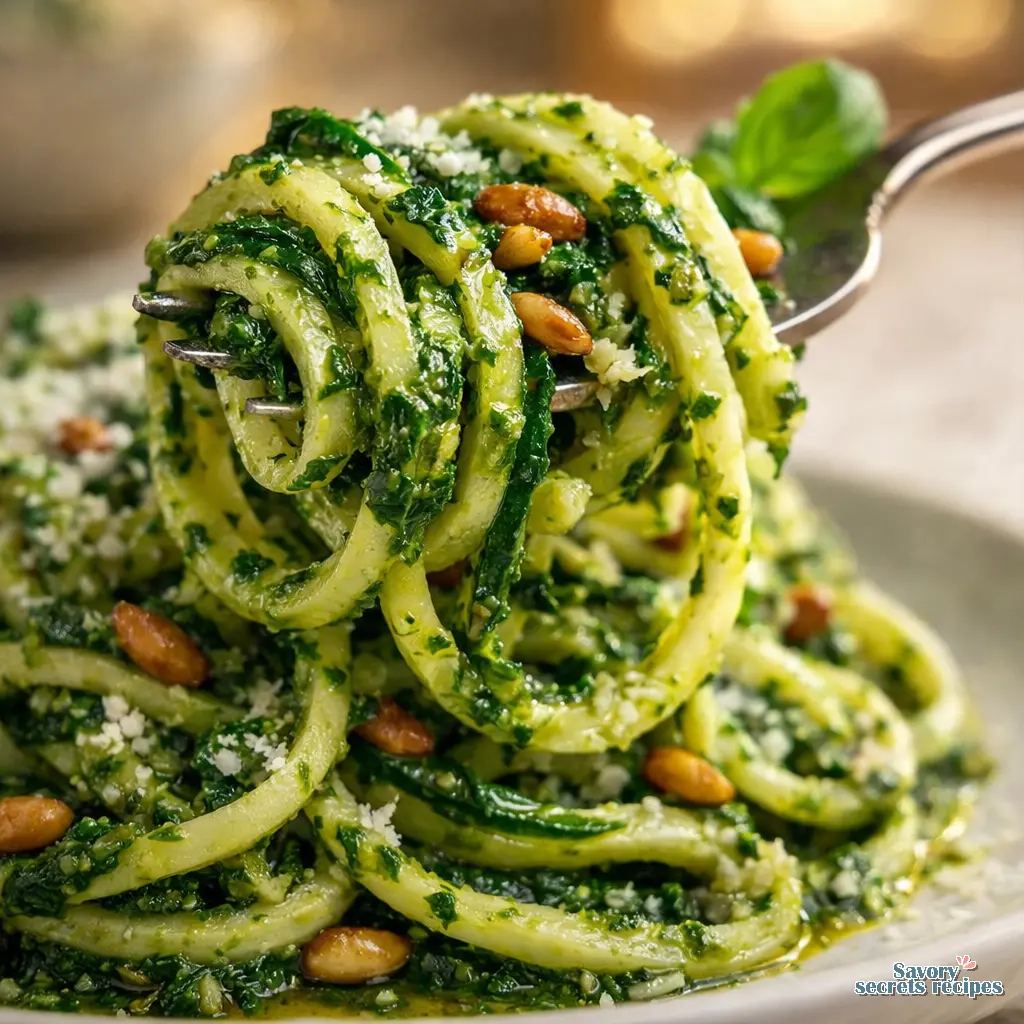
Zucchini Noodles with Kale Pesto
Ingredients
Method
- Combine basil, Parmesan, pine nuts, and garlic in a food processor and pulse until finely chopped.
- Slowly drizzle in olive oil and lemon juice while the processor is running until smooth, then season with salt and pepper to taste.
- Spiralize or julienne the zucchinis into thin, noodle-like strands.
- Heat olive oil in a large skillet over medium heat, add zucchini noodles and a pinch of salt, and sauté for 2 to 3 minutes until tender-crisp.
- Remove the skillet from the heat and toss the noodles with pesto, starting with half the quantity and adding more to preference.
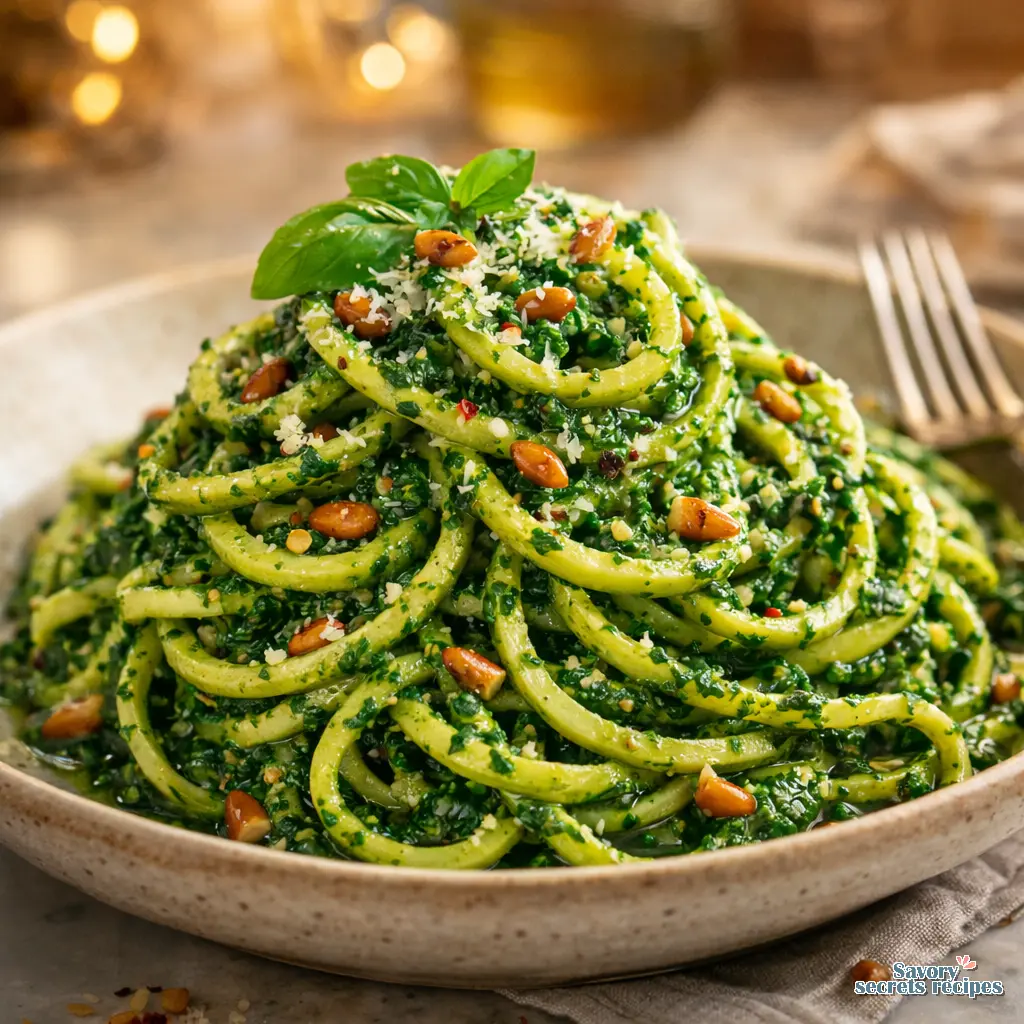
- Divide the mixture between plates, garnish with additional Parmesan, basil, and red pepper flakes if desired, and serve immediately.
Nutrition
Notes
The Secret to Perfect Zucchini Noodles with Kale Pesto
I learned the importance of sauce consistency from a failed dinner party in my mid-twenties. I had made a beautiful pan sauce reduction for a roasted duck, but I lost focus while talking to my guests. I let it reduce too far. It became sticky, almost syrupy, coating the meat like lacquer instead of a proper sauce. My friend Sarah was too polite to say anything, but I saw her reaching for her water glass after every bite. Now I always do the spoon test before plating. If it doesn’t flow smoothly, it’s not ready to serve.
The exact same principle applies to zucchini noodles with kale pesto. I know that sounds like a stretch, comparing a classic French reduction to a modern California health-cafe dish, but sauce mechanics remain the same. You want that deep emerald green sauce to cling beautifully to the vegetable strands, not pool in a watery, separated mess at the bottom of your bowl. We are taking a nutrient-packed superfood and treating it with proper culinary technique.
Springtime in Los Angeles means the Santa Monica Farmers Market is overflowing with beautiful, firm squash and vibrant greens. It is the perfect time to master this dish. The vibrant green of the finished sauce is striking. The realization that it doesn’t taste bitter at all is even better. Let’s walk through the technique.
Why Blanching the Kale is Non-Negotiable
If you are wondering how to make kale pesto less bitter, the answer is blanching. This is where most people rush it. They throw raw leaves straight into the food processor. That is a mistake. Raw kale has a robust, earthy flavor that can easily overpower the delicate sweetness of the squash and the rich pine nuts.
Blanching does two crucial things. First, a quick plunge into boiling salted water (about 30 to 45 seconds) softens the tough cell walls and leaches out the bitter compounds. Second, it locks in that brilliant, vibrant green color. You’ll know it’s ready when the leaves turn a shocking, bright emerald shade.
Immediately transfer those leaves to an ice bath. The ice bath stops the cooking process instantly. Trust the process on this one. Once cooled, you must squeeze every single drop of water out of the greens. If you leave water in the leaves, your zucchini noodles with kale pesto will end up diluted and bland. I usually wrap the blanched greens in a clean kitchen towel and wring it out until it is completely dry.
Curly vs. Lacinato: A Kale Flavor Profile Comparison
In my experience, not all greens behave the same way in a food processor. You generally have two main choices at the grocery store: curly kale and lacinato kale (also known as dinosaur kale or Tuscan kale).
I tend to think lacinato is the superior choice for a superfood pesto recipe for zoodles. It has a darker, slightly sweeter, and less fibrous profile than the curly variety. It breaks down into a smoother, silkier sauce. Curly kale works, but it brings a more pepper-forward, mustard-like bite that requires more lemon juice to balance.
Whichever variety you choose, you must remove the tough center ribs before blanching. Those stems are pure fiber and will leave unpleasant, woody chunks in your sauce. Save the stems for vegetable stock if you like, but keep them out of your pesto.
The Science of Zucchini Moisture (And How to Beat It)
Let me think on that common complaint about vegetable noodles. People say they are too watery. That tracks, considering a zucchini is about 95 percent water by weight. When you apply heat, the cell walls break down and release that water directly into your beautiful sauce.
The key checkpoint here is cooking time. You only need to sauté zoodles for 1 to 2 minutes. That is it. You are simply warming them through, not cooking them down. If you cook them longer, they will collapse into a soggy, watery mess. I prefer using Blade C on my spiralizer for thin, spaghetti-like noodles. They warm up almost instantly in the pan. If you don’t own a spiralizer, you can absolutely use a julienne tool to achieve a similar effect.
For an even crunchier texture, zucchini noodles can be used completely raw. Just toss the raw strands with the room-temperature sauce. The salt in the cheese and the acid in the lemon juice will naturally soften the raw squash slightly as it sits.
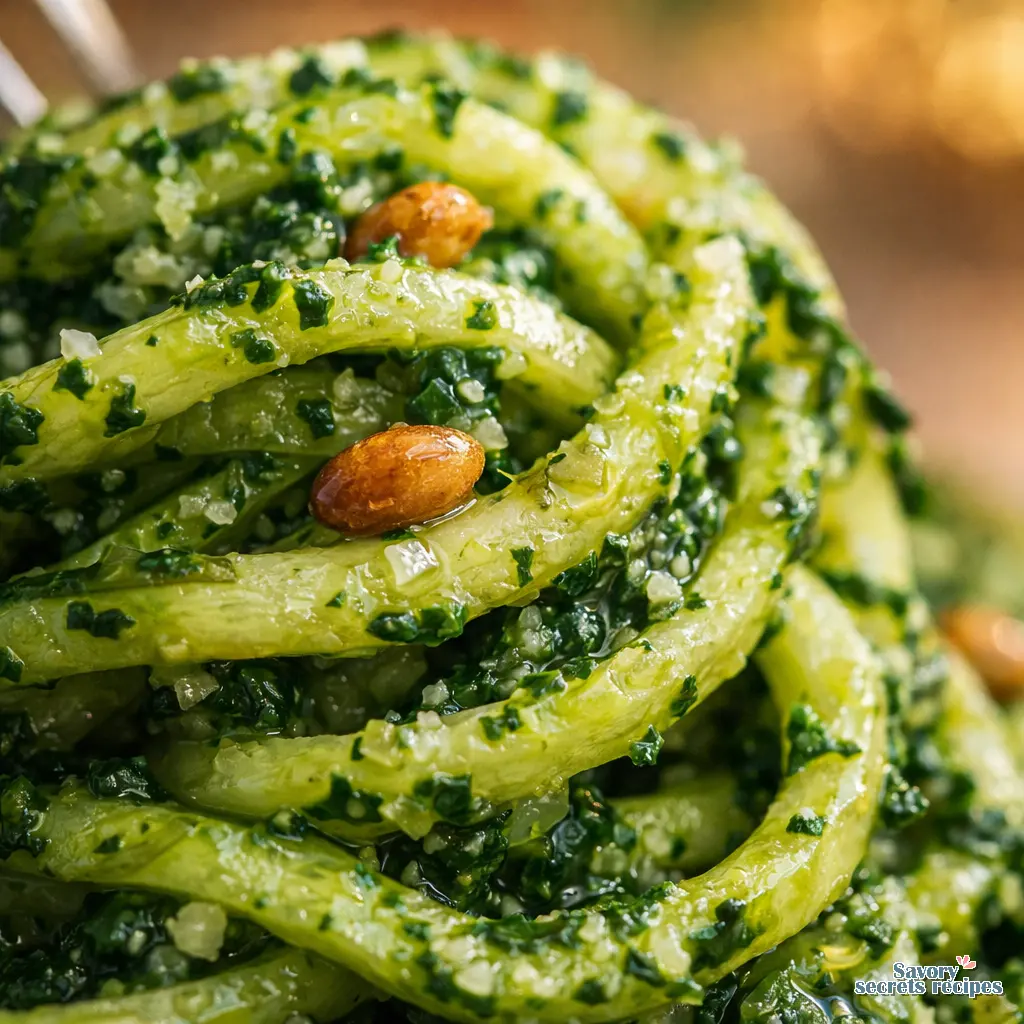
Visual Troubleshooting Guide for Zoodle Texture
Even with the best intentions, things can go sideways. I’ve made every mistake possible while testing this recipe. Here is how to fix the most common issues.
Common Mistakes & Fixes
Mistake: The sauce is too thick and clumpy.
Solution: Scrape down the sides of the food processor frequently when making the sauce. Add water or broth one tablespoon at a time to the pesto to achieve your desired consistency. Don’t dump in extra olive oil, or it will become greasy.
Mistake: The dish turned into a watery soup.
Solution: You overcooked the squash. Limit your sauté time to 1 to 2 minutes max. If it is already watery, use a pair of tongs to lift the noodles out of the liquid and transfer them to a fresh, dry bowl.
Mistake: The sauce tastes flat or overly grassy.
Solution: It needs acid and salt. Add an extra squeeze of fresh Meyer lemon juice and a pinch of kosher salt. The garlicky punch and the acid will wake up the earthy greens immediately.
Smart Dietary Substitutions
As a general rule, a good sauce recipe should be adaptable. While I love the classic combination of zucchini noodles with pesto and pine nuts, you can easily modify this based on what you have in your pantry.
If you want to make zucchini zoodles hemp pesto for a nut-free environment, simply swap the pine nuts for an equal amount of hemp seeds or sunflower seeds. Hemp seeds provide a fantastic, creamy texture and a massive protein boost. Worth noting, you should still toast sunflower seeds if you use them, just to develop that essential depth of flavor.
If you are entirely out of kale, you can substitute spinach to make zucchini noodles spinach pesto. Spinach is much more delicate, so you can skip the blanching step entirely. Just pack the raw spinach directly into your food processor. For a dairy-free or vegan adaptation, swap the parmesan cheese for nutritional yeast. It provides that savory, cheesy umami note without any dairy.
Storage Instructions and Detailed Reheating Guide
Meal prep is a reality for most of us, especially during busy spring weeks. If you are making zucchini noodles with kale pesto ahead of time, you need a strategy to maintain that perfect texture.
You can store the leftover dish in an airtight container in the refrigerator for 3 to 4 days. However, the squash will release moisture as it sits. When it is time to reheat, do not use the microwave. The microwave will essentially steam the vegetables in their own juices, ruining the texture. Instead, briefly sauté the leftovers in a dry skillet over medium-high heat for about 60 seconds. This warms the dish quickly without drawing out excess water.
If you want to prep in bulk, freeze the pesto by itself. I like to freeze the sauce in silicone ice cube trays. Once frozen solid, pop the cubes into a freezer-safe bag. They will keep beautifully for up to 2 months. You can melt a cube or two directly into a pan of freshly spiralized squash for a dinner that takes literally three minutes to make. To be clear, never freeze raw zucchini noodles. They will turn to absolute mush when thawed.
Frequently Asked Questions
Bringing It All Together
Mastering a proper sauce changes how you view everyday ingredients. Once you understand how to balance the earthy notes of the greens with bright lemon juice and rich olive oil, you’ll find yourself putting this sauce on everything. Try massaging the leftover pesto into raw kale ribbons for a salad, or spoon it over your morning eggs. It is incredibly versatile.
I hope you’ll give this technique a try the next time you pick up some fresh produce. It looks like a fancy, complicated health-cafe dish, but it is deeply rooted in simple, traditional culinary methods. For more inspiration, check out my Pinterest boards where I save all my favorite seasonal vegetable preparations. Drop a comment below when you make this. I’d love to hear how your sauce turns out.
Reference: Original Source
How do you prevent zucchini noodles with kale pesto from becoming watery or soggy?
The trick is strict temperature and time control. Sauté the spiralized squash for no more than 1 to 2 minutes. You just want to warm them through. If you cook them longer, their cell walls collapse and release all that trapped water into your beautiful sauce.
How can I make kale pesto less bitter when preparing this superfood pesto recipe for zoodles?
In my experience, blanching is the only reliable method. Boil the leaves for 30 to 45 seconds, then plunge them immediately into an ice bath. This process leaches out the bitter compounds while locking in that stunning, vibrant emerald green color. It is entirely worth the extra step.
Can I substitute spinach to make zucchini noodles spinach pesto instead of using kale?
Yes, absolutely. Spinach is much more delicate and naturally sweeter. If you use spinach, you can skip the blanching step completely. Just add the raw baby spinach directly to your food processor with the garlic, nuts, and oil. It makes a incredibly silky, mild sauce.
What are the best tips for serving zucchini noodles with pesto and pine nuts?
I prefer to serve this dish immediately after tossing it in the warm skillet. Top it with extra toasted pine nuts for a satisfying crunch, a generous grating of fresh parmesan, and a pinch of red pepper flakes. It pairs wonderfully with grilled chicken or sautéed shrimp.
How long can you store leftover zucchini noodles with kale pesto in the refrigerator?
You can keep the leftovers in an airtight container in the fridge for 3 to 4 days. The sauce itself freezes exceptionally well for up to 2 months, but remember that the spiralized squash should never be frozen, as it will disintegrate when thawed.