



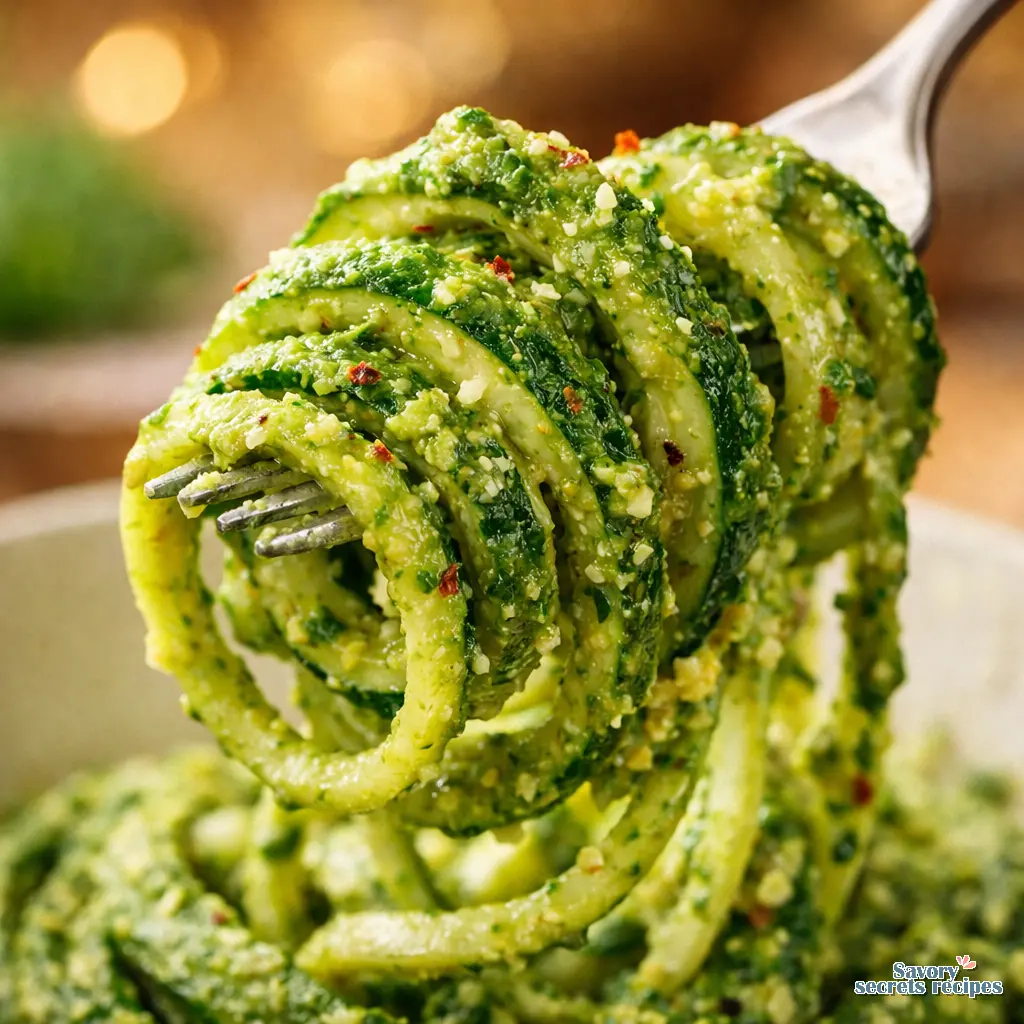
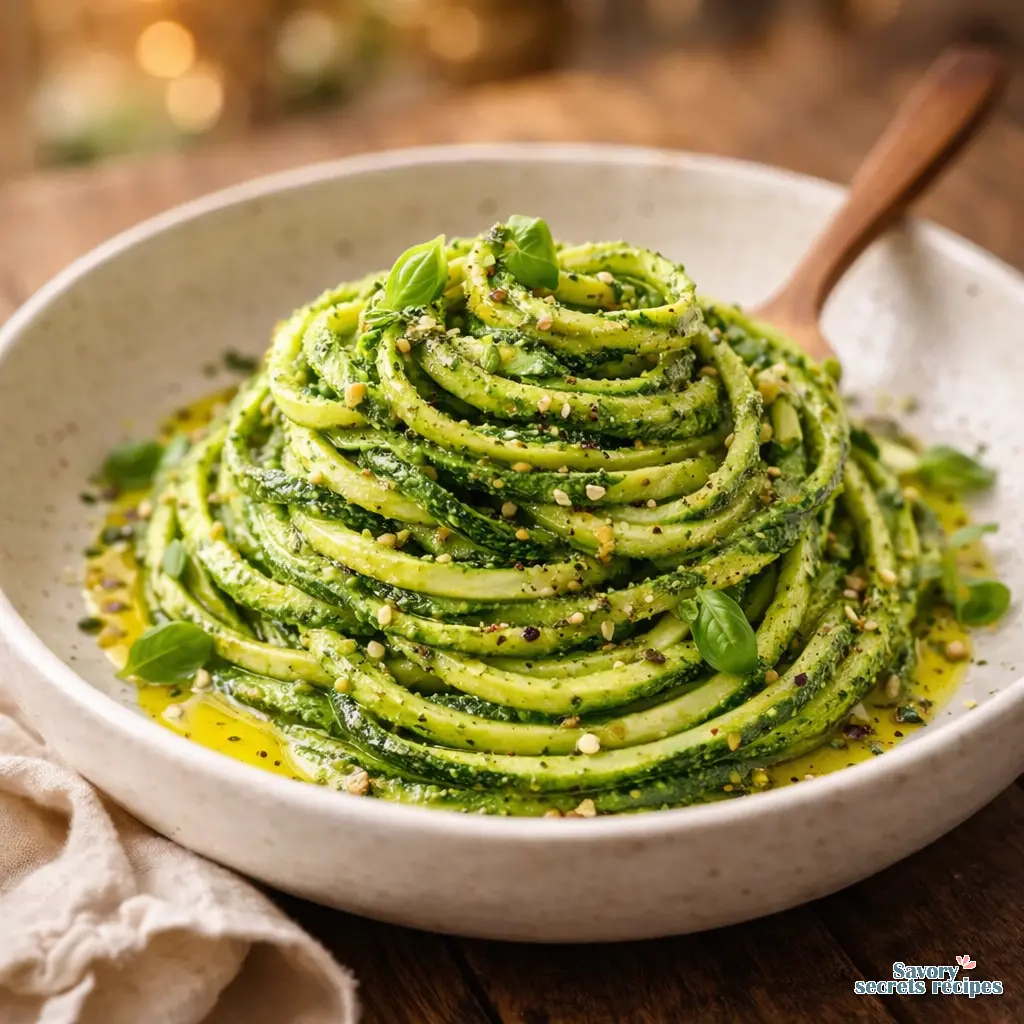
Raw Avocado Zucchini Noodles with Pesto Dressing
Ingredients
Method
- Wash and dry the medium zucchinis. Spiralize into long strands, cut into smaller pieces, and place in a mixing bowl.
- Combine ripe avocados, basil leaves, minced garlic, lemon juice, and hemp seeds in a food processor. Blend until velvety smooth.
- Pour the avocado pesto over the zucchini noodles. Toss gently with tongs for 1 to 2 minutes until evenly coated.
- Serve immediately or refrigerate until ready. Garnish with extra hemp seeds or red pepper flakes if desired.
Nutrition
Notes
When It’s Too Hot to Cook: Mastering Raw Zucchini Noodles with Pesto
We’ve all been there. It is a Wednesday evening in late spring, the Los Angeles heat is already creeping into the high eighties, and the absolute last thing you want to do is turn on the stove. You are staring at the fridge, hoping a cold, refreshing meal will magically assemble itself. Let me walk you through exactly what I make on days like this. Raw zucchini noodles with pesto completely changed my summer dinner rotation.
I remember standing in my teta’s kitchen in Dearborn years ago. She was always cooking something elaborate, but on the hottest days, she relied on fresh, raw vegetables straight from the garden. She understood instinctively that raw food feels hydrating and alive. I took that philosophy and applied it to this 5 minute meal. It requires zero heat, preserves maximum nutrients, and gives you that incredibly satisfying crisp texture you crave when the weather gets warm.
My daughter Layla usually insists on helping me test recipes, and this summer salad is her favorite because there is no waiting around for things to bake. We just spin the vegetables, toss them in a vibrant pesto vinaigrette, and eat. I know a lot of people are skeptical about eating raw squash. I certainly was. But once you understand how to properly prepare raw zucchini noodles with pesto, you’ll never look at cold pasta the same way again.
The Science of Zoodles: Osmosis and the Soggy Noodle Problem
Here is what I wish someone had told me before I made my first batch of zucchini noodles. Zucchini is mostly water. When you slice it into thin ribbons, you expose a massive amount of surface area. If you treat it exactly like regular wheat pasta, you are going to end up with a watery, diluted mess at the bottom of your bowl.
The culprit here is osmosis. Salt naturally draws moisture out of plant cell walls. If you salt your raw zucchini noodles with pesto too early, the salt pulls the water out of the squash and completely ruins your sauce. I learned this the hard way during a dinner party where my beautiful thick pesto turned into a sad, green soup within twenty minutes.
Let’s troubleshoot this together. First, always pat zucchini noodles dry with paper towels to remove excess moisture right after you cut them. Second, add salt only right before serving, or if you decide to cook them, add salt only after removing from heat to prevent drawing out water. Watch for the visual cue. The noodles should look matte, not glossy with water, before you add your dressing.
Common Mistakes & Fixes
❌ Mistake: Salting the noodles during the prep phase.
✅ Solution: Wait until the absolute last second to add salt, or rely on the salt already present in your parmesan cheese and pesto.
❌ Mistake: Using massive, overgrown zucchini.
✅ Solution: Choose medium-sized, firm zucchini for the best flavor and ease of spiralizing. Soft ones are old and will be mushy no matter what you do.
❌ Mistake: Forgetting to dry the vegetables.
✅ Solution: Always pat the zoodles dry before mixing with sauce. This step makes all the difference.
Finding the Right Tool: Spiralizer vs. Mandoline vs. Chef’s Knife
I get asked about equipment constantly. I occasionally question whether my insistence on specific tools makes cooking seem intimidating, but having the right gear really does help here. Let’s look at your options for getting that perfect spaghetti shape.
A tabletop spiralizer is my personal favorite. It anchors to the counter and cranks out perfectly uniform noodles in seconds. It handles firm vegetables beautifully. A handheld spiralizer is cheaper and fits in a drawer, which is great for small LA apartments. It requires a bit more elbow grease, but it works perfectly fine for one or two portions.
What if you don’t have a gadget? Fair enough. You can use a julienne peeler to scrape long strips. If you only have a chef’s knife, cut the squash into thin planks, stack them, and slice them into matchsticks. It takes longer, but the texture is actually fantastic. Whatever method you choose, remember to use medium-sized zucchini. The massive ones from the farmers market have giant seed cores that just fall apart when you try to cut them.
Raw vs. Sautéed: A Texture Comparison
People often ask if they really have to eat the vegetables raw. In my tests, raw usually works best for summer salads, though your mileage may vary depending on your digestion. Let’s compare the two approaches.
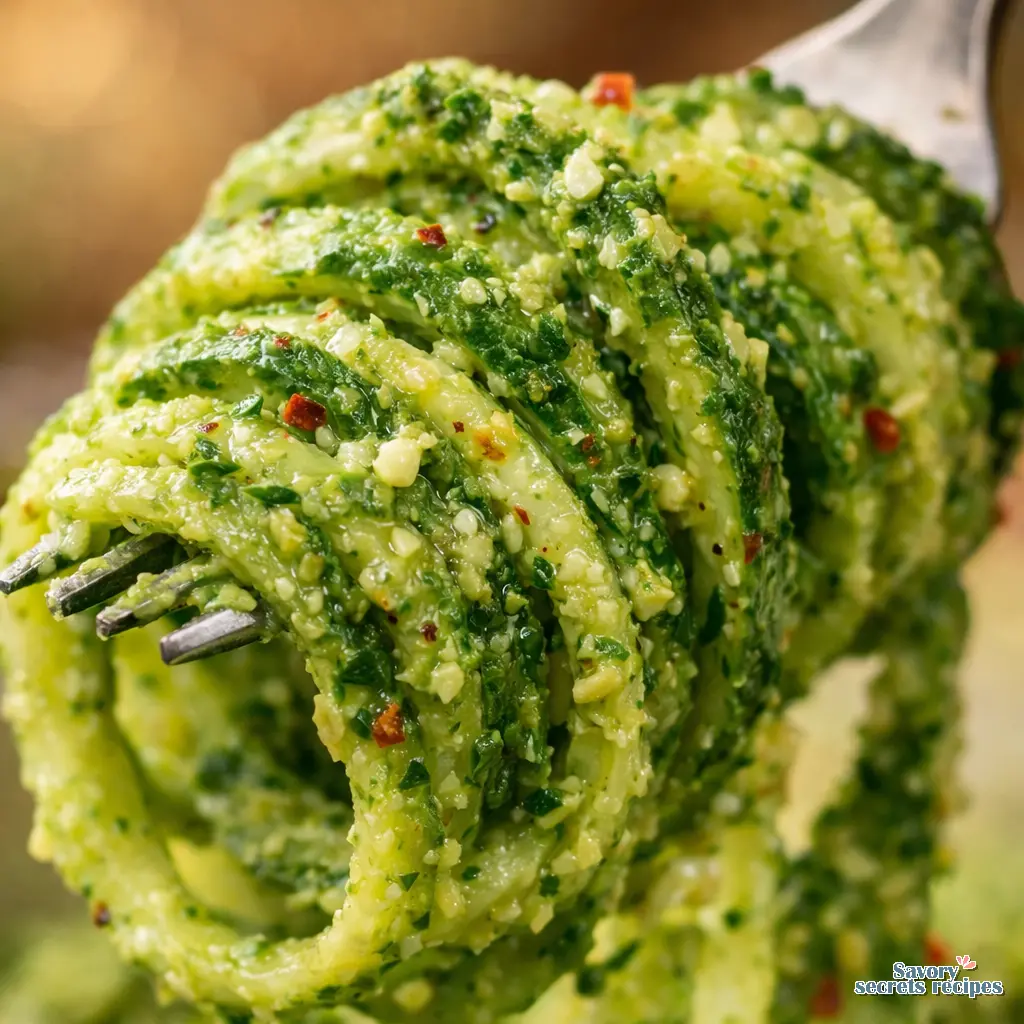
Serving raw zucchini noodles with pesto gives you a bright, crisp snap that feels incredibly refreshing. It mimics the al dente bite of perfectly cooked pasta. The raw food approach also means zero heat in your kitchen and maximum retention of water-soluble vitamins. The tradeoff is that raw squash doesn’t absorb flavors quite as deeply as cooked squash does.
If you prefer them warm, you absolutely can sauté them. But here is the critical rule. Don’t overcook them. One to two minutes in a hot skillet is enough to prevent mushiness. You are just trying to warm them through, not break them down. Watch for the visual cue. They should turn slightly translucent but still hold their shape. The moment they start drooping heavily, get them out of the pan.
Building a Pesto Vinaigrette for Raw Vegetables
Traditional pesto is quite thick. It is designed to melt into hot, starchy pasta water. When you are making raw zucchini noodles with pesto, you don’t have hot starch to help emulsify the sauce. We need to adapt the dressing.
I like to thin the pesto out slightly with fresh lemon juice and a touch more high-quality olive oil. This turns it into a pesto vinaigrette that coats the cold strands beautifully. Homemade pesto and store-bought both work perfectly well here, but quality matters. If you are buying it from Ralphs or Trader Joe’s, look for the refrigerated tubs rather than the shelf-stable jars. The flavor is infinitely brighter.
You can easily customize this. Try a sun-dried tomato pesto for a sweeter, tangy profile. Or blend in some kale for a deeply earthy, nutrient-dense sauce. I always use fresh parmesan for better texture and flavor than the pre-packaged powdery stuff. If you want a vegan option, nutritional yeast works wonders. Skip raw onions in your sauce if you are sensitive to the flavor, and instead add minced garlic cloves or fresh cherry tomatoes halved right down the middle.
To add crucial bulk and crunch to this no cook meal, I toast seeds or nuts in a skillet for 5 minutes. Pine nuts are classic, but hemp seeds, pepitas, or sliced almonds from the Central Valley are fantastic. If you are adding butter to toast them, use unsalted to control your sodium levels.
Advanced Meal Prep: Storing Raw Zucchini Noodles with Pesto
I tend to favor make-ahead components over start-to-finish recipes because they are more realistic for how people actually cook during the week. But prepping this dish requires a specific strategy.
If you toss the noodles with the sauce on Sunday, you will have a swampy mess by Tuesday. The secret to a 5-day meal prep is total separation. Spiralize your firm zucchini, pat it completely dry, and store it in an airtight container lined with dry paper towels. Store your pesto vinaigrette in a separate small jar. When you are ready for lunch, just toss them together.
Keep leftovers for 3 to 4 days max in the refrigerator. If you need to reheat noodles that are already coated in sauce, do it briefly on the stovetop over low heat, stirring constantly so the oil in the pesto doesn’t separate. You can also microwave individual portions for about 30 seconds. Honestly, I usually just eat it cold right from the fridge. It is incredibly hydrating.
And please, whatever you do, do not freeze these. Freezing expands the water inside the squash, shattering the cell walls. When they thaw, they turn into a puddle of mush. Trust the process here. Fresh is always better.
Frequently Asked Questions About Raw Zucchini Noodles with Pesto
Final Thoughts on Your Summer Salad
Making raw zucchini noodles with pesto is one of those kitchen tricks that feels like cheating. You get a vibrant, garden fresh meal on the table in minutes, without breaking a sweat over a hot stove. It reminds me of those quiet Friday afternoons at my teta’s house, where simple, fresh ingredients did all the heavy lifting. I genuinely love the moment when someone tries this for the first time and realizes how satisfying raw food can actually be.
Serve this as a light lunch, or pair it with grilled chicken breasts or shrimp for a heavier dinner. It is incredibly versatile. I share tons of variations and seasonal ideas on my Pinterest boards if you want more inspiration for keeping your kitchen cool this summer. Grab some firm squash on your next grocery run and give this a try. You’ve got this.
Reference: Original Source
Why are my zoodles soggy? How to fix it?
Sogginess happens when salt draws moisture out of the squash. To fix this, always pat your noodles completely dry with paper towels after cutting. Only add salt right before eating. If you cook them, salt them after they come off the heat.
Can you eat zucchini noodles raw or do they need to be cooked?
You can absolutely eat them raw. In fact, raw zucchini noodles with pesto offer the best crisp texture and are incredibly hydrating for summer salads. Raw squash acts just like al dente pasta and holds up beautifully to a thick sauce.
How do I cook zoodles without them getting mushy?
The secret is high heat and very little time. Toss them in a hot skillet with a tiny bit of oil for no more than 1 to 2 minutes. You just want to warm them through. The moment they turn slightly translucent, remove them immediately.
Can I freeze zucchini noodles?
I strongly advise against it. Zucchini has a very high water content. When frozen, the water crystals expand and destroy the vegetable’s cell walls. Once thawed, they turn into an unappealing, mushy puddle that cannot be saved. Always enjoy them fresh.