



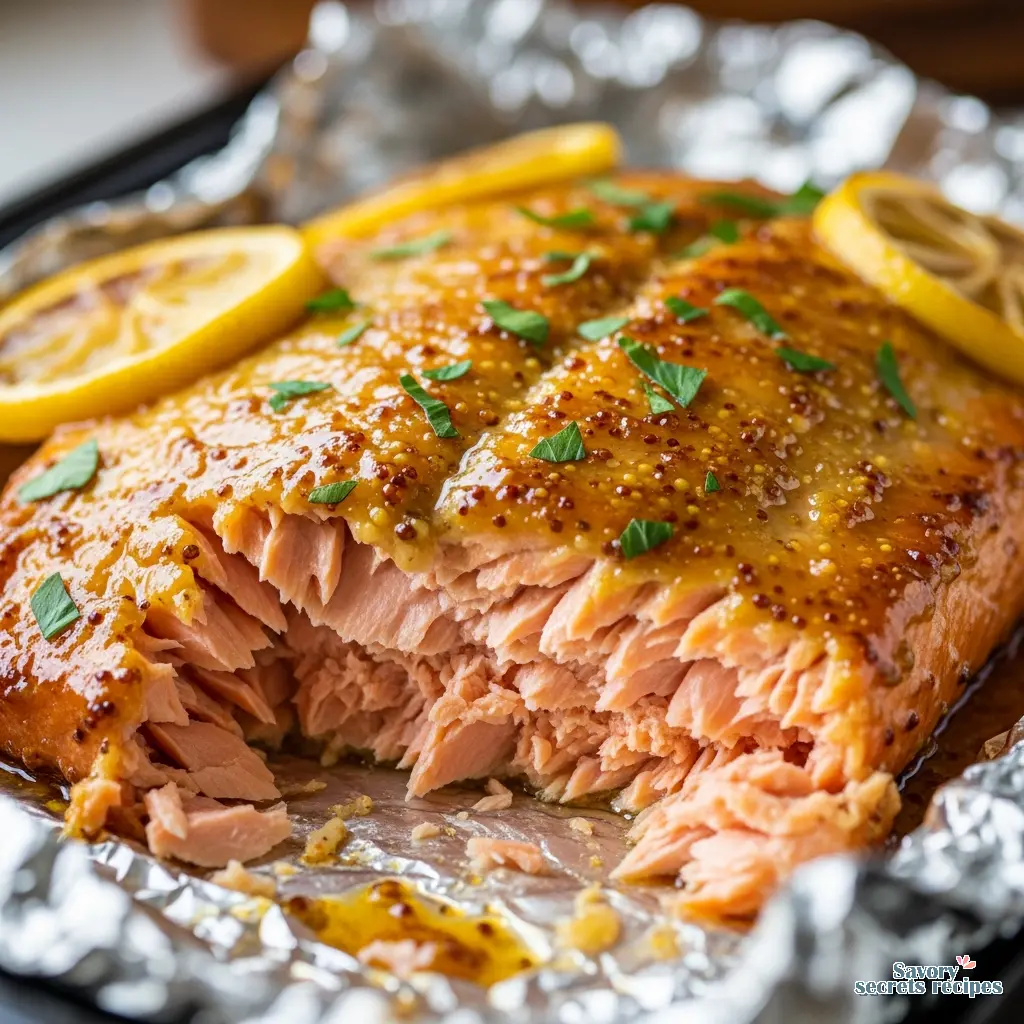
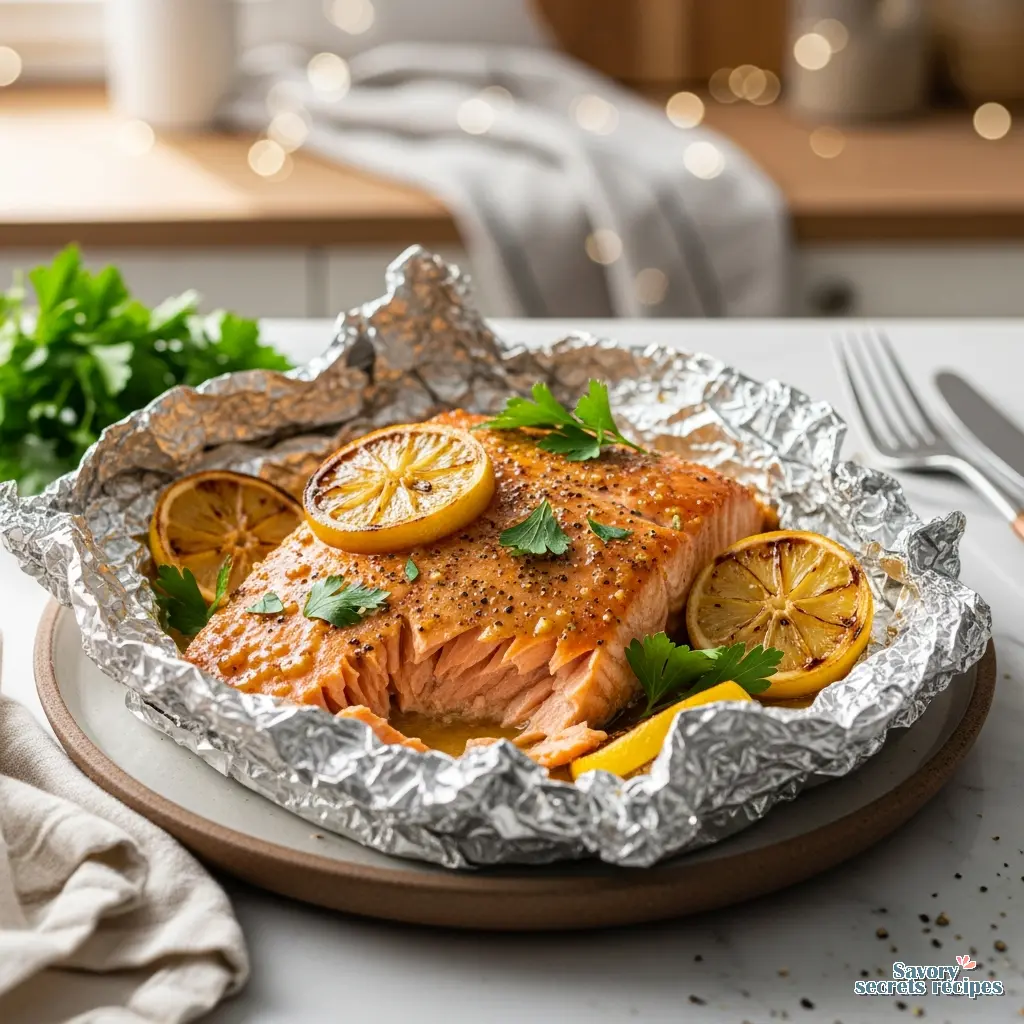
Moist Honey Mustard Salmon Recipe In Foil Packets
Ingredients
Method
- Preheat the oven to 375°F or heat a grill to medium.
- Prepare the honey mustard sauce according to the instructions provided below.
- Line a large baking sheet with aluminum foil, mist with cooking spray, and place the salmon in the center of the foil.
- Spoon the honey mustard sauce over the salmon and spread it evenly to cover the surface.
- Fold the foil over the salmon to seal it completely, adding a second sheet if necessary to create a closed packet.
- Bake for 14–15 minutes until nearly cooked through, then remove from the oven and carefully open the foil to expose the fish. Switch the oven to broil and cook for 2–3 minutes, watching closely to prevent the sauce from burning.
- Transfer the salmon packet to the grill and cook for 12–14 minutes until nearly done. Carefully open the foil to expose the fish and continue grilling for 3–4 minutes until fully cooked.
- Remove the salmon from the heat, garnish with fresh parsley, and serve immediately.
- Whisk all ingredients together in a small bowl until thoroughly combined.
Notes
The Science of the Flavor Vault
Have you ever spent good money on a beautiful piece of fish at Whole Foods, only to bake it into dry, flaky cardboard? I certainly have. Wednesday evening, 35 minutes before dinner, panic sets in. You want something healthy but foolproof. That is exactly why I rely on honey mustard salmon in foil. Think of the aluminum foil as a flavor vault. It locks in the aromatic steam from the lemon slices and fresh dill, guaranteeing the juiciest fish of your life.
It is honestly impossible to mess up. I know cooking fish can feel intimidating for a beginner cook. The smell, the sticking, the heavy pan cleanup. But the foil packets solve all of that. During these cooler LA winter months when we actually use our ovens, this is my absolute go-to. Just to be safe, I always keep a few fillets in the freezer for nights when I need a quick win. The moment you open that packet and hear the hiss of steam, smelling that butter and garlic, you’ll know exactly what I mean.
4 Quick Wins for Perfect Honey Mustard Salmon in Foil
Before we get into the technical details, I want to share a few quick wins. These are the little adjustments I’ve learned from testing this honey mustard salmon in foil recipe dozens of times.
First, buy frozen wild-caught salmon to ensure freshness and save money. I usually grab a bag on my weekly Trader Joe’s run. Second, let the salmon marinate in the glaze for 15 to 20 minutes before cooking for deeper flavor. The data suggests that giving the salt time to penetrate the flesh actually helps it retain moisture. Third, don’t skip the citrus slices on top. They protect the fish from direct heat and infuse an incredible aroma. And finally, brush olive oil on the foil before laying down the fish to prevent sticking. Better to err on the side of caution than lose half your meal to the aluminum foil.
The Foil Packet Method: Oven, Grill, and Air Fryer
Let’s talk about folding. Proper headspace prevents oxidation in my fermentation crocks, and here, proper headspace allows the salmon to steam perfectly. You want to use the “tenting” method. Cut a piece of foil about 14 inches long. Place your fish in the center, bring the long edges together above the fish, and fold them down a few times. Then crimp the short ends. Leave a little pocket of air inside. Do not seal it so tightly that the steam can’t circulate.
For the oven baked method, 375°F is your sweet spot. It takes about 15 to 20 minutes depending on thickness. If you’re using an air fryer, which is brilliant for individual portions, drop the temperature to 380°F and check it at 10 minutes. For outdoor grilling, place the crimped edges facing up over medium-high heat for about 12 to 15 minutes. No matter which method you choose, you’re creating a succulent, butter-soft texture with zero pan cleanup.
Why Dijon Beats Yellow Mustard (And Sauce Customization)
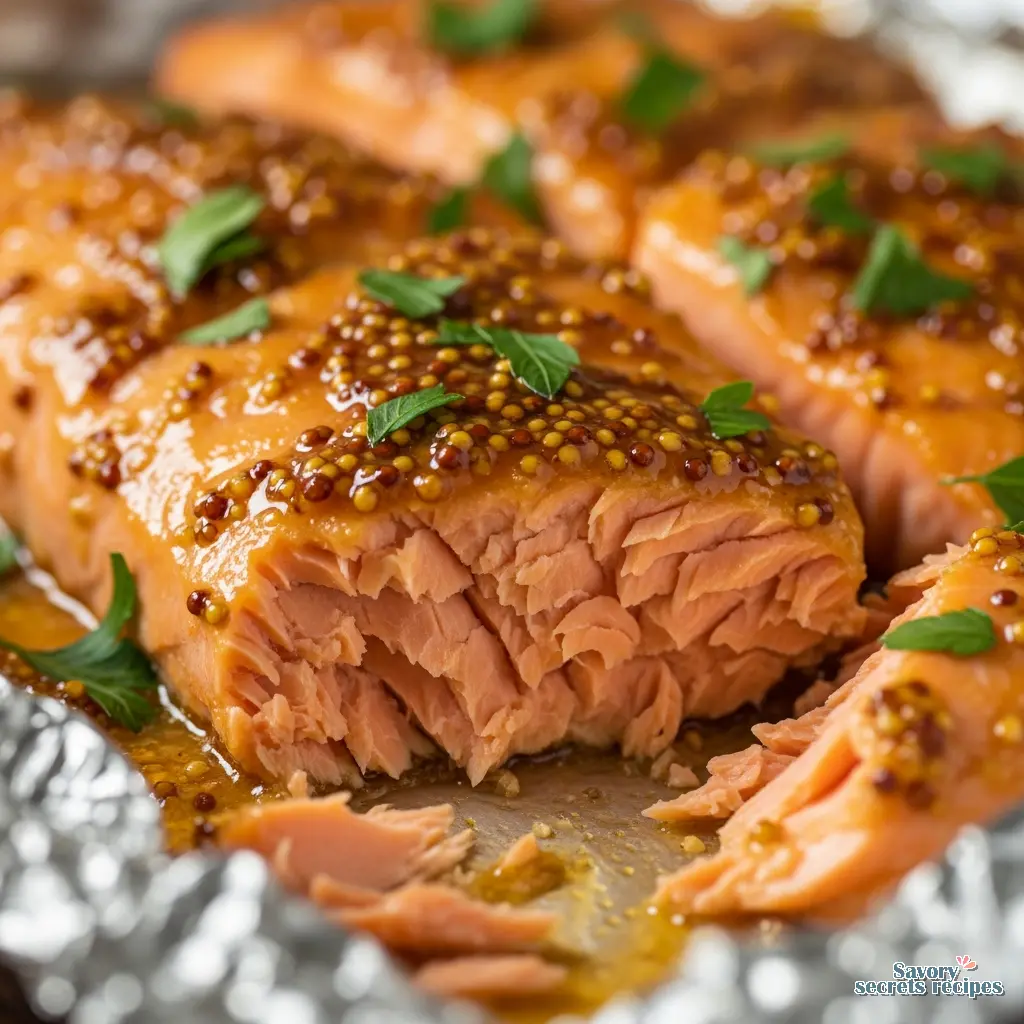
I occasionally doubt whether my approach is too technical, but understanding your ingredients is crucial. When making the honey mustard sauce, please use Dijon or whole grain mustard. I know some people reach for standard yellow mustard, but I’d want to verify first if that’s a good idea. In my experience, yellow mustard is far too vinegary and sharp. It overpowers the delicate flavor of the fish. Dijon offers complex, earthy notes that pair perfectly with sweet honey and fresh Meyer lemon juice.
You can easily balance the sauce to your personal taste. Increase the mustard to a full 1/2 cup for a stronger, tangier flavor, or scale back the honey for less sweetness. Here is a little trick I use. A spoonful of mayonnaise helps keep wild salmon, which is quite lean, from drying out. Just whisk it right into the glaze.
Visual Doneness Chart & Internal Temperatures
I remember standing on a step stool in Babcia’s kitchen, watching her pack cucumbers. She told me her mother taught her that you trust your hands, but you verify with your tools. I still think about that every time I cook. Trust the meat thermometer, not just your eyes. For the perfect honey mustard salmon baked recipe, you want an internal temperature of 125°F for medium-rare, or 145°F for fully cooked. I prefer pulling it at 135°F because it continues to cook slightly while resting.
Check the salmon early to avoid overcooking. It goes from under-cooked to dry in seconds. If the salmon appears underdone, just re-wrap it in the foil and let it rest for a few minutes on the counter. The residual heat will finish the job gently. For a beautiful finish, open the foil packets and broil for the last 2 to 3 minutes to get a caramelized, golden crust. That sizzle under the broiler is exactly the result we want to see.
Common Mistakes & Fixes
Mistake: The salmon is dry and chalky.
Solution: Overcooking is the most common mistake. Use an instant-read thermometer and pull the fish at 135°F. It will finish cooking as it rests.
Mistake: The top looks gray and unappealing.
Solution: You skipped the broiler step. Open the foil for the last 3 minutes and let the broiler caramelize the honey mustard sauce.
Mistake: The fish stuck to the foil.
Solution: Skipping the oil on the foil leads to sticking. Always lightly brush or spray the aluminum foil before laying down the fillet.
Storage, Reheating, and Meal Prep
If you’re making this honey mustard salmon in foil for meal prep Sundays, you’re in luck. The make-ahead sauce can last 7 days in the fridge, so you can mix it well in advance. As for the cooked fish, refrigerate it in an airtight container for up to 3 days. You can also freeze cooked salmon for up to 2 months, though I’d probably want to wrap it tightly in plastic wrap and then foil to prevent freezer burn.
Reheating is where most people ruin leftover fish. I’m hesitant to say definitively without knowing your microwave wattage, but generally, microwaving fish on high is a disaster. According to the guidelines I follow, the best method is the oven. Wrap the leftover honey mustard salmon in foil again, and bake at 300°F for 10 to 12 minutes until just warmed through. If you must use a microwave, use low power (30-50%) and cover it with a damp paper towel to retain moisture. Pair your leftovers with roasted seasonal veggies like sweet potatoes or asparagus, or flake it cold over an arugula pasta salad.
Frequently Asked Questions
Wrapping It Up
I genuinely love the moment when you open that foil packet and the smell is exactly right. Tangy, bright, alive. It never gets old. Once you master this simple technique, you’ll never be intimidated by cooking fish again. You’ve got this. Grab some fresh fillets on your next grocery run and see for yourself how effortless weeknight dinners can be.
I share tons of variations on my Pinterest boards if you want more ideas for quick, healthy meals. Drop a comment below if you try this honey mustard salmon in foil, and let me know if you used the broiler hack for that perfect crust!
Reference: Original Source
How do you know if honey mustard salmon in foil is ready?
Trust the thermometer, not just your taste. It’s ready when the thickest part reaches 135°F to 145°F. Visually, the flesh should be opaque and flake easily with a fork. I always check a few minutes early to prevent drying it out.
Can I use skinless salmon for this recipe?
Absolutely. Skinless works perfectly for honey mustard salmon in foil. Just make sure you brush the aluminum foil with olive oil first, as skinless fillets are more prone to sticking. The cooking time remains exactly the same.
Can I use smaller fillets instead of a whole piece?
Yes, individual portions are great. You’ll just need to make separate foil packets for each fillet. Keep in mind that smaller pieces cook faster, so check your honey mustard salmon baked recipe around the 12-minute mark to be safe.
How do I know when salmon is done without a thermometer?
If you don’t have a thermometer, press gently on the top of the fillet. It should feel firm but springy. You can also take a fork and gently twist it in the thickest part; if it flakes easily and isn’t translucent, it’s done.
Can I bake this instead of grilling?
Of course. While grilling adds a nice ambient heat, oven baked is my preferred method for consistency. Bake at 375°F for 15-20 minutes. I actually find the oven gives you better control over the final texture of the fish.
Is this honey mustard salmon in foil recipe keto or low carb?
As written, the honey adds carbs. To make it strict keto, swap the honey for a sugar-free maple syrup alternative. The whole grain mustard and salmon are already perfectly low-carb and keto-friendly. I’d want to verify your specific macro needs, but that simple swap works beautifully.
Can I meal prep this moist honey mustard salmon recipe in foil packets?
Yes, it’s fantastic for meal prep. You can mix the sauce a week ahead. I like to assemble the raw foil packets in the morning, leave them in the fridge, and just pop them in the oven when I get home from work.