



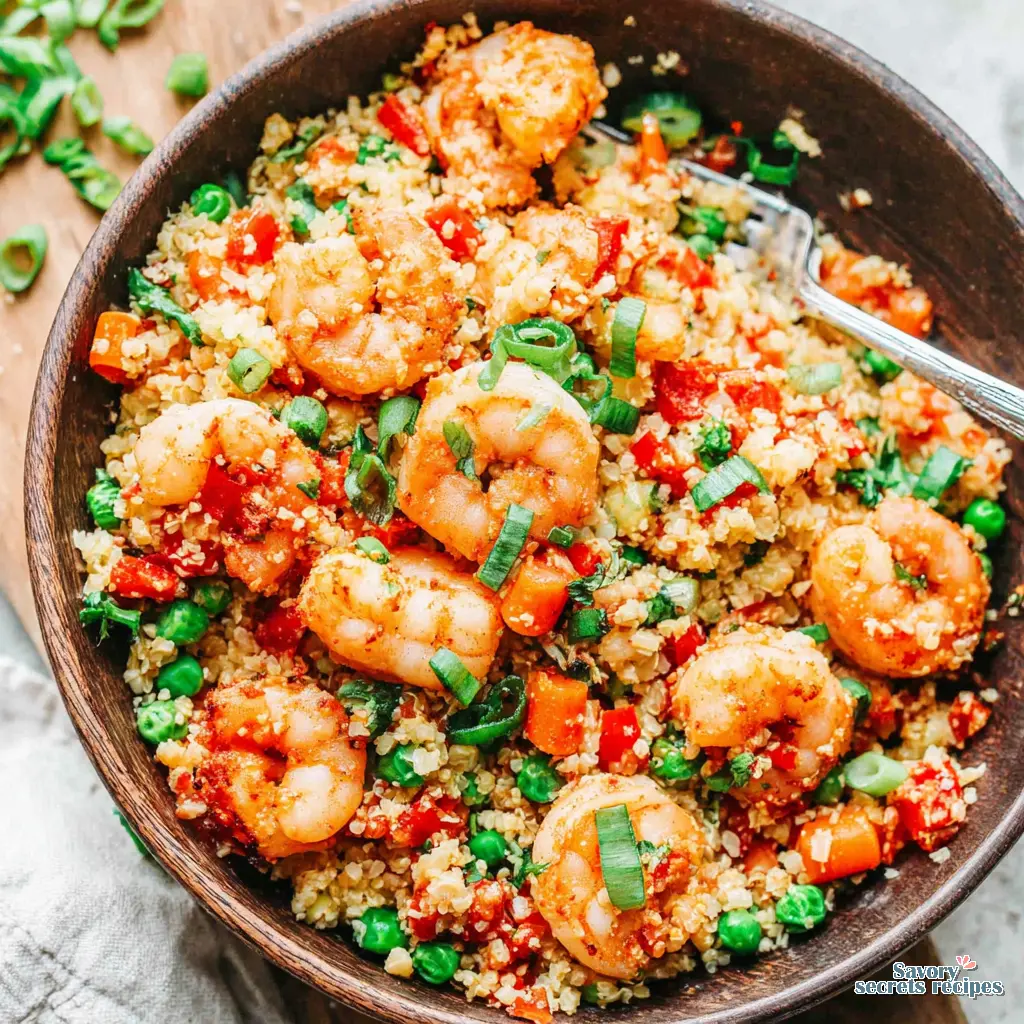
Soy-Free Chinese Shrimp Cauliflower Rice Stir Fry
Ingredients
Method
- Cut the cauliflower into florets.
- Pulse cauliflower florets in a food processor until rice-sized, then set aside.
- Heat 1 tablespoon oil in a large pan or wok over medium-high heat.
- Add shrimp to the heated oil and season with salt and pepper.
- Cook shrimp for 2 to 3 minutes, until pink and opaque.
- Remove shrimp from the pan and set aside.
- Place the pan back over medium-high heat.
- Pour eggs into the pan and quickly scramble.
- Remove from the pan and set aside.
- Place the pan back over medium-high heat and heat the remaining oil.
- Add the white parts of the green onions and sauté for 30 seconds.
- Stir in garlic and ginger, and cook for 30 seconds, or until fragrant.
- Add the carrots and peppers; cook until crisp-tender, about 3 minutes.
- Add the peas and cauliflower "rice," then stir to combine.
- Reduce heat to medium and cook for 4 more minutes, stirring occasionally.
- Stir in the cooked eggs, shrimp, and soy sauce.
- Taste and add more soy sauce, if needed.
- Garnish with basil leaves and serve.
Nutrition
Notes
Craving Takeout? Try This Healthy Cauliflower Rice Shrimp Bowl Chinese!
You know those nights? It’s been a long day, maybe you’ve just battled the traffic on the 405, and all you can think about is ordering in. That classic Chinese takeout shrimp fried rice sounds incredible. But then, you think about how you’ll feel afterward. The heavy feeling, the sodium, the carbs. I’m telling you, I’ve been there so many times.
Here’s what I’ve found works: a healthy, homemade alternative that genuinely hits those savory, umami notes. This cauliflower rice shrimp bowl Chinese recipe is seriously simple, and you won’t believe how quick it comes together. It’s a total takeout fakeout, but it’s actually good for you, low carb, and completely soy-free.
During these mild LA spring evenings, when you want something light but still satisfying, this bowl is a game-changer. It means you can enjoy those beloved Chinese inspired flavors without any of the guilt. I mean, who doesn’t want that on a busy weeknight?
What You’ll Need: Key Ingredients for Your Bowl
The beauty of a good stir-fry, or in this case, a healthy shrimp stir fry, is that the ingredients do most of the work if you let them. We’re talking fresh, vibrant vegetables and quick-cooking shrimp. You’ll want about a pound of shrimp, peeled and deveined. Frozen shrimp works perfectly here, just make sure to thaw it properly first. I usually grab a bag from Ralphs or Trader Joe’s during my weekly run.
For the ‘rice’ part of our cauliflower rice shrimp bowl Chinese, you’ll need cauliflower rice. Most grocery stores sell it pre-riced in bags, which saves a ton of time. But if you prefer to use a whole cauliflower, you can rice it yourself using a food processor or a cheese grater. It’s a good alternative, and you’ll know exactly what’s in it.
Our soy free stir fry sauce is built on coconut aminos, which gives you that delicious umami without the soy. You’ll also need some garlic, fresh ginger (or ground, that tracks with what I’ve seen in a pinch), eggs, and a colorful mix of veggies like diced carrots, red bell pepper, and fresh or frozen peas. Green onions and fresh basil leaves for garnish are a must, in my experience.
The Method: Easy Step-by-Step for Your Shrimp & Cauliflower Rice Stir Fry
Making this shrimp fried cauliflower rice isn’t complicated, but there are a few things that’ll make all the difference. First up, the shrimp. You want them perfectly cooked, not rubbery. Toss them with a little salt and fresh ground pepper before they hit the pan. You’ll know they’re ready when they curl into a C-shape and turn opaque, usually just a couple of minutes per side.
Next, the cauliflower rice. This is where people sometimes get nervous about soggy cauliflower rice. Here’s the secret: use a hot pan or wok, don’t overcrowd it, and let it cook without too much stirring at first. My grandmother, Fatoumata, used to say about her rice, ‘So each grain remembers it’s separate.’ That always stuck with me. You’re aiming for slightly tender, not mushy. I mean, it’s not traditional fried rice, but it’s a fantastic low carb shrimp recipe.
The stir-fry itself is all about layering flavors. You’ll cook your veggies until they’re tender-crisp, then add the aromatics like garlic and ginger. Trust your nose on this one; when that garlic-ginger aroma hits, now we’re talking. Finally, you’ll add the eggs and the cauliflower rice, tossing everything with that amazing coconut aminos sauce. It’s truly a quick weeknight dinner.
Amara’s Pro Tips for a Perfect Cauliflower Rice Shrimp Bowl Chinese
Getting this cauliflower rice shrimp bowl just right comes down to a few small things that make a big impact. One common concern is getting that ‘wok hei’ flavor at home. While you probably won’t get a full-on smoky char without a commercial burner, high heat is your friend. Make sure your pan or wok is screaming hot before you add anything. That’s a good question, actually, about how to replicate it. It depends on what you’re going for, but high heat is the closest we’ll get.
Don’t overcrowd the pan. Seriously, I can’t stress this enough. If you put too many ingredients in at once, the temperature drops, and everything steams instead of stir-fries. You’ll end up with soggy veggies and rice, and nobody wants that. If you’re doubling the recipe to serve four to six people, you’ll need a bigger pan, and you might have to cook in batches. A few minutes cooking time will need to be added also because a large quantity takes a little longer to cook.
For the best flavor, look for the color change in your garlic and ginger. That’s your signal. You want them fragrant, not burnt. And don’t overcook the shrimp. They go from perfectly tender to tough in a flash. Pull them off the heat as soon as they’re done, even if you’re adding them back to the stir-fry later. This is just based on my own testing, but it makes a huge difference to the final texture of your healthy takeout style shrimp bowl.
Serving It Up: Ideas for Your Healthy Takeout Style Shrimp Bowl
Once your cauliflower rice shrimp bowl Chinese is ready, it’s time to serve it up. This dish is vibrant and colorful, so a simple bowl works beautifully. Garnish with plenty of fresh green onions and those basil leaves. I like to add a drizzle of sesame oil dressing right before serving for an extra layer of nutty flavor. It’s a protein rich meal that feels substantial without being heavy.
If you’re making this for a casual family dinner, it’s enough for two large portions if this is your whole meal. It is enough for four if you are serving other things for dinner, like maybe some steamed edamame or a crisp cucumber salad. The beauty of this easy cauliflower rice recipe is its versatility. It’s a complete meal on its own, perfect for a busy parent recipe, but also plays well with others.
Sometimes, I’ll add a few slices of fresh California avocado on top for a creamy counterpoint, especially since we’re in LA and avocados are always in season here. That tracks with what I’ve seen for adding healthy fats to a keto shrimp bowl. It really elevates the experience and makes it feel a little more special, even though it took hardly any time to prepare.
Mix It Up: Variations & Substitutions for Your Bowl
This chinese shrimp and cauliflower rice recipe is incredibly adaptable, which is one of the reasons I’m genuinely excited about this one. If you’re looking for variations, you could easily swap out the shrimp for other proteins. These would also be amazing with salmon or crab meat, if that’s what you have on hand. For a vegetarian option, try tofu instead of shrimp, or just add more veggies!
Speaking of veggies, feel free to use what’s seasonal and fresh. Asparagus or snap peas would be fantastic additions this time of year, adding a lovely spring crunch. I haven’t worked with every specific variety, though I’d imagine most quick-cooking vegetables would work well. Bell peppers, broccoli florets, or even some thinly sliced cabbage would be delicious. It depends on what you’re going for in terms of texture and flavor.
For dietary adaptations, this recipe is already a great gluten free fried rice alternative because we’re using coconut aminos instead of soy sauce. It’s also a fantastic paleo shrimp recipe. If you’re doing keto, this is obviously a perfect fit. You can adjust the amount of vegetables to fit your carb goals. Fair enough, it’s all about making it work for your family friendly meal prep.
Planning Ahead: Storage & Make-Ahead Tips for Busy Weeknights
One of the best things about this quick cooking shrimp dish is how well it works for meal prep ideas. You can absolutely make a big batch of this cauliflower rice shrimp stir fry on a Sunday and enjoy it throughout the week. For storage, let the bowl cool completely to room temperature before transferring it to airtight containers. I like using glass containers; they just seem to keep things fresher, you know?
You can store this in the refrigerator for up to 3-4 days. When it’s time to reheat, the microwave works well for meal prep. Just pop it in for 1-2 minutes, stirring halfway through, until it’s warmed through. If you want to avoid any potential sogginess, you could reheat it in a skillet over medium heat with a tiny bit of oil. That’s a good question, actually, about keeping the texture.
I wouldn’t recommend freezing the entire prepared bowl, as the cauliflower rice can get a bit watery upon thawing. However, you can prep components ahead of time. Chop all your vegetables and store them in the fridge, mix your soy-free stir fry sauce, and even thaw your frozen shrimp. This way, when dinner time rolls around, it’s truly a one pan meal that comes together in minutes. Seriously, it’ll make your life so much easier.
Frequently Asked Questions About Your Shrimp Fried Cauliflower Rice
Troubleshooting Your Cauliflower Rice Shrimp Stir Fry
Look, even the best cooks run into little issues sometimes. I learned this the hard way with some of my own recipe testing. The thing is, knowing what can go wrong helps you fix it, or better yet, prevent it. This is exactly the sort of thing I love to dig into because it helps everyone cook with more confidence. Your mileage may vary depending on your stove and pan, but these fixes generally track with what I’ve seen.
Common Mistakes & Fixes
Mistake: Your cauliflower rice is watery or mushy.
Solution: This usually happens if the pan wasn’t hot enough, or you crowded it. Cook the cauliflower rice in batches if needed, on high heat, letting moisture evaporate. Don’t overcook; it only needs about 5-7 minutes.
Mistake: The shrimp are tough and rubbery.
Solution: You’ve probably overcooked them. Shrimp cook incredibly fast. Pull them off the heat as soon as they turn pink and opaque. They’ll continue to cook slightly from residual heat.
Mistake: The stir-fry tastes bland.
Solution: Give it time to bloom! Make sure your garlic and ginger are fragrant before adding other ingredients. A pinch more salt, a little extra sesame oil, or a squeeze of fresh Meyer lemon juice can brighten flavors. Also, ensure your coconut aminos sauce is balanced.
Mistake: The vegetables are too soft.
Solution: You might be cooking them too long, or again, overcrowding the pan. Stir-fry vegetables should be tender-crisp. Add them in order of how long they take to cook, with harder veggies like carrots going in first.
I’m not entirely sure, but here’s what I’d try if your homemade stir fry isn’t quite hitting the mark. Don’t be afraid to taste as you go. That’s the best way to adjust seasonings and ensure everything is coming together perfectly. This is just based on my own testing, but it really helps.
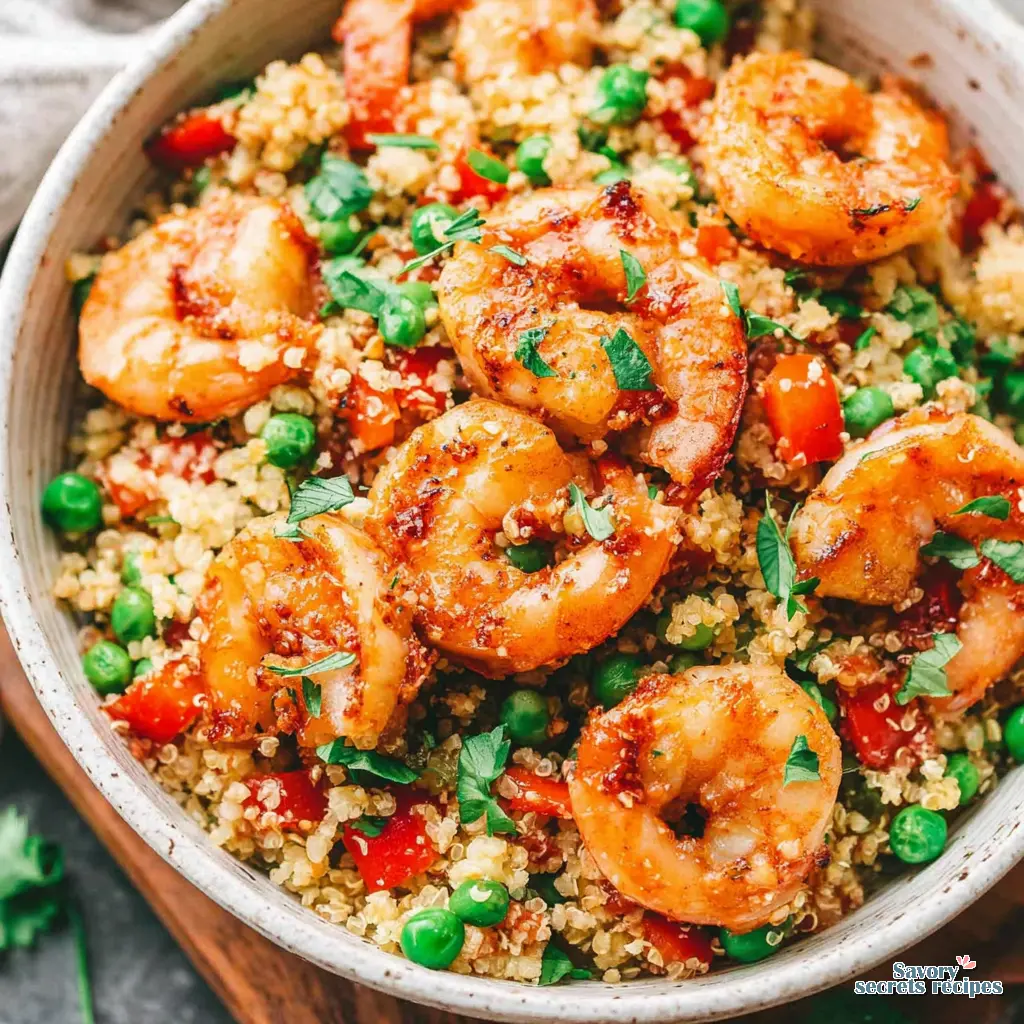
The Final Bite: Enjoy Your Healthy Takeout Fakeout!
When you make this cauliflower rice shrimp bowl Chinese, you’ll feel so proud. Seriously, it’s the kind of meal that makes you wonder why you ever ordered takeout. The aroma of garlic and ginger sizzling, the vibrant colors of the shrimp and vegetables, and that satisfying sizzle in the pan. It’s just a wonderful thing to bring to your table.
Your family will love this healthy alternative, and you’ll love how easy it was to get a delicious, wholesome meal on the table. It’s that guilt-free indulgence we all crave. This is the kind of ingredient that changes how you cook, giving you so much versatility.
So go ahead, grab your ingredients on your next Trader Joe’s run. You’ve got this. Let me know how your family loved it, or tag me in your photos! I share tons of variations on Pinterest if you want ideas.
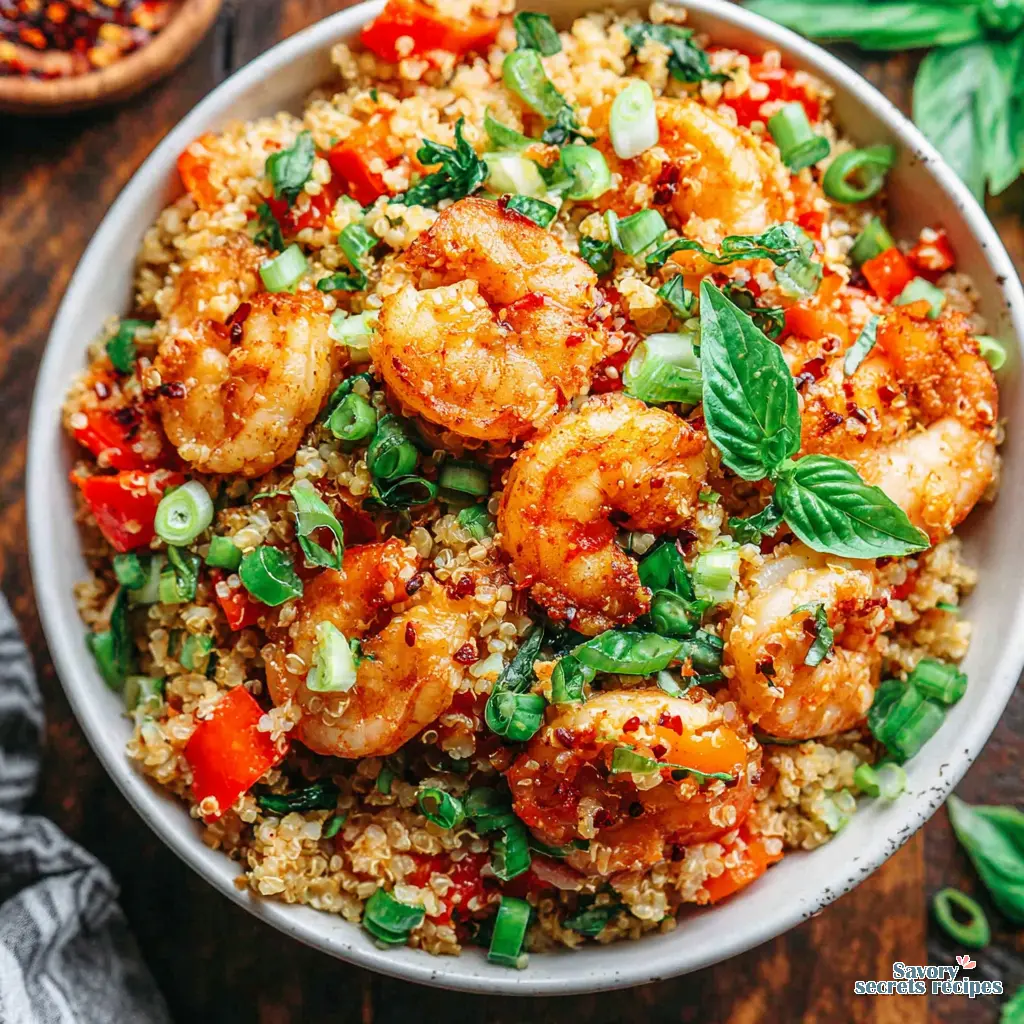
Source: Nutritional Information
Can I make cauliflower rice shrimp bowl chinese ahead of time?
Absolutely! This cauliflower rice shrimp bowl Chinese is fantastic for meal prep. Just cook it as directed, let it cool completely, then store in airtight containers in the fridge for up to 3-4 days. It reheats beautifully, making busy weeknights a breeze.
How do I store leftover cauliflower rice shrimp bowl chinese?
Store any leftover shrimp fried cauliflower rice in an airtight container in the refrigerator for up to 3-4 days. For reheating, a microwave works fine for about 1-2 minutes, stirring halfway. Or, for a better texture, warm it in a skillet over medium heat with a splash of oil.
How do you make your cauliflower rice? Do you chop on your own or use a food processor?
I usually buy pre-riced cauliflower in bags from the grocery store to save time. It’s so convenient! But you can definitely make it yourself. A food processor with the grating attachment works wonderfully, or you can use a box grater for a slightly coarser texture. Fair enough, either way works for this easy cauliflower rice.
Is cauliflower rice healthy for weight loss?
Yes, cauliflower rice is a fantastic healthy alternative for weight loss. It’s much lower in calories and carbs than traditional rice, while still providing fiber and nutrients. This cauliflower rice shrimp bowl Chinese offers a satisfying, protein-rich meal that helps you feel full without the extra calories.
Will frozen rice work for fried rice?
If you’re talking about frozen cauliflower rice, then yes, it works perfectly for this shrimp fried cauliflower rice! Just make sure to cook it until it’s tender-crisp and not mushy. If you mean actual frozen white rice, I’d suggest thawing it first and then following the cooking method for the cauliflower rice for best results.
Does cauliflower rice get mushy?
It can, and that’s a common concern! The secret to preventing soggy cauliflower rice is not to overcrowd your pan and to cook it over high heat, stirring occasionally, until it’s just tender. Don’t overcook it. It’s not entirely sure, but that’s what I’ve found works best.