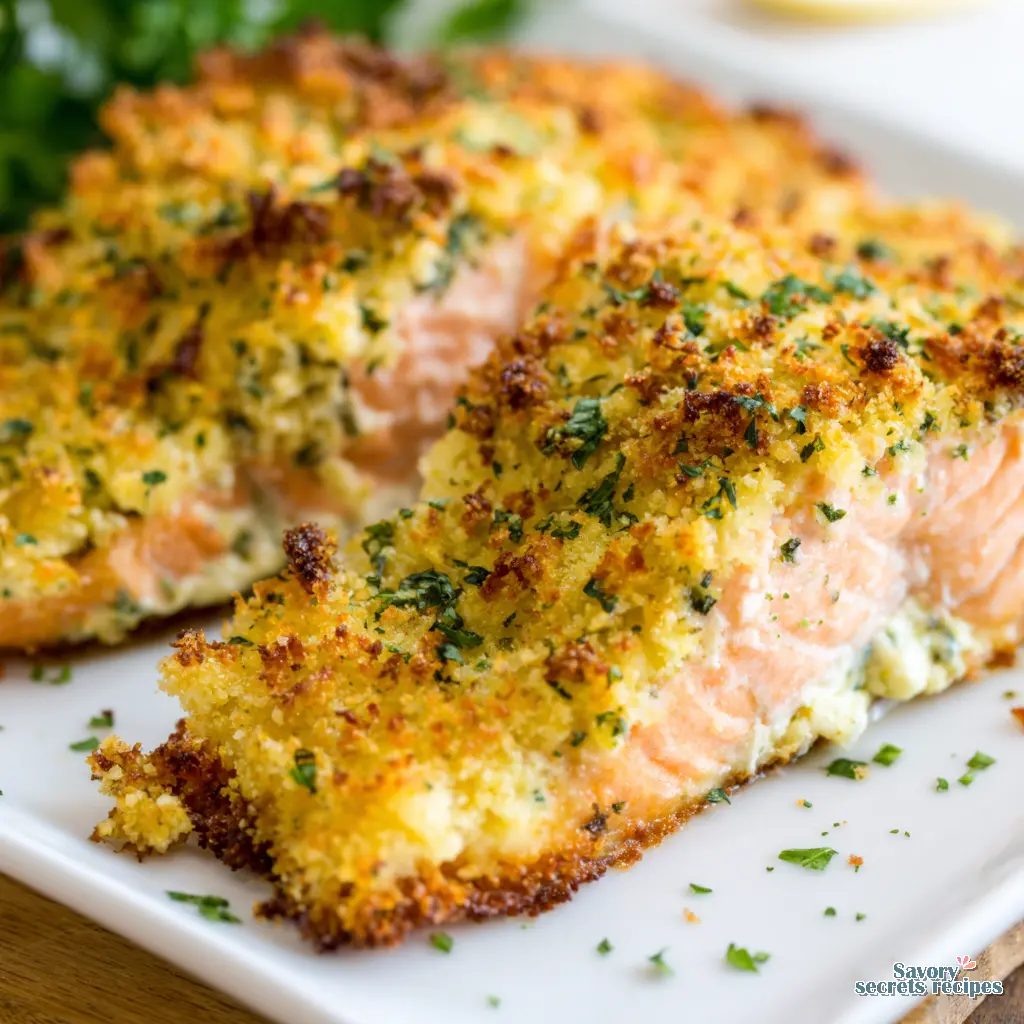
Crispy Parmesan Crusted Salmon with Cream Cheese
Ingredients
Method
- Preheat oven to 400°F (200°C). Smear 2 tbsp of butter on the bottom of a shallow oven-safe dish large enough for 3 salmon fillets.
- Generously season the salmon fillets with salt, black pepper, and 1 tbsp Italian seasoning. Place them in the prepared dish and set aside. In a small bowl, combine panko bread crumbs, Parmesan cheese, garlic, 1 tbsp Italian seasoning, parsley, and butter. Mix until combined.
- Distribute the mixture evenly over the salmon fillets. Top with additional Parmesan cheese as desired. Bake for 12-15 minutes, or until the salmon is cooked through and the crust is golden. If the crust needs more browning, broil for 1-2 minutes, then remove. Serve immediately.
Nutrition
Notes
Why You’ll Want This Crispy Parmesan Crusted Salmon with Cream Cheese
You know that feeling, right? It’s a busy weeknight, maybe you just got home from a Trader Joe’s run, and you want something truly special for dinner. Not just ‘good enough,’ but something that feels like a treat, something that sparks a little joy. That tracks with what I’ve seen in my own kitchen, especially during these milder Los Angeles spring evenings when you want something comforting but not heavy.
I think we all crave that moment when a dish genuinely impresses, but without the complicated fuss. This crispy parmesan crusted salmon with cream cheese is exactly that kind of recipe. It promises a golden, crunchy exterior that shatters beautifully, giving way to a moist, flaky salmon fillet, all cradling a rich, herbed cream cheese filling. It’s genuinely interesting how a few simple techniques can elevate a weeknight meal to something so memorable.
I mean, who doesn’t love a dish that looks like it took hours but actually comes together quite quickly? This recipe delivers on that promise, giving you restaurant-quality results right at home. It’s perfect for a spring dinner party or just a luxurious meal for yourself when you’re tired from that holiday traffic, offering a delightful contrast of textures and flavors.
The Science Behind the Crispy Parmesan Crusted Salmon and Cream Cheese
Let’s talk ingredients. Creating truly exceptional food, even something as seemingly straightforward as crispy parmesan crusted salmon and cream cheese, often comes down to understanding the components. We’re aiming for a symphony of textures and flavors here: a perfectly crisp crust, moist salmon, and a creamy, savory filling. This isn’t just about throwing things together; it’s about making informed choices.
For the salmon, fresh fillets are ideal, of course. I prefer wild-caught, if you can find it at your local Whole Foods Market or farmers’ market, as the flavor tends to be richer. Worth noting here, you’ll want boneless, skin-on or skin-off fillets, depending on your preference. I usually remove the skin because I’m focused on that top crust, but if you like crispy skin, leave it on and cook skin-side down first for a few minutes.
The cream cheese filling is where the magic really happens for this particular recipe. I like a full-fat cream cheese for that unctuous texture, but you could use a reduced-fat version if you prefer; just be aware it might release a bit more moisture. We’ll be blending it with fresh herbs and garlic, and I’ll explain later how to make sure it stays put and doesn’t leak out during baking. That said, the herbs are key. I’m using a mix of fresh parsley and dill, which are lovely this time of year, but you’ve got room to adapt.
Essential Equipment for Your Crispy Salmon
You don’t need a professional kitchen to make this dish, fair enough? But having the right tools can make a big difference in achieving that perfect crispy parmesan crusted salmon using cream cheese. I’m not entirely convinced that fancy gadgets are always necessary, but some basics are truly helpful.
First, a good baking sheet is essential. I like a heavy-duty, light-colored aluminum sheet because it conducts heat evenly and prevents the bottom of your crust from burning. You’ll also want some parchment paper or a silicone baking mat for easy cleanup and to prevent sticking. A small mixing bowl for your cream cheese filling and another for the parmesan crust mixture will be handy.
And, of course, a reliable instant-read meat thermometer. This is genuinely interesting, because it takes the guesswork out of cooking fish, ensuring it’s perfectly done and moist every single time. My nani in Chandigarh taught me to temper spices by sound and smell, not timers, but for proteins, the data on internal temperature is actually quite clear. I also recommend a sturdy spatula for transferring the delicate salmon fillets to plates without breaking that beautiful crust.
How to Make That Perfect Crispy Parmesan Crusted Salmon with Cream Cheese
Alright, let’s get into the nitty-gritty of making this incredible crispy parmesan crusted salmon with cream cheese. The process is simpler than you might think, but a few key steps make all the difference. I’ll break it down for you, focusing on the ‘why’ behind each action, which is something I always appreciated in my own cooking journey.
Preparing the Salmon and Cream Cheese Filling
First things first, you’ll want to pat your salmon fillets super dry with paper towels. This isn’t being fussy, it’s the difference between a crust that adheres beautifully and one that slides right off. Excess moisture creates steam, which is the enemy of crispiness. Once that’s done, you’ll lightly season your salmon with salt and pepper. To be clear, we’re building layers of flavor here.
Next, the cream cheese filling. You’ll want your cream cheese softened slightly so it’s easy to mix, but not completely warm. Combine it with your minced garlic, fresh herbs (I’m using parsley and dill, but chives or a little marjoram would be lovely too), a pinch of salt, and a grind of black pepper. Mix it until it’s smooth and well combined. This is your creamy salmon filling, and it’s going to provide that luscious counterpoint to the crispy crust.
Assembling Your Stuffed Salmon Recipe
Now, for the assembly, and this is where we prevent that beautiful herbed cream cheese salmon from leaking. You have a couple of options. For a truly stuffed salmon recipe, you can carefully cut a pocket into the side of each salmon fillet, being careful not to cut all the way through. Then, gently spoon the cream cheese mixture into this pocket. Don’t overfill it, or it’ll burst during baking. That tracks with what I’ve seen in my own kitchen; less is often more when it comes to stuffing.
Alternatively, for an easier stuffed salmon, you can simply spread the cream cheese mixture generously over the top of each fillet. This creates a creamy base for our parmesan crust. I’d want to see more research before definitively saying one method is “better” for crispiness, but both approaches yield delicious results. Just make sure the cream cheese is a relatively thin, even layer if you’re spreading it on top, so it doesn’t overwhelm the fish.
Creating the Crispy Topping Salmon
The parmesan crust technique is what makes this dish shine. In a shallow dish, combine your panko breadcrumbs, grated Parmesan cheese, a little garlic powder, and a drizzle of olive oil or melted butter. Panko breadcrumbs are chunkier than normal ones, and that makes a better crust. This is genuinely interesting because the larger surface area allows for more crisping. If you’re using freshly grated Parmesan, you might need a bit more than store-bought, as it’s less dense.
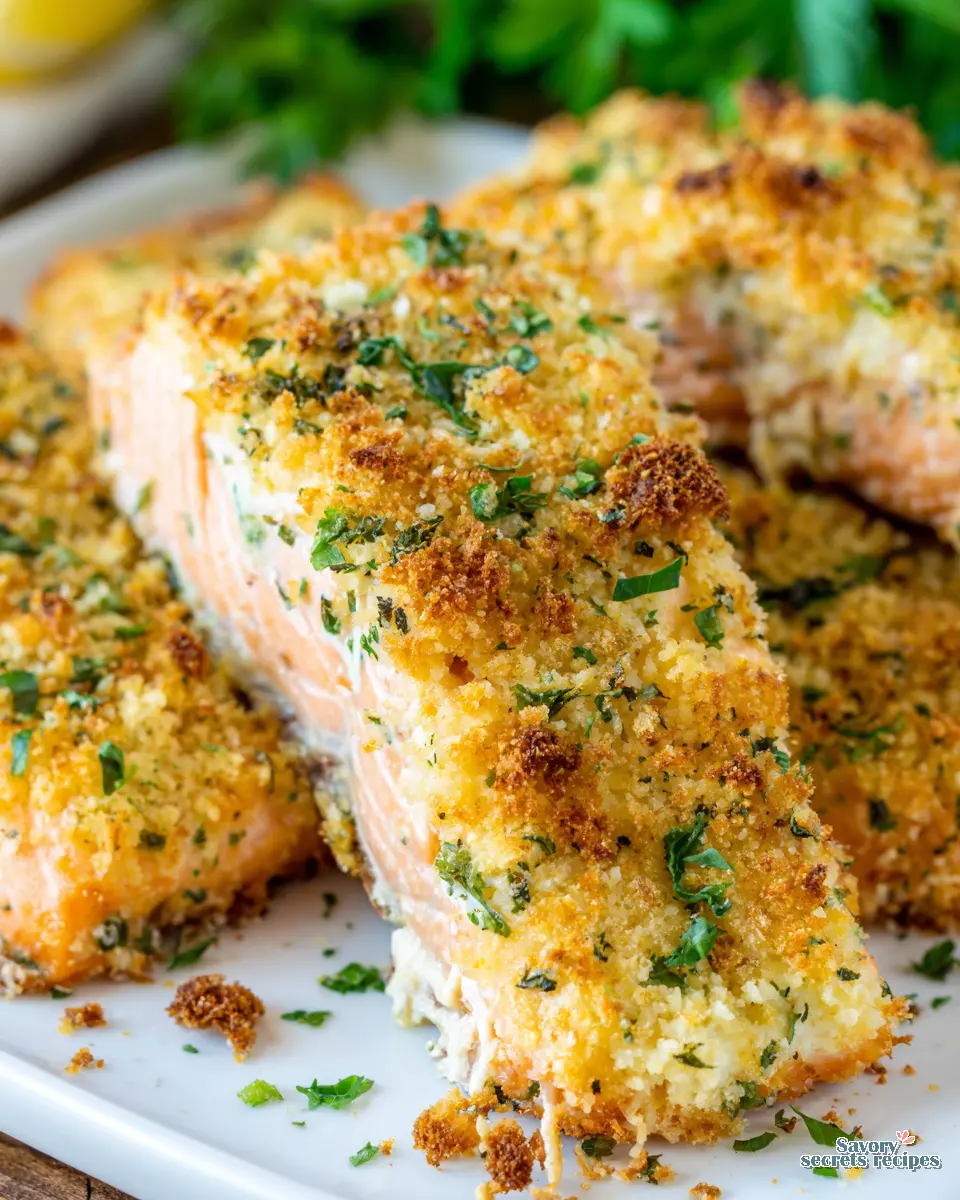
Gently press this mixture onto the cream cheese-coated or stuffed salmon fillets. You want to pat the crust on lightly, but don’t compact it. We’re aiming for a light, airy texture that crisps up beautifully, not a dense, heavy layer. Place the crusted salmon on your prepared baking sheet. We’re almost there! The anticipation for that golden brown crust is real.
Tips for Crispy Perfection and a Moist Salmon Recipe
Achieving that dream combination of a crispy parmesan crusted salmon and a moist, flaky interior isn’t difficult, but it does benefit from a few expert insights. I’ve learned these from, well, a lot of testing, and sometimes from making mistakes myself. For instance, I once tried to make my nani’s achaar from memory without calling her for the recipe. I under-salted it, and it spoiled within a week. Turns out the salt concentration isn’t just for flavor; it’s a preservative that controls microbial growth. I knew this intellectually from food science, but I’d gotten cocky. Called my nani, got the proper ratio, started over. So, trust the science, and these tips!
The Art of the Crispy Crust
To ensure a beautiful, evenly golden crust without overcooking the salmon, lightly toast your panko breadcrumbs on a baking tray for a few minutes before mixing them with the Parmesan. This is a game-changer for color and crunch. Another trick for a darker, extra crispy crust? Broil for the last 1-2 minutes of baking, watching it closely to prevent burning. Do this when your salmon is about 5-8 degrees below its target temperature.
Ensuring Perfectly Cooked, Moist Salmon
Bake your salmon based on its thickness. A good rule of thumb is 4-6 minutes per half-inch of thickness. This ensures a moist and flaky fish without drying it out. Individual fillets will bake about 4-5 minutes faster than a larger piece, so adjust accordingly. And please, use that meat thermometer! You’re aiming for 125-130°F (52-54°C) for medium-rare, 130-135°F (54-57°C) for medium, or 140-145°F (60-63°C) for well-done. The data on this is actually quite clear.
Once it’s out of the oven, let the salmon rest for a few minutes before serving. This allows the juices to redistribute throughout the fish, resulting in a more moist and flavorful end product. I mean, you could skip this, but it’s such a simple step for a big payoff. Let it develop some fond.
Variations & Cream Cheese Swaps for Your Dinner Party Salmon
This crispy parmesan crusted salmon using cream cheese is fantastic as is, but it’s also a great framework for creativity. That’s one of my personal preferences, actually; I like recipes that give me room to adjust. We can explore some delicious variations and even some cream cheese substitutes if you’re looking to mix things up for your next dinner party salmon or even a weeknight gourmet meal.
Flavor Twists for the Creamy Salmon Filling
For a spicy twist, sprinkle some crushed red pepper flakes or cayenne pepper into your cream cheese mixture. If you’re a fan of lemon, a teaspoon of lemon zest or a squeeze of lemon juice in your garlic herb cream cheese can brighten the flavors beautifully. I’ve also tried adding finely chopped sun-dried tomatoes to the cream cheese, which gives it a lovely tang and a pop of color. To be clear, these are additions to the base, not replacements for the cream cheese itself. If you’re exploring other savory additions, a crispy parmesan crusted salmon with mushrooms offers another delightful flavor profile.
Crust and Herb Alternatives
While panko is my go-to for that ideal crispy topping salmon, you could try crushed rice Chex cereal for a gluten-free option, or even very finely chopped almonds for a nutty flavor. For the herbs, feel free to swap parsley and dill for basil, marjoram, or even some fresh chives. Dried herbs work too, but I’d suggest using about 2 teaspoons of dried for every 2 tablespoons of fresh. In practical terms, the fresh herbs just have a more vibrant flavor, but dried will do in a pinch.
Cream Cheese Substitutes and Dietary Adaptations
If cream cheese isn’t your preference, you could try a blend of ricotta and a little goat cheese for a different creamy fish recipe. The evidence here is mixed on how well other cheeses hold up to the heat without leaking, but a good quality, thicker ricotta could work. For a dairy-free version of this crispy parmesan crusted salmon with cream cheese, plant-based cream cheese alternatives are readily available at stores like Whole Foods Market or Ralphs. Pair it with gluten-free breadcrumbs and vegan Parmesan or nutritional yeast for a delicious plant-based crust.
What to Serve with Your Rich and Savory Salmon
When you’ve got a show-stopping dish like crispy parmesan crusted salmon with cream cheese, you want sides that complement it without overpowering. This rich and savory salmon deserves pairings that balance its indulgence, making it a perfect family dinner idea or seafood main course.
During these spring months in Los Angeles, I love pairing it with fresh, seasonal vegetables. Think roasted asparagus spears, steamed green beans with a squeeze of Meyer lemon, or even a light spring salad with a tangy vinaigrette. These lighter options cut through the richness of the creamy salmon filling beautifully. That makes good sense when you think about it from a flavor balance perspective.
If you’re looking for something a bit more substantial, roasted baby potatoes, mashed potatoes, or even some fluffy basmati rice would be wonderful. I’ve also served it alongside creamed spinach, which is an indulgent pairing but oh-so-delicious. For a true farm-to-fork experience, grab some fresh produce from your local Santa Monica Farmers Market and see what inspires you!
Storage & Reheating Tips for Crispy Parmesan Crusted Salmon with Cream Cheese
So, you’ve made this incredible crispy parmesan crusted salmon with cream cheese, and maybe you have some leftovers. Fair enough, it happens! Storing and reheating this dish correctly is key to maintaining its deliciousness and, crucially, that crispy texture.
Storing Leftovers
Any leftover crispy parmesan crusted salmon should be stored in an airtight container in the refrigerator. It will keep well for up to 3 days. I’d want to see more research before recommending longer than that, just to be safe. If you’re planning on making this ahead, you can prepare the crumb and cream cheese components up to 2 days in advance and store them separately in the fridge. Do not put the crumb mixture on the salmon then refrigerate it uncooked; it will draw moisture out of the salmon and into the crumb mixture, leading to a soggy crust. That tracks with what I’ve seen.
Reheating for Crispness
Reheating salmon can be tricky, as it tends to dry out. For the best results with your crispy parmesan crusted salmon cream cheese leftovers, I recommend reheating individual portions in an air fryer at 320°F (160°C) for 5-8 minutes, checking until warmed through and the crust is crisp again. Alternatively, you can use a conventional oven at 300°F (150°C) for 10-15 minutes. For a really dark, extra crispy finish, broil for just 1-2 minutes at the very end, but watch it like a hawk!
You can also enjoy this dish chilled straight from the refrigerator, perhaps flaked over a salad. For picnics or serving cold, bake the salmon plain, cool it, and wrap it. Toast the panko crumbing separately, cool it, and seal it. Assemble just prior to serving. The salmon and sauce are best served at room temperature rather than completely cold, in my opinion, for optimal flavor. This is where it gets complicated, trying to balance crispiness with temperature for different serving styles.
Frequently Asked Questions About Crispy Parmesan Crusted Salmon
Common Mistakes & Fixes for Crispy Parmesan Crusted Salmon
Common Mistakes & Fixes
Mistake: The crispy parmesan crusted salmon crust isn’t sticking.
Solution: You probably didn’t pat the salmon dry enough. Moisture is the enemy of adhesion here. Also, ensure the cream cheese layer is thin and even. I learned this the hard way once, trying to rush things.
Mistake: The cream cheese filling leaks out.
Solution: This usually happens from overfilling the pocket or spreading the cream cheese too thickly on top. Keep the filling modest, and ensure your salmon pocket isn’t cut all the way through. Chilling the cream cheese mixture for 15 minutes before stuffing can help too.
Mistake: The salmon is dry.
Solution: Overcooking is the culprit here. Use a meat thermometer! Bake based on thickness, and pull it from the oven when it reaches your desired internal temperature, around 125-135°F (52-57°C). Remember to let it rest.
Mistake: The crust is soggy or not golden brown.
Solution: Make sure you’re using panko breadcrumbs for better texture. Lightly toasting them beforehand ensures even browning. Also, avoid overcrowding the baking sheet, as this can trap steam. If it’s still pale, a quick broil at the end works wonders.
Mistake: The crust is too salty.
Solution: You might be using salted butter in the crust mixture or adding too much salt to the cream cheese. Use unsalted butter for the crust, and taste and adjust as you go for the filling. My nani always said to taste everything; that’s good advice.
Ready to Impress with Your Crispy Parmesan Crusted Salmon?
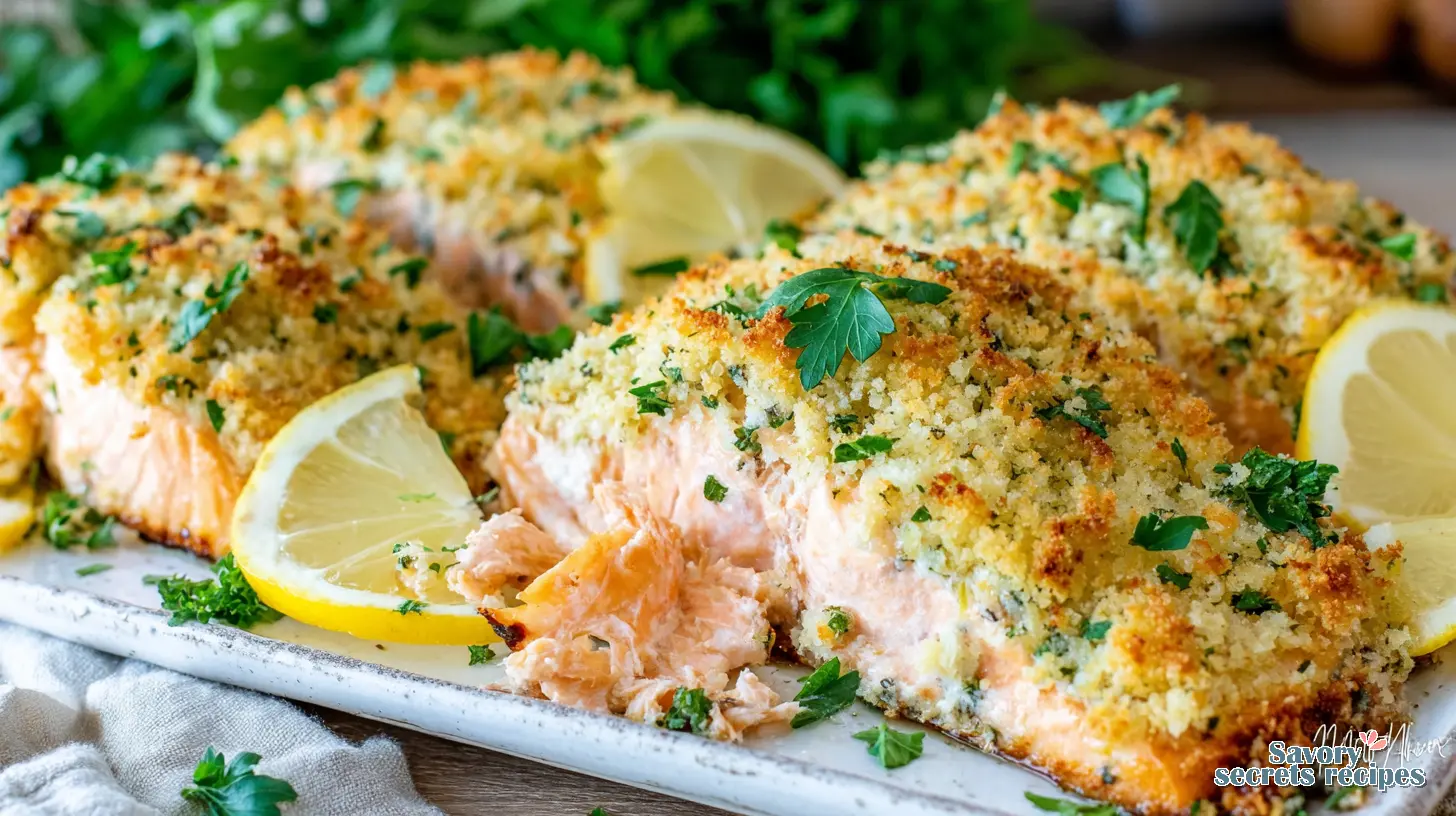
When you pull this masterpiece of crispy parmesan crusted salmon with cream cheese from the oven, you’ll know exactly what I mean. That golden-brown crust, the aroma of garlic and herbs, and the promise of moist, flaky salmon with a creamy center. It’s truly satisfying to create something so impressive with techniques that are, honestly, quite straightforward once you understand the basics.
I’m impressed by how well this holds up as a dish that feels both indulgent and achievable. It’s perfect for those evenings when you want to elevate your meal without spending hours in the kitchen. So, go ahead and grab some fresh salmon on your next trip to Ralphs or your local farmers’ market. You’ve got this!
If you’re looking for more delicious and scientifically sound recipes, browse my Pinterest for related ideas and culinary inspiration.
Source: Nutritional Information
How do you achieve a perfectly crispy parmesan crusted salmon using cream cheese?
The secret to a perfectly crispy crust on your crispy parmesan crusted salmon using cream cheese lies in patting the salmon dry, using panko breadcrumbs, and baking at a higher temperature. A quick broil at the very end can also enhance that golden-brown crispiness. Don’t compact the crust too much; keep it light for best texture.
What kind of cream cheese works best for a crispy parmesan crusted salmon cream cheese filling?
I recommend using full-fat cream cheese for your crispy parmesan crusted salmon cream cheese filling. It provides the richest, creamiest texture and is less likely to release excess moisture during baking, which could compromise your crispy crust. Make sure it’s softened slightly for easy mixing with herbs and garlic.
Can I make crispy parmesan crusted salmon without cream cheese?
Absolutely! While the cream cheese adds a lovely richness, you can certainly make a delicious crispy parmesan crusted salmon without it. Simply skip the cream cheese layer and apply the parmesan-breadcrumb crust directly to the seasoned salmon. You’ll still get a fantastic crispy topping salmon with moist fish.
What are the best side dishes to serve with crispy parmesan crusted salmon?
For this rich and savory salmon, I suggest lighter sides to balance the meal. Roasted spring vegetables like asparagus or green beans, a fresh garden salad, or a simple rice pilaf are excellent choices. A lemon dill cream cheese sauce could also be served on the side, but it’s not strictly necessary.
How do you store and reheat crispy parmesan crusted salmon to maintain its crispiness?
Store leftovers in an airtight container in the fridge for up to 3 days. To reheat and maintain crispiness, use an air fryer at 320°F (160°C) for 5-8 minutes, or an oven at 300°F (150°C) for 10-15 minutes. A quick broil for 1-2 minutes at the end can revive the golden-brown crust.
Is there a nondairy version of this crispy parmesan crusted salmon with cream cheese?
Yes, you can adapt this crispy parmesan crusted salmon with cream cheese to be dairy-free. Use plant-based cream cheese, plant-based butter or avocado oil, and either vegan Parmesan or nutritional yeast for the crust. Gluten-free breadcrumbs will also ensure it’s suitable for gluten-free diets.
Do you thaw frozen salmon before baking?
Yes, you should always thaw frozen salmon completely before baking it. Thaw it overnight in the refrigerator or, for a quicker method, place the sealed salmon in a bowl of cold water, changing the water every 30 minutes until thawed. Baking from frozen can result in uneven cooking and a dry exterior.
What is the internal temperature for cooked fish?
The U.S. FDA recommends cooking fish to an internal temperature of 145°F (63°C). However, for salmon, many chefs prefer a slightly lower temperature for a more moist and tender result, around 125-135°F (52-57°C), as it will continue to cook a bit after being removed from the oven. Use an instant-read thermometer to check.
Can the same coating be used to bake chicken breast?
That’s a really interesting question! While I haven’t specifically tested this crispy parmesan crusted salmon coating on chicken breast, I don’t see why it wouldn’t work. Chicken breast might need a longer baking time than salmon, or you could pre-cook the chicken slightly. I’d want to see more research before giving definitive cooking times, but in theory, the parmesan crust technique should be quite delicious with chicken. Give it a try!