



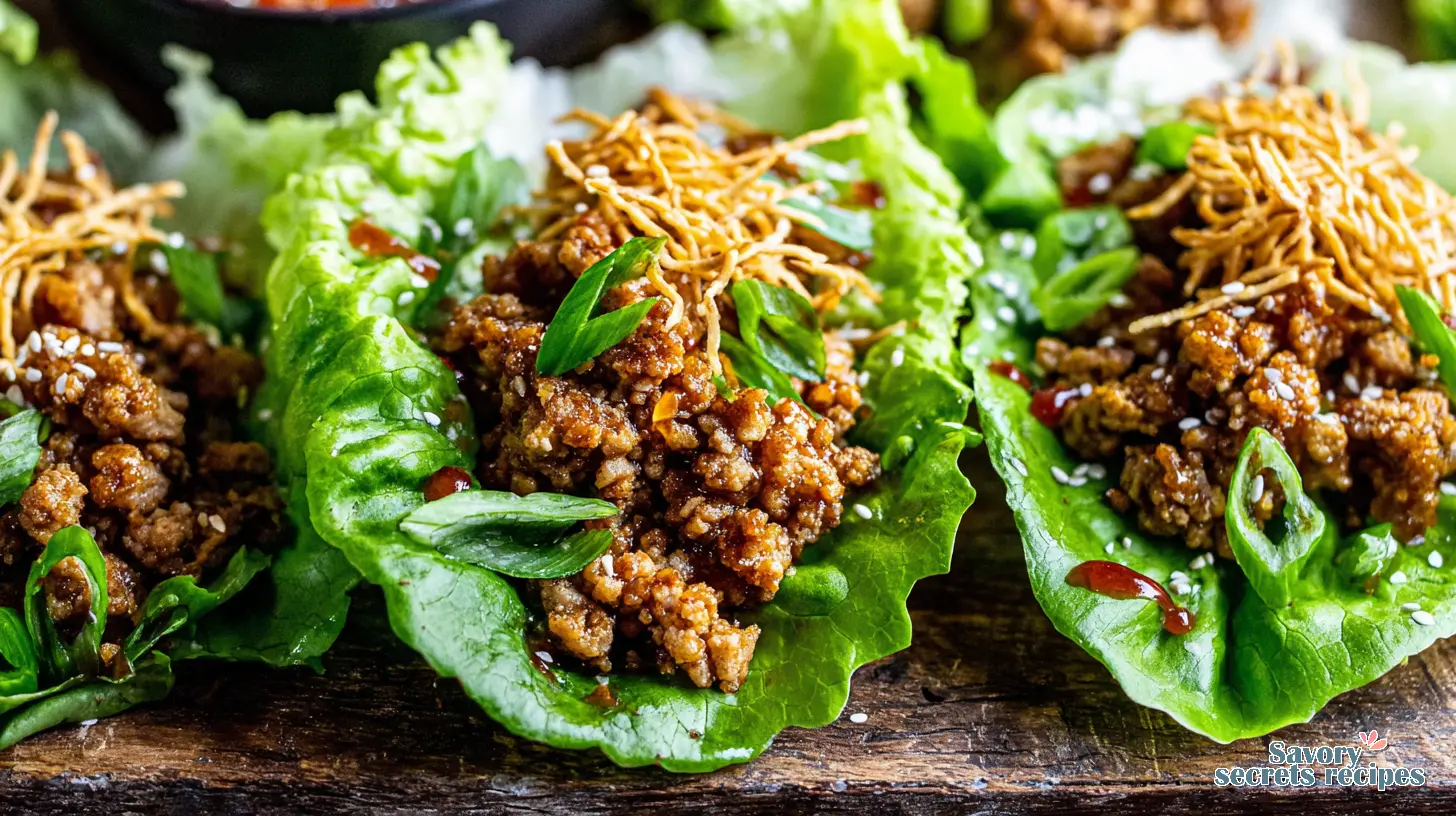
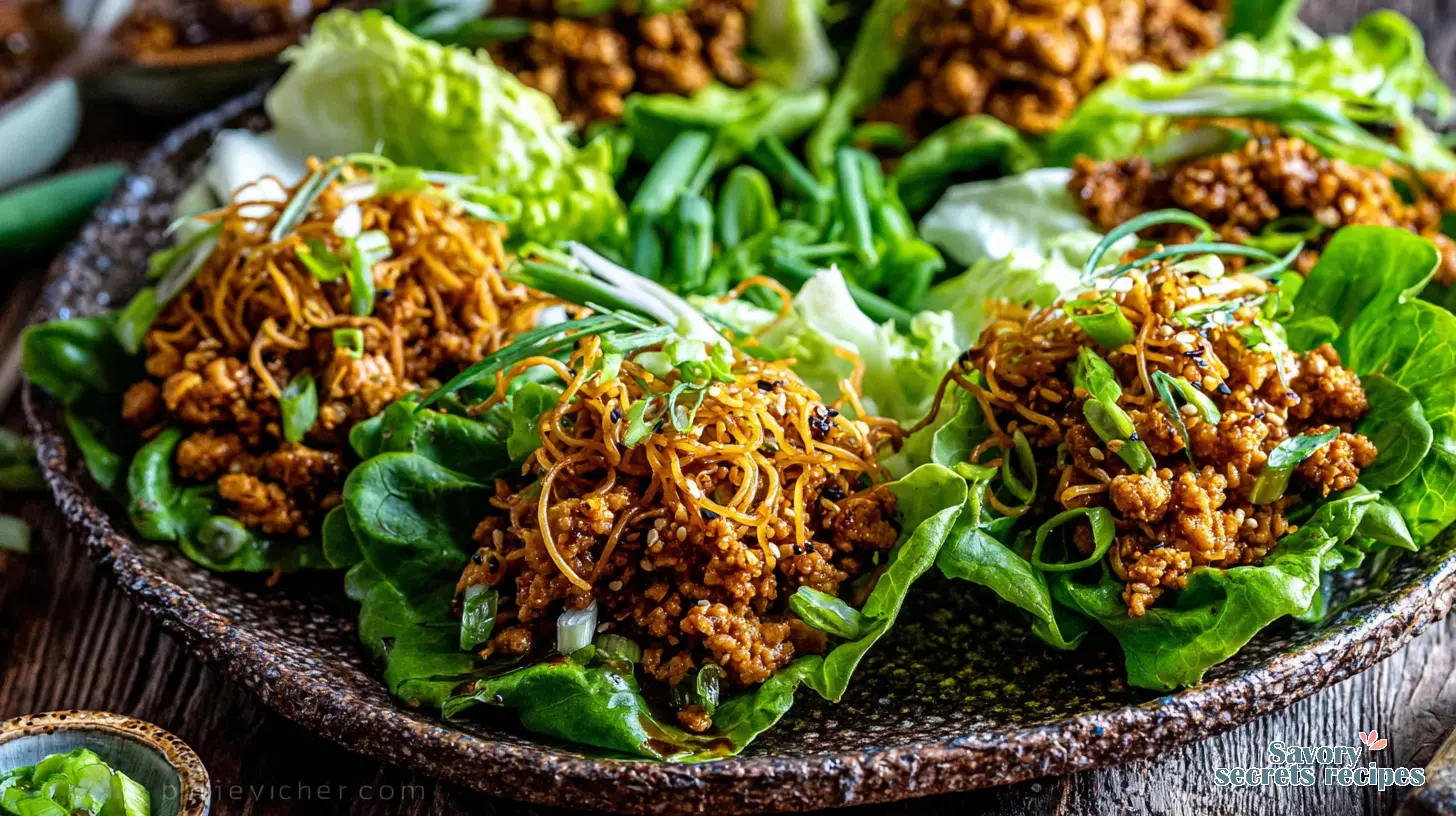
Crispy Noodle Chicken Lettuce Wraps Recipe
Ingredients
Method
- Heat oil in a small saucepan over medium heat.
- Once hot, add a small handful of thin rice noodles, which will fry instantly. Flip over and then remove from the oil immediately and set aside on a napkin lined plate.
- Heat a large skillet over medium-high heat. Add the oils once hot and then add the ground chicken.
- Cook over medium-high heat until chicken is almost cooked through; stirring intermittently with the meat chopper to properly crumble the meat.
- Add the garlic, ginger, green onions and soy sauce and stir well. Remove from heat and serve with rice noodles and lettuce. You can top it with some sweet chili sauce or sriracha if you want.
Nutrition
Notes
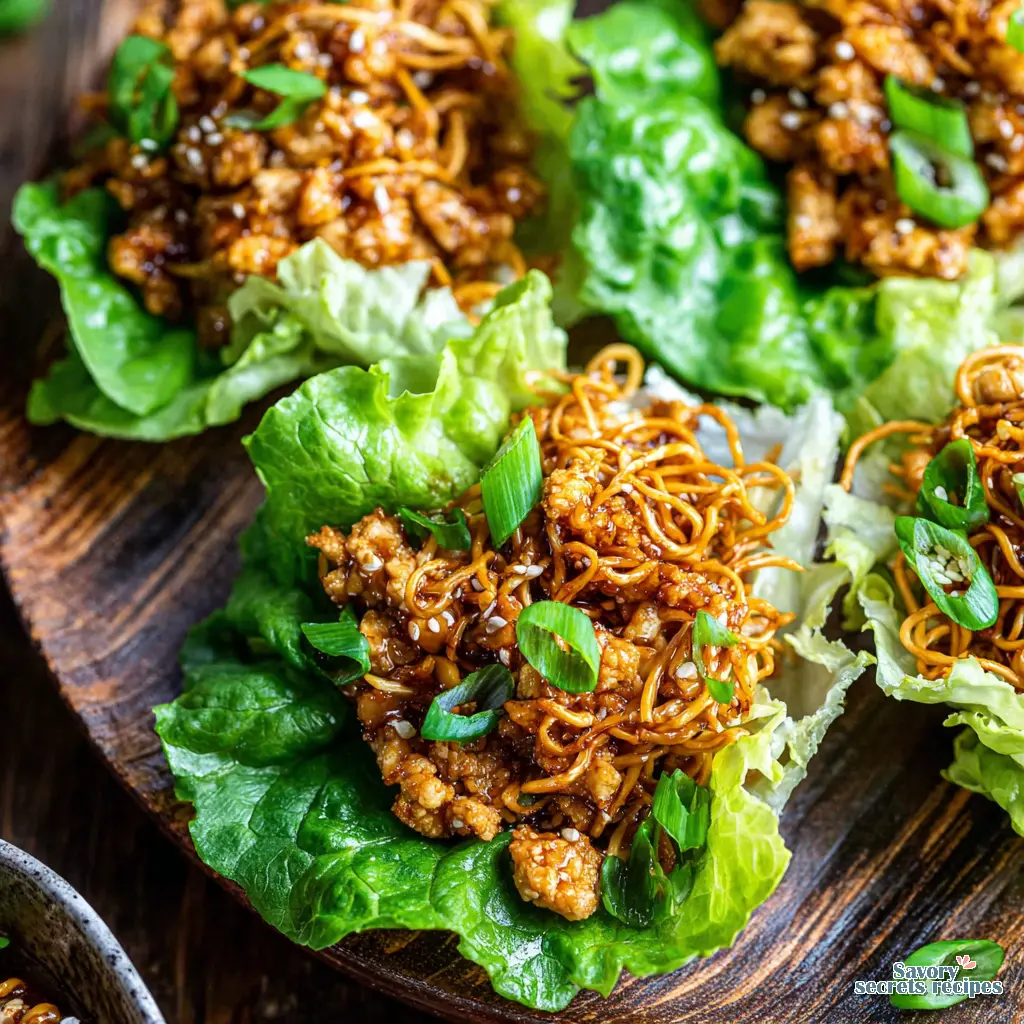
That Restaurant Crunch You’ve Been Missing
You know the feeling. You order those chicken lettuce wraps at a restaurant, and the whole experience hinges on that final, glorious sprinkle. The one that adds a crackle, a pop, a texture that makes the whole thing sing. Then you try to make them at home, and it’s… fine. Good, even. But it’s missing that magic. That specific, airy crunch that turns a simple meal into an event. I’ve been there, chasing that perfect texture in my own kitchen in Jersey City. I’m working through the variables, and let me tell you, the secret isn’t just in the sauce. It’s all about finding the best type of noodles for crispy topping on chicken lettuce wraps.
I need to test that assumption, of course. Is it rice vermicelli? Bean threads? Something else entirely? And once you find them, how do you transform those brittle strands into a cloud of crispness without ending up with a greasy, burnt mess? This is the detail that changes everything. Once you see how simple it can be, you can’t unsee it. So let’s talk noodles, heat, and the pure joy of that audible crunch. This is exactly the texture we’re after.
The Noodle Breakdown: Your Guide to the Best Crunch
Not all noodles are created equal when your goal is a light, puffy, crispy topping. Your hands know before your eyes do, honestly. The wrong type will just get hard and oily, or worse, stay stubbornly limp. Here’s what I’m noticing after testing more batches than I’d care to admit.
The undisputed champion for that classic, airy puff is rice vermicelli, sometimes labeled as maifun or thin rice sticks. These are the ones that look like a dense bundle of white threads. They contain almost no moisture, which is key. When they hit hot oil, the residual water inside vaporizes instantly, causing the noodle to expand into a delicate, golden web. It’s a fantastic transformation. You can find them in the Asian aisle of most supermarkets like Whole Foods or even at Costco in larger packs.
Bean thread noodles (also called glass noodles or cellophane noodles) are another great candidate. Made from mung bean starch, they fry up into a slightly denser, glassier crunch. They don’t puff *quite* as dramatically as rice vermicelli, but they offer a wonderful, clear snap and hold up a bit better if you’re worried about sogginess. I’ve seen this go both ways, but I tend to reach for rice vermicelli for that classic restaurant feel.
What won’t work? Avoid egg noodles, ramen, or any noodle that’s meant to be soft and chewy. They’ll just absorb oil and become heavy. For the best type of noodles for crispy topping on chicken lettuce wraps, you want purity of starch. That tracks with what I’ve seen in every successful batch.
Your Frying Toolkit: No Intimidation Allowed
I know the idea of deep-frying can make you pause. I get it. My teta Samira would use a whole pot of oil for feteer, and it felt like a big production. But for these noodles? It’s more of a shallow fry, and it’s over in seconds. Really. Temperature matters more than time here, and that’s the only tricky part you need to master.
You don’t need special equipment. A medium saucepan or a small wok works perfectly. A cooking thermometer is your best friend here, I won’t lie. You’re aiming for 350°F to 375°F (175°C to 190°C). If you don’t have a thermometer, do the wooden chopstick test: stick the end of a dry wooden chopstick into the oil. If steady, small bubbles immediately form around it, you’re in the zone. The oil should shimmer, not smoke.
Use a neutral oil with a high smoke point. Canola, vegetable, or peanut oil are all great. And you only need about an inch to an inch and a half in the pan. You’re not submerging a whole chicken; you’re just giving a small handful of noodles room to dance. Have a spider strainer or tongs ready, and a plate lined with paper towels or a wire rack set nearby. The smell shifts right before it’s done, from neutral oil to a warm, toasty aroma. That’s your cue.
The Moment of Truth: Frying Your Noodles to Perfection
This is where most recipes skip the detail. Break off a small bundle of dry rice vermicelli, about the size of a lime. Too much and they’ll clump and fry unevenly. Gently place the bundle into the hot oil. It will sink for a split second, then erupt. It’s a fantastic, instant puff. Use your tongs to gently turn it over, ensuring all sides get contact with the oil. The whole process takes about 5 to 10 seconds total. I mean, it’s fast.
Watch for the color. You want a pale, golden blonde, not a deep brown. They continue to darken a touch after you pull them out. As soon as they’re uniformly puffed and colored, lift them out, let the excess oil drip back into the pan for a second, and transfer them to your waiting paper towels. They’ll crisp up fully as they cool. The sound is incredible, a faint, continuous crackle.
Repeat in small batches. Don’t crowd the pan. Crowding drops the oil temperature and leads to oily, soggy noodles. And that’s the whole thing we’re trying to avoid, right? This might vary depending on your stove, but give the oil a minute to come back up to temp between batches. Patience here gives you perfect crunch.
Crispy Noodle Troubleshooting
Mistake: Noodles are dark brown and taste bitter.
Solution: Your oil is too hot. The noodles burn before they can puff. Let the oil cool down to the correct temperature range before trying again.
Mistake: Noodles are soggy and oily, not crispy.
Solution: The oil wasn’t hot enough, or you fried too big a batch. The noodles absorb the oil instead of frying. Always check your temp and fry in small, lime-sized bundles.
Mistake: Only parts of the noodle bundle puffed.
Solution: The noodles might have been clumped too tightly. Gently separate the strands a little before adding to the oil, and use tongs to gently submerge and turn them.
Building Your Ultimate Chicken Lettuce Wrap
Now, the crispy noodles are your glittering crown, but the foundation has to be solid. For the chicken filling, I actually recommend hand-mincing chicken thighs. It gives a chunkier, more interesting texture than uniform ground chicken. Thighs stay juicier, too. But if you only have breasts or ground turkey, that’s fine. You can use chopped chicken breasts, ground turkey, or even a plant-based crumble. The recipe is pretty versatile. For a classic, foundational recipe with detailed instructions, check out our main crispy chicken lettuce wraps recipe.
The aromatics are non-negotiable for me. Fresh ginger, grated on a microplane so it almost melts into the sauce. Garlic. Green onions. And that textural trio: diced water chestnuts for crunch, mushrooms for savoriness (I love rehydrated shiitakes, but cremini work), and a good, sticky-sweet-salty sauce built on hoisin and low-sodium soy sauce (or coconut aminos to keep it gluten-free). Use low sodium soy sauce so you can control the salt level. Let everything cook until the sauce clings to the chicken and glazes it nicely. That’s the smell you want filling your kitchen.
The Lettuce Cup & Assembly: Keeping Everything Crisp
Your vessel matters. Our favorite lettuce for these is butter lettuce (Boston or Bibb). The cups are pliable, have a mild flavor, and hold their shape beautifully. Green leaf and iceberg also work nicely for a sturdier, crisper bite. That said, iceberg lettuce tends to be harder to wrap as it breaks easily. In a pinch, romaine lettuce is also a workable option, though you’ll be making more of a scoop than a wrap. If you’re looking for a different flavor profile entirely, our crispy chicken Caesar lettuce wraps offer a delicious twist.
Here’s a PF Chang’s-level trick to keep your lettuce crisp: after washing the leaves, submerge them in a bowl of ice water for 10-15 minutes before serving. Then dry them *thoroughly* with a salad spinner or kitchen towels. This shocks them crisp and keeps them perky. Store any leftover lettuce separately, wrapped in paper towels inside a zip-top bag in the crisper.
When you’re ready to eat, that’s when you bring it all together. Warm the filling. Have your crispy noodles in a bowl. Let everyone build their own. A spoonful of chicken, a sprinkle of noodles, maybe some extra chopped peanuts or a drizzle of sriracha. Then you get it. The cool, crisp lettuce. The warm, savory filling. And that final, glorious, shattering crunch from the best type of noodles for crispy topping on chicken lettuce wraps. It’s a symphony of texture.
Make-Ahead Magic & Storing Your Success
The beauty of this dish is how well it preps. The chicken filling can be made ahead of time, up to 48 hours, and stored in an airtight container in the fridge. Gently reheat it in a pan or the microwave before serving. You can even freeze the cooled filling for a future quick meal. Thaw it overnight in the fridge and reheat it gently on the stovetop.
Now, the crispy noodles. They’re best made fresh, right before serving. But if you must, you can fry them ahead and store them *completely cool* in an airtight container at room temperature for a day. Don’t refrigerate them, as moisture is the enemy of crispness. If they lose a little snap, you can briefly refresh them in a 300°F (150°C) oven for a few minutes. We like to keep the noodles and peanuts separate from the stir fry so that they don’t get soggy if you have leftovers.
Frequently Asked Questions
Your Turn to Create That Crunch
So there you have it. The quest for the perfect crunch, demystified. It’s not a restaurant secret guarded by chefs. It’s a simple understanding of ingredients and heat. When you make these, you’ll be amazed at how that small pile of puffed noodles transforms the entire dish from a simple weeknight stir-fry into something special, something shareable. The pride of nailing that technique is its own reward.
I’d love to hear how it goes for you. Did you try rice vermicelli or bean threads? What’s your favorite lettuce for wrapping? For more inspiration on balancing textures and flavors in all sorts of dishes, check out my Pinterest boards. Now, go find those noodles. Your best type of noodles for crispy topping on chicken lettuce wraps adventure is waiting.
Source: Health & Nutrition Research
What are the crunchy noodles on top of lettuce wraps?
They’re almost always deep-fried rice vermicelli or maifun noodles. These thin, dry rice noodles puff up instantly in hot oil, creating that signature airy, crispy web that’s the best type of noodles for crispy topping on chicken lettuce wraps.
Can I make the crispy noodles without deep frying?
You can try shallow frying in just an inch of oil, which is much less intimidating. For a completely oil-free version, you can buy pre-fried crispy rice noodle nests at some Asian markets, but homemade fried ones have a fresher, lighter texture.
What kind of meat does PF Chang’s use in their lettuce wraps?
They use minced chicken. For the best homemade version, I suggest hand-mincing chicken thighs. It gives a juicier, more textured result than pre-ground chicken, getting you closer to that restaurant-quality feel for your crispy chicken lettuce wraps.
How do I keep my lettuce wraps from getting soggy?
The key is keeping components separate until assembly. Store lettuce dry and crisp (use the ice water trick), don’t mix the crispy noodles into the warm filling, and only fill the cups right before eating. This protects all those wonderful textures.
Is iceberg or romaine better for lettuce wraps?
For pliable, easy-to-wrap cups, butter lettuce is best. For ultimate crunch, iceberg wins, though it can be brittle. Romaine is a compromise, offering a sturdy scoop. It really depends on your priority: ease of eating or maximum crispness.