



Vanilla Peach Cake with Cream Layers
Ingredients
Method
- Preheat the oven to 350 degrees F.
- Cream 1/2 cup + 2 tbsp of butter and 1 1/2 cups of granulated sugar together in a large bowl.
- Add 3 eggs and 1 1/2 tbsp vanilla bean paste. Mix until combined.
- Add 1 cup of buttermilk and combine.
- In a separate medium bowl, sift together 2 1/4 cups of cake flour, 1/2 tsp of salt, 1 1/2 tsp of baking powder, and 1/4 tsp of baking soda.
- Gradually add the dry ingredients to the wet ingredients. Mix until just combined.
- Divide the batter evenly among 3 greased 6-inch cake pans.
- Bake the cakes at 350 degrees F for 35-38 minutes, or until a toothpick inserted into the center comes out clean.
- Cool the cakes in their pans for five minutes, then transfer them to a wire rack to cool completely.
- Add 3 cups of thinly sliced peaches to a bowl.
- Sprinkle 1/4 cup + 2 tbsp of granulated white sugar over the peaches.
- Gently stir to coat the peaches with sugar. Cover and let sit for about 30 minutes to allow the sugar to dissolve and create peach syrup.
- Add 1 1/2 cups of heavy whipping cream to a large bowl. Whip the cream with an electric mixer on high speed until stiff peaks form.
- Sift in 3/4 cup of powdered sugar and mix until just combined.
- Finally, add 1 1/2 tsp of vanilla bean paste and combine.
- Using a sharp knife, level the domed tops off each cake layer for even stacking.
- Pour 2-3 tbsp of peach syrup over the first cake layer.
- Arrange a layer of sliced peaches on top of the cake layer.
- Spread about 1/3 of the whipped cream on top of the peaches.
- Arrange another layer of peaches over the whipped cream.
- Place the second cake layer on top and repeat the previous steps.
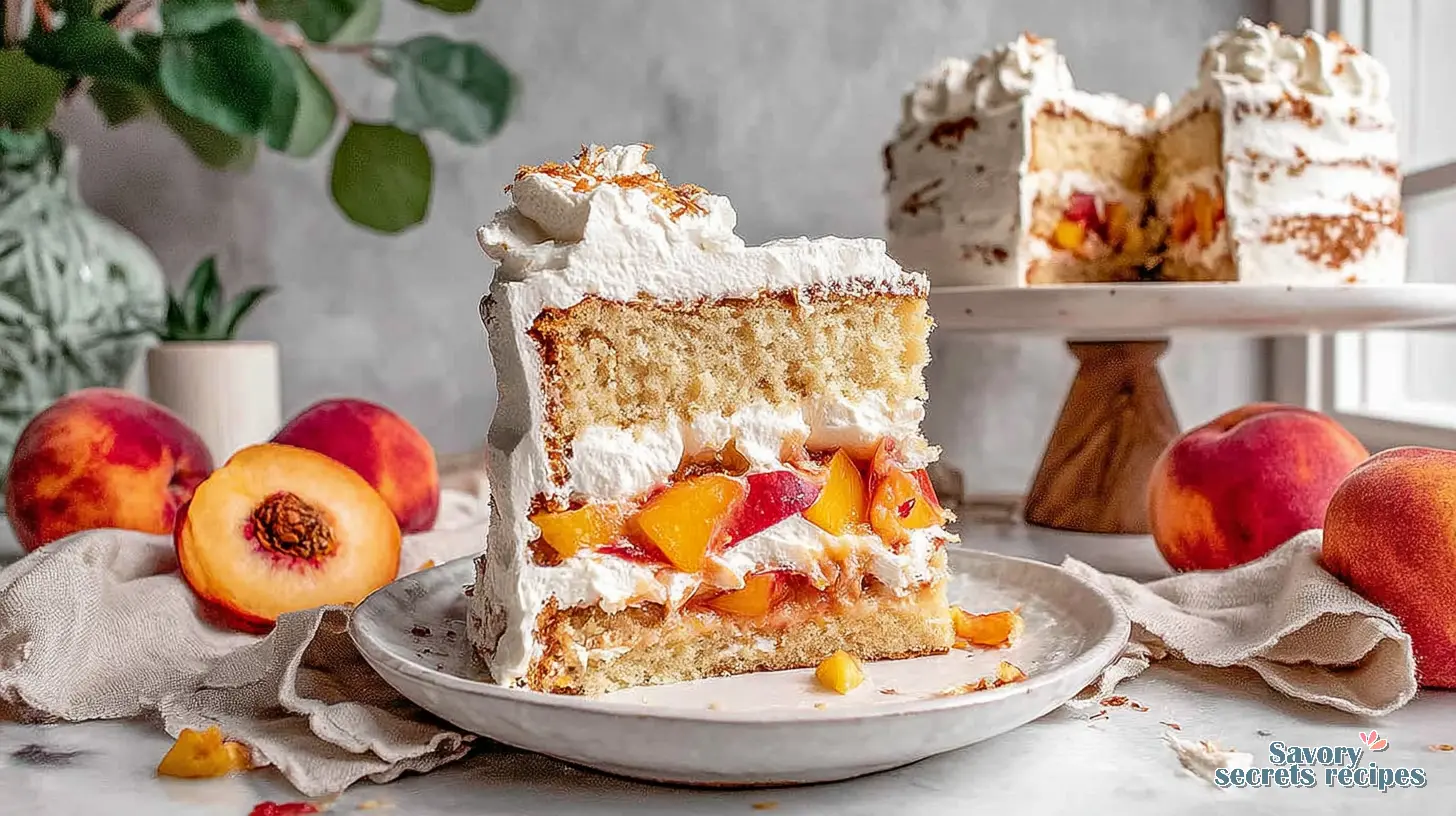
- Place the remaining cake layer on top, then top with the rest of the whipped cream and the remaining sliced peaches.
- Drizzle the remaining peach syrup over the cake and serve.
Nutrition
Notes
Why This Vanilla Peach Cake is the Only Recipe You Need
Look, I know the drill. You see a beautiful fresh peach layer cake online, you try to make it, and what happens? The fruit sinks, the cake is dry, or worse, you end up with a soggy mess that doesn’t hold together. It’s frustrating, isn’t it? Wasting good ingredients on something that just doesn’t deliver. I’ve been there, trust me.
But what if I told you there’s a way to get that perfectly moist, tender crumb with sweet, flavorful peaches in every single bite? A summer peach cake recipe that looks like it came from a fancy bakery here in Los Angeles, but you made it yourself. That’s the promise of this vanilla peach cake. Imagine the soft peach vanilla sponge dessert, infused with real vanilla bean paste, layered with fresh peaches, and frosted with a light, creamy finish. The smell alone, as it bakes, it’s pure comfort.
My grandmother Zoya, she taught me that baking isn’t magic, it’s math you can eat. I learned percentages before fractions because she made me calculate baker’s percentages for her blini batter. If I got it wrong, we’d start from the beginning. That precision is what makes the difference, and it’s what we’ll apply to this vanilla peach cake. We’re not guessing on this one.
Gathering Your Tools and Ingredients
Before we even think about mixing, let’s be clear about this: having your mise en place ready, and your ingredients at the correct temperature, is half the battle. You’ll need standard baking equipment, of course: mixing bowls, a whisk, a rubber spatula, measuring cups and spoons (I prefer a kitchen scale for flour, personally, for accuracy), and a good 8-inch round cake pan.
For the ingredients, we’re talking about the good stuff. Cake flour, not all-purpose, because it gives us that soft peach vanilla sponge. Baking powder and baking soda for lift. Salt, always. And then the stars: softened unsalted butter, buttermilk, granulated sugar, pure vanilla bean paste (none of that imitation stuff, please), and eggs, at room temperature. For the peaches, fresh, thinly sliced peaches are best, plus a little extra granulated white sugar. And for the frosting, heavy whipping cream and powdered sugar. You can find beautiful fresh peaches at the Santa Monica Farmers Market this time of year, or really good ones at Ralphs or Whole Foods.
Essential Equipment for Your Best Cake
Beyond the basics, an offset spatula is going to be your best friend for frosting. A cooling rack is non-negotiable for proper cooling, preventing soggy bottoms. A kitchen scale, as I mentioned, is invaluable for measuring flour correctly. Overpacking flour is a common mistake that leads to a dense cake, and a scale eliminates that variable entirely. Trust me on this, it’s worth the small investment.
Building Your Perfect Vanilla Peach Cake, Step by Step
Making a beautiful fresh peach layer cake might seem daunting, but it’s actually a series of logical steps. We’ll build this vanilla peach cake in layers of flavor and texture. First, we’ll create that wonderfully light and fluffy sponge cake. Then, we’ll prepare our fresh peaches so they’re sweet but not watery. Finally, we’ll assemble and frost it into a showstopper. It’s simpler than you think.
The key here is following the sequence and paying attention to textures. Don’t rush. I mean, you could skip some steps, but the outcome won’t be the same. The process is designed to ensure a moist cake and a tender crumb every time. I need you to show me your process, not just the finished product. That’s how we learn.
The Secret to a Moist Vanilla Peach Cake: Peaches and Precision
Let’s talk peaches. What kind of peaches are best for a fresh peach layer cake? Fresh peaches are ideal for this summer peach cake recipe. Look for ripe, fragrant ones that yield slightly to pressure. For the cake itself, you can peel or leave the peach skins on; slice or dice as preferred for batter and topping. The thing is, peaches release a lot of moisture, and that’s the enemy of a soft peach vanilla sponge. So, don’t skip patting the peaches dry to prevent a soggy cake. This is critical. You want sweet peach cake slices, not a watery mess.
Temperature matters here, especially for your cake batter. Use room temperature butter, eggs, and buttermilk for a moist and tender cake. Why? Cold ingredients don’t emulsify properly with the butter and sugar, leading to a lumpy batter that you’ll be tempted to overmix. Overmixing develops too much gluten, and that’s not how this works for a light and fluffy sponge. You’ll get a dense cake instead. Bring cold ingredients to room temperature before mixing to ensure easier mixing and avoid overmixing. That’s the correct instinct.
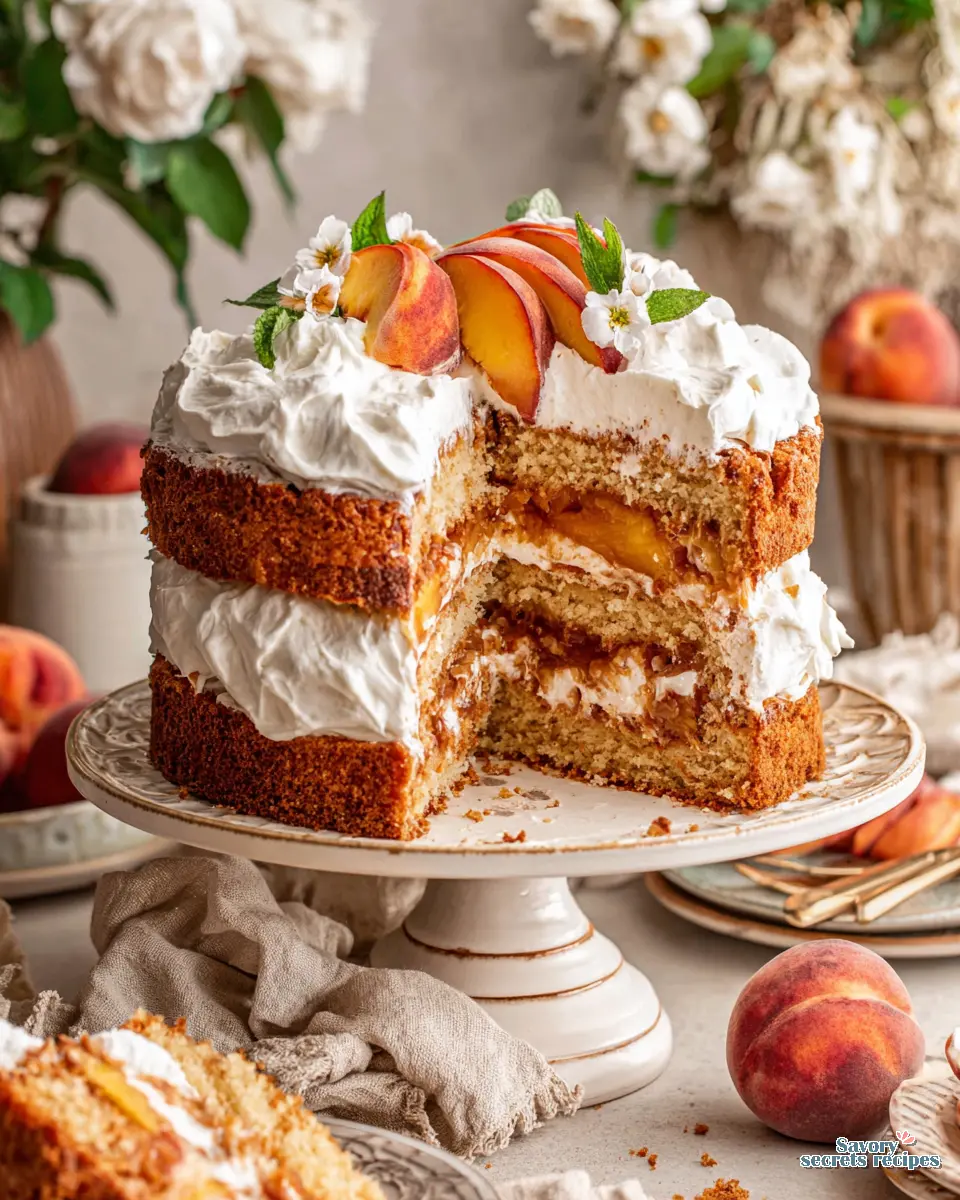
Frosting Your Vanilla Peach Cake for a Bakery Finish
Once your beautiful vanilla peach cake layers are baked and cooled, it’s time for the frosting. This is where the magic happens, transforming a simple sponge into a bakery-worthy presentation. The aroma of vanilla bean paste in the whipped cream, it’s just incredible. You’ll want to make sure your cake is completely cooled before frosting to prevent melting. I’m not entirely convinced that rushing this step ever pays off.
For the whipped cream frosting, chill your mixing bowl and beaters before whipping cream for fluffy peaks in half the time. This isn’t being fussy, it’s the difference between luscious, stable cream and a sad, deflated topping. Once your cake is cooled, add a thin crumb layer, then chill it to seal crumbs for a smoother final frosting. See how much better that looks? That’s exactly the texture we want. Now you’ve got it. Imagine that first bite, the light and fluffy cake, the burst of fresh peaches, and the cool, sweet cream.
Smart Substitutions and Vanilla Peach Cake Variations
While this vanilla peach cake recipe is perfect as is, I understand the need for adaptability. Sometimes you’re out of an ingredient, or you want to try something a little different. Fine, but document what you changed. For the peaches, if fresh aren’t available, you could try plums, nectarines, or apricots. Mango or pears could also work for canned peaches, if you’re going that route.
You can also create peach variations. For a peach sponge cake, you could swap the vanilla pudding only for whipped cream if you prefer a lighter filling. If you’re feeling adventurous, arrange peaches at the pan’s bottom before adding batter for an upside-down peach cake. I haven’t worked with that flour enough to say, but for a UK-style peach cake, you might use golden syrup in the sponge for a British touch, though that’s a different animal entirely. You could even mix peach juice with a splash of lemon for a zesty layer, if you wanted to.
Common Hurdles and How to Fix Them
Common Vanilla Peach Cake Mistakes & Fixes
Mistake: Dry cake.
Solution: This often comes from overmixing the batter or overbaking. Ensure your cold ingredients are at room temperature to avoid overmixing. Check your oven temperature with a thermometer; I once ruined an entire week’s worth of recipe testing because my home oven ran twenty degrees hot. Had to tell my editor we were pushing the deadline, and I’d never felt more incompetent. Now I check with two thermometers before every single test. Also, use a kitchen scale for flour to prevent overpacking.
Mistake: Soggy peaches or a wet cake bottom.
Solution: You likely skipped patting the peaches dry. They release a lot of liquid, and that moisture needs to go somewhere. Make sure your fresh peaches are really dry before adding them to the cake or frosting. That’s not how this works if you want a clean slice.
Mistake: Frosting melting off the cake.
Solution: The cake wasn’t completely cooled before frosting. You’ve got to ensure the cake is completely cooled before frosting to prevent melting. I mean, it seems obvious, but people rush it. Also, ensure your cream is properly whipped firm by chilling your bowl and beaters beforehand.
Mistake: Cake collapsing in the middle.
Solution: This can be due to opening the oven door too early, incorrect leavening (old baking powder/soda), or underbaking. Don’t open the oven until the minimum bake time. Check your leavening agents’ freshness. If it doesn’t look right, it isn’t right.
Mistake: Crumbly frosting.
Solution: You didn’t add a crumb layer before the final frosting. A thin layer, chilled until firm, traps all those loose crumbs, giving you a smooth canvas for your beautiful final layer. My daughter Maya wanted to make cookies by herself last month and packed the flour into the cup before weighing it. The dough was too dry. We made a chart showing the difference between scooped and spooned flour. Precision matters.
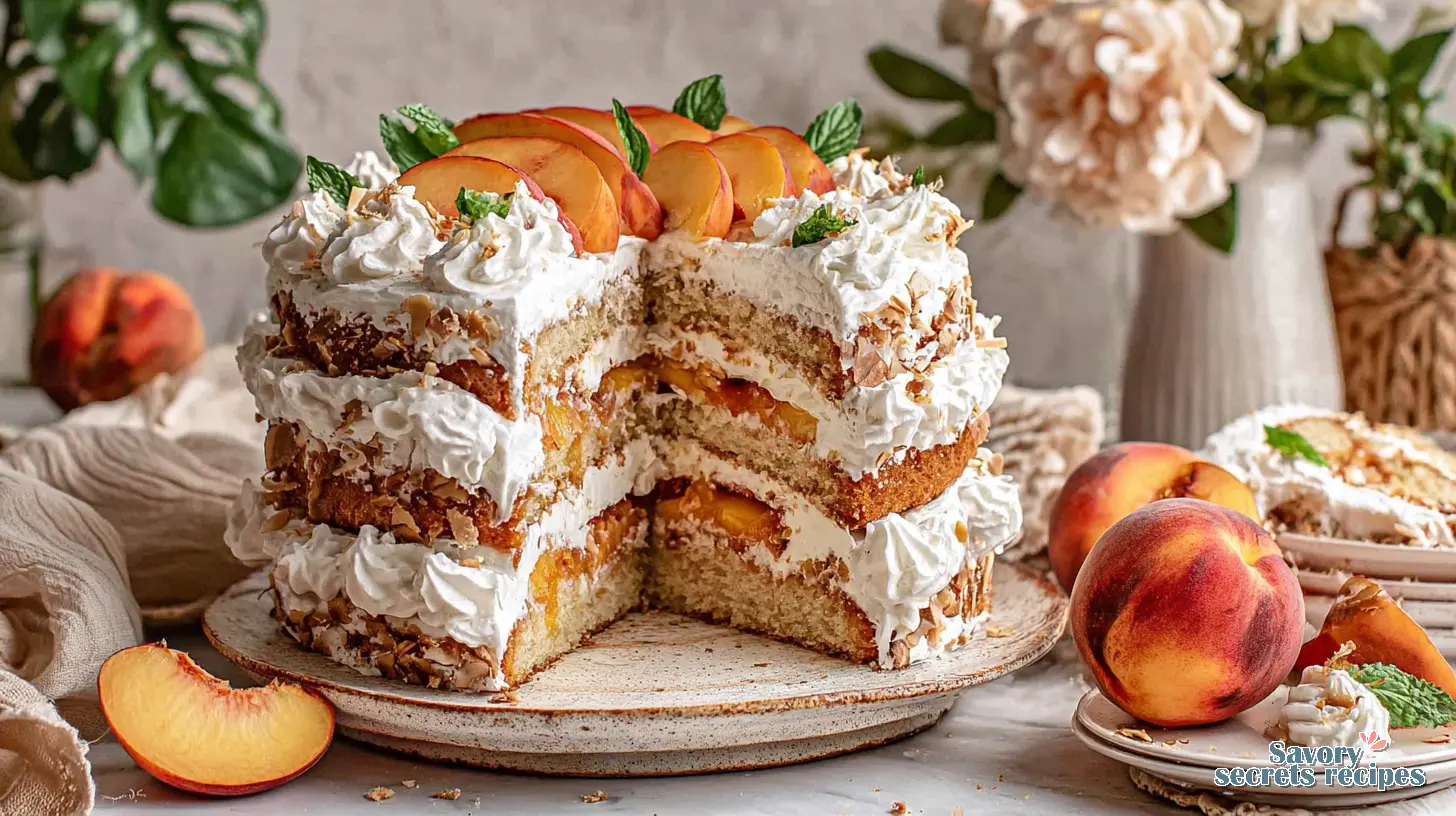
Storing and Serving Your Vanilla Peach Cake
Once you’ve put all that effort into creating this glorious vanilla peach cake, you want to make sure it stays fresh. Because of the fresh peaches and whipped cream, this cake absolutely needs to be refrigerated. Store it in an airtight container in the fridge for up to 3 to 5 days. You can also press cling film directly onto the cream topping to stop it from drying out. That’s the correct instinct.
If you want to prep ahead, you can freeze the plain sponge layers (tightly wrapped) for up to a month. Thaw them overnight in the fridge before assembling. For picture-perfect slices, let the assembled cake sit at room temperature for about 10 minutes before cutting. This helps the frosting soften just enough for a clean cut. Enjoy it with a cup of coffee for an afternoon snack, or as a beautiful after-dinner dessert. It’s perfect for any spring gathering.
Frequently Asked Questions
When you pull this glorious vanilla peach cake from the oven, golden and fragrant, you’ll know the effort was worth it. That satisfaction of creating something beautiful and delicious with your own hands, it’s truly rewarding. Don’t let past baking failures deter you; with precision and a little patience, you’ll succeed. Give this summer peach cake recipe a try, and let me know how it turns out. For more inspiration and variations, check out my Pinterest boards.
Source: Nutritional Information
How do I make a delicious Vanilla Peach Cake from scratch?
To make a delicious vanilla peach cake from scratch, focus on precise measurements, room temperature ingredients, and properly prepared fresh peaches. Follow the steps for a light sponge, pat your peaches dry, and ensure the cake is fully cooled before frosting with vanilla whipped cream for the best results.
What kind of peaches are best for a fresh peach layer cake?
For a fresh peach layer cake, ripe, fragrant fresh peaches are always best. Look for ones that are slightly soft to the touch. They’ll give you the most natural sweetness and best texture. Make sure to slice them thinly and pat them very dry to prevent excess moisture in your vanilla peach cake.
How can I ensure my peach vanilla sponge dessert is soft and moist?
To ensure a soft and moist peach vanilla sponge dessert, use cake flour, measure it by weight, and bring all cold ingredients (butter, eggs, buttermilk) to room temperature before mixing. Avoid overmixing the batter, as this develops too much gluten and can lead to a dense cake. Baking powder and soda should be fresh.
How long can I store a homemade Vanilla Peach Cake with cream layers, and how should I keep it fresh?
You can store a homemade vanilla peach cake with cream layers in an airtight container in the refrigerator for 3 to 5 days. To keep it fresh, press a layer of cling film directly onto the exposed cream or cut slices to minimize air exposure. This helps prevent the cake from drying out.
Can I use frozen peaches instead of fresh for this summer peach cake recipe, and how would it affect the outcome?
Yes, you can use frozen peaches for this summer peach cake recipe, but they must be thawed completely and drained very well. Pat them dry with paper towels to remove as much moisture as possible. They might be slightly softer in texture than fresh peaches, but the flavor will still be delicious.
Can I use canned peaches for this peach vanilla cake?
Yes, you can use canned peaches for this peach vanilla cake. Be sure to drain them thoroughly and pat them very dry before adding them to the batter or frosting. Canned peaches are often sweeter and softer than fresh, so adjust your expectations for texture and sweetness slightly. They’re a good year-round option.
Why is this old-fashioned peach vanilla cake so juicy?
This old-fashioned peach vanilla cake is so juicy because of the generous amount of fresh, ripe peaches and the moist sponge cake base. The peaches release their natural juices as they bake and meld with the tender crumb, creating a wonderfully flavorful and juicy experience in every sweet peach cake slice.
Can I use this recipe for an upside-down peach cake?
You absolutely can adapt this recipe for an upside-down peach cake. Arrange your thinly sliced, slightly sweetened peaches at the bottom of a greased and floured cake pan before pouring the vanilla peach cake batter over them. Bake as directed, then invert carefully after cooling slightly for a beautiful presentation.