



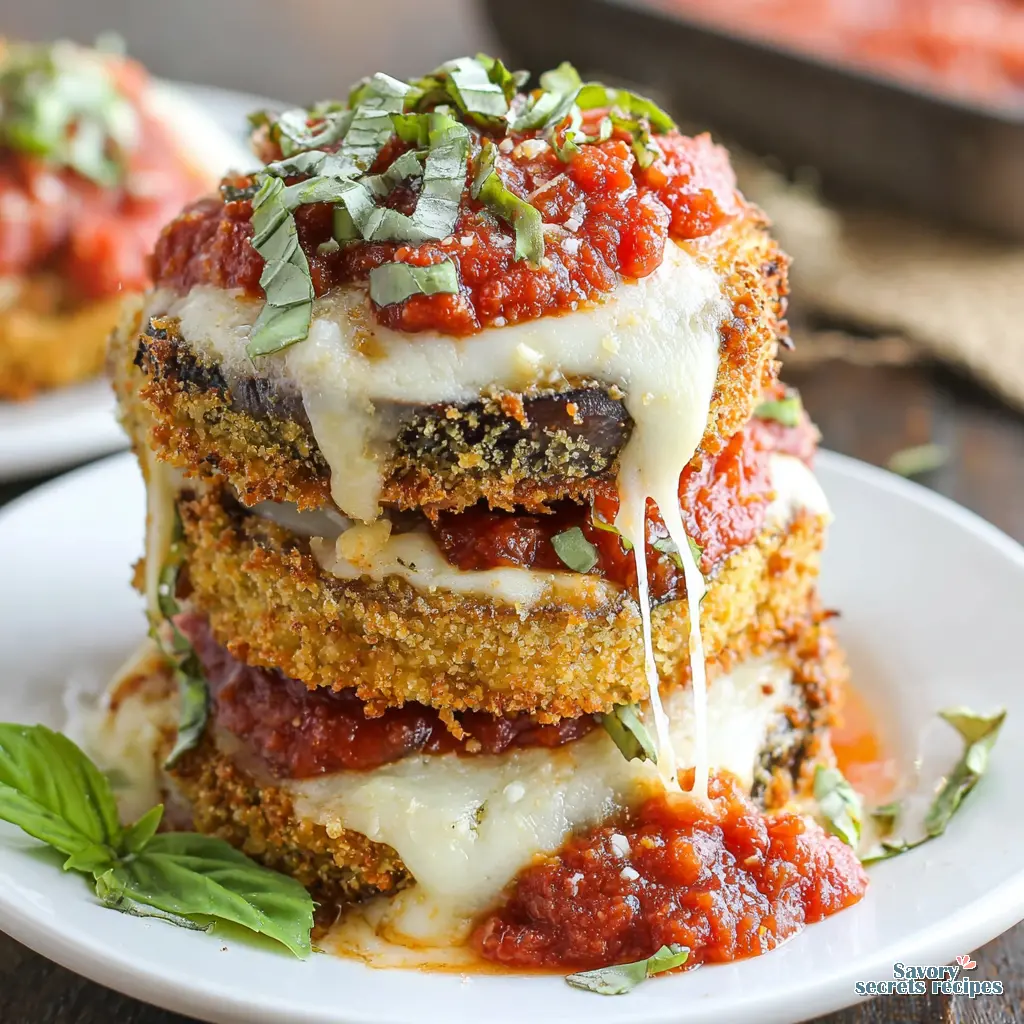
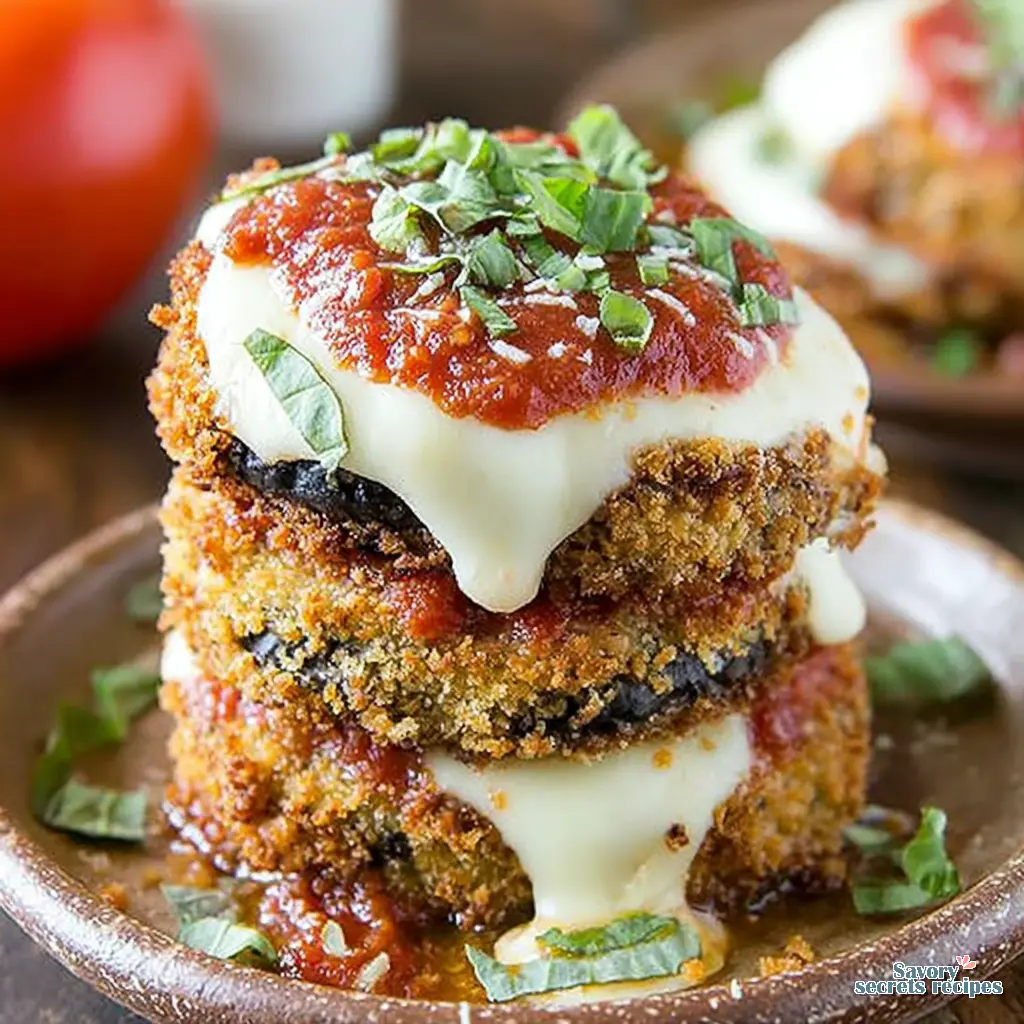
Cheesy Eggplant Parmesan Stack
Ingredients
Method
- Place the eggplant circles onto a large baking sheet or work surface, and liberally sprinkle some salt and black pepper, plus the Italian seasoning and the red pepper flakes evenly over the front and back of the circles; allow the eggplant to rest while you prepare the rest of your ingredients.
- Set up your coating/dredging area by adding the flour to a large bowl, having your whisked eggs in large bowl next, and in a third bowl, combining the panko breadcrumbs and the parmesan.
- Preheat your oven to 350°, and line a baking sheet with foil.
- Take each eggplant slice and dip it into the flour, then the whisked eggs, and finally in the panko/parmesan mixture, pressing the slices to make sure that the coating sticks; place the slices onto another large baking sheet to hold while you repeat the process with the rest of the slices.
- Once your eggplant slices are coated, heat enough oil on the bottom of a large skillet to cover, or to come up about 1/2” or so (for shallow frying); once the oil is hot (keep the heat on medium-high or medium), begin adding in a batch of coated eggplant slices, and fry each for about 5 minutes on the first side, and about 3-4 minutes on the second side, or until a deep, golden-brown, and crisp.
- Place the fried slices onto the prepared, foil-lined baking sheet, or onto a rack over a baking sheet.
- Once all slices are fried, add roughly 3 tablespoons of marinara sauce to each eggplant slice, then top with some of the shredded mozzarella cheese, and place into the oven just until the cheese is melted and bubbly about 5 minutes.
- Serve eggplant parmesan stacked if you like, with pasta or green salad on the side.
Nutrition
Notes
Why You’ll Love These Eggplant Parmesan Stacks
I remember the first time I tried to make a classic eggplant parmesan casserole. Not gonna lie, it was a mess. The whole thing slid apart on the plate, the eggplant was somehow both soggy and undercooked, and I spent more time cleaning up than eating. That tracks, right? You love the idea of that cheesy, savory Italian comfort food, but the reality of a sloppy, time-consuming bake can be a real turn-off.
Here’s the thing. This eggplant parmesan stack recipe is the solution. It gives you all that flavor the crispy breaded eggplant, the tangy marinara, the melty mozzarella but in neat, individual portions that actually hold their shape. It feels fancy, like something you’d get at a nice little trattoria, but it’s built for a regular weeknight in your kitchen. Straight up, it’s the move if you want impressive results without the classic eggplant parm headache.
Getting Your Eggplant Right: The Foundation
Everything starts with the eggplant. I’m not totally sure, but I think a lot of the fear around cooking eggplant comes from not treating it right from the get-go. You want to look for smaller, firm eggplants. They’re usually sweeter and have fewer seeds. The skin should be shiny and smooth, with a nice green stem attached. That’s the one.
Now, slicing. This is crucial. You want all your slices about a quarter-inch thick. Too thin and they’ll turn to mush; too thick and they won’t cook through properly, leaving you with that unpleasant bitterness. A good, sharp chef’s knife makes this easy. Just try to keep them even. Trust the process here.
Let’s talk about salting. This is the step where people get opinionated. Some say you must do it to draw out bitterness and moisture. Others say it’s outdated. In my experience, anyway, for an eggplant parmesan stack where you want a crispy, non-watery result, salting is worth it. You sprinkle the slices, let them sit for 30 minutes, and then pat them dry with paper towels. You’ll see the beads of moisture on the surface. That’s liquid that won’t be steaming inside your breading later. Fair enough if you skip it, but I always do this.
Roasting vs. Frying: Your Crispy Choice
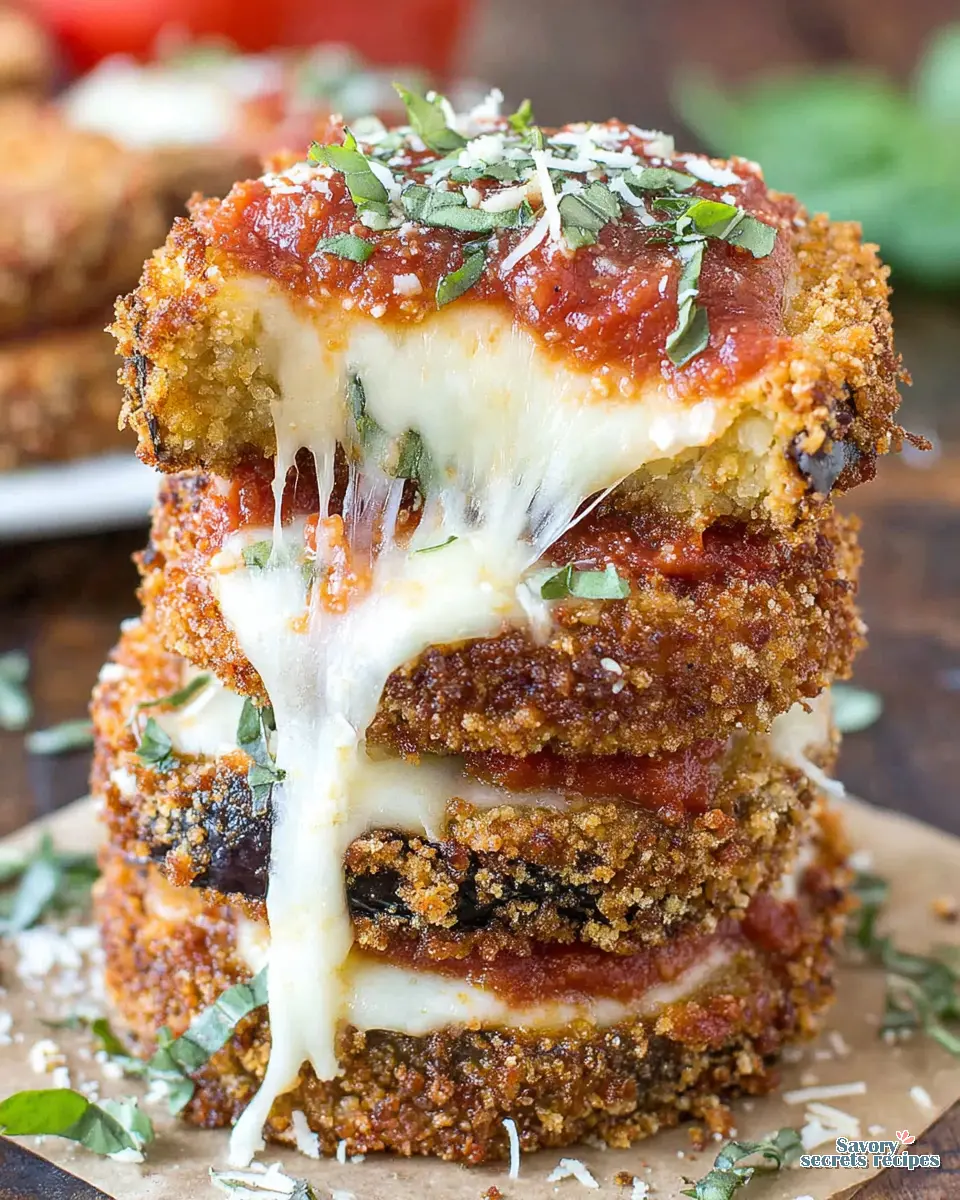
For the breaded eggplant in this layered eggplant parmesan dish, you’ve got options. The recipe card gives you a pan-frying method, which gives you that incredible, golden-brown, classic texture. The sizzle when the breadcrumb-coated slice hits the hot oil? Solid. It’s a specific smell, that savory toasty aroma that fills your kitchen.
But maybe you want a lighter touch. You can absolutely bake the breaded slices. Here’s what I wish someone had told me: you need to use plenty of oil even when roasting. Eggplant is like a sponge. It’ll soak up that oil fast, so you gotta move quickly when coating it. A good drizzle or spray on both sides before they go into a hot oven (around 425°F) works. They won’t get *quite* as uniformly golden as fried, but they’ll be delicious and a bit healthier. Works every time.
The Art of the Stack: Assembly Line Strategy
Okay, your eggplant is cooked and crispy. Now we build. This is the fun part. Think of it like building little savory towers. I lay everything out in an assembly line: the baked eggplant slices, the marinara sauce, the shredded mozzarella, the grated parmesan. It just makes it faster.
Start with an eggplant round on your baking sheet. That’s your base. Spoon on a little marinara not too much, or it’ll make everything slide around. Then, a generous sprinkle of that whole milk mozzarella. The whole milk stuff melts so much better, it’s not even close. Top with another eggplant slice and repeat. You can do two or three layers high, depending on how ambitious you’re feeling. I usually stop at three. Anything taller and you’re asking for a structural engineering challenge.
One pro tip I learned the hard way: save the fresh basil for after baking. If you tuck it between the hot layers, it wilts into nothing and loses that bright, peppery flavor. You want that pop of green and freshness on top at the end. Let it do its thing.
Tips for a Perfect Eggplant Parmesan Stack Every Time
I want this to work for you, so let’s walk it back through some key points. First, cook that eggplant thoroughly. This isn’t the time for al dente. You want it tender all the way through. An undercooked slice can taste bitter and, honestly, cause a bit of indigestion. Not fun.
Cheese choices matter. You can buy pre-sliced fresh mozzarella, which is so much easier. If you have to slice a ball yourself, stick it in the freezer for 10-20 minutes first. It firms up and won’t squish everywhere. And about the parmesan if you’re cooking for strict vegetarians, check the label. Traditional parmigiano reggiano often uses animal rennet. Look for a vegetarian parmesan style cheese made with plant-based rennet instead.
This recipe is also meal prep friendly. You can roast or fry the eggplant slices up to two days ahead. Just keep them in an airtight container in the fridge. When you’re ready to eat, just stack with sauce and cheese and bake. It turns a potentially long process into a 20-minute dinner.
Common Stack Mistakes & Fixes
Mistake: Soggy, falling-apart stacks.
Solution: You probably skipped salting the eggplant or used too much sauce. Pat those slices dry and go easy on the marinara between layers.
Mistake: Bland eggplant.
Solution: Season every layer. Don’t be shy with the salt, pepper, Italian seasoning, and red pepper flakes in the breading mix.
Mistake: Cheese not melting properly.
Solution: Use freshly shredded whole milk mozzarella. The pre-shredded stuff has anti-caking agents that can make it melt poorly.
Mistake: Bitterness.
Solution: Choose smaller eggplants and cook them until very tender. Undercooked eggplant is often the culprit.
Making It Your Own: Variations & Dietary Tweaks
The basic eggplant parmesan stack is a fantastic vegetarian dinner. But you can dial it in. For a gluten-free version, just swap the all-purpose flour and panko bread crumbs for your favorite gluten-free alternatives. I’ve used a mix of almond flour and gluten-free panko with great success.
Want to add more protein? I sometimes make a hybrid batch. I’ll bread and cook some chicken cutlets the same way as the eggplant, then build a few chicken parmesan stacks alongside the eggplant ones. It keeps everyone at the table happy. The ratio’s off if someone leaves hungry.
If you don’t have fresh basil, don’t stress. Buy a good quality marinara sauce that already has basil in it. The flavor will still be there. Cooking is about working with what you have.
How to Store, Freeze, and Reheat Like a Pro
Leftovers? They store beautifully. Let the stacks cool completely, then store them in an airtight container in the fridge for up to 3 days. To reheat, I don’t recommend the microwave it turns the crispy eggplant soft. Instead, pop them on a baking sheet in a 350°F oven for about 10 minutes, or until heated through. You might add a tiny spoonful of fresh sauce and a sprinkle of cheese to freshen them up.
You can also freeze these layered eggplant parmesan dishes. Assemble the stacks completely but don’t bake them. Place them on a parchment-lined sheet pan, freeze until solid, then wrap each stack tightly in plastic wrap and foil. They’ll keep for up to 2 months. Bake from frozen, adding maybe 10-15 extra minutes to the baking time.
What to Serve With Your Savory Eggplant Plate
These stacks are a hearty, filling meal on their own. But if you want to round things out, you’ve got options. A simple green salad with a sharp vinaigrette cuts through the richness perfectly. It’s my go-to.
For a more classic Italian-American spread, serve them over a bed of spaghetti with extra marinara sauce on the side. A chunk of crusty bread from the bakery section of your local Ralphs or Vons is also never a bad idea for soaking up any extra sauce. For a lighter side, a simple lemon-herb rice pilaf works great too.
Frequently Asked Questions
Your Turn to Build Something Great
When you make this eggplant parmesan stack, prepare for that moment of pride when you pull it from the oven. The cheese will be bubbly and blistered, the aroma of garlic and basil in the air. It tastes like comfort, like a satisfying project that actually worked. It’s the kind of homemade meal that makes a regular dinner feel special.
I’d love to hear how it goes for you. Did you bake or fry? What did you serve it with? Let me know in the comments. And if you’re looking for more ways to dress up vegetables or other comforting bakes, I share tons of ideas over on my Pinterest boards. Now we’re talking.
Go build those stacks. You’ve got this.
Source: Nutritional Information
Do you need to salt the eggplant before making this eggplant parmesan stack?
I recommend it, especially for a stack where you want crisp layers. Salting draws out excess moisture, which helps prevent a soggy final dish. If you’re short on time, you can skip it, but pat the cooked slices very dry before assembling.
Should I peel the eggplant for eggplant parm stacks?
Nope. The skin is totally edible and helps the slices hold their shape during cooking. It also adds a bit of texture and color to your finished eggplant parmesan stack. Just give them a good wash.
How do you keep an eggplant parmesan stack from getting soggy?
Three things: salt and dry the eggplant slices, cook them until truly tender before assembling, and don’t drown the layers in sauce. A moderate amount of marinara is key. Also, let the stacks rest for a few minutes after baking so they set.
Can I prepare a layered eggplant parmesan dish ahead of time?
Absolutely. You can bread and cook the eggplant slices up to 2 days ahead. Store them in the fridge. You can also fully assemble the unbaked stacks and freeze them for a future meal. It’s a huge time-saver for busy nights.