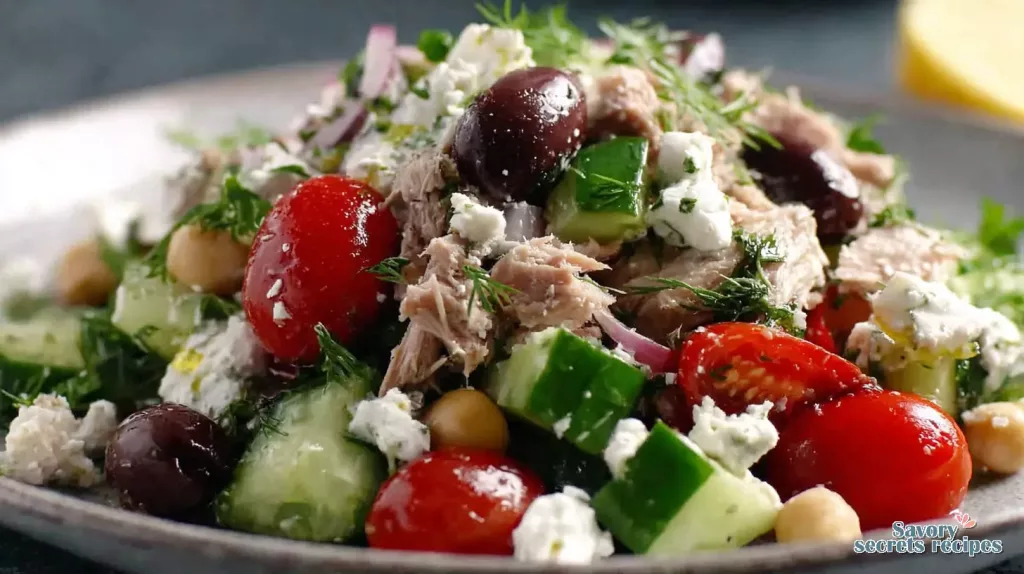




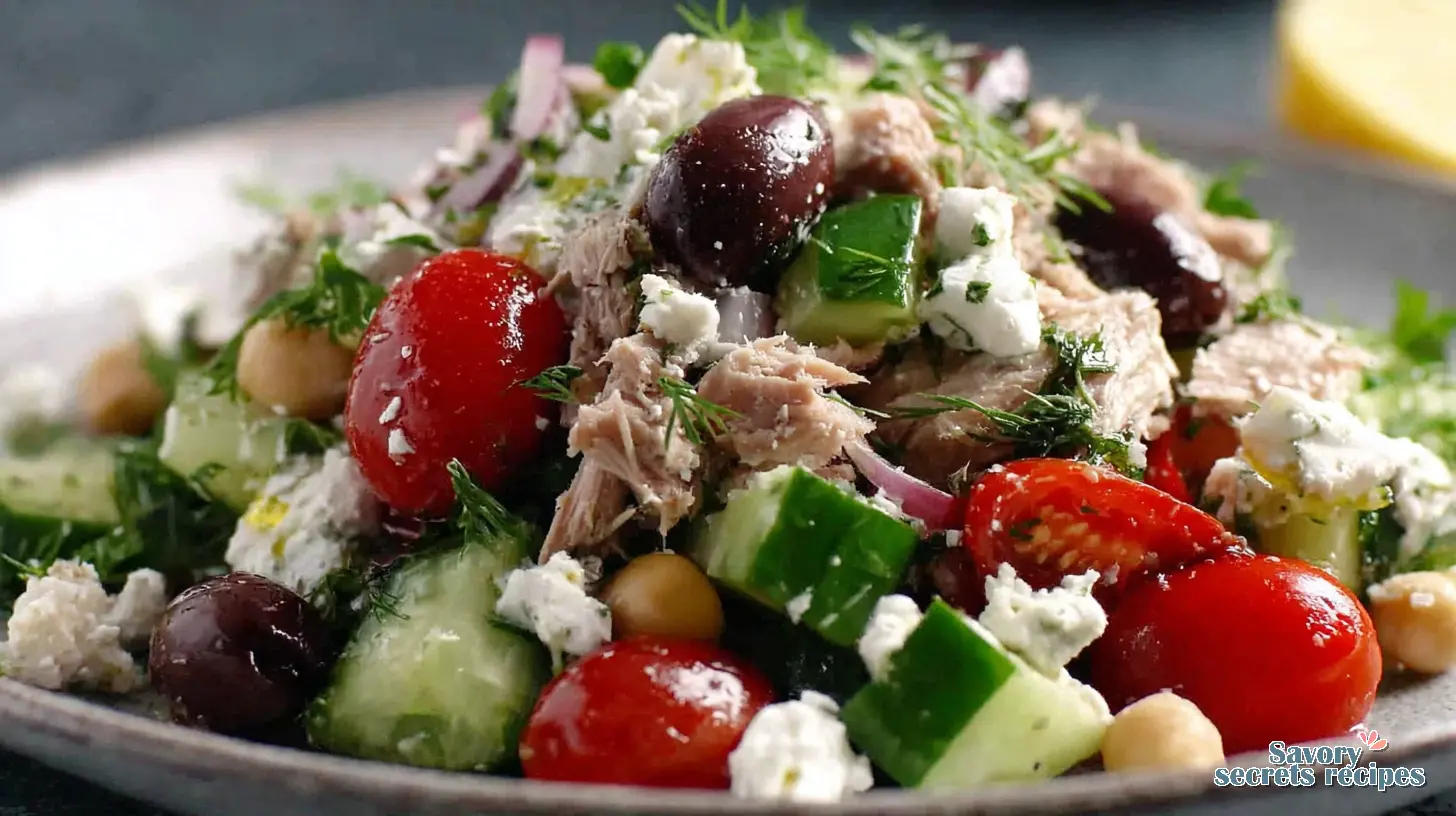
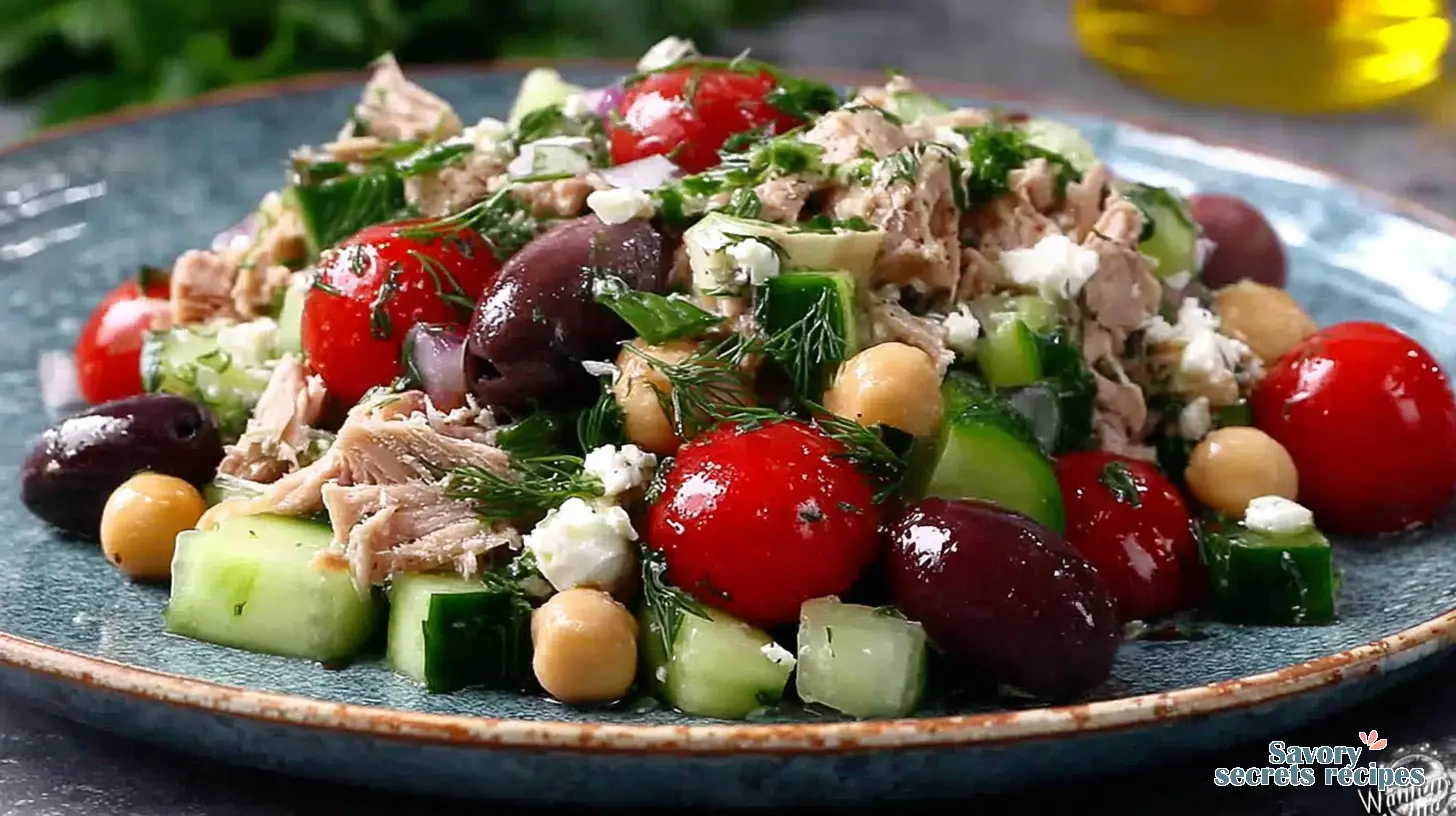
Easy Mediterranean Tuna Power Bowl
Ingredients
Method
- Combine drained chickpeas, diced cucumber, halved tomatoes, diced red onion, halved Kalamata olives, and chopped fresh parsley and dill in a large mixing bowl.
- Add drained tuna to the bowl. Gently flake it into the vegetable mixture with a fork, incorporating it lightly.
- In a small bowl or jar, combine extra virgin olive oil, fresh lemon juice, minced garlic, Dijon mustard, and dried oregano. Add a pinch of salt and a few grinds of black pepper. Vigorously whisk until slightly thickened and creamy. Taste and adjust seasoning as needed.
- Pour the dressing over the tuna and vegetable mixture. Gently toss everything together with a large spoon or spatula until evenly coated.
- Let the salad rest for at least 10-15 minutes before serving to allow flavors to meld.
- Give the salad a final gentle toss. Taste and adjust seasoning if needed before serving.
Notes
Why This Mediterranean Tuna Power Bowl?
You know that feeling, right? It’s a busy Tuesday, maybe you’ve just rushed home from a long day, and the thought of cooking anything elaborate just feels like too much. You want something healthy, something satisfying, but you don’t want to spend an hour in the kitchen, or deal with a huge pile of dishes. I’ve been there countless times, and in my experience, that’s precisely when a recipe like this Mediterranean Tuna Power Bowl shines.
This isn’t just another canned tuna recipe. This is about effortless nourishment, a meal that feels vibrant and tastes incredible without demanding much from you. It’s a smart healthy choice, especially as we head into spring here in Los Angeles, when lighter meals that still pack a punch really hit the spot. I mean, who doesn’t want a meal that looks impressive but takes minutes to assemble?
From what I’ve seen, people are always looking for quick weeknight dinner ideas that don’t compromise on flavor or health benefits. This Mediterranean Tuna Power Bowl is exactly that. It’s a balanced Mediterranean tuna plate, full of protein and fresh vegetables, designed for your busy life. You’ll feel energized, not weighed down, and honestly, that’s the difference-maker for me.
Gathering Your Goodness: Ingredients You’ll Need
The beauty of a healthy tuna bowl meal like this Mediterranean Tuna Power Bowl is how straightforward the ingredients are. You won’t need to hunt down anything obscure at Whole Foods or your local Santa Monica Farmers Market. These are all staples you can pick up at Ralphs or Trader Joe’s.
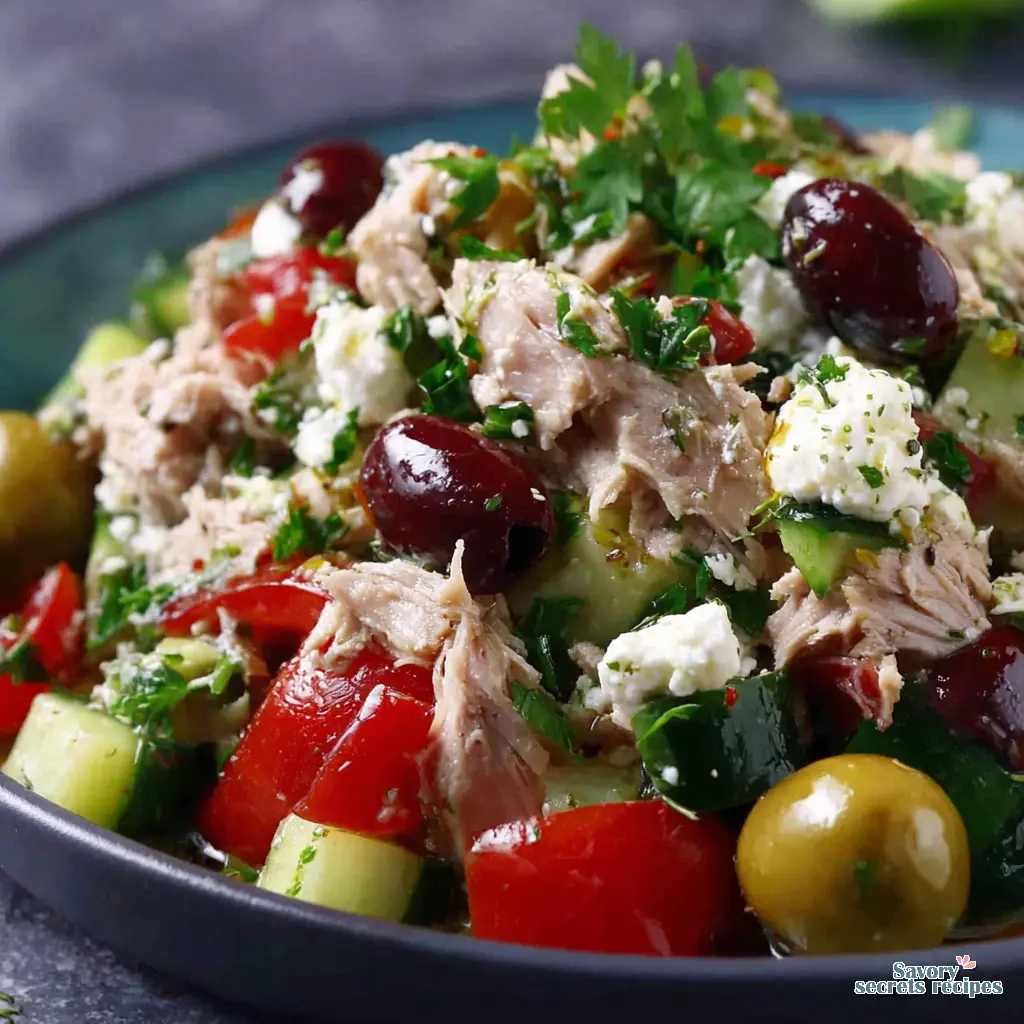
We’re talking about solid tuna, chickpeas for that extra fiber and texture, crisp English cucumber, sweet cherry or grape tomatoes, a bit of finely diced red onion, and those wonderfully briny Kalamata olives. Fresh parsley and dill bring that vibrant, herbaceous flavor that just screams “Mediterranean.” For the dressing, it’s a simple, classic olive oil dressing: extra virgin olive oil, fresh lemon juice, dried oregano, Dijon mustard, a garlic clove, and a pinch of salt and freshly ground black pepper. Makes sense to me, right?
You’ll notice I don’t list quantities here. That’s because the recipe card below will have all those precise details. My job is to tell you why these ingredients work and how to pick the best ones.
Choosing the Best Tuna for Your Power Bowl
When it comes to canned tuna recipes, the quality of your tuna really matters for a Mediterranean Tuna Power Bowl. I’d lean toward solid tuna, packed in olive oil if you can find it. Why? Well, the olive oil adds flavor and healthy fats, and it helps keep the tuna moist. If it’s packed in water, that’s fine too, just make sure to drain it really well.
For me, the healthiest canned tuna to buy is often wild-caught, pole-and-line caught tuna. It’s generally more sustainable, and I think it just tastes better. You’re looking for clean, mild flavor, not something overly fishy. You might wonder, is it okay to have canned tuna on a Mediterranean Diet? Absolutely! It’s an excellent source of omega-3 rich foods and protein, fitting perfectly into the diet’s emphasis on seafood.
As for which tuna is better for diabetics, generally speaking, tuna packed in water or olive oil with no added sugars or excessive sodium is a good choice. It’s a lean protein that won’t spike blood sugar, which is a common concern for many. Just read your labels carefully, that’s the detail that matters.
Assembling Your Mediterranean Tuna Power Bowl
You’ll find the full, step-by-step instructions in the recipe card below, but let me walk you through the general flow. This isn’t complicated, honestly. It’s all about combining fresh, simple ingredients into something greater than the sum of its parts.
First, you’ll prep your vegetables: dicing the cucumber, halving the tomatoes, finely chopping the red onion and herbs. For the red onion, here’s a quick win: if you find the raw onion a bit too sharp, soak the slices for about five minutes in ice water after slicing, then dice them finely. It really softens the flavor, trust me on this.
Then, you’ll drain and flake your tuna and rinse your chickpeas. Finally, you whisk together that bright, zesty lemon herb vinaigrette. After that, it’s just assembly. Layer your chosen grain (quinoa is my go-to, but brown rice works beautifully) with the fresh vegetables, chickpeas, tuna, and a generous drizzle of that amazing dressing. This is where it gets good.
Pro Tips for a Perfect Power Bowl
Omar’s Quick Wins for Your Tuna Power Bowl
Dressing Ahead: I always recommend mixing up a large batch of that lemon herb vinaigrette and storing it in a tightly closed mason jar in the fridge. It’ll keep for 1 to 2 weeks, meaning you’ve got fresh dressing ready for this Mediterranean Tuna Power Bowl or any other salad you whip up during the week. That’s the difference-maker for easy meal prep, in my experience.
Meal Prep Strategy: For smart meal prep, here’s what I’ve seen works best: hold the dressing and tuna separately. Arrange your cooked grain and all the fresh salad components in your meal-prep containers. Then, add the tuna and dressing just before you’re ready to eat. This prevents the greens from getting soggy and the tuna from drying out. It’s a small step, but it makes all the difference for a fresh-tasting bowl.
Packing for On-the-Go: If you’re taking your healthy tuna bowl meal to work or school, try layering ingredients backwards. Put the olives and tomatoes at the bottom, then the chickpeas, then the cucumber, and finally the leafy greens (if you’re using any). This protects the more delicate items. Always pack the dressing in a small, separate container. It’s worth considering.
Optimizing Red Onion Flavor: As I mentioned earlier, if you’re not a fan of the sharp bite of raw red onion, give it a quick ice bath. Slicing it finely and then soaking it for five minutes in ice water before dicing will mellow it out considerably. You still get that essential flavor without it overpowering the dish. Fair enough?
Mediterranean Tuna Bowl Variations
The beauty of a power bowl is its adaptability. This Mediterranean Tuna Power Bowl is a fantastic template, and you’ve got permission to make it your own. I mean, we’re all looking for variety, right?
You can easily switch out the quinoa for any other cooked whole grain. Brown rice works wonderfully, or even farro or a whole wheat orzo for a different texture. If you’re looking for a change from tuna, try chopped cooked chicken or even canned cannellini beans for a vegetarian option. That’s the detail that matters for customization.
Feel free to mix and match your fresh vegetables too. Add some vibrant bell peppers, maybe some roasted red peppers for a smoky note, or even some creamy avocado. I’ve seen people add spinach or romaine, though if you’re meal prepping, keep those separate until serving to prevent sogginess. Some sun-dried tomatoes or a sprinkle of feta cheese recipes would also be fantastic additions. It depends on the situation, but generally speaking, you can’t go wrong with fresh additions.
Storage & Meal Prep Tips for Your Mediterranean Tuna Power Bowl
This Mediterranean Tuna Power Bowl is absolutely perfect for no-cook meal prep. You want to make sure you’re setting yourself up for success throughout the week.
Your homemade olive oil dressing will keep beautifully in a tightly closed mason jar in the fridge for 1 to 2 weeks. That means less work later. For the assembled bowls, arrange your cooked grain and salad components in individual meal-prep containers. Keep the tuna and the dressing in separate small containers until you’re ready to eat. This high-value tip prevents oxidation and sogginess. I’m still not entirely sure if everyone follows this, but it makes a huge difference.
When you’re ready to eat, simply add the tuna and dressing, give it a good stir to redistribute everything, and enjoy. An assembled salad, stored correctly, stays fresh for about 3-4 days in the refrigerator. Just remember, it’s a fresh tuna veggie bowl, so you’re aiming for that crisp freshness.
Serving Ideas for Your Balanced Mediterranean Tuna Plate
The great thing about a Mediterranean Tuna Power Bowl is its versatility. You can serve it exactly as it is, a complete, satisfying meal all on its own. That’s usually how I enjoy it, especially for a quick Mediterranean diet lunch.
But you’ve got options. If you’re feeling extra hungry, or want to make it a bit more substantial, it’s delicious served with some warm whole wheat pita bread or a slice of good sourdough. You could even stuff the salad into a pita or wrap for a portable lunch. For something different, I’ve seen it scooped up with crackers or even tortilla chips. It depends on the situation, but the goal is always vibrant satisfaction.
Frequently Asked Questions (FAQ)
When you finally dig into this Mediterranean Tuna Power Bowl, you’ll feel it. That perfect combination of fresh, crisp vegetables, the satisfying texture of the chickpeas and grain, and that flavorful tuna all tied together with a zesty lemon herb vinaigrette. It’s exactly right for a light dinner idea or a quick, healthy lunch.
I genuinely love the problem-solving aspect of creating meals that are both delicious and easy. This recipe is one of those solutions. It takes me back to those summer evenings in Essaouira, when the fishing boats came in at sunset and the whole harbor smelled like seawater and diesel and possibility.
So, grab some fresh ingredients on your next Trader Joe’s run. Make this Mediterranean Tuna Power Bowl. I promise you’ll feel nourished, energized, and pretty proud of yourself for making such a smart, healthy choice. And when you do, let me know how you customized it. I share tons of variations on Pinterest if you want ideas.
Source: Health & Nutrition Research
What is a Mediterranean power bowl?
A Mediterranean power bowl is a balanced meal featuring fresh, whole ingredients typical of the Mediterranean diet. It usually includes a grain base, lean protein like tuna, plenty of fresh vegetables, healthy fats, and a flavorful dressing, offering power bowl benefits like sustained energy and nutrient density.
Is it okay to have canned tuna on a Mediterranean Diet?
Yes, absolutely. Canned tuna is a fantastic, convenient source of protein and omega-3s, which are cornerstone Mediterranean ingredients. Just pick good quality tuna, preferably packed in olive oil or water, and ensure it’s a sustainable choice. It’s a great addition to your Mediterranean Tuna Power Bowl.
Which tuna is better for diabetics?
For diabetics, I’d lean toward canned tuna packed in water or extra virgin olive oil, with no added sugars or excessive sodium. These choices provide lean protein without impacting blood sugar levels significantly. The omega-3s are also beneficial for heart health, which is worth considering.
Is it okay to eat a Mediterranean Tuna Power Bowl every day?
Eating a Mediterranean Tuna Power Bowl daily can be part of a healthy diet, but I tend to think variety is key. While tuna is healthy, consuming it every single day might lead to concerns about mercury intake over time. From what I’ve seen, it’s better to rotate your protein sources throughout the week for balanced meals.
Why is it not good to eat canned tuna every day?
Generally speaking, the main concern with eating canned tuna every day is mercury exposure, especially from larger tuna species like albacore. Smaller varieties, like skipjack (often labeled “light” tuna), tend to have lower mercury levels. It’s a question of moderation and choosing wisely, but a Mediterranean Tuna Power Bowl a few times a week is fine.
What is the healthiest canned tuna to buy?
The healthiest canned tuna to buy is typically wild-caught, pole-and-line caught skipjack or light tuna, packed in water or extra virgin olive oil. These options tend to be lower in mercury and more sustainable. Reading the label for sustainability certifications is always a good idea, that’s the detail that matters.
Will tuna spike blood sugar?
No, tuna is a protein-packed meal and won’t spike blood sugar. In fact, its high protein content can help stabilize blood sugar levels, making it an excellent choice for anyone managing diabetes or just looking for a balanced Mediterranean diet lunch. It’s a smart healthy choice.