



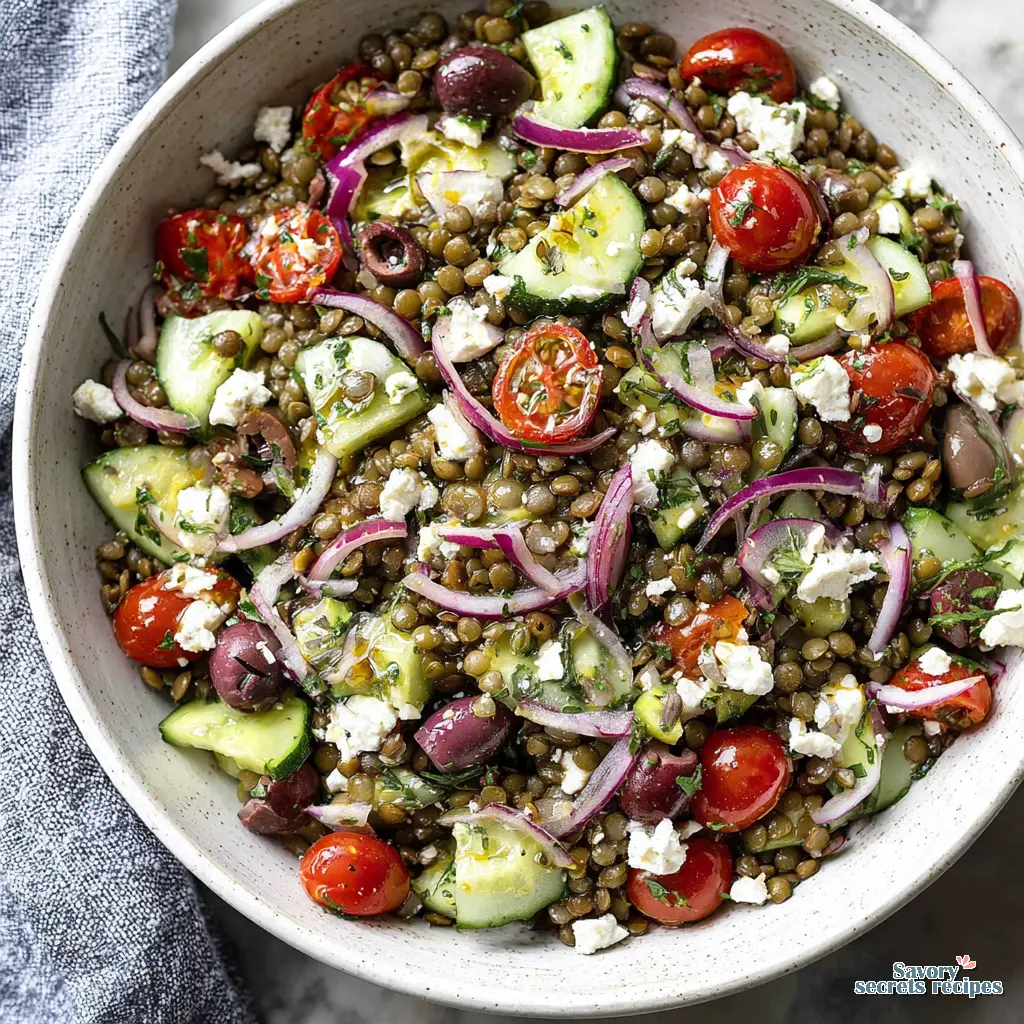
Fresh Mediterranean Lentil Bowl with Feta
Ingredients
Method
- Place lentils in a fine-mesh sieve. Rinse well under cold water, removing any imperfect or bad lentils.
- Place lentils, water, and a bay leaf in a medium pot. Bring to a boil over high heat. Reduce heat to medium-low, cover, and cook for 18-25 minutes until the lentils are tender but not mushy.
- Drain the lentils. Discard the bay leaf. Allow the lentils to cool in a large bowl in the refrigerator.
- Once the lentils are cooled, add cucumber, red onion, cherry tomatoes, olives, roasted red peppers, feta, oregano, and mint to the bowl. Toss well until combined. Set aside.
- In a small bowl, whisk orange juice, lemon juice, Dijon, and honey until smooth. Slowly drizzle in olive oil until the dressing is smooth. Season the dressing with salt and pepper to taste.
- Drizzle the dressing over the salad and toss until evenly coated. Season with additional salt and pepper to taste if needed. Store the salad in the refrigerator until ready to serve. Enjoy!
Nutrition
Notes
Why This Mediterranean Lentil Bowl Works for Your Real Life
You know the feeling. It’s Tuesday, you’re staring into the fridge, and you want something that feels nourishing but doesn’t require a culinary degree or two hours of your evening. I’ve been there, standing in my Brooklyn kitchen after a long day of testing, my brain fried. That’s exactly where this Mediterranean lentil bowl comes in. It’s not a revelation, honestly. It’s just a smart, satisfying assembly of things that work together. You get the plant protein from the lentils, the bright crunch from the veggies, and this dressing that ties it all together with a sweet, citrusy punch. It’s the kind of meal that makes you feel like you’ve got your life together, even when you really don’t. That tracks, right?
Choosing Your Ingredients: A Quick Comparison
Let’s talk about the foundation: the lentils. Here’s what I’m seeing. You’ve got a couple of clear paths. The recipe calls for standard dry lentils, which are perfect. They’re cheap, they cook quickly, and they soak up flavor like a dream. But if you’re truly pressed for time, those pre-cooked lentils from the produce section at Trader Joe’s or Whole Foods? They’re a legitimate shortcut. The tradeoff is texture. Your own simmered lentils will be more tender and seasoned through, while the pre-cooked ones hold a firmer bite. Fair enough. For a Wednesday night, I’d probably grab the pre-cooked. For a Sunday meal prep where I want that deeper flavor, I’m simmering my own with a bay leaf. Both get you to a great Mediterranean lentil bowl.
The same logic applies to the roasted red peppers. Jarred are fantastic, consistent, and sitting right there in your pantry. Freshly roasted have a smokier, more complex sweetness. I usually have the jarred kind on hand for exactly this scenario. It’s about building a pantry that works for you, not against you.
The Method: Letting the Process Do the Work
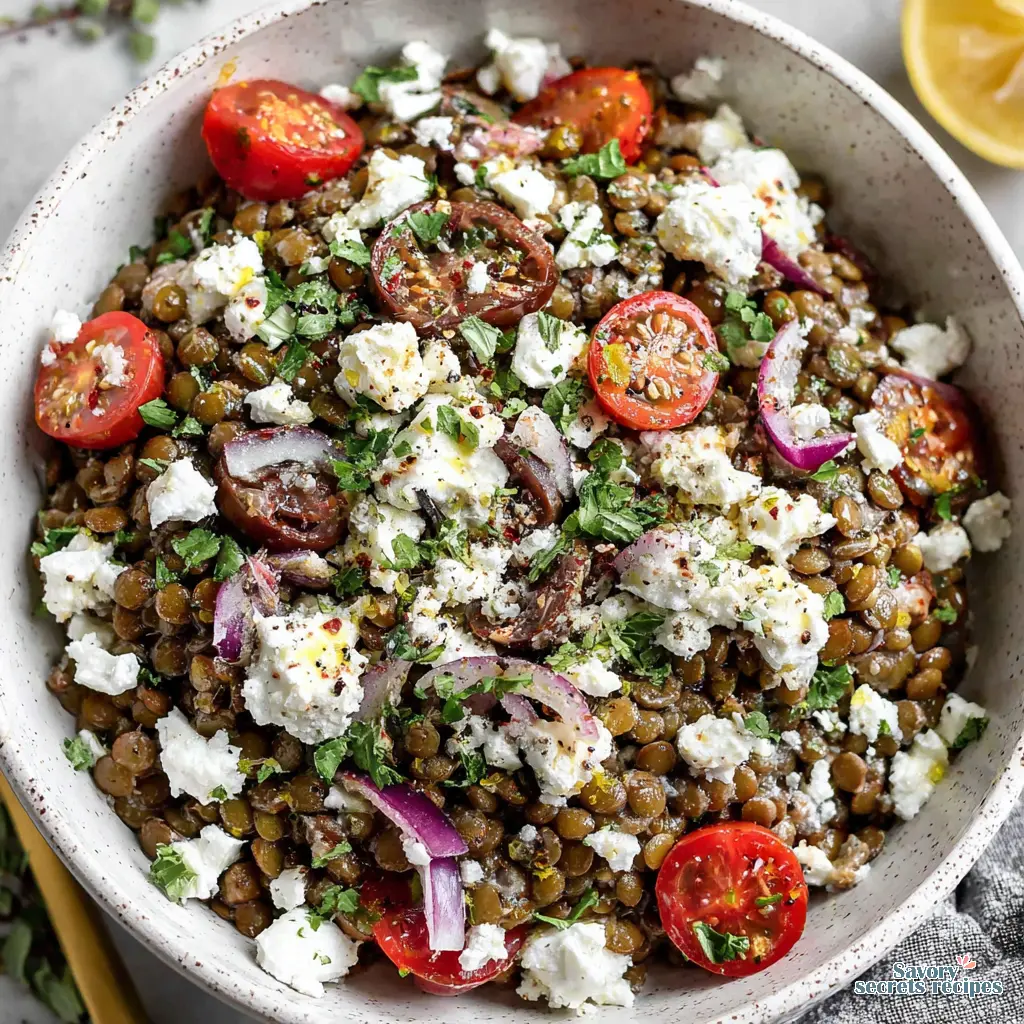
This isn’t a recipe where you need to babysit anything. If you’re cooking the lentils, you rinse them, cover them with water, drop in that bay leaf, and let them simmer. That’s it. Your pan’s not hot enough yet? It doesn’t matter here. You’re going for tender, not crispy. While that happens, you chop. The cucumber into little cubes, the red onion into thin half-moons that lose their bite in the dressing, the tomatoes just halved. This is the part I find almost meditative. Rough chops are fine. Imperfection is expected. It’s a bowl, not a French consommé.
The real magic, the thing that makes this taste like more than the sum of its parts, is the dressing. Freshly-squeezed orange and lemon juice, a hit of Dijon for emulsifying power, a whisper of honey, and good olive oil. You whisk it. Taste it really taste it. It should be bright, a little sweet, and sharp all at once. This is where you season. Now, pour most of it over the warm lentils and let them sit. This is the step most people rush. Those warm lentils drink in that dressing, and the flavor goes all the way through. Give it another minute. Let the process do the work.
Expert Tips for Your Best Lentil Bowl
I’ve tested this in more variations than I can count. Here’s what I wish I knew the first time.
First, flavor your lentils from the inside out. If you’re cooking them from dry, use vegetable broth instead of water. It adds a savory depth that plain water just can’t. And always add your salt after they’re cooked, not at the beginning. It seems counterintuitive, but it helps them stay tender.
Second, manage your moisture. If you’re meal prepping, store the components separately. The cucumbers will weep, the tomatoes will soften. Keep the dressing in its own little jar. When you’re ready to eat, assemble. It takes two extra seconds and keeps everything from getting soggy. Spread your hummus on the bottom of the bowl if you’re using it, then pile everything on top. The texture stays distinct.
Finally, the herbs. You’re using dried oregano and fresh mint. Don’t swap them. The oregano gives that earthy, classic Mediterranean base note. The fresh mint, added right at the end, is the high note, the burst of cool fragrance that makes the whole thing sing. If it’s not ready, it’s not ready. Wait until you have fresh mint.
Common Mistakes & Fixes
Mistake: Soggy, mushy bowl.
Solution: You assembled everything too far in advance. Store the dressing, lentils, and veggies separately. Combine just before eating.
Mistake: Bland lentils.
Solution: You probably cooked them in plain water. Next time, use broth. And always dress them while they’re still warm so they absorb the flavor.
Mistake: Dressing won’t emulsify.
Solution: Your mustard is your friend. Whisk the Dijon with the citrus and honey first, then slowly stream in the olive oil while whisking constantly. It’ll come together.
Your Complete Meal-Prep Blueprint
This Mediterranean lentil bowl is a meal prep superstar. Here’s my exact Sunday timeline. At 4 PM, I put the lentils on to simmer (or I open the package of pre-cooked). While they cook, I whisk the dressing and chop all the vegetables cucumber, onion, tomatoes, olives. I stash the veggies in one container, the dressing in a small jar. When the lentils are done, I drain them, let them cool just for a minute, then toss them with most of the dressing in their own container. The feta goes in a tiny separate container so it doesn’t get soggy. The whole process takes maybe 35 minutes, and now I have the base for four lunches. Each morning, I grab the containers and assemble at work. It’s fresh, it’s fast, and it beats takeout every single time.
Delicious Variations and Customizations
The framework here is incredibly flexible. Let’s table the original recipe for a second and talk options.
Need it gluten-free? The bowl itself is, but if you want to add a grain, skip farro. Quinoa or millet are perfect, fluffy substitutes. Cook them in broth, too, and spread them on a tray to cool so they don’t get mushy.
Going vegan? Omit the feta. To get that tangy, salty note back, add a tablespoon of nutritional yeast to the dressing. It sounds weird, but it works. You could also add a handful of toasted almonds for crunch and richness.
Want a heartier texture? Use French green or black Beluga lentils instead of the standard brown or green. They hold their shape beautifully and have a more distinct, almost peppery bite. It’s a 1:1 swap.
My daughter, who refuses to eat “mixed up food,” builds her own deconstructed version. I put all the components in little bowls and let her assemble. She’s seven and can properly dress farro. Last week she told her teacher that vinaigrette is “a temporary emulsion.” I’m not sure if I should be proud or apologize.
How to Store, Reheat, and Revive Your Bowls
Storage is straightforward but important. Keep components separate in airtight containers in the fridge. They’ll last 4 to 5 days. The dressed lentils might soak up the dressing; that’s okay. If they seem dry when you go to assemble, just drizzle a little fresh olive oil and a squeeze of lemon juice over them. It rehydrates and wakes the flavors right back up.
Reheating? I prefer this at room temperature, honestly. But if you want it warm, just microwave the lentils (and grain, if using) for 60-90 seconds. Then top with the cold, crisp veggies and cheese. You get that wonderful contrast of warm and cool, soft and crunchy. Don’t microwave the whole assembled bowl unless you want limp vegetables. I learned that the hard way.
Can you freeze it? I wouldn’t. The vegetables will lose all their texture and become watery when thawed. This is a fridge meal prep recipe, not a freezer one.
Frequently Asked Questions
Serving It Right: The Final Touch
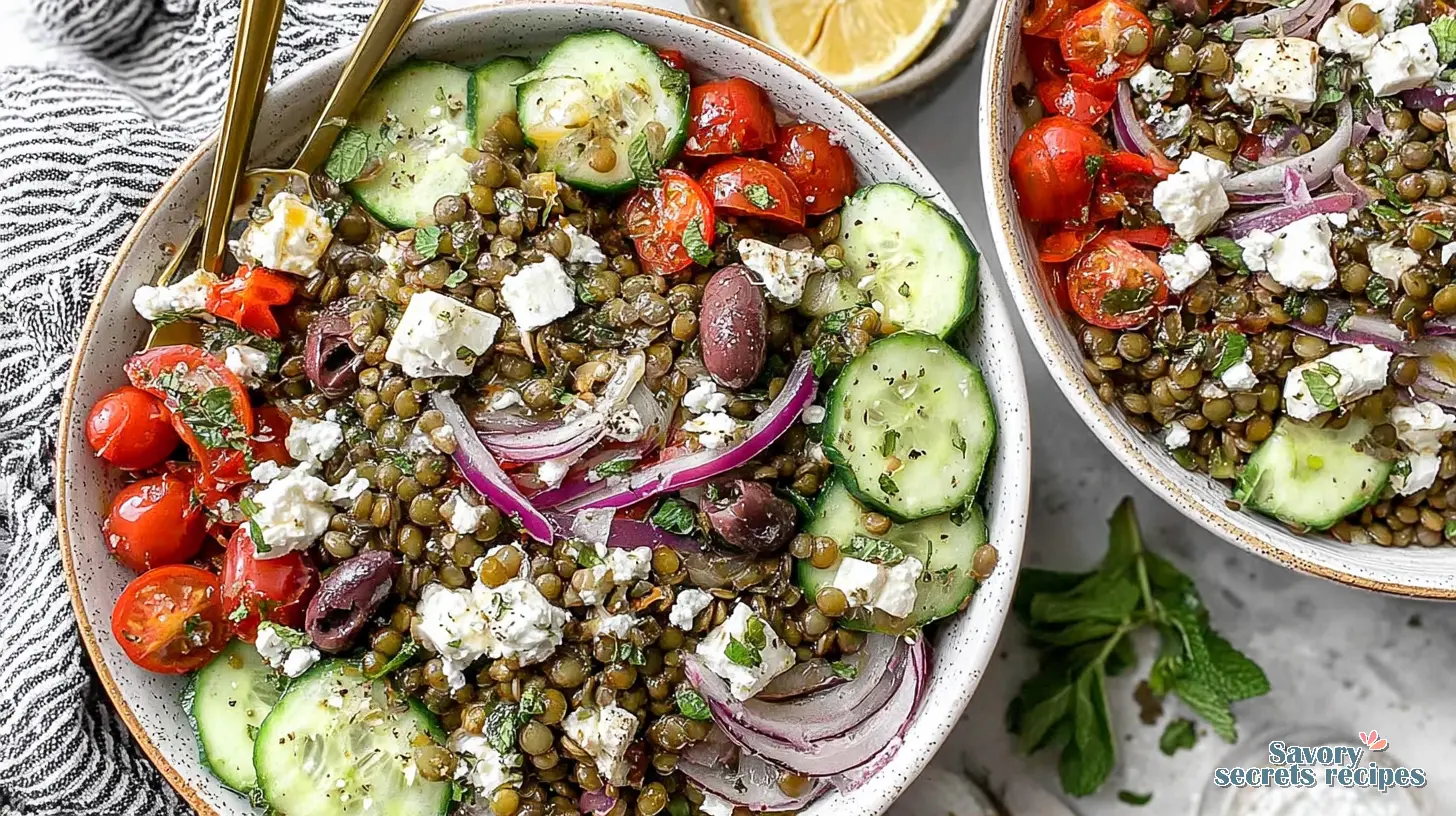
Presentation matters, even at home. I like to spread a spoonful of hummus on the bottom of a wide, shallow bowl. Then, I mound the dressed lentils in the center. Arrange the cucumbers, tomatoes, onions, and olives in little piles around the edges. Crumble the feta over the top, and finish with a generous sprinkle of fresh mint. The final drizzle of extra virgin olive oil and a crack of black pepper? That’s the one. It looks like something from a California cafe, but you made it in your kitchen in under 30 minutes of active work. Serve it with warm pita or just a fork. It’s a complete, satisfying meal that proves healthy eating doesn’t have to be complicated or boring.
When you make this Mediterranean lentil bowl, you’ll see how the simple act of combining fresh, vibrant ingredients creates something truly greater than the sum of its parts. It’s the kind of recipe that becomes a reliable friend in your weekly rotation. Let me know how it goes for you. And for more ways to play with grains, bowls, and big flavors, check out my Pinterest boards where I save all my inspiration.
Source: Health & Nutrition Research
What are the key ingredients for a Mediterranean lentil bowl?
The core is cooked lentils, fresh veggies like cucumber and tomato, a briny element like kalamata olives, and a bright citrus-herb dressing. Feta cheese and fresh mint are the finishing touches that make it sing. It’s that combo of plant protein, crunch, and zest that defines the bowl.
How do you make the zesty citrus dressing for this lentil bowl?
Whisk together freshly-squeezed orange and lemon juice with Dijon mustard and honey. Then, slowly stream in extra-virgin olive oil while whisking constantly until it emulsifies. The fresh citrus is non-negotiable for that authentic, sunny flavor. Bottled juice just won’t give you the same brightness.
Can I make this Mediterranean lentil bowl ahead of time for meal prep?
Absolutely. It’s ideal for it. Just store the dressed lentils, chopped vegetables, dressing, and feta in separate containers. Assemble when you’re ready to eat. This keeps the veggies crisp and prevents sogginess. The components will last 4-5 days in the fridge.
What are some protein variations for a plant-based lentil bowl?
The lentils are your main protein, but you can add canned chickpeas (rinsed and patted dry) for extra heft. For a different texture, try baked tofu cubes marinated in lemon and oregano. The bowl framework is flexible, so feel free to add what you like or have on hand.
How long do cooked lentils last in the refrigerator for meal prep bowls?
Cooked lentils, stored in an airtight container, will keep well for up to 5 days in the fridge. If you’ve dressed them with the vinaigrette, they might absorb it and dry out slightly. A drizzle of olive oil or lemon juice before serving will revive them perfectly.