



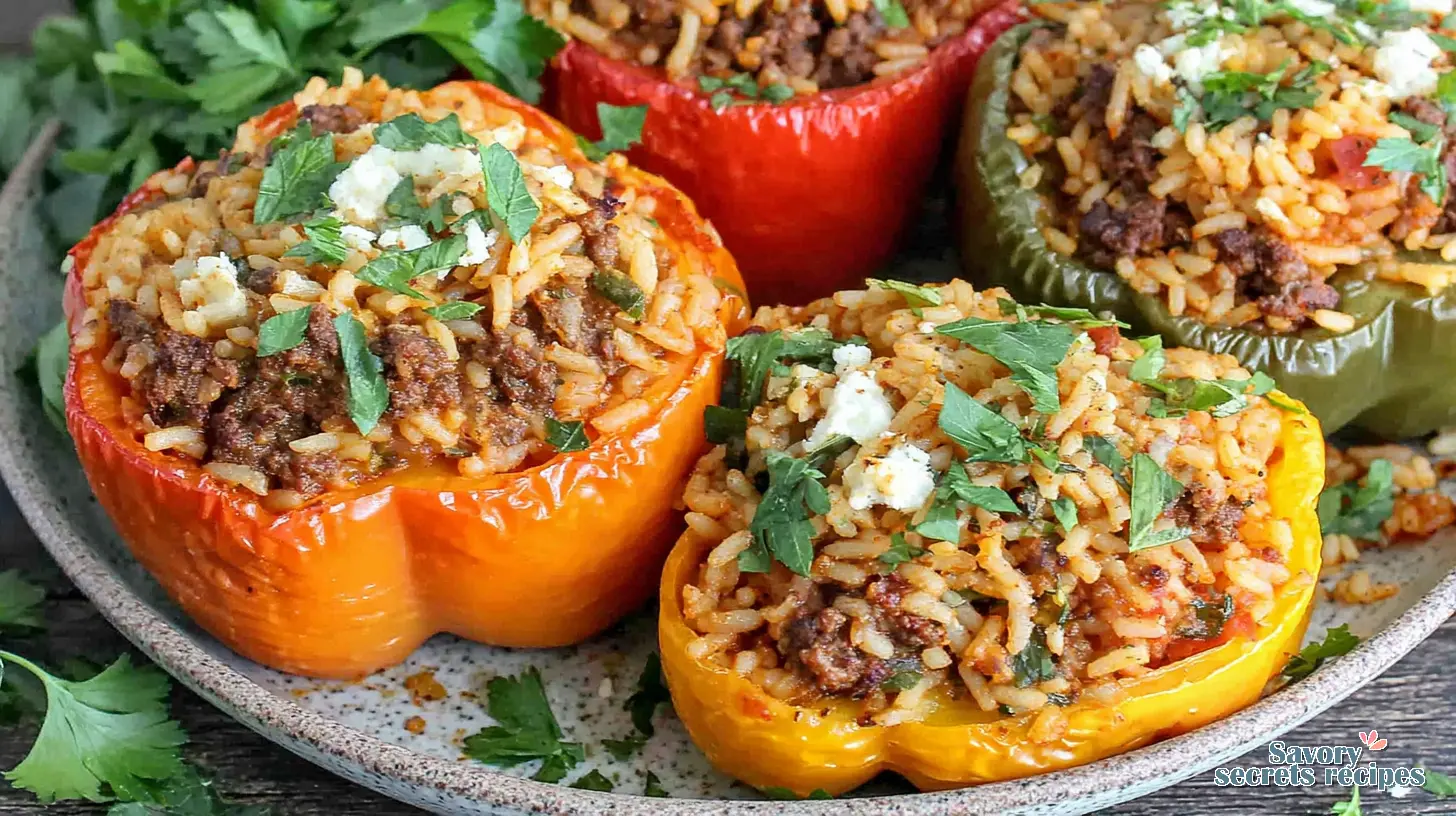
Mediterranean Chickpea Stuffed Peppers Recipe
Ingredients
Method
- Heat 1 tbsp of extra virgin oil in a medium heavy pot. Sauté the chopped onions until golden. Add the meat and cook over medium-high heat, stirring occasionally, until deeply browned. Season with salt, pepper, allspice, and minced garlic (or garlic powder). Stir in the chickpeas and cook briefly.
- Add the parsley, soaked and drained rice, paprika, and tomato sauce to the same pot. Stir to combine. Add water and bring to a high simmer until the liquid reduces by half. Turn the heat to low, cover, and cook for 20 minutes or until the rice is fully cooked and tender. Taste and adjust seasoning as desired.
- While the rice cooks, heat a grill, indoor griddle, or skillet over medium-high heat. Grill the bell peppers for 10-15 minutes, covered, turning as needed until softened and colored. Remove from heat and set aside to cool briefly.
- Preheat the oven to 350 degrees F.
- Arrange the bell peppers open-side up in a baking dish filled with 3/4 cup broth or water. Fill each bell pepper with the cooked stuffing mixture of meat, rice, and chickpeas.
- Cover the baking dish with foil, ensuring it does not touch the stuffed peppers. Place the dish on the middle rack of your preheated oven. Bake for 20-30 minutes.
- Remove from the oven. Garnish with parsley, if desired, and serve.
- To serve Greek-style, add Tzatziki sauce and Greek salad as sides.
Notes
- Variations for Stuffed Bell Peppers: If you like you can replace the ground beef with ground turkey or ground chicken. Or you can make these stuffed peppers vegan by eliminating the meat all together. And to try different flavors, you can replace ground allspice with ground cumin or Italian seasoning. This is a dairy free stuffed pepper recipe, but if you want to add cheese, a sprinkle of crumbled feta added at the end is a good option.
- To Prepare Ahead: You can prepare the rice mixture one day in advance if you like by following steps #1 and #2. Let the rice cool completely before storing in the fridge. And you can also prepare the peppers per step #3. Store the peppers in the fridge separately once cooled. The next day, you can assemble the stuffed bell peppers and bake (steps #5 and #6). It may help to bring the stuffed peppers to room temperature before baking.
- Can you freeze cooked stuffed peppers? First, be sure to cool the stuffed peppers completely. You can portion and store them in freezer-safe containers and freeze for 1 to 2 months. Thaw in fridge overnight, and warm up in a medium-heated oven (it helps to add a little bit of liquid to your baking dish, and cover the peppers before placing in oven.)
- Visit our Online Shop to browse quality Mediterranean ingredients including extra virgin olive oils and all-natural and organic spices used in this recipe
Why You’ll Love These Mediterranean Chickpea Stuffed Peppers
You know that feeling. It’s a Tuesday, you’re staring at a can of chickpeas and a couple of bell peppers, and you’re just… stuck. You want something healthy, something that actually tastes good, but you don’t want to spend the whole night in the kitchen. I get it. I’ve been there more times than I can count, especially when I’m trying to get a video shoot wrapped up and still need to get dinner on the table.
Here’s the thing about that. This recipe for Mediterranean Chickpea Stuffed Peppers is the solution. It transforms those simple, staring-back-at-you ingredients into a legitimately satisfying meal in under an hour. I used to end up with peppers that were either too crunchy or, more often, a sad, mushy mess. The filling would be bland, the whole thing would slump. Not a huge deal, but worth noting because I figured out the fixes. Now, this is one of my go-to weeknight dinners. My family devours them, and honestly, they reheat like a dream for lunch the next day. It’s healthy eating made effortless, and that’s a win in my book.
The Key Ingredients & What They Do
Let’s talk about what makes this filling sing. You’re building layers of flavor here, and each component has a job. The base is, of course, chickpeas. I like the convenience of canned, but you can absolutely cook your own from dry if you’re into that. They give you that plant-based protein and a hearty, satisfying texture. The white rice is crucial, too. It soaks up all the savory juices from the tomato sauce and spices, plumping up and making the filling cohesive so it doesn’t just tumble out when you take a bite.
The aromatics are non-negotiable. A small yellow onion, finely diced, and a few garlic cloves, minced. You’ll cook these in good Greek extra virgin olive oil until they’re soft and fragrant. That smell, the one that hits you when the garlic first hits the warm oil? That’s the start of everything good. Then come the spices: sweet or hot paprika and ground allspice. This might just be me, but allspice is the secret weapon. It’s warm, a little peppery, and it gives that deep, complex background note that makes the whole thing taste… well, more Mediterranean. Fresh parsley stirred in at the end brings a bright, clean finish that cuts through the richness.
And the peppers themselves. You’ll want firm, brightly colored bell peppers. I’m partial to red, orange, or yellow for their natural sweetness, which plays so nicely against the savory filling. Green ones work in a pinch, but they have a more bitter edge. Fair enough if that’s what you’ve got. The key step here is to season the inside of each pepper with a little salt before you stuff them. It seems like a tiny detail, but it draws out just a bit of moisture and seasons the vegetable itself, not just the filling. Makes sense to me to treat the whole dish, right?
How to Prepare Them, Step by Step
Okay, let me show you what I mean. First, you’ll prep your peppers. Slice them in half lengthwise and remove the ribs and seeds. Give the insides that light sprinkle of salt I mentioned and set them in your baking dish. A 9×13-inch dish usually fits them all snugly, which helps them steam a little and stay upright.
Now, the filling. In a large skillet, you’ll cook your onion in that olive oil until it’s translucent. Then you add the garlic for just a minute until it’s fragrant. Don’t let it brown. This is where most people run into trouble, rushing the garlic and ending up with a bitter note. Next, you add your ground beef, breaking it up as it cooks until it’s no longer pink. Season it well with kosher salt and black pepper. Then, the spices go in. You’ll toast them for about thirty seconds with the meat. That quick toast wakes up their oils and makes the whole kitchen smell incredible.
Stir in the drained chickpeas, the tomato sauce, water, and uncooked white rice. Bring it to a simmer, then cover and let it cook. This is where the rice starts to absorb the liquid and the flavors really marry. Let it do its thing for about 15-20 minutes, until the rice is mostly tender but still has a slight bite. It’ll finish cooking in the oven. Take it off the heat and fold in almost all of your chopped fresh parsley, saving a little for garnish.
Now, stuff those pepper halves. Pack the filling in there, but don’t overstuff. Leave a little room at the top because the rice will expand a bit more in the oven. Pour the chicken broth into the bottom of the baking dish around the peppers. This creates steam in the oven, helping to cook the peppers through without drying out the filling. Cover the dish tightly with foil and bake.
My Uncle Marc’s Rule & The Baking Science
I remember my uncle Marc letting me stand on a milk crate at his bistro’s prep station, teaching me how to brunoise carrots. He’d check my cuts with a ruler and if they weren’t within a millimeter, I’d start over. Seemed harsh, but now I get it. Consistency matters. That tracks with baking these Mediterranean Chickpea Stuffed Peppers.
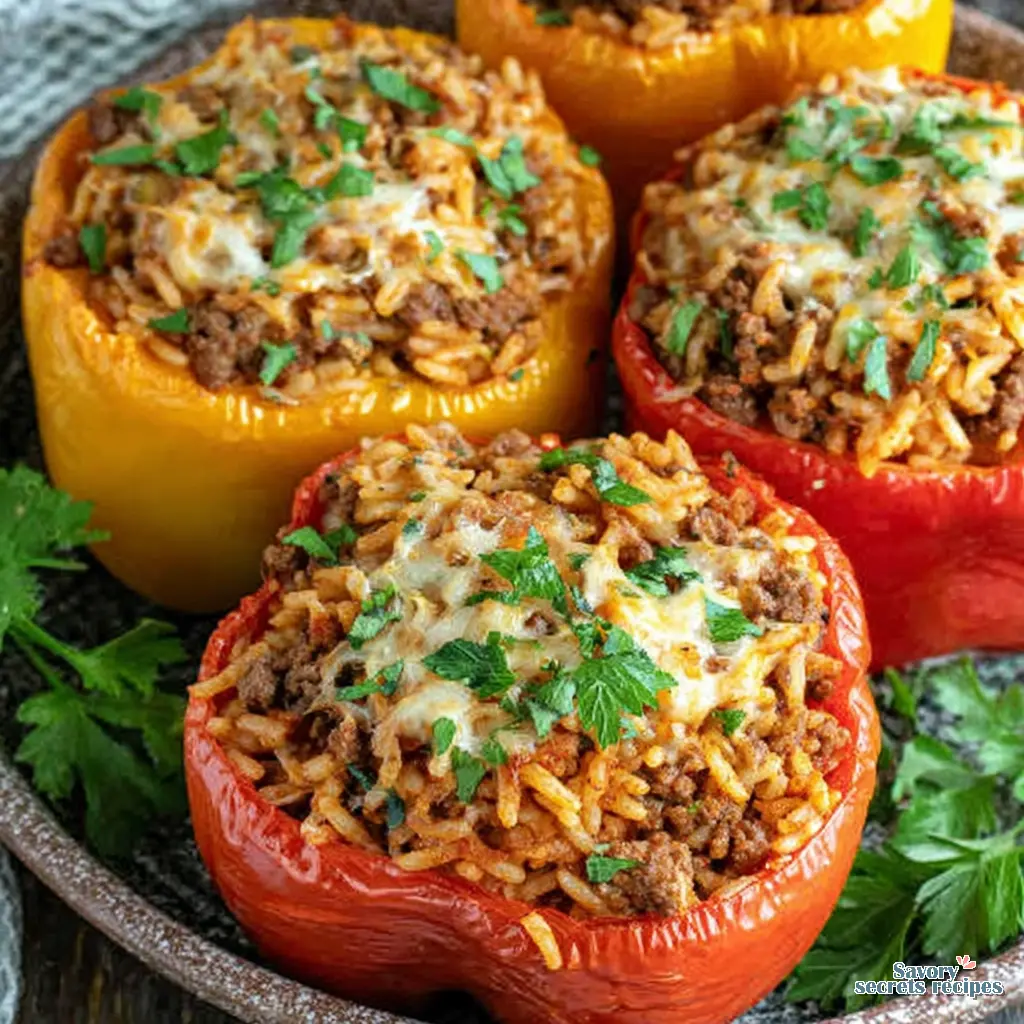
The ideal baking temp is 375°F (190°C). You start them covered with foil. This steams the peppers, making them tender without burning the tops. After about 35 minutes, you take the foil off. This is the good stuff. That last 10-15 minutes of uncovered baking is critical. It lets any excess moisture evaporate, firms up the filling, and gives the edges of the peppers and the top of the filling a chance to get those delicious, slightly caramelized spots. You’ll know they’re ready when the peppers are tender enough to pierce easily with a fork and the filling is hot all the way through. They should hold their shape, not collapse.
Expert Tips for Perfect Results Every Time
I want to give you a few quick wins here, straight from my test kitchen. First, to save time, cook the filling mixture while the peppers are prepped and waiting. Multitasking is your friend on a weeknight. Second, and I can’t stress this enough, taste your filling before you stuff the peppers. Season it generously. If it tastes a bit bland in the pan, it’ll be bland in the pepper. Third, if your filling seems a little loose or wet, let it sit off the heat for five minutes. The rice will absorb that extra liquid.
For meal prep, you’ve got options. You can prepare the filling a day ahead, keep it sealed in the fridge, and stuff the peppers the next day when you’re ready to bake. If you have the fridge space, you can even stuff them, arrange them in the dish, cover, and refrigerate overnight. Just add an extra 5-10 minutes to the bake time since you’re starting from cold. That’s a solid approach for getting ahead.
Common Mistakes & Fixes
Mistake: Bland tasting stuffed peppers.
Solution: This isn’t just about salt. You likely under-seasoned the filling or skipped toasting the spices. Always taste the filling before stuffing and make sure you cook the spices with the meat for that thirty seconds.
Mistake: Soggy peppers or filling.
Solution: You probably used a watery ingredient like fresh tomatoes, or didn’t let the filling thicken enough before stuffing. Stick to tomato sauce, and ensure the rice has absorbed most of the liquid in the skillet. Also, that final uncovered bake is non-negotiable for driving off steam.
Mistake: Peppers are still too crisp.
Solution: The baking dish wasn’t covered tightly enough with foil during the first phase, or the oven temp was too low. Make sure the foil is sealed well over the dish to trap the steam that tenderizes the peppers.
Delicious Variations to Try
Once you’ve got the basic Mediterranean Chickpea Stuffed Peppers down, it’s fun to play. The recipe is wonderfully adaptable. Want to make it vegan or dairy-free? You can simply omit the ground beef and add in another can of chickpeas or some chopped mushrooms for depth. I’m not totally sure, but I’d probably lean toward mushrooms for that umami hit.
Love a bit of briny saltiness? Chop up some green or black olives and stir them into the filling. For a nutty crunch, scatter a handful of pine nuts on top during the last 10 minutes of baking. If you want to use a different grain, you can substitute brown rice or even quinoa for the white rice, just adjust the cooking time in the skillet accordingly. Brown rice will need more liquid and more time to become tender.
Serving Suggestions & Pairings
These peppers are a complete meal on their own, honestly. But if you’re feeding a crowd or just want to round things out, I’ve got ideas. A simple, crunchy side salad is always a winner. Think romaine or butter lettuce with a lemony vinaigrette. It cuts through the heartiness perfectly.
For something a bit more substantial, roasted vegetables are fantastic. Toss some asparagus or broccoli florets with olive oil, salt, and pepper, and roast them on another rack in the oven while the peppers bake. Steamed green beans or a quick sauté of spinach with garlic also work beautifully. The goal is something fresh and green to complement the savory, baked goodness of the Mediterranean Chickpea Stuffed Peppers.
Storage & Reheating Instructions
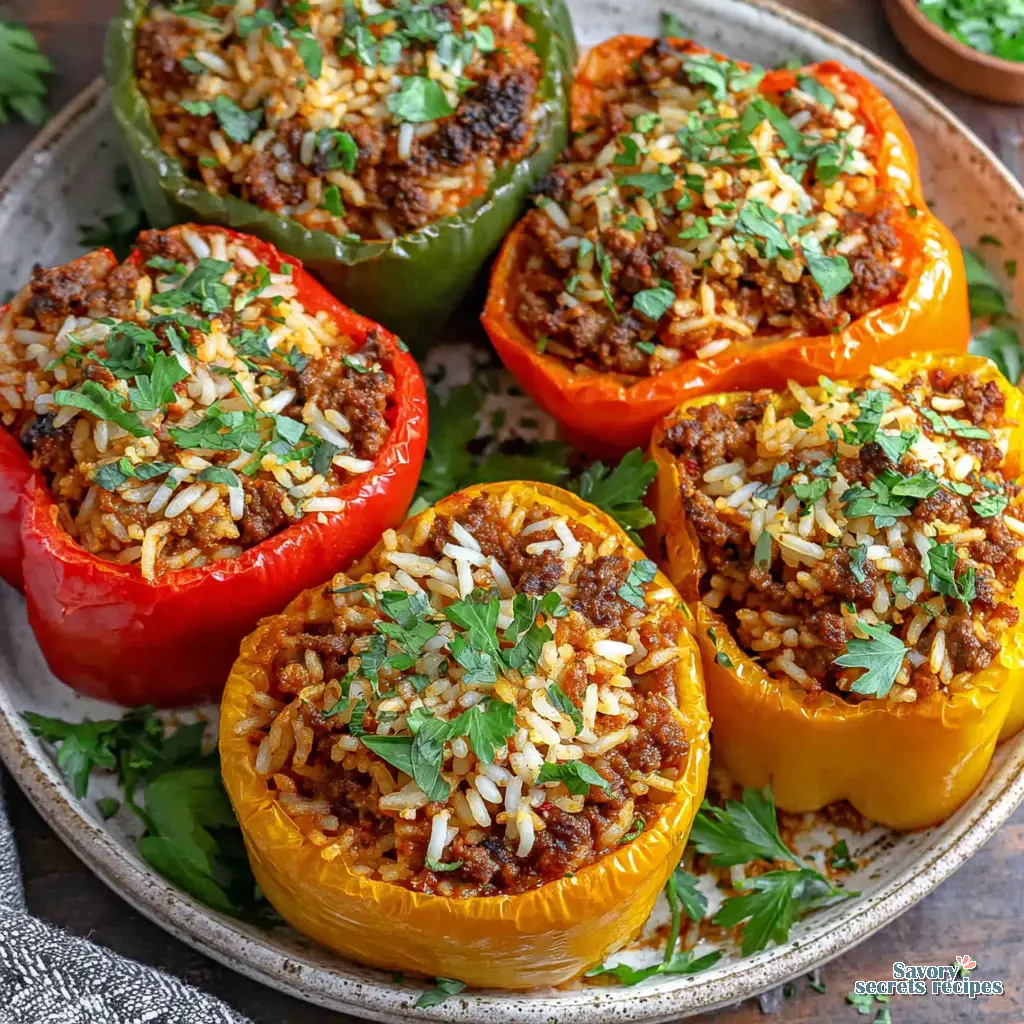
Leftovers are one of the best parts. Let the peppers cool completely, then transfer them to an airtight container. They’ll keep in the fridge for up to 4 days. To reheat, you can use the microwave for a quick fix, but for the best texture, place them in a baking dish, add a splash of water or broth to the bottom, cover with foil, and warm them in a 350°F (175°C) oven for about 15 minutes, or until heated through.
You can also freeze these. Wrap each pepper half individually in foil, then place them all in a freezer-safe bag. They can be stored in the freezer for up to 3 months. Thaw overnight in the fridge before reheating using the oven method above. Trust the process on this one, the oven reheat really brings them back to life better than the microwave.
Frequently Asked Questions
You’ve Got This
When you pull these Mediterranean Chickpea Stuffed Peppers out of the oven, that aroma of toasted spices, sweet pepper, and herbs is going to fill your kitchen. It’s going to feel like a way bigger accomplishment than the actual effort required. That’s exactly right. You’ve taken a few simple ingredients and turned them into a healthy, crowd-pleasing meal that looks like you fussed. Snap a pic if you make them. I’d love to see your creation. Now we’re talking.
For more weeknight dinner inspiration and visual guides, check out my Pinterest boards. I share tons of variations and plating ideas over there.
Source: Nutritional Information
Can I make Mediterranean Chickpea Stuffed Peppers ahead of time?
Absolutely. You can prep the filling up to 2 days ahead and store it separately in the fridge. You can even stuff the peppers and keep them covered in the baking dish overnight. Just add 5-10 extra minutes to the bake time since they’ll be going in cold.
How do I store leftover Mediterranean Chickpea Stuffed Peppers?
Let them cool, then store in an airtight container in the refrigerator for up to 4 days. For longer storage, wrap them well in foil and freeze for up to 3 months. They reheat great, making them perfect for meal prep.
What’s the best way to reheat chickpea stuffed peppers?
For the best texture, use the oven. Place them in a dish with a little broth or water in the bottom, cover with foil, and heat at 350°F for about 15 minutes. The microwave works in a pinch, but the peppers can get a bit soft.
How can I make these Mediterranean Chickpea Stuffed Peppers vegan?
Skip the ground beef. You can add an extra can of chickpeas, or sauté some chopped mushrooms with the onions for a meaty texture. The rest of the recipe is naturally vegan if you use a vegetable broth instead of chicken broth.
What role does fresh parsley play in the herb chickpea pepper filling?
It’s a fresh, bright finish. You stir most of it into the warm filling at the end, which preserves its color and lively flavor. It cuts through the richness of the spices and tomato sauce, balancing the whole dish. Don’t skip it.
Are there specific types of bell peppers recommended for a colorful veggie stuffed dish like this?
I prefer red, orange, or yellow. They’re sweeter and have a thinner skin, which tenderizes nicely. Green peppers are more bitter and have a thicker wall. For the best flavor and color, go for the rainbow ones.
How do I avoid bland tasting stuffed peppers?
Season in layers. Salt the onion as it cooks, season the meat well, and most importantly, taste the filling before you stuff. Also, toasting the paprika and allspice in the skillet for 30 seconds before adding liquid makes a world of difference.
Should peppers be precooked before stuffing?
Not for this method. By covering the dish tightly with foil for the first part of baking, we’re essentially steaming them to tenderness. Precooking can make them too soft and they might lose their structure. The two-stage bake handles it perfectly.
What sides go best with Mediterranean Chickpea Stuffed Peppers?
Keep it light and fresh. A simple Greek salad, some warmed pita bread, or roasted lemony potatoes. A dollop of tzatziki or tahini sauce on the side is also fantastic. You want sides that complement, not compete with, the hearty peppers.