




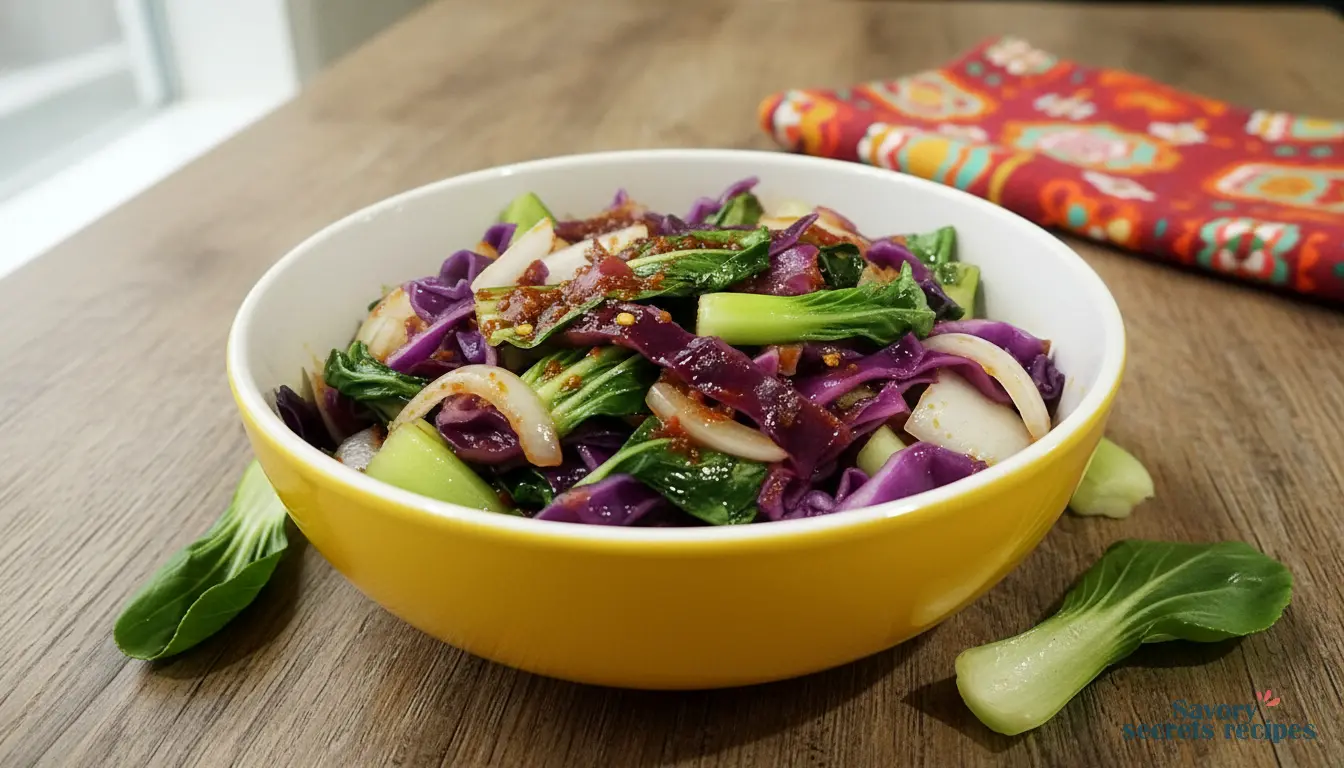
Bok Choy and Cabbage Quick Stir Fry
Ingredients
Method
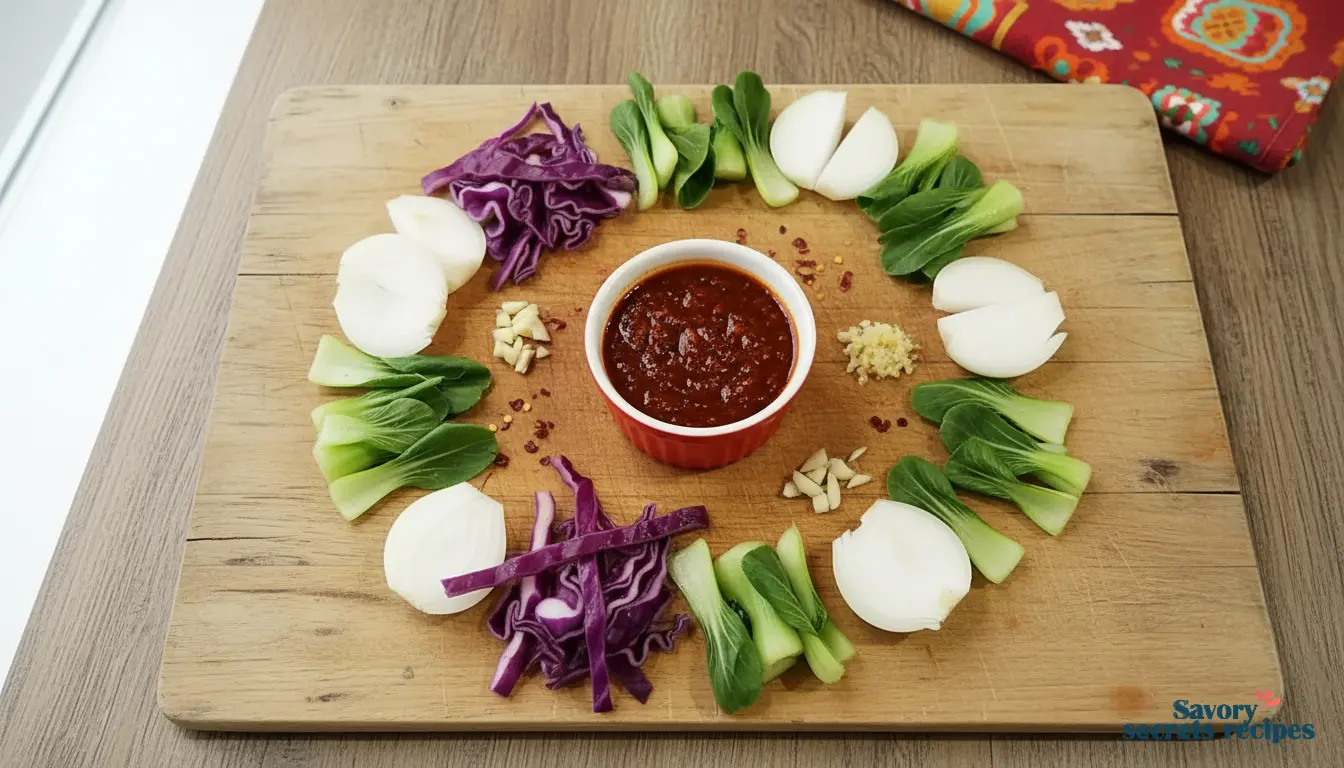
- Cut the red cabbage into small, bite-sized pieces.
- Dice the yellow onion and slice the baby bok choy.
- Add avocado oil to a large frying pan with the red cabbage. Cover and begin cooking over high heat.
- After 5 minutes, stir in the onion and baby bok choy.
- After five minutes, combine the sesame oil, soy sauce, and chili paste. Add this mixture and stir thoroughly. Reduce the heat to medium.
- Cook for an additional 5 to 10 minutes until the stir-fry is done.
Nutrition
Notes
When Your Weeknight Needs a Hero
It was a Wednesday, maybe a Thursday. Honestly, they all blur together this time of year. The light was fading early, my daughter was asking what was for dinner for the third time, and I was staring into the fridge with that particular kind of tired. You know the one. I had a head of red cabbage starting to look a little lonely and a bunch of baby bok choy I’d bought with good intentions. The classic winter vegetable dilemma. I needed something fast, something healthy, and something that wouldn’t taste like a punishment. That’s when this stir-fry saved the night. This bok choy and cabbage recipe is my answer to the busy-night question. It comes together in the time it takes to cook a pot of rice, and it’s the kind of healthy comfort food that actually feels good to eat. Let me think through this… it’s crunchy, it’s savory, and it makes you feel like you’ve got your life together, even if you’re just faking it until naptime. I’m talking about a dead-simple bok choy and cabbage recipe that’s become my weeknight secret weapon.
It reminds me of the smell of my grandmother’s kitchen in Taipei—not this exact dish, but that specific, comforting aroma of garlic and ginger hitting hot oil. It’s a smell that means food is happening, and it’s going to be good. This dish taps right into that memory for me. It’s the perfect way to turn those sturdy winter vegetables into a meal that’s anything but boring.
Why This Bok Choy and Cabbage Recipe Actually Works
Okay, let’s be real. A stir-fry can go wrong in so many ways. Soggy vegetables, bland sauce, everything steaming instead of sizzling. I’ve made all those mistakes, so you don’t have to. Here’s what I’m seeing with this particular bok choy and cabbage recipe. First, it respects the vegetables. The cabbage and bok choy get a quick, hot sear that keeps their crunch and bright color intact. No one wants gray, mushy greens. Second, the sauce is built right in the pan. The soy sauce and sesame oil caramelize slightly on the hot vegetables, creating this incredible umami glaze instead of just pooling at the bottom. That tracks with how my grandmother taught me to build flavor. You’re not just dumping sauce on at the end; you’re letting it become part of the dish. To be honest, it’s this technique that turns a simple vegetable side into a legit, craveable main event.
The Stir-Fry Science: Why High Heat is Non-Negotiable
This is exactly what I mean when I talk about technique. Most home cooks are scared of high heat. We see smoke and panic. But for a proper stir-fry, especially one with cabbage, you need that intense heat. Here’s why it works. That initial blast of heat causes something called the Maillard reaction—it’s the same thing that browns your steak. It creates complex, savory flavors on the surface of the vegetables that you just can’t get from steaming or boiling. It also quickly evaporates water released from the cabbage, which is the enemy of crunch. If your pan isn’t hot enough, the vegetables will stew in their own juice. You’ll miss out on that signature wok hei, the “breath of the wok” flavor. I’m not convinced yet? Try it once. Get your pan screaming hot. You’ll hear the difference—a fierce, confident sizzle when the veggies hit the oil, not a sad, watery sputter. That sound is your ticket to a better bok choy and cabbage recipe. For a different approach that uses gentle heat, explore our guide on blanching cabbage to preserve delicate textures.
Your Visual Troubleshooting Guide
Recipes give you times, but your eyes and ears give you the truth. Let’s talk about what you’re actually looking for.
Is My Pan Hot Enough?
Here’s a test. Add a single drop of water to the oil. If it dances and evaporates instantly, you’re good. If it just sits there and slowly bubbles, wait another minute. This is the good stuff, the foundational step.
How Do I Know When the Vegetables Are Done?
You want the cabbage to be wilted but still have a firm bite—what we call “al dente” for vegetables. The color will intensify. The bok choy stems should be tender-crisp, and the leaves should be just wilted and vibrant green. If they start turning a dull army green, you’ve gone too far. Taste as you go. Seriously. Snag a piece of cabbage after 3 minutes. Trust your own mouth more than the clock.
What if My Sauce is Too Thin or Too Thick?
The sauce should lightly coat the vegetables, not drown them. If it’s too thin and watery, your heat might be too low, or you added the soy sauce too early. Crank the heat for a final 30-second toss to reduce it. If it’s too thick and sticky, add a tablespoon of water or vegetable broth to loosen it up. Season in layers, and adjust at the end.
Bok Choy and Cabbage: A Nutritionist’s Comparison
Fair enough, you’re probably wondering which one is the superstar. As a dietitian, I love them both for different reasons. Bok choy is a hydration hero—it’s about 95% water, packed with vitamins A, C, and K, and it’s a great source of folate. It’s also rich in antioxidants like beta-carotene. Cabbage, especially the red kind we’re using, is famous for its anthocyanins (those are the pigments that give it the purple color) and its vitamin C content. It’s also fantastic for gut health because it contains prebiotic fiber that feeds the good bacteria in your digestive system. That said, some people experience stomach discomfort after eating raw cabbage. The cooking process in this bok choy and cabbage recipe helps break down those complex fibers, making it much easier to digest. So, is one healthier? I’d say they’re a perfect team. You’re getting a broad spectrum of nutrients in one delicious, crunchy package.
Equipment Recommendations for the Perfect Stir-Fry
You don’t need a professional wok station. I mean, who has that? But your tool choice matters. A large carbon steel or cast iron skillet is my top pick. It holds heat incredibly well, which is key for that constant high temperature we need. A thin, non-stick pan just can’t do it—it loses heat too fast when you add the cold vegetables. If you’re using a typical home stove, I’d want to see more data before recommending a round-bottomed wok; it doesn’t make proper contact with a small burner. A 12-inch skillet is your best friend here. Also, get yourself a good pair of tongs or a sturdy wooden spatula. You need to be able to move the vegetables around quickly and confidently. Let it do its thing for a minute, then give it a good flip. This isn’t being fussy, it’s the difference between a stir-fry and a steam-fry.
Comprehensive Alcohol-Free Substitution Guide
I noticed a lot of similar recipes rely on Shaoxing wine or mirin for that depth of flavor. If you don’t cook with alcohol, or just don’t have any on hand, don’t sweat it. Here’s what works for me. For that touch of sweetness and complexity mirin would provide, I use a tiny bit of maple syrup or agave nectar—just a teaspoon stirred into the soy sauce. For the savory depth of Shaoxing wine, a splash of vegetable broth with a pinch of sugar works wonders. You could also use a teaspoon of rice vinegar mixed with a teaspoon of water to mimic that slight tang. The goal is balance. The soy sauce gives us salt and umami, the sesame oil gives us nutty richness, and a touch of sweetness rounds it all out. You’ll build a fantastic sauce without ever opening a bottle.
Meal-Prep and Make-Ahead Strategy
This is a weeknight lifesaver, and it gets even better if you do a tiny bit of prep. On a Sunday, you can wash and chop your bok choy, and shred your cabbage. Store them separately in airtight containers in the fridge, with a paper towel in each to absorb excess moisture. They’ll stay crisp for 2-3 days. The sauce? Mix it up in a little jar. When dinner panic hits, you’re literally five minutes from a finished dish. I’m still working this out, but I’ve found the cooked stir-fry keeps okay for lunch the next day, though it will lose a bit of its crunch. It reheats surprisingly well in a skillet over medium heat. Just avoid the microwave if you can—it turns everything to mush.
Tips for Perfect Bok Choy and Cabbage Recipes
These aren’t rules, just things I’ve learned from getting it wrong a few times.
Preparation Tips
Dry your vegetables. This is huge. After washing the bok choy, spin it dry in a salad spinner or pat it thoroughly with towels. Wet veggies = steamed veggies. For the cabbage, the inner core can be tough. Just cut around it and discard it. And don’t worry about perfect, uniform shreds. Rustic is fine. If it smells ready, it probably is.
Cooking Tips
Don’t crowd the pan. If you double the recipe, cook in two batches. Overcrowding drops the pan temperature and creates steam. We want sizzle, not steam. Add the vegetables in stages: onions first to soften, then cabbage, then the more delicate bok choy stems, and finally the leaves at the very end. Trust the browning process on the onions. That golden color is pure flavor.
Storage Tips
Leftovers go in a shallow container in the fridge and are best within 2 days. To reheat, a quick toss in a hot skillet is ideal. It’ll revive some of the texture. I wouldn’t recommend freezing this one—the cabbage and bok choy become far too watery when thawed.
Variations & Substitutions
This recipe is a framework. Make it yours.
Dietary Adaptations
For a gluten-free bok choy and cabbage recipe, use tamari or coconut aminos instead of soy sauce. For a vegan version, you’re already there! Just double-check your chili paste for hidden fish or shrimp ingredients if that’s a concern.
Ingredient Substitutions
No baby bok choy? Use regular bok choy, just chop the stems into bite-sized pieces. Green cabbage works if that’s what you have, though you’ll miss the gorgeous purple color. Out of fresh chili paste? A pinch of red pepper flakes or a drizzle of chili oil at the end works great.
Flavor Variations
Add minced garlic and ginger with the onions for a classic base. Toss in some sliced mushrooms for extra umami. A handful of roasted peanuts or cashews at the end adds fantastic crunch. This is just what works for me, but play around.
Common Mistakes to Avoid
❌ Mistake: Adding all the vegetables at once.
✅ Solution: Stagger them! Onions first, then hearty cabbage, then delicate bok choy. This ensures everything cooks evenly and stays crisp-tender.
❌ Mistake: Using a cold pan or not enough heat.
✅ Solution: Get your pan properly hot before adding oil. Wait for the oil to shimmer. That initial sear is non-negotiable for flavor and texture.
❌ Mistake: Stirring constantly.
✅ Solution: Let the vegetables sit for a minute to get some color. Constant stirring steams them. Give it a toss, then let it be for a bit.
❌ Mistake: Using pre-bagged, wet coleslaw mix.
✅ Solution: Shred your own cabbage. The bagged stuff is often treated and releases too much water, making your stir-fry soggy.
Frequently Asked Questions
How to Store and Serve This Stir-Fry
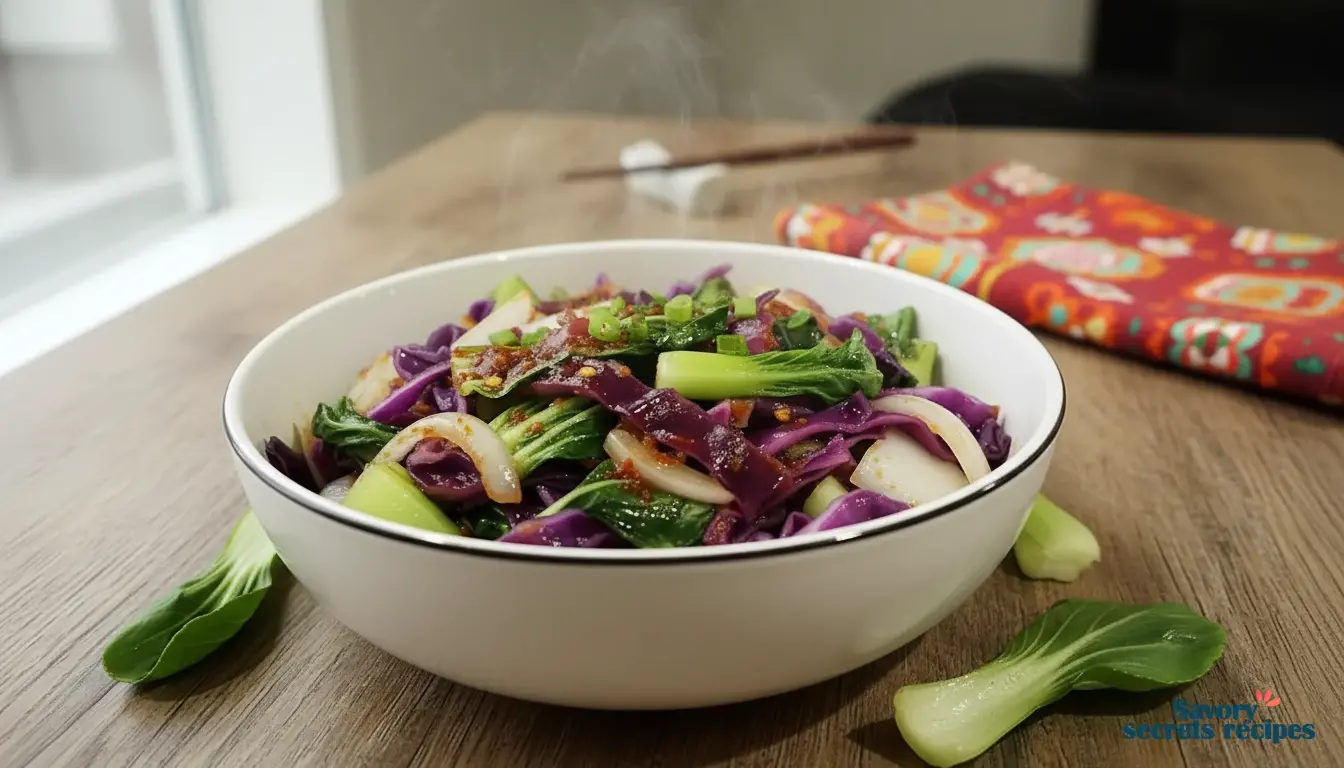
Store any leftovers in an airtight container in the fridge for up to 2 days. Reheat gently in a skillet over medium heat to restore some texture; the microwave will make it soggy. Now, how to serve this bok choy and cabbage recipe? It’s incredibly versatile. I love it over a bowl of steaming jasmine rice or quinoa for a complete vegetarian meal. It’s a perfect side for seared tofu, salmon, or a simple omelet. For lunch the next day, toss it with some cold noodles and a extra splash of sesame oil. It’s that good.
You’ve Got This
When you make this bok choy and cabbage recipe, you’ll love how something so simple can chase away the winter doldrums and fill your kitchen with the best smells. It’s the kind of food that makes you feel capable and nourished all at once. You’re not just making dinner; you’re building confidence, one sizzling stir-fry at a time. I’d love to hear how it goes for you—tag me or leave a comment with your own twist. Now we’re talking. Go cook something amazing.
Can bok choy and cabbage be cooked together?
Absolutely, and they’re fantastic together. That’s the whole idea behind this bok choy and cabbage recipe! They have complementary textures and cook in roughly the same time if you add the bok choy leaves at the end. The cabbage provides a sturdy crunch, and the bok choy adds a tender, leafy component.
What is the best method for cooking bok choy?
For flavor and texture, a quick stir-fry over high heat is my top recommendation. It preserves the bright color and crisp-tender bite. Blanching or steaming are also healthy options, but they don’t develop the same savory, caramelized flavors you get from the wok.
Is cabbage and bok choy good for you?
They’re incredibly nutritious. This bok choy and cabbage recipe delivers a powerhouse of vitamins A, C, and K, along with antioxidants and fiber. They’re low in calories but high in volume, making them great for healthy eating goals. Cooking them together is a smart way to boost your veggie intake.
What part of bok choy do you not eat?
You can eat the entire plant! The white stems are deliciously crisp, and the dark green leaves are tender. Just trim off the very bottom of the root end, which can be tough and dirty. For baby bok choy, I often just halve it lengthwise. Easy.
How much time does bok choy take to cook?
Not long at all. In a hot stir-fry like this bok choy and cabbage recipe, the stems need 2-3 minutes to become tender-crisp. The leafy greens wilt in under a minute. The key is high heat and not overcooking it—you want to preserve that fresh texture.