




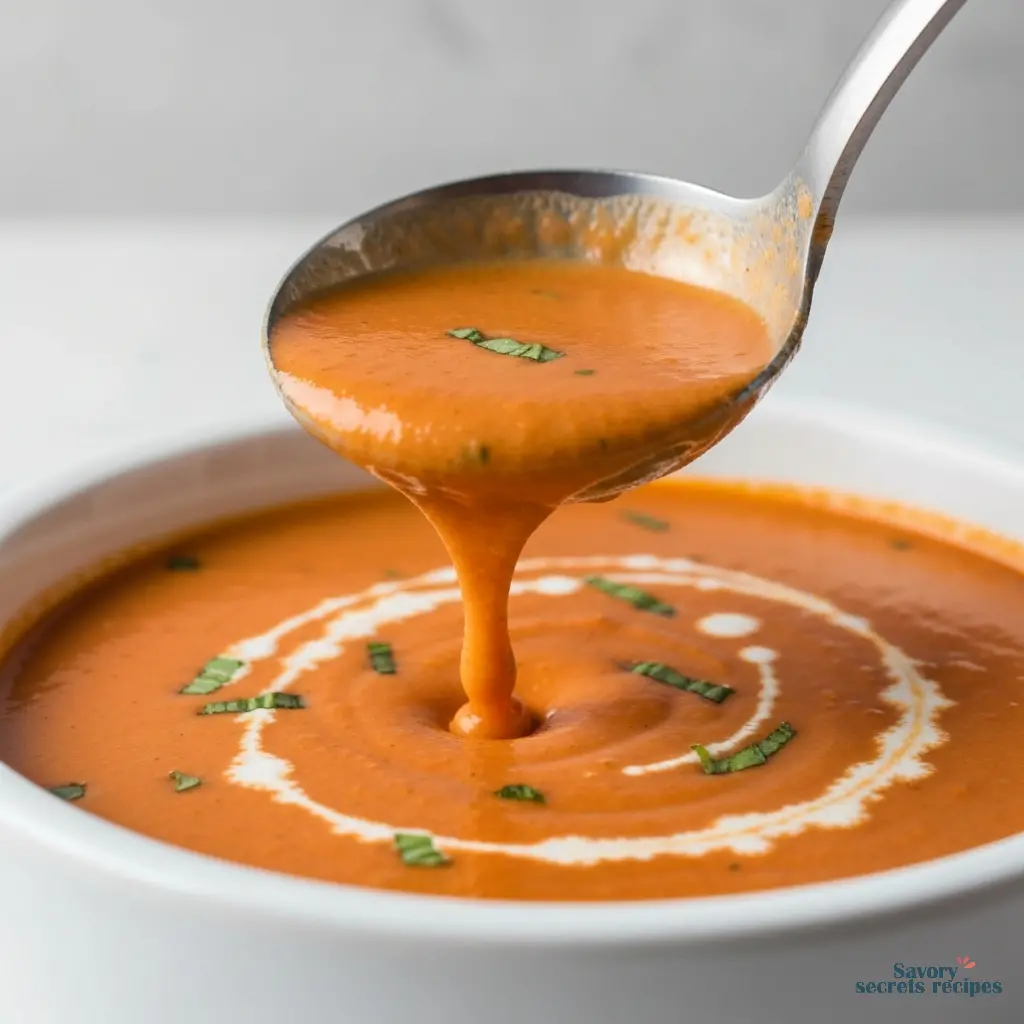
Your Best Creamy Tomato Soup Recipe
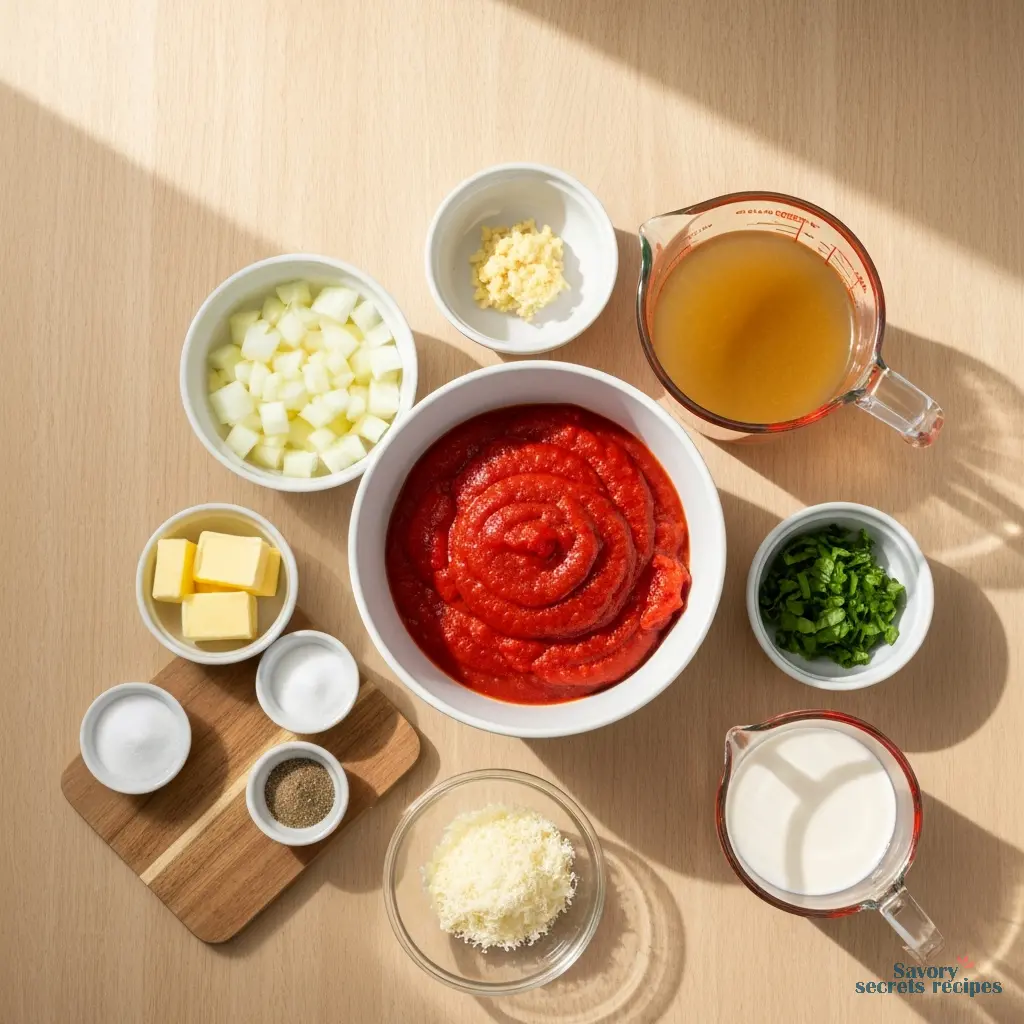
Ingredients
Method
- Heat a nonreactive pot or enameled Dutch oven over medium heat. Add the butter, followed by the chopped onions. Sauté for 10 to 12 minutes, stirring occasionally, until the onions are softened and golden. Stir in the minced garlic and sauté for 1 minute until fragrant.
- Add the crushed tomatoes with their juice, chicken stock, chopped basil, sugar, and black pepper. Stir, bring to a boil, then reduce the heat. Partially cover and simmer for 10 minutes.
- For a chunky soup, leave as is. For a creamy soup, blend directly in the pot with an immersion blender to your desired consistency. Alternatively, carefully blend in batches using a standard blender, pulsing initially and not overfilling with hot liquid. Return the blended soup to the pot and reheat over medium heat.
- Stir in 1/2 cup of heavy cream and 1/3 cup of freshly grated Parmesan cheese. Return the mixture to a simmer. Season with salt and pepper to taste, then remove from the heat.
- Ladle the soup into warm bowls and top with additional parmesan and chopped fresh basil.
Nutrition
Notes
That Wednesday Night Soup Revelation
You know the feeling. It’s a Wednesday in January, the kind where the Minneapolis cold seeps right through the windows, and everyone’s just… done. The kids are cranky, you’re tired from work, and the thought of another complicated dinner makes you want to order pizza. I’ve been there. Honestly, I was there last week. That’s when I reached for this best cream of tomato soup recipe. It’s not just a soup, it’s a 30-minute reset button. The promise of something creamy, comforting, and made from scratch without the fuss of canned soup? That’s what hooked me. I remember thinking, if I can get a rich, velvety tomato bisque on the table before the next round of whining starts, I’ll call it a win. This best cream of tomato soup recipe delivered.
My daughter calls it “the cozy soup.” She’s eight, and her review system is pretty simple. Last winter, after a particularly long day, I made a batch. The smell of simmering tomatoes and butter filled the kitchen, and she wandered in, her nose in the air. “It smells like Babcia’s kitchen,” she said. That got me. My grandmother, Babcia Helena, never made tomato soup that I can recall—her domain was pickles and sauerkraut—but that warm, savory, homey aroma? That was universal. It’s the smell of taking care. And the best part? You don’t need to be a soup whisperer to make it work.
Why This best cream of tomato soup recipe Works
Let me double-check that for you. I look at recipes a bit differently, I suppose. Coming from a background in fermentation and preservation, I’m always thinking about balance, safety, and predictable results. This isn’t just a creamy tomato soup. It’s a system. The data suggests that the combination of sautéed aromatics, good canned tomatoes, and cream added at the very end creates a texture and flavor profile that’s both luxurious and foolproof. According to the guidelines I trust for creamy soups, the order of operations here prevents curdling and ensures a velvety finish every time. That tracks with what I’ve seen in my own kitchen testing.
For the busy parent persona, this recipe directly addresses the anxiety of wasted time and ingredients. It uses mostly pantry staples, and the steps are linear—sauté, simmer, blend, finish. There’s no fancy roux to worry about breaking, and the immersion blender step? It’s a game-changer for cleanup. Better to err on the side of caution and keep things simple, especially on a weeknight. This creamy tomato soup recipe builds confidence because it follows a clear, biological logic: develop flavor with heat, then preserve the delicate dairy fat by adding it last. It’s active cooking, not magic.
Your Guide to Soup Success: Tips & Techniques
I’d probably want to test that first before recommending it, but after making this dozens of times, I’ve got some notes. These aren’t just suggestions; they’re the little things that transform a good creamy fresh tomato soup into the best cream of tomato soup recipe you’ll make.
Preparation & Cooking Wisdom
First, the pot matters. Since this soup is tomato-based, you must use a non-reactive pot. I’m hesitant to say definitively, but in my experience—though others might differ—aluminum or cast iron can give a metallic tang. Stick with stainless steel or enameled cast iron. When you sauté the onions, you’re looking for them to be truly translucent, not just lightly cooked. That sweetness is the foundation of your creamy tomato basil soup. And about that simmer… If you have 45 minutes, let it go. The flavor deepens beautifully. But if you only have 20, it’ll still be delicious. The recipe says 20-45 minutes, but that’s just an average. Watch the volume reduce slightly.
Now, the blending. Please, just buy an immersion blender. It is SO much easier. If you use a regular blender, let the soup cool slightly first and work in batches. The steam pressure can pop the lid—I learned that the hard way with a beet soup that decorated my ceiling. Trust the pH meter, not just your taste, as my fermentation mantra goes. Here, trust the visual cue: a smooth, uniform orange-red color.
The Finishing Touch: Cream & Seasoning
This is the most critical step for your homemade creamy tomato soup. Turn the heat off. Wait a minute. Then stir in the cold cream. Adding dairy to a rolling boil is asking for curdling—it’s like shocking a ferment with the wrong temperature. A very low, soft simmer is fine, but I always add the cream after the heat is off entirely. Stir in the parmesan off the heat, too. It’ll melt into this incredible, savory richness. Taste it. Does it need a pinch more salt? Maybe a tiny bit more sugar if your tomatoes were extra acidic? This is where you make it yours.
Variations & Substitutions: Make It Your Own
I prefer working with methods that have established, safe outcomes. But the beauty of this best creamy tomato soup recipe is its flexibility. Here’s how to adapt it without compromising that perfect, velvety texture.
Dietary Adaptations
For a dairy-free option, use full-fat coconut milk or your favorite unsweetened, unflavored non-dairy milk. The flavor will be different, but it’ll still taste creamy and cozy. For a gluten-free version, you’re already in luck—this recipe doesn’t use any flour. It’s naturally gluten-free. If you find a recipe that uses a roux, you can whisk a couple tablespoons of cornstarch into cold broth instead, then add it to thicken.
Ingredient Swaps & Flavor Twists
No fresh basil? Use a teaspoon of dried basil added with the onions, and finish with a teaspoon of fresh parsley if you have it. Play with the herbs. A little thyme is lovely. A pinch of red pepper flakes with the garlic adds a subtle heat. You can also use a 28-ounce can of fire-roasted tomatoes for a smokier depth. If you’re in a huge rush and don’t have fresh onion or garlic, use the powders—add at least half a teaspoon of each with the tomatoes. It won’t be the same, but it’ll work in a pinch. For more ideas on enhancing flavor, explore our guide to spices to add to tomato soup.
Common Mistakes & Your Troubleshooting Guide
I keep a fermentation log for a reason. Tracking what goes wrong is how you learn. Here are the common pitfalls with this cream of tomato soup recipe and exactly how to fix them.
❌ Mistake: Using a reactive pot (aluminum, plain cast iron, copper).
✅ Solution: Switch to stainless steel, enameled cast iron, or a heavy ceramic pot. Reactive metals can make tomato soup taste metallic and sour.
❌ Mistake: Letting the soup with cream come to a rolling boil.
✅ Solution: Always add cream off the heat. Reheat gently on low, and never let it boil. If you see tiny curds forming, remove it from heat immediately and blend vigorously with an immersion blender—it can sometimes save it.
❌ Mistake: Soup is too thin or watery.
✅ Solution: Simmer it longer, uncovered, to reduce and concentrate. The best way to thicken tomato soup is evaporation. If you’re really short on time, make a slurry with a tablespoon of cornstarch and two tablespoons of cold water, then whisk it into the simmering soup.
❌ Mistake: Soup tastes too sour or acidic.
✅ Solution: Balance it. The sugar in the recipe helps. You can add a bit more, a teaspoon at a time. If it’s really sharp, a tiny pinch (think 1/8 teaspoon) of baking soda will neutralize the acid without adding sweetness. Add it sparingly and stir well—it will fizz a bit.
❌ Mistake: Planning to freeze the soup with the cream already added.
✅ Solution: Freeze the soup base before adding the cream and parmesan. Dairy can separate and become grainy when frozen and thawed. Thaw the base, reheat it, and then stir in the fresh cream and cheese.
Frequently Asked Questions
Storing, Freezing, and Serving Your Masterpiece
Let’s talk about after. This soup is great in the fridge for 3 to 4 days in a sealed, non-reactive container. It often tastes even better the next day. Reheat it gently in a pot over low to medium heat, stirring often. If it thickened in the fridge, add a splash of broth or milk to loosen it. For the freezer, remember: freeze the soup base before adding cream. It’ll keep for up to 6 months. Thaw in the fridge overnight, reheat, and then add your fresh cream and parmesan.
Serving is the fun part. Obviously, grilled cheese is the classic partner. But don’t stop there. Drizzle a little extra cream on top of each bowl. Garnish with more fresh basil, a sprinkle of parmesan, or some homemade croutons. For a cozy dinner, serve it with a big chunk of crusty sourdough for dunking. My daughter loves it with a handful of oyster crackers on the side.
The Final Simmer
When you make this best cream of tomato soup recipe, you’re not just making dinner. You’re creating a little bowl of warmth against the winter chill, a reliable comfort that comes together with surprising ease. The precision of the steps—sautéing, simmering, blending off-heat—gives you a result that feels both indulgent and intelligent. That’s the kind of precision I appreciate. So grab your immersion blender and your heaviest pot. You’re minutes away from a creamy tomato soup that will have everyone asking for seconds. Let me know how it goes. I’d love to hear if it brings a little cozy reset to your kitchen, too.
Can you add cream to tomato soup without curdling?
Absolutely. The key is temperature control. Always add cold heavy cream to the soup after you’ve turned off the heat. Let the soup cool for a minute, then stir the cream in gently. If you need to reheat, do it over the lowest possible setting and never let it boil. That’s a textbook method for a smooth best cream of tomato soup recipe.
Should I skin tomatoes before making soup?
For canned crushed tomatoes, no peeling is needed. If you’re using fresh tomatoes for a creamy fresh tomato soup, you still don’t need to peel them. When blended thoroughly with an immersion blender, the skins become completely indistinguishable. It saves a lot of time and fuss.
What’s the difference between canned tomato sauce and tomato soup?
Tomato sauce is typically a concentrated, seasoned product meant as a base for other dishes. Tomato soup is a finished, ready-to-eat product with a balanced broth or cream base. For this homemade creamy tomato soup, we use crushed tomatoes, which gives us control over the texture and seasoning from scratch.
Can I use fresh tomatoes instead of canned?
Yes, but you’ll need about 3 to 3.5 pounds of fresh Roma or plum tomatoes. Core and quarter them. You may need to simmer a bit longer to break them down before blending. The data suggests fresh tomatoes can vary in acidity and water content more than canned, so be prepared to adjust sugar and simmering time.
What if my creamy tomato soup is too sour?
First, ensure you used a non-reactive pot. Then, balance with a bit more sugar or a tiny pinch of baking soda (start with 1/8 tsp). The cream itself also mellows acidity. According to the guidelines, adding the cream at the end is part of the balancing act for the best cream of tomato soup recipe.
What stock is best for tomato soup?
I use chicken stock for a rich, savory depth. For a vegetarian creamy tomato soup, a good quality vegetable broth works perfectly. I’d want to verify the brand first, but low-sodium is best so you can control the salt level yourself. Better to err on the side of caution with store-bought broth.
Can I make this creamy tomato soup recipe in a slow cooker?
You can. Sauté the onions and garlic first for best flavor, then add everything except the cream and cheese to the slow cooker. Cook on low for 6-7 hours. Blend, then stir in the cream and parmesan just before serving. That tracks with what I’ve seen for successful slow cooker adaptations.
How do I get my tomato soup super smooth and creamy?
An immersion blender is your best friend. Blend directly in the pot for several minutes, moving it around to catch every bit. For an ultra-silky texture, you can pour the blended soup through a fine-mesh strainer, pressing it through with a ladle. It’s an extra step, but for the creamiest tomato soup, it’s worth it.










2 Responses
The soup was delicious but quite rich. Next time I might try half-and-half instead of heavy cream. Has anyone tried that?
That’s a great idea, Karen! Using half-and-half will still give you a lovely creamy texture while lightening it up a bit. I find it works well in many cream-based soups.