



Track Kimchi Stew Calories in Your Kimchi Jjigae Recipe
Ingredients
Method
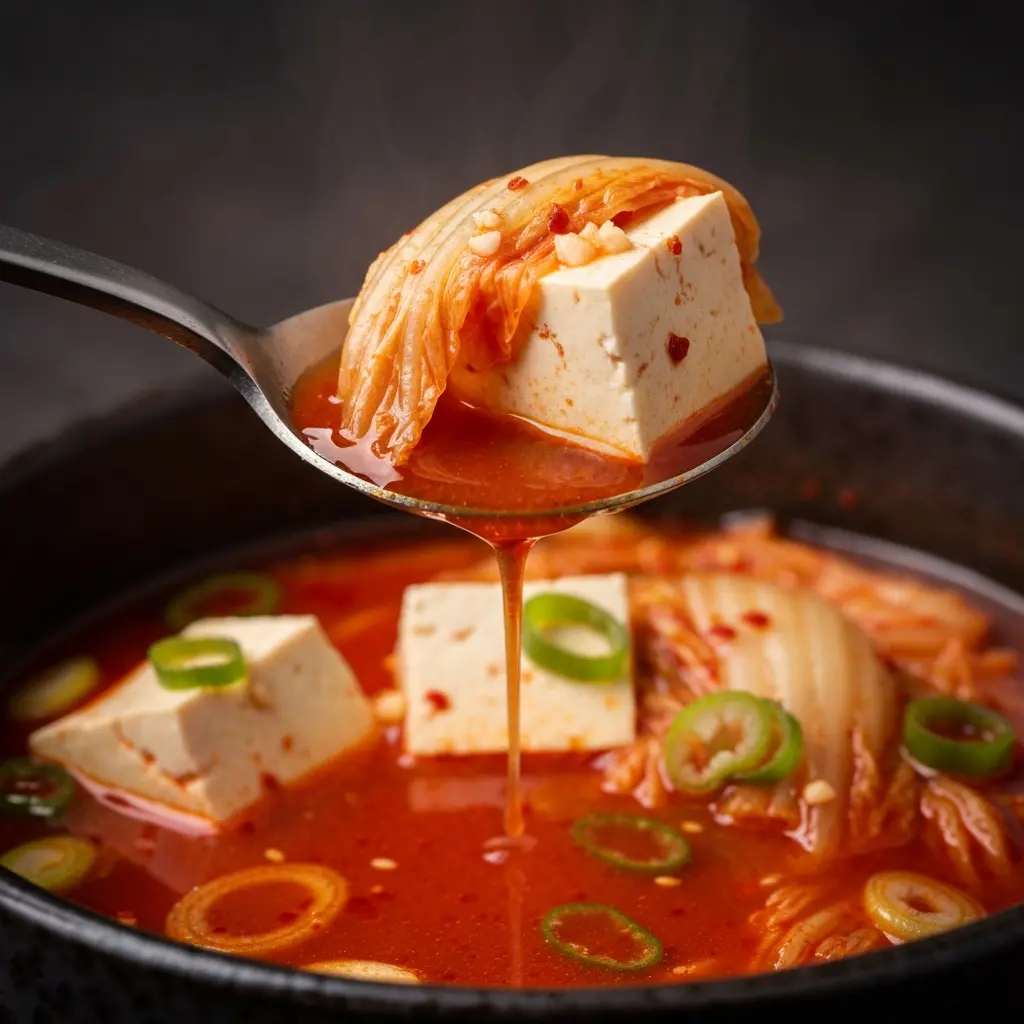
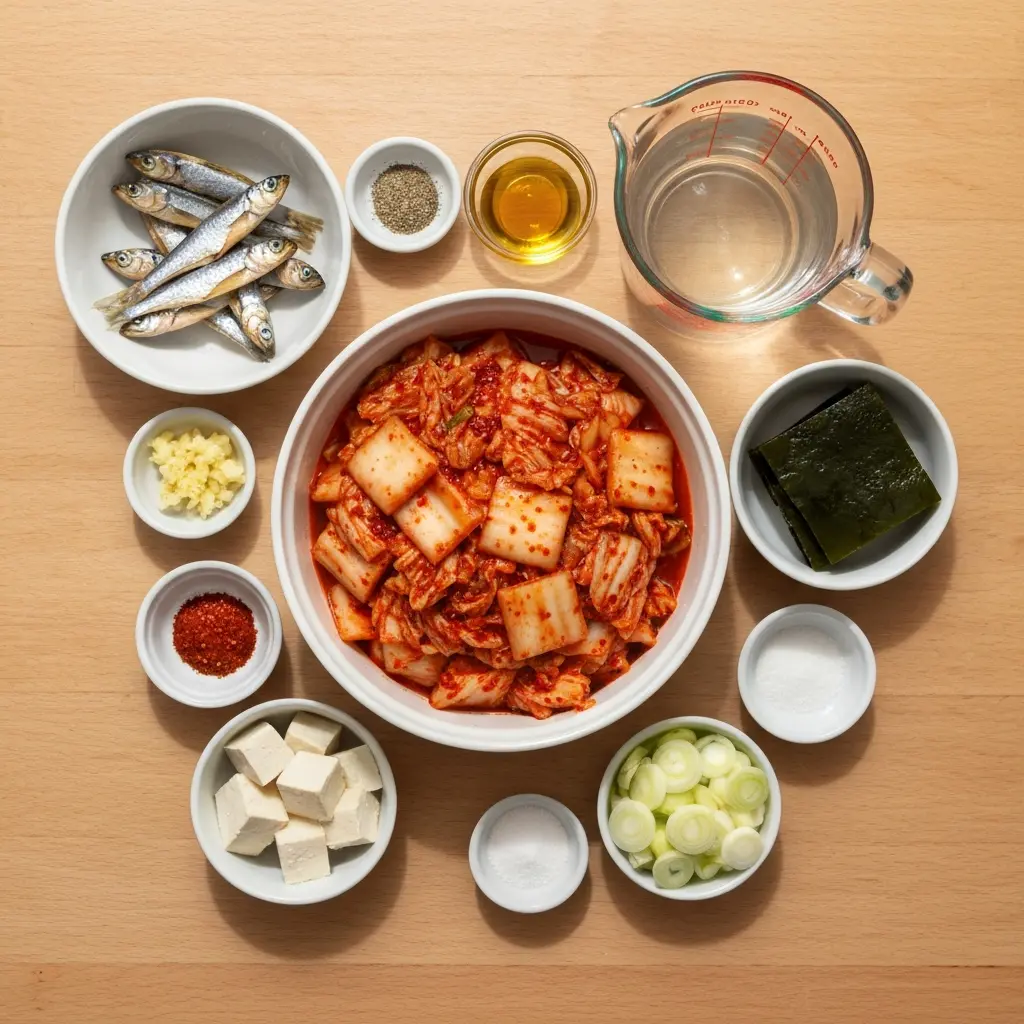
- Prepare the broth by cleaning the anchovies: slice open the bellies and remove the entrails while keeping the heads intact. Place the anchovies in a medium pot. Add water and dried kelp, if desired, and bring to a boil. Reduce the heat to medium-high and boil uncovered for 10 minutes. Remove and discard the anchovies and kelp. Transfer the broth to a bowl and wipe the pot clean.
- Slice the kimchi into bite-sized pieces and set aside 1/2 cup of the juice. Warm oil in a pot over medium-high heat. Add the kimchi, garlic, and gochugaru to taste. Sauté while stirring for about five minutes until the kimchi becomes soft and translucent.
- Pour in the anchovy broth and any saved kimchi juice, then bring the mixture to a boil. Lower the heat to medium, cover the pot, and simmer for approximately 15 minutes.
- Incorporate the tofu and scallions, cooking for approximately five minutes until thoroughly heated. Season with salt and pepper to taste, then serve immediately while piping hot with a bowl of rice.
Nutrition
Notes
Understanding Kimchi Soup Calories and Why It’s a Weeknight Win
I remember sitting at the zinc bar at my uncle Marc’s bistro back in the 90s. He’d usually hand me a bowl of whatever was simmering on the back burner for the staff meal. It was often something heavy, like a cassoulet or a rich beef bourguignon. Those meals were incredible, but let’s be real, they weren’t exactly light. Now that I’m older and spending my days lighting food for video shoots, I’ve realized that comfort doesn’t always have to mean heavy. That’s where kimchi soup comes in. It’s become my go-to when I want something that feels like a warm hug but won’t make me feel like I need a three-hour nap afterward. Honestly, the first time I calculated kimchi soup calories, I thought I’d made a mistake. It seemed too low for something that tastes this complex.
Here’s the thing about that: most of the volume in this soup comes from water and fermented cabbage. When you’re looking at a standard serving size of about 1.5 cups, you’re often looking at fewer than 200 calories. That tracks for a meal that’s mostly vegetables and lean protein. I’ve spent a lot of time in test kitchens trying to make healthy food taste like “real” food, and kimchi is basically a cheat code. It brings acidity, heat, and depth without needing a stick of butter. Makes sense to me why it’s a staple for anyone trying to keep things balanced. You’ll know it’s ready when the aroma fills your kitchen and that spicy, fermented scent starts to clear your sinuses. It’s the good stuff, I promise.
In my experience, though your mileage may vary depending on what you toss in the pot, the base of the soup is remarkably lean. If you’re grabbing a bowl at a restaurant, the kimchi stew calories might creep up because they sometimes use fattier cuts of meat or extra sugar to balance the sourness. But at home? You’re in total control. I usually stick to tofu and a light anchovy-based broth. It keeps the kimchi jjigae calories low while providing enough protein to keep you satisfied until breakfast. You’ve got this, and trust me, it’s a lot easier to manage than those French sauces my uncle taught me to make. No broken hollandaise here.
The Secret to Low Calorie Kimchi Soup: It’s All in the Fermentation
I once scheduled a video shoot for a stew and the kimchi we bought was way too fresh. It looked great on camera, but the flavor was flat. This is where most people run into trouble. For a healthy kimchi soup recipe, you want the old, sour stuff. I’m talking about the jar that’s been sitting in the back of your fridge for a month. As kimchi ages, the sugars are consumed by those beautiful probiotics, which actually helps keep the kimchi calories per cup on the lower side. The sourness isn’t just a flavor profile; it’s a sign that the fermentation has done the heavy lifting for you.
Let it do its thing. When you sauté that aged kimchi in a little sesame oil before adding your liquid, you’re intensifying the flavor without adding a bunch of caloric fillers. I’ve learned that a little goes a long way. This might just be me, but I think the smell of browning kimchi is one of the best scents in the world. It reminds me of those Saturday mornings in the Italian Market here in Philly, even though the flavors are worlds apart. It’s that same sense of “something good is happening.” Not a huge deal, but worth noting: if your kimchi isn’t sour enough, a teaspoon of vinegar can help mimic that aged depth, though it won’t be quite the same.
What most people don’t know is that the kimchi soup broth calories are negligible if you use a traditional anchovy and dashima base. You get all that umami for maybe 10 or 20 calories. If you start swapping that for heavy bone broths or adding lots of oil, that’s when the kimchi soup calories start to climb. I’d probably lean toward the lighter broth every time. It lets the kimchi be the star. Plus, it’s much faster. In the time it takes to order takeout from Ralphs or Vons, you can have this simmering on your stove. It’s a solid approach for a busy Tuesday night when you’re tired from the commute and just want to eat something that makes you feel human again. For those who prefer a spicier, deeper base, experimenting with a gochujang broth can add significant flavor without many extra calories.
Managing Kimchi Soup Sodium Content Without Losing Flavor
I’ll take a look at it from a technical perspective: the biggest hurdle with kimchi soup nutrition facts isn’t actually the calories. It’s the sodium. Kimchi is preserved with salt, and the broth often calls for more. If you’re like me and you tend to hold onto water weight after a salty meal, this can be frustrating. But here’s the trick: you don’t need as much salt as you think. The gochugaru (Korean red pepper flakes) provides so much “perceived” flavor that you can often cut the added salt in half. I’ve found that using a high-quality dashima (dried kelp) also adds a natural saltiness that feels more rounded and less aggressive than table salt.
The key step here is to taste as you go. A chef I was filming once showed me that tasting at every stage not just at the end is how you build a masterpiece. If you taste the broth after the kimchi has simmered for ten minutes, you might realize it’s already perfect. Adding more salt at that point would just be a habit, not a necessity. If it does end up too salty, don’t panic. A few extra cubes of tofu can help soak up some of that intensity. Tofu is like a sponge for flavor, and it’s a great way to add tofu kimchi soup calories without blowing your daily budget. It’s a very forgiving ingredient. If you want to master this combination, follow a detailed kimchi tofu soup recipe to balance nutrition and taste.
I’m not totally sure, but I think the “bloat” people associate with Korean food is often just a matter of portion control and hydration. If you’re eating low calorie kimchi soup as part of a balanced diet, just make sure you’re drinking plenty of water alongside it. Fair enough? I also like to add a lot of extra scallions and maybe some fresh zucchini. These vegetables add volume and fiber, which helps you feel full without needing a side of white rice. Though, let’s be honest, a little rice is great. If you do include it, just remember to account for those kimchi soup with rice calories. A half-cup of steamed rice adds about 100 calories, which is still very reasonable for a full dinner.
Why This Healthy Kimchi Soup Recipe Outshines Restaurant Versions
When you go out to eat in LA, especially in Koreatown, the soups are often served in these beautiful, bubbling stone pots called dolsot. They stay hot forever, which is great, but restaurants also tend to use a lot of sugar to balance the heat. That’s where the homemade kimchi soup vs restaurant calorie gap really starts to show. By making it yourself, you can skip the added sugar entirely. The natural sweetness from the onions and the fermented cabbage is usually enough. Trust the process on this one; you won’t miss the sugar once you get used to the clean, sharp taste of the real thing.
I remember my daughter helping me make a version of this last winter. She’s at that age where she wants to smell everything. She thought the kimchi smelled “loud,” which is a pretty accurate description. But when she saw the tofu cubes, she was all in. We made a vegetarian kimchi soup calories version by using a mushroom-based broth instead of anchovies. It was just as satisfying. That’s the beauty of this dish. It’s a one pot kimchi soup that scales easily. Whether you’re cooking for a family or just meal prepping for yourself, it doesn’t require you to buy some obscure ingredient you’ll never use again. Everything has a purpose. This type of hearty korean stew is a staple for a reason: it’s filling and incredibly versatile.
Now we’re talking about real efficiency. I like recipes that don’t make me do a mountain of dishes. You sauté, you pour, you simmer. Done. If you’re looking for kimchi soup for weight loss, this simplicity is your best friend. It’s hard to mess up. I’ve seen people get intimidated by the idea of “authentic” Korean cooking, but at its heart, this is just a country stew. It’s meant to be rustic. If your tofu cubes aren’t perfectly uniform, who cares? My uncle Marc might have measured my carrot cuts with a ruler, but in your home kitchen, consistency of flavor matters way more than consistency of shape. That’s exactly right.
Common kimchi soup calories Mistakes and How to Fix Them
I’ve screwed up plenty of dishes on camera, and I’ve learned that most mistakes are just opportunities to understand the ingredients better. When it comes to kimchi soup calories and flavor, a few common slip-ups can really throw things off. Let me show you what I mean with a quick breakdown of what to avoid.
- ❌ Mistake: Using “fresh” kimchi from the store that hasn’t fermented yet. → ✅ Solution: Look for jars with a further-out expiration date or let your jar sit in the fridge for a week before cooking. The sourness is what creates the low-calorie depth.
- ❌ Mistake: Adding too much sesame oil at the start. → ✅ Solution: Use just a teaspoon to sauté the aromatics. You can always add a tiny drop at the end for aroma, but oil is calorie-dense. A little goes a long way.
- ❌ Mistake: Including starchy thickeners or lots of sugar. → ✅ Solution: Let the cabbage and tofu provide the texture. If you need balance, use a splash of kimchi brine instead of sugar.
- ❌ Mistake: Freezing the leftovers with tofu in them. → ✅ Solution: Tofu becomes spongy and weirdly chewy after freezing. It’s better to store the soup in the fridge for up to 3 days and just add fresh tofu when you reheat.
- ❌ Mistake: Overboiling the soup until the kimchi turns to mush. → ✅ Solution: Simmer for 15-20 minutes. You want the cabbage to be tender but still have a bit of “soul” to it.
I once tried to make a big batch of this for a video shoot and thought I’d save time by freezing it. Big mistake. The texture of the tofu was so distracting we couldn’t use the footage. It’s worth noting that kimchi probiotic benefits are also affected by heat. While the live cultures don’t survive the boiling process, you still get all the fiber and the fermented metabolites that are great for your gut. So, even if it’s not “live” anymore, it’s still doing good work. This isn’t being fussy; it’s just the reality of how these ingredients behave. Trust me on this one.
Keto Kimchi Soup and Other Dietary Adaptations
If you’re doing the whole “I’m doing keto” thing, you’re in luck. Kimchi soup is naturally very low in carbs. The main thing you have to watch out for is hidden sugar in store-bought kimchi. I’ve seen brands at Trader Joe’s and Whole Foods that add a surprising amount of sugar to appeal to a broader palate. Always check the label. A truly keto kimchi soup should have very few net carbs, mostly coming from the fiber in the cabbage and a few grams in the tofu. It’s a winter comfort soup low calorie option that fits perfectly into a high-protein, low-carb lifestyle.
For my vegan friends, the adaptation is simple. Most traditional kimchi uses fish sauce or shrimp paste, so you’ll need to source a vegan-certified kimchi. For the broth, swap the anchovies for dried shiitake mushrooms. They give you that same deep, earthy umami without the animal products. I actually think the mushroom version is sometimes better because it feels a bit “cleaner” on the palate. Vegetarian kimchi soup calories remain almost identical to the seafood-based version, so you’re not losing out on the health benefits. It’s a win-win.
I’m still figuring out the balance between traditional methods and modern dietary needs, but I think this soup is one of the most adaptable recipes in my rotation. Whether you’re looking for a quick kimchi soup recipe for a weeknight or something more elaborate with added protein like beef or shrimp, the foundation stays the same. Just be mindful that adding meat will change the calories in kimchi stew significantly. If you’re tracking closely, stick to the tofu or very lean cuts. It’s all about what your goals are for the day. No judgment here.
Frequently Asked Questions
Serving Sizes and Storage for the Best Results
When you’re ready to serve, I recommend a kimchi soup serving size of about 1 to 1.5 cups. This is enough to be a light meal on its own or a perfect starter for a larger dinner. If you’re feeling extra hungry, adding a side of steamed greens or a small portion of brown rice is a great way to bulk it up without going overboard. I love the visual of a bright red bowl of soup topped with a handful of fresh, crunchy scallions. It’s that contrast between the simmered cabbage and the fresh greens that really makes the dish pop. Plus, it looks great on camera, which I’ll always appreciate.
For storage, keep your leftovers in an airtight container in the refrigerator for up to 3 days. As I mentioned earlier, don’t freeze it if you can help it. The tofu just doesn’t survive the crystalization process well. When you’re ready for round two, reheating on the stovetop is best. Just bring it to a gentle simmer. If you’re in a rush, the microwave works too just cover the bowl so you don’t end up with red splatters all over the place. I’ve made that mistake in the studio more times than I care to admit. It’s not fun to clean up.
The flavors actually tend to meld and improve by the second day. The broth gets a little deeper and the spice settles into the tofu. It’s one of those rare meals that might actually be better as a leftover. If you find the broth has reduced too much, just add a splash of water or more kimchi juice to bring it back to the right consistency. It’s very flexible. For more inspiration on how to meal prep healthy Korean-inspired dishes, you should definitely browse my Pinterest boards where I save all my favorite low-calorie finds.
When you make this, you’ll love how it fits your diet without making you feel like you’re “dieting.” It’s just good, honest food that happens to be light. There’s something genuinely satisfying about finishing a bowl and feeling energized rather than weighed down. Let me know how your low-calorie version turns out, especially if you try any interesting vegetable swaps. I’m always looking for new ways to keep things fresh in the kitchen. Enjoy the warmth and the spice this winter. You’ve earned it.
Reference: Original Source
<!– wp:rank-math/faq-block {"questions":[{"id":"faq-question-1770034767501","title":"How many calories are in a typical bowl of kimchi soup?","content":"A standard 1.5-cup serving of homemade kimchi soup with tofu usually contains between 150 and 200 calories. This makes kimchi soup calories exceptionally low compared to other hearty stews. The bulk of the calorie count comes from the tofu and the small amount of sesame oil used for sautéing.”,”visible”:true},{“id”:”faq-question-1770034767502″,”title”:”Is kimchi soup good for weight loss?”,”content”:”Absolutely. Because it’s high in fiber and water content, it helps you feel full without a high caloric cost. Many people find that kimchi soup for weight loss is effective because the spicy gochugaru and sour kimchi provide intense flavor satisfaction, which can reduce cravings for less healthy snacks later on.”,”visible”:true},{“id”:”faq-question-1770034767503″,”title”:”Can I eat kimchi soup every day?”,”content”:”You definitely can, though you should keep an eye on the kimchi soup sodium content. To make it a daily staple, I recommend using a low-sodium broth and loading up on extra vegetables like zucchini or spinach to balance out the meal. It’s a fantastic, nutrient-dense way to stay warm during winter.”,”visible”:true},{“id”:”faq-question-1770034767504″,”title”:”What is the difference between kimchi jjigae and kimchi soup?”,”content”:”The terms are often used interchangeably, but \”jjigae\” usually refers to a thicker, more concentrated stew with less liquid. Consequently, kimchi jjigae calories might be slightly higher per spoonful because the ingredients are more densely packed. \”Soup\” usually implies a thinner, more broth-heavy version that is lighter overall.”,”visible”:true}]} –>