




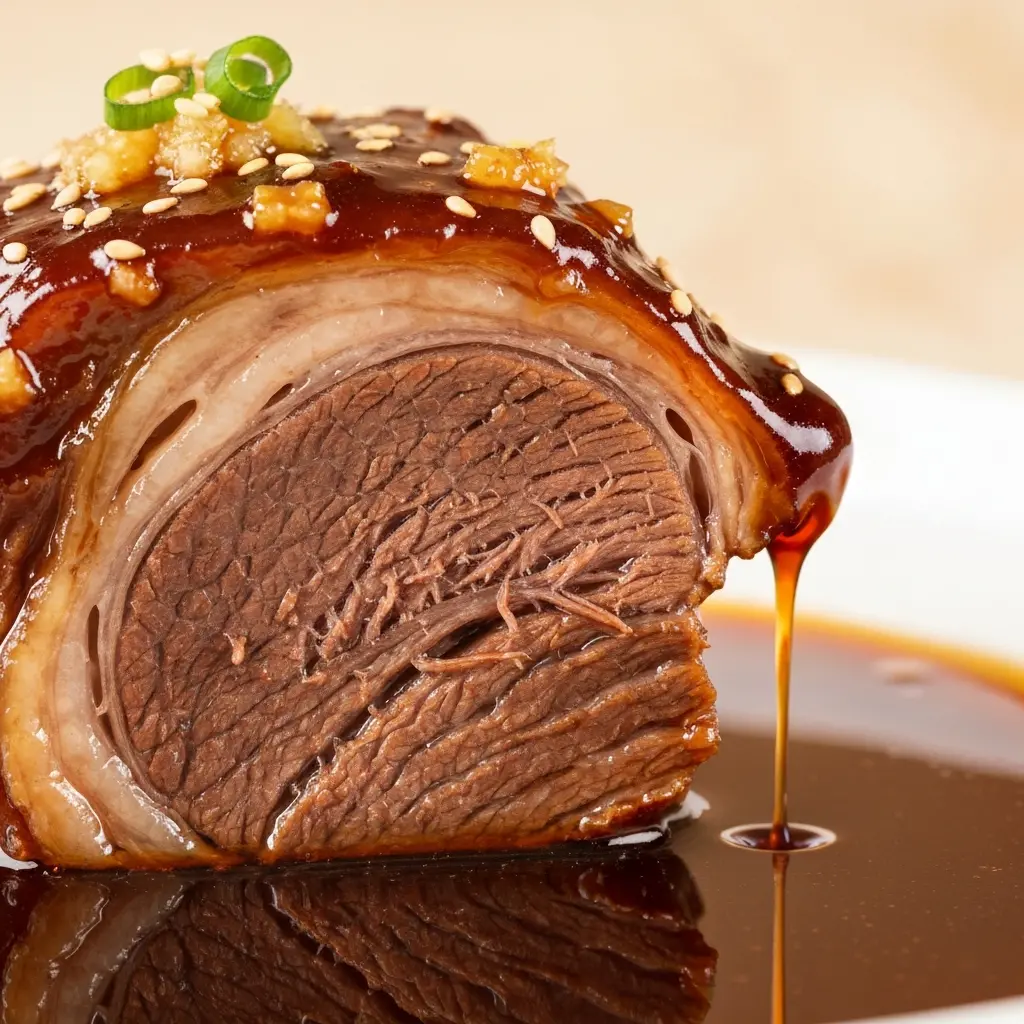
What is Korean Beef Stew Called? Galbi Jjim Recipe
Ingredients
Method
- Whisk the miso and soy sauce in a small bowl until fully incorporated.
- Combine the beef with the miso mixture and refrigerate for 4 to 12 hours.
- Preheat the oven to 325°F.
- Generously coat a pot with vegetable oil and sear the beef in small batches over medium-low heat. Avoid overcrowding the pan to prevent steaming and ensure a rich brown crust. Work patiently, adjusting the temperature as needed to achieve optimal results on your stove.
- Place the seared beef in a clean Dutch oven and add the garlic and gochugaru.
- Prepare the dashi by bringing the water and hon-dashi to a boil, then simmering briefly.
- Whisk the gochujang with two tablespoons of hot dashi in a small bowl until fully dissolved, adding more liquid if necessary. Use a small bowl for this step to ensure the paste incorporates smoothly, as it is difficult to dissolve directly in a large pot.
- Incorporate the gochujang mixture and pour in the remaining dashi until the liquid reaches two-thirds of the way up the meat.
- Seal the Dutch oven with aluminum foil or parchment paper and secure the lid.
- Braise in the oven for approximately one hour, stir the mixture, and return it to the oven.
- Cook the beef until tender, which typically takes 3 to 3.5 hours for large chunks. Begin checking for doneness after 2.5 hours and allow the meat to finish naturally without rushing the process.
- Plan ahead and allow extra time since this dish reheats well. Reheat before serving to ensure dinner is ready on schedule and avoid keeping guests waiting.
Nutrition
Notes
The Search for Winter Comfort
When the temperature drops in Los Angeles, even if it’s just down to 55 degrees, my mind goes straight to the oven. I’ve found that a heavy pot of korean beef stew is the best way to handle a chilly evening when you’re tired of the usual suspects like chili or pot roast. It’s got that deep, savory soul that reminds me of the long cooks Uncle Raymond used to do back in North Carolina, but with a flavor profile that’s entirely its own. I’ll be honest, the first time I tried making this, I was worried about getting that specific balance of sweet and salty right. It’s easier than it looks, though. That tracks with most good braises. You put in the work at the start, and then you let the heat do the heavy lifting. It is a fantastic example of a hearty korean stew that provides deep satisfaction on a cold day.
Most people ask me, what is korean beef stew called? In traditional circles, you’ll hear it referred to as galbi jjim. While the classic version usually calls for short ribs, I’ve found that using a good chuck roast makes this way more accessible for a Tuesday night. It’s the kind of meal that fills the house with a scent that’s part garlic, part ginger, and all comfort. I mean, who doesn’t want their kitchen smelling like a high-end BBQ joint? It’s solid, reliable, and honestly, the leftovers might be better than the first bowl. That’s a win in my book every single time.
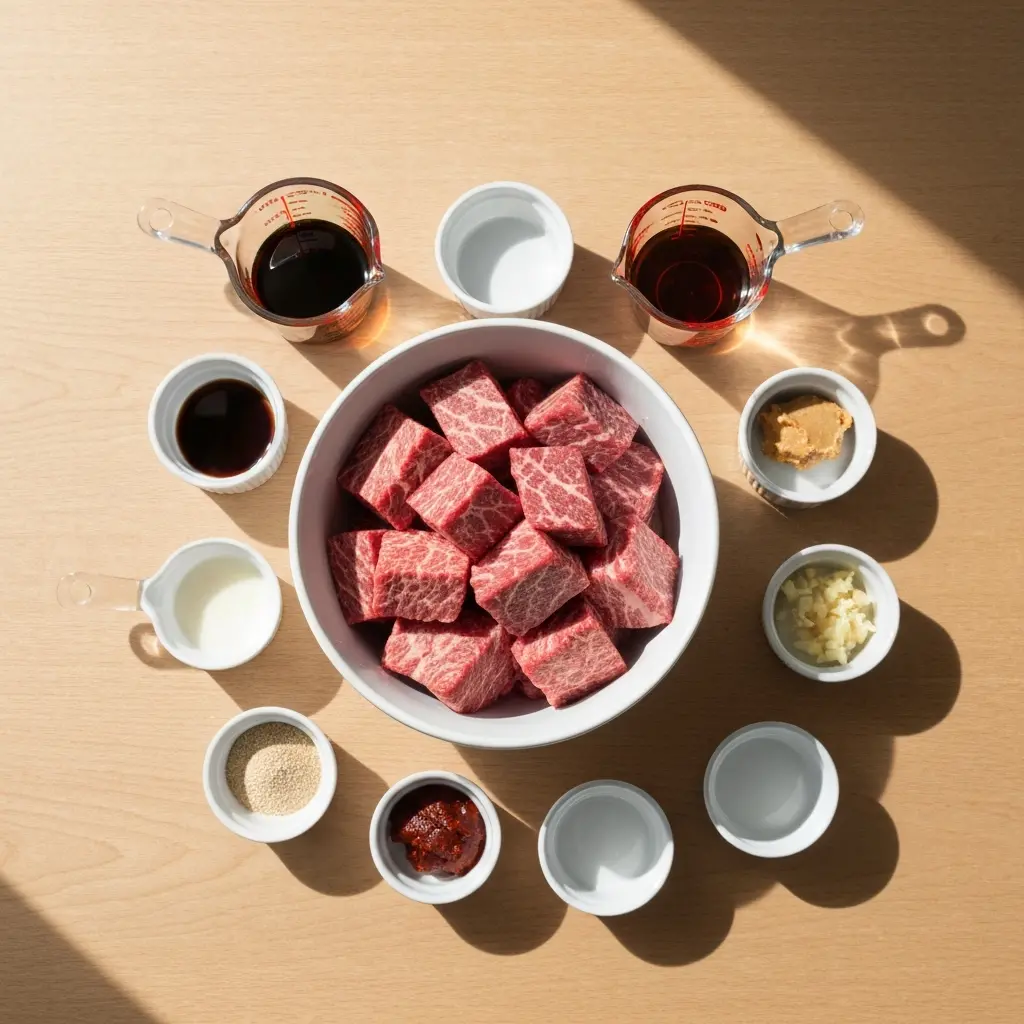
The Beef Cut Guide: Choosing Your Meat
If you’re looking to dominate the dinner table, you’ve got to start with the right protein. While short ribs are the traditional choice for galbi jjim, I’m a big proponent of the chuck roast for your korean beef stew. Why? Well, for one, it’s easier on the wallet. But beyond the price tag, a well-marbled chuck roast has the perfect ratio of fat to connective tissue. When you braise it low and slow, that collagen breaks down into gelatin, which gives the sauce a rich, lip-smacking quality. I usually buy mine in bulk at Costco. It’s worth noting that you should avoid the pre-cut “stew meat” packages. Those are often a mix of different scraps, and they won’t cook at the same rate. One piece will be tender while the next is like chewing on a shoe. No thanks.
I tend to cut my own cubes, usually about two inches square. Don’t go too small. The meat will shrink as it cooks, and you want substantial chunks that can stand up to a long simmer. If you’ve got a little extra time, some folks suggest soaking the meat in cold water to draw out excess blood. Honestly, with the quality of beef we get at Ralphs or Whole Foods these days, I find that step unnecessary. It’s a bit of an old-school technique that doesn’t add much to the final flavor profile. Just pat the meat dry with paper towels before you start. Moisture is the enemy of a good sear, and a good sear is where the magic happens.
Browning vs. Simmering: The Two-Stage Process
In my experience, though your mileage may vary, the most common mistake people make with korean beef stew is rushing the browning stage. You want to see a deep, dark crust on that beef. We’re talking mahogany, not gray. This is the Maillard reaction at work, and it’s the foundation of your flavor. I use a heavy Dutch oven for this. Get it hot, add a little oil, and work in batches. If you crowd the pan, the meat will steam instead of sear. That’s not what you’re after. Once the beef is browned, you’ll see those little brown bits stuck to the bottom of the pot. That’s liquid gold. Don’t you dare wash that out.
The second stage is the simmer. This is where patience comes in. Uncle Raymond used to say the meat will tell you when it’s ready, and he wasn’t kidding. You want a gentle simmer, just a few bubbles breaking the surface. If you boil it hard, the muscle fibers will tighten up and get tough. We’re looking for a slow transformation. This is when the soy sauce, ginger, and garlic start to penetrate the meat. I like to add a bit of dashi instead of just plain beef stock. It adds a savory depth that isn’t fishy but just feels… complete. Checks out every time I make it. Let it ride for a couple of hours until the beef is fork-tender.
The Role of Natural Sweeteners
One thing that makes korean beef stew unique is the balance of sweet and savory. Traditional recipes often use Asian pear to tenderize the meat. It contains an enzyme called calpain that helps break down those tough fibers. If you can’t find an Asian pear at your local market, don’t sweat it. A regular Bosc pear or even a grated kiwi works just as well. I’ve used kiwi before when I couldn’t find anything else, and it worked like a charm. Just be careful with kiwi; it’s powerful. If you let it marinate too long, the meat can turn to mush. About a tablespoon of grated kiwi is all you need for a big pot.
If you prefer a sweeter version, you can stir in a little honey or maple syrup toward the end. I usually stick to the natural sweetness from the pear and the carrots. It’s a more subtle, rounded flavor. I’ve seen some recipes call for a lot of white sugar, but I find that can mask the complexity of the gochujang and miso. You want to taste the fermentation and the spice, not just a sugar rush. It’s all about that balance. If the sauce feels a bit too sharp, a tiny pinch of brown sugar can mellow it out. Fair enough, right?
Sodium Management: Balancing the Salt
When you’re working with soy sauce, miso, and gochujang, things can get salty in a hurry. I’ve learned this the hard way. In 2014, I over-seasoned a braise and it was basically inedible. Now, I always start with a low-sodium soy sauce. You can always add more salt at the end, but you can’t take it out once it’s in there. The shiro miso adds a beautiful creaminess and a hit of umami, but it’s also packed with sodium. Think of it as a seasoning rather than a main ingredient. Solid advice, trust me. This technique is quite different from a korean doenjang soup recipe, where the paste is the primary flavor profile.
If you find your korean beef stew is getting too salty as the liquid reduces, splash in a little more water or unsalted broth. Don’t reach for the salt shaker until the very end. I also like to use tamari if I’m cooking for friends who are gluten-free. It has a richer, darker flavor that actually works quite well with the beef. Just keep tasting as you go. Texture is truth, but taste is the final judge. If it tastes too intense, a little splash of rice vinegar can help cut through the salt and the fat, brightening the whole dish up.
Instant Pot and Slow Cooker Conversions
I know not everyone has three hours to babysit a pot on the stove. While I love the ritual of a stovetop braise, I’m not above using technology. For an Instant Pot korean beef stew, you’re looking at about 45 minutes under high pressure with a natural release. You still need to brown the meat first using the sauté function. Don’t skip that. In a slow cooker, let it go on low for 8 hours. The flavors won’t be quite as concentrated because there’s less evaporation, so you might want to reduce the sauce in a pan at the end. Here is a quick reference for your planning:
- Stovetop: 2.5 to 3 hours at a low simmer. Best for flavor development.
- Instant Pot: 45 minutes pressure cook + 15 minutes natural release. Best for busy weeknights.
- Slow Cooker: 8 hours on low. Best for “set it and forget it” meal prep.
Regardless of the method, the goal is the same: tender beef that yields to a fork. If you’re using the Instant Pot, be careful with the vegetables. I usually add the carrots and potatoes after the meat is done and run it for another 3 minutes on high pressure. Otherwise, they’ll turn into baby food. That’s a mistake you only make once. Well, maybe twice if you’re distracted like I sometimes am. But that’s how we learn, right? Experience is just the name we give to our past kitchen disasters.
Visual Troubleshooting: Sauce and Doneness
Is the sauce too thin? This happens sometimes if your pear was particularly juicy or if you didn’t reduce the liquid enough. The fix is easy. Mix a tablespoon of cornstarch with a little cold water to make a slurry, then stir it into the simmering stew. It’ll thicken up in about a minute. You’re looking for a sauce that coats the back of a spoon, not something watery like a soup. On the flip side, if it’s too thick, just add a splash of water. This is a very forgiving recipe, so don’t stress if it’s not perfect on the first try.
How do you know the beef is done? Don’t just look at the clock. Take a piece out and press it with a fork. It should slide right through without much resistance. If it’s still bouncy or tough, it needs more time. There’s no such thing as “overcooking” chuck roast in a stew unless you turn it into literal shreds. Usually, it’s the other way around; people pull it too early. If it’s tough, let it ride for another twenty minutes. Patience is a virtue, especially when it comes to korean beef stew. When it’s ready, the fat will have rendered into the sauce, and the meat will look dark and inviting.
Storage and Serving: Better the Next Day
Like most braises, this stew is actually better the next day. The flavors have time to mingle and the beef absorbs even more of that savory liquid. If you make it ahead of time, you can put the whole pot in the fridge overnight. The next morning, the fat will have solidified into a white layer on top. You can just scrape that off with a spoon and throw it away. It’s the easiest way to get a clean, rich sauce without all the extra grease. Fat is your friend until it isn’t, and in a finished stew, too much of it can feel heavy.
When you’re ready to serve your korean beef stew, keep it simple. A bowl of fluffy white rice is mandatory to soak up all that incredible sauce. I also like to serve it with a side of spicy kimchi to provide a cold, crunchy contrast to the warm, rich beef. Maybe some sliced cucumbers with a little sesame oil if you’re feeling fancy. It’s a complete meal that feels like a hug in a bowl. If you have leftovers, they freeze beautifully for up to three months. Just thaw it in the fridge overnight and reheat it gently on the stove. You’ve got this. A quick kimchi tofu soup recipe is another excellent way to utilize these ingredients if you have extra kimchi on hand.
Frequently Asked Questions
Mastering the Winter Braise
When you finally sit down with a bowl of this korean beef stew, you’ll see why it’s a staple in my house. The way the beef just falls apart under your fork, the sweetness of the pear hitting that salty soy sauce, and the warmth of the ginger… it’s just exactly right. It reminds me of those Sunday afternoons watching my mother in the kitchen, where the goal wasn’t just to eat, but to feel taken care of. That’s what a good stew does. It’s not just food; it’s a bit of peace in a busy week. I hope this becomes a new tradition for you and your family, especially when those rare cold nights hit. If you’re looking for more ways to use your heavy pots this winter, I share tons of variations on my Pinterest boards if you want ideas. Give it a shot, let it ride, and let me know how it turns out in the comments below. Happy cooking!
Reference: Original Source
What is a Korean beef stew called?
The traditional name for this dish is galbi jjim. While it’s usually made with short ribs, using chuck roast for a korean beef stew is a common and delicious variation. It translates roughly to “braised short ribs,” but the flavor profile remains consistent even if you swap the cut of meat.
What is the best cut of beef for Korean beef stew?
I always recommend beef chuck roast. It has the right amount of fat and connective tissue to stay moist during a long braise. If you’re feeling spendy, bone-in short ribs are the classic choice, but for everyday cooking, chuck roast is a solid, reliable option that delivers great results.
Why do some recipes say to soak the meat in cold water?
It’s an older technique used to remove excess blood and impurities from the meat. For modern, high-quality beef from a standard US grocery store, it’s not really necessary. I usually skip this step and just focus on getting a really good sear on my korean beef stew instead.
Can I make this korean beef stew in a slow cooker?
You absolutely can. Just brown the meat in a pan first to build flavor, then toss everything into the slow cooker for 8 hours on low. It’s a great way to have dinner ready when you get home from work, though you might need to reduce the sauce slightly afterward.
How do I store and reheat the leftovers?
Store it in an airtight container in the fridge for up to 3 days. To reheat, just put it in a pot over medium-low heat until it’s bubbling. If the sauce has thickened too much in the fridge, add a splash of water to loosen it back up. It’s even better the next day!