



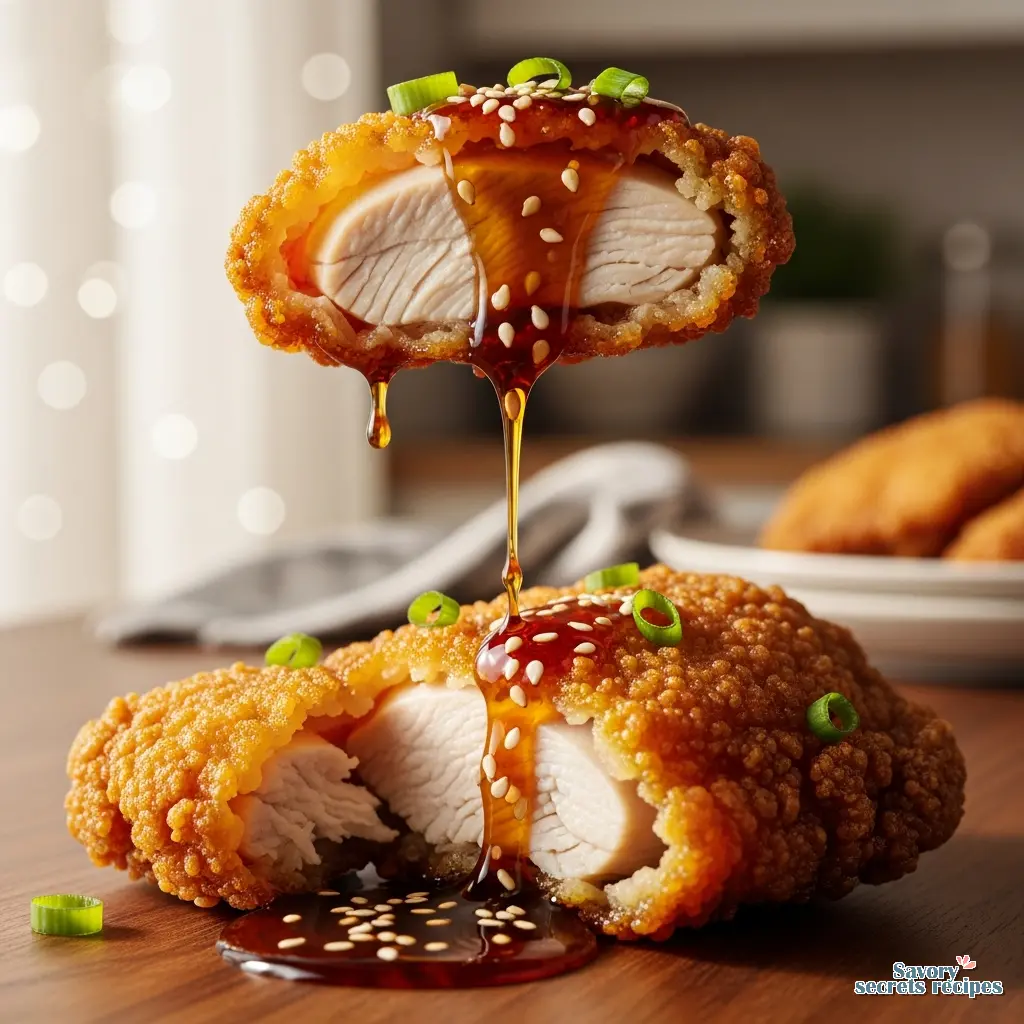
Asian Crispy Fried Chicken Recipe for Maximum Crunch
Ingredients
Method
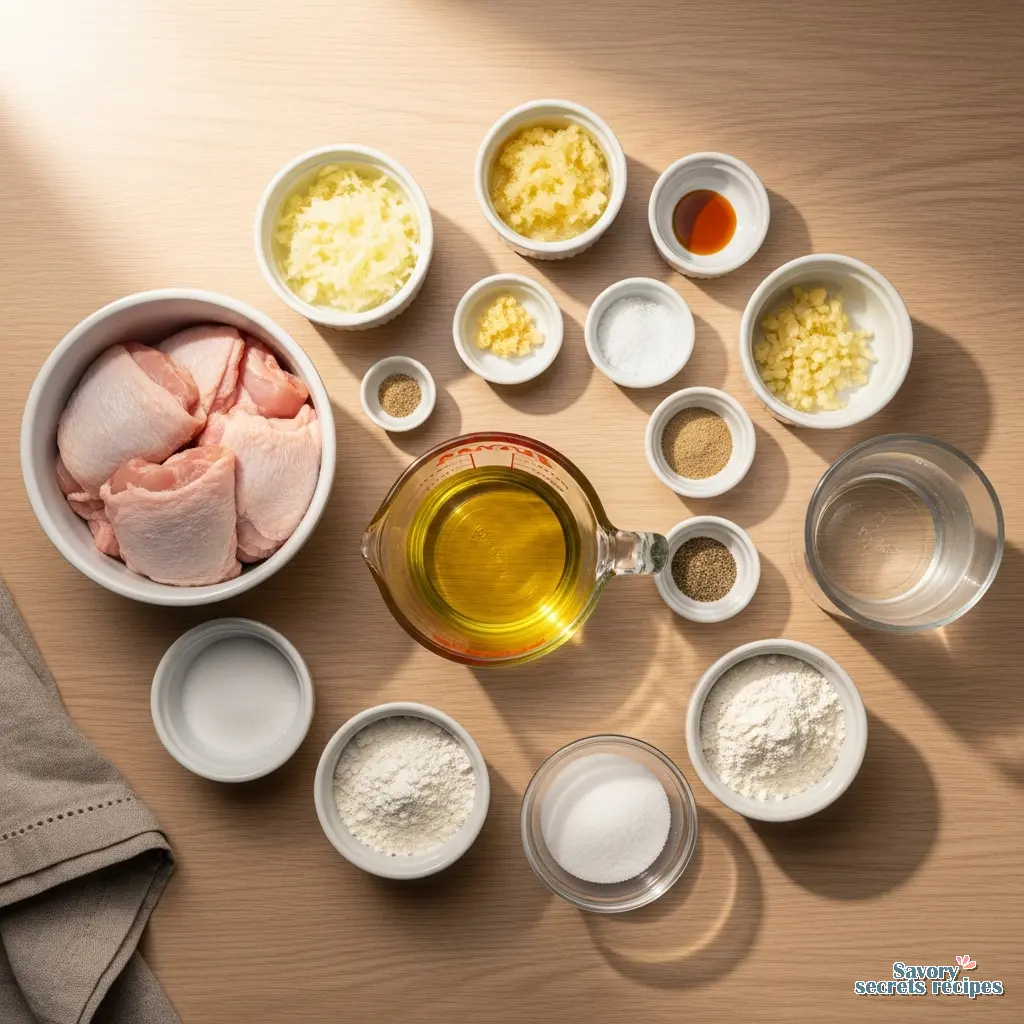
- Assemble all necessary ingredients.
- Prepare the marinade by stirring the chicken, onion, garlic, salt, and pepper in a medium bowl until the meat is well-coated. Cover the bowl with plastic wrap and refrigerate for 4 hours or up to overnight.
- Preheat oil in a deep fryer or large saucepan to 340°F (171°C).
- Whisk the cornstarch, flour, sugar, pepper, and salt in a large bowl. Gradually incorporate cold water until the mixture reaches a smooth consistency. Use tongs to transfer the chicken from the marinade into the batter, stirring to coat completely, and discard the leftover marinade.
- Fry the chicken in batches for 4 minutes, then transfer the pieces to a cooling rack.
- Increase the oil temperature to 375°F (190°C).
- Fry the chicken a second time in batches until golden brown and crispy, approximately 3 to 4 minutes. Transfer to a wire rack to drain.
- Serve and enjoy.
Nutrition
Notes
Why This Asian Crispy Fried Chicken Recipe Actually Works
Let me tell you about a specific Tuesday night last month. It was one of those damp, bone-chilling evenings in Oakland where the fog rolls in thick off the bay, and I was absolutely craving comfort food. Not just any comfort food, but specifically asian crispy fried chicken. You know the kind I mean. The kind where the crunch is so loud it interrupts conversation. I ordered takeout from a local spot I usually love, waited forty minutes, and when I opened the box? Soggy. Sad. Steamed chicken in a wet raincoat.
To be honest, I almost cried. It sounds dramatic, but when you’re hungry and cold, a soggy crust feels like a personal betrayal. That disappointment sent me straight into my kitchen the next day with a mission. I needed to nail down a recipe that didn’t just taste good straight out of the fryer, but one that actually understood the science of crunch. I wanted that glass-like, shattering exterior that my grandmother in Taipei used to achieve effortlessly, combined with the juicy interior of a good American fried chicken thigh.
I’m not convinced yet that there is a single “perfect” recipe, but this one is as close as I’ve gotten in ten years of nutrition work and home cooking. It relies on a few non-negotiables: a starch-heavy batter, a double-fry technique, and a soy-garlic glaze that balances salt, sweet, and heat. If you’ve been intimidated by deep frying, don’t be. Honestly, a thermometer is your best friend here, and once you hear that sizzle, you’ll wonder why you ever settled for the soggy takeout version. If you prefer more heat, you can also whip up a quick **spicy sauce for fried chicken** to serve on the side.
The Science of the Starch: Flour vs. Cornstarch
Here’s what I’m seeing in a lot of failed attempts at asian crispy fried chicken: people use plain all-purpose flour and treat it like Southern fried chicken. That tracks if you want a bread-like, heavy crust. But if you want that airy, jagged, teeth-shattering crispiness typical of Korean or Japanese styles, you need to rethink your powders.
In my kitchen, I’ve run side-by-side tests (my daughter loves these days because she gets to be the judge). Wheat flour contains gluten. When developed, gluten creates a chewy network. That’s great for bread, terrible for maximum crispiness. Starches like cornstarch, potato starch, or tapioca flour have high amylose content. When they hit hot oil, they don’t form a gluten network; instead, they dehydrate rapidly and form a rigid, glass-like structure.
For this recipe, we are using a blend. A little bit of flour provides structure so the batter doesn’t slide right off, but the heavy lifting is done by cornstarch. This combination gives us the best of both worlds: adhesion and crunch.
The Flavor Foundation: Why Marination Matters
My grandmother used to say that if the meat doesn’t taste good on its own, no amount of sauce can save it. That stays with me. For asian crispy fried chicken, we aren’t just coating the outside; we are seasoning from the inside out. We use grated onion and garlic in the marinade. Why grated? Because it turns into a liquid pulp that penetrates the muscle fibers of the chicken thighs much better than chopped pieces would.
I usually let this sit for at least 30 minutes. If you have time, let it go for four hours in the fridge. The salt creates a brine effect, helping the chicken retain moisture during the high heat of frying. Just remember to let the chicken come back to room temperature for about 15 minutes before you start frying. Cold chicken drops the oil temperature too fast, and that is exactly how you end up with greasy food.
The Double-Fry Technique: The Real Secret
If you take nothing else away from this article, please remember this: fry it twice. I know, I know. It sounds like extra work. I’m still working this out in my own head sometimes when I’m tired and just want to eat, but the results are undeniable. Here is why it works.
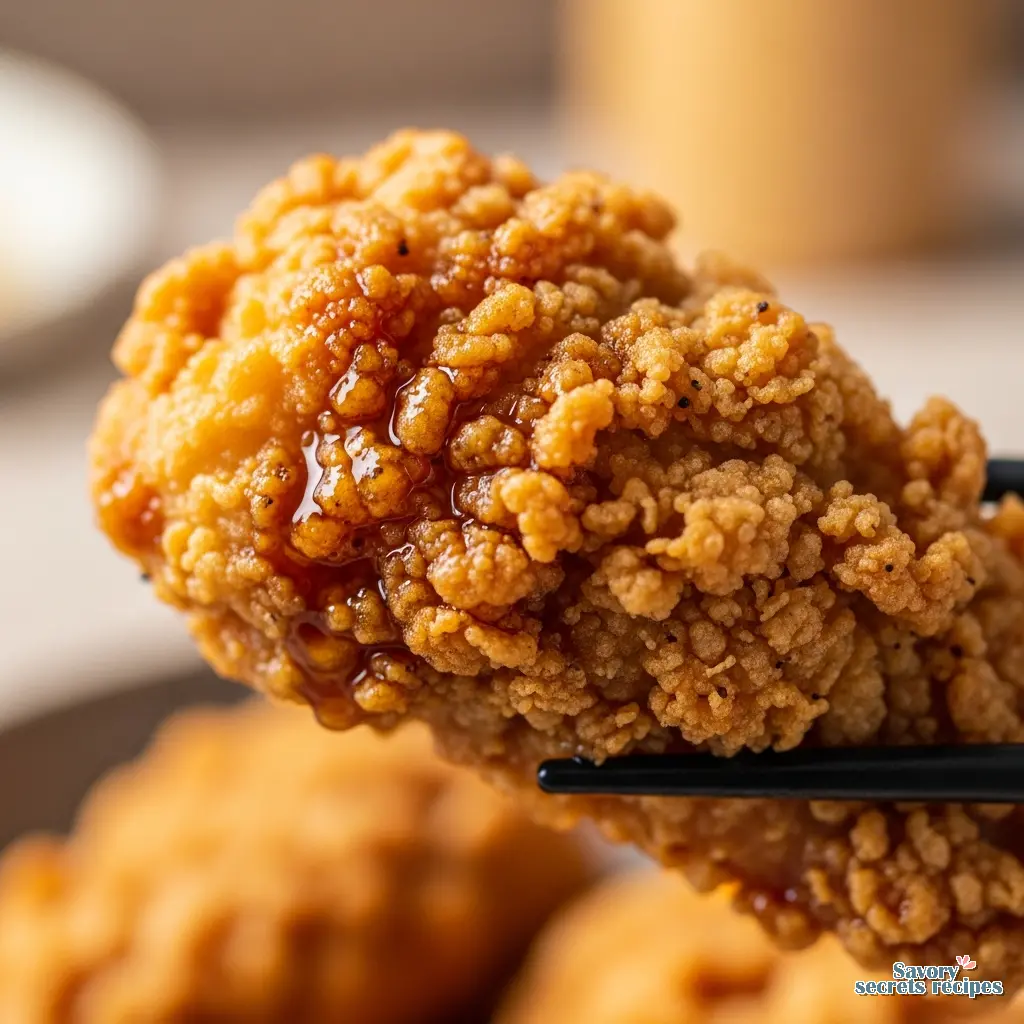
The first fry cooks the chicken through. We do this at a slightly lower temperature (around 330°F to 340°F). The moisture inside the chicken turns to steam and pushes its way out, cooking the meat. However, as the chicken cools down after this first round, more moisture migrates from the center to the crust, making it soggy again. This is the “soggy takeout” phenomenon.
The second fry is shorter and hotter (around 375°F). This flash-fry evaporates that lingering surface moisture and sets the starch structure into that permanent, audible crunch. It’s the difference between “good” fried chicken and “I need to text my mom about this” fried chicken. To balance the savory profile, consider serving it with a side of **gochujang fried rice**.
Oil Temperature & Thermometer Guide
I can’t stress this enough: use a thermometer. My grandmother could judge oil temp by holding her hand over the wok or watching how a wooden chopstick bubbled. I am not that cool. I use a digital clip-on thermometer because I like data, and I hate burnt food. You want to maintain your oil between 350°F and 375°F for the final fry.
Common mistake? Overcrowding the pot. When you drop five pieces of cold chicken into hot oil, the temperature plummets. If it drops below 300°F, the batter acts like a sponge and soaks up the oil instead of crisping. Fry in batches. It takes longer, but it’s worth it. Trust the browning process.
Troubleshooting: Common Mistakes & Fixes
❌ Mistake: The coating falls off in the oil.
✅ Solution: This usually happens because you touched it too soon. When you drop the chicken in, let it do its thing for at least 2 minutes before you try to flip it. The starch needs time to set.
❌ Mistake: The chicken is dark outside but raw inside.
✅ Solution: Your oil was too hot during the first fry. Lower the heat to 330°F for the initial cook to allow the heat to penetrate without burning the sugar in the batter.
❌ Mistake: The sauce made it soggy immediately.
✅ Solution: You likely sauced it while it was too hot, or your sauce was too watery. Let the chicken rest on a wire rack for 2 minutes after the second fry, and simmer your sauce until it’s thick and syrupy. If you are looking for other crispy textures to master, learning **how to cook frozen rice cakes** is a great next step.
Garnishing Like a Pro: The Ice Water Trick
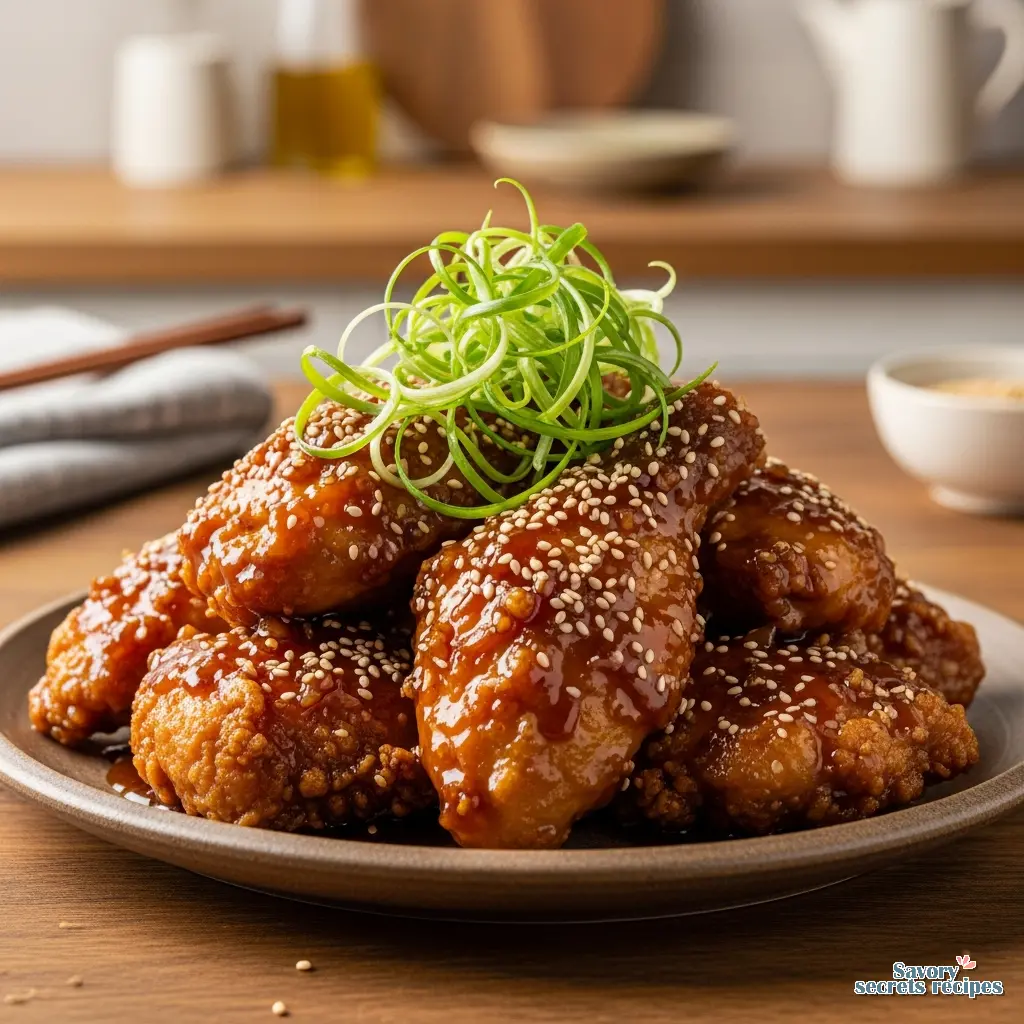
You know those beautiful, curly green onions you see at restaurants? They don’t grow like that. Here is a little trick I use to make this asian crispy fried chicken look as good as it tastes. Slice your scallions into long, thin shreds lengthwise. Prepare a bowl of ice water. Drop the shredded scallions in there for about 10 minutes while you fry the chicken.
The cold shock causes the fibers to contract and curl up into perfect little ringlets. Drain them well and pile them on top of the hot chicken. It adds a fresh, sharp bite that cuts through the richness of the fried food. It’s a small detail, but it makes you look like a culinary genius.
Frequently Asked Questions
Storage & Reheating: Keeping the Crunch Alive
I’ll be honest, fried chicken is never quite as good as it is three minutes out of the fryer. That said, you can get pretty close. If you have leftovers, store them in an airtight container in the fridge for up to 3 days. But whatever you do, do not put them in the microwave. The microwave excites water molecules, which effectively steams your chicken from the inside out. You will end up with a rubbery, sad mess.
Instead, use an air fryer or your oven. I usually toss leftovers in the air fryer at 350°F for about 5 to 6 minutes. It brings the oil back to the surface and re-crisps the skin surprisingly well. If you’re using a standard oven, place the chicken on a wire rack set over a baking sheet and bake at 375°F for 10-15 minutes. It’s worth the wait.
You’ve Got This
When you serve this asian crispy fried chicken to your friends or family, watch their faces when they take that first bite. That sound that audible crunch is the best compliment a cook can get. It takes a little practice to get comfortable with the oil temperature, and your kitchen might smell like a fryer for a few hours, but I promise it is absolutely worth it.
Snap a pic of your creation (especially those curly green onions!) and tag me I love seeing how yours turns out. For more inspiration, check out my Pinterest boards where I collect all my favorite comfort food ideas.
You’ve got this, and your taste buds will thank you.
Reference: Original Source