



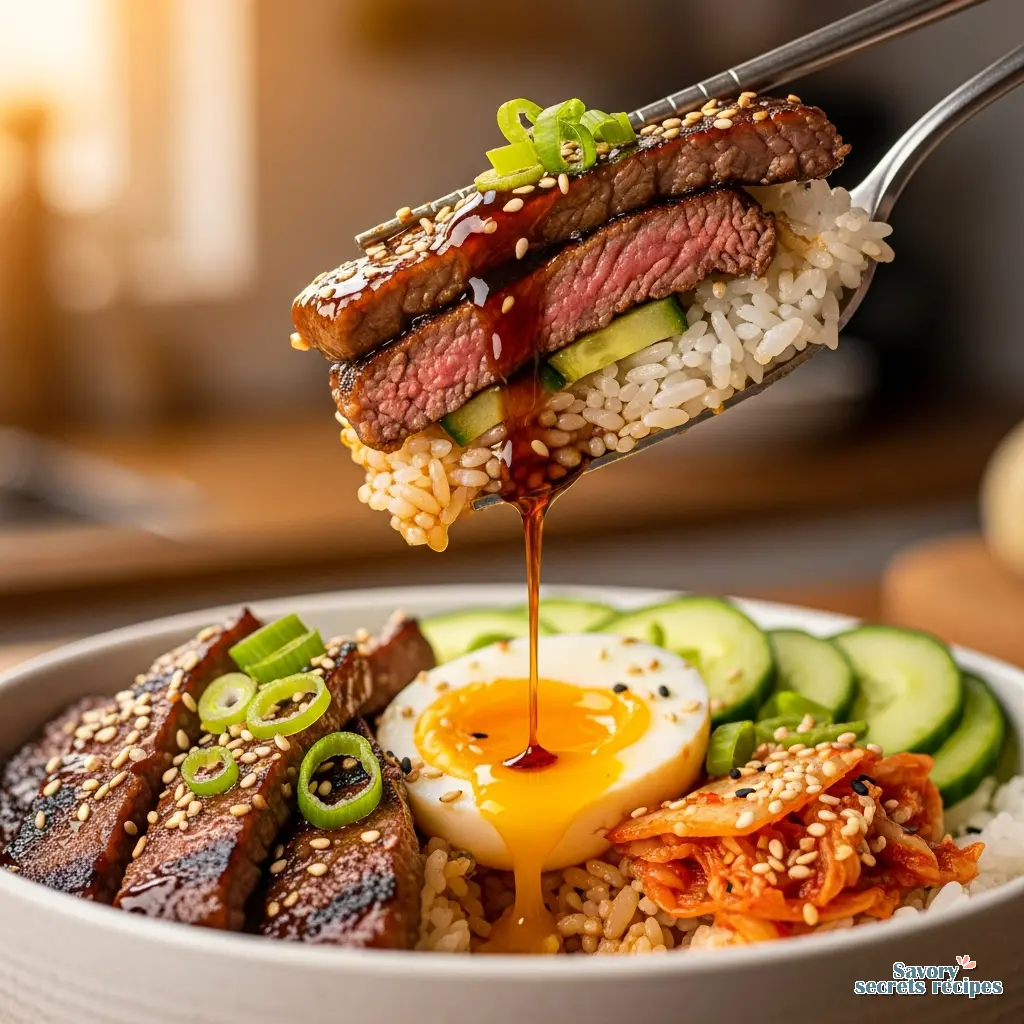
Easy Korean BBQ Rice Bowl Recipe
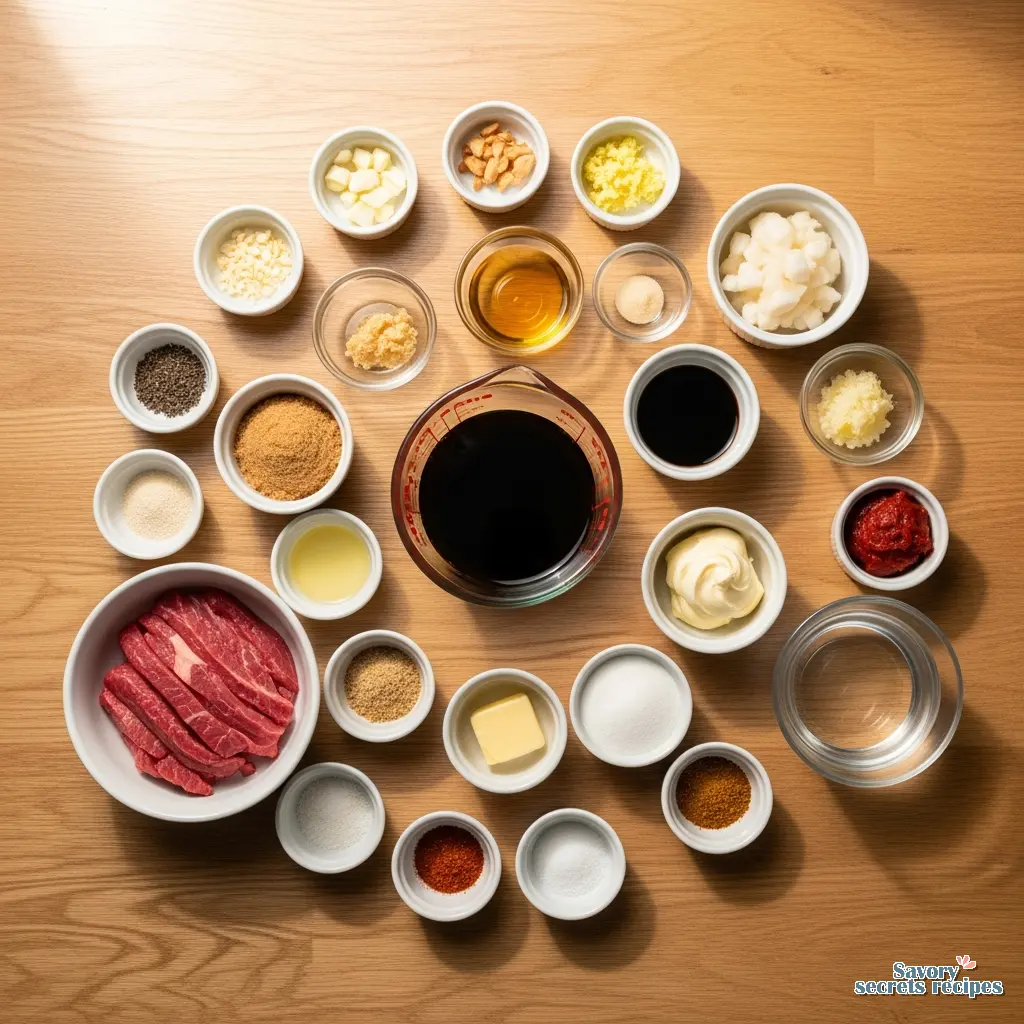
Ingredients
Method
- Slice the steak into thin, bite-sized pieces and place them in a mixing bowl. Peel the garlic, ginger, and pears, then pulse in a food processor until a paste forms. Combine the paste with the meat. Add soy sauce, brown sugar, and sesame oil in a 4:4:1 ratio until the meat is covered. Mix thoroughly and refrigerate for approximately 30 minutes.
- Prepare the rice according to the package instructions.
- Whisk all Yum Yum Sauce ingredients together and set the mixture aside.
- Heat a large, heavy-duty skillet over very high heat. Drain the excess marinade and add the steak to the pan. Sear the meat for several minutes, flipping occasionally, until it reaches a deep golden brown. Set aside.
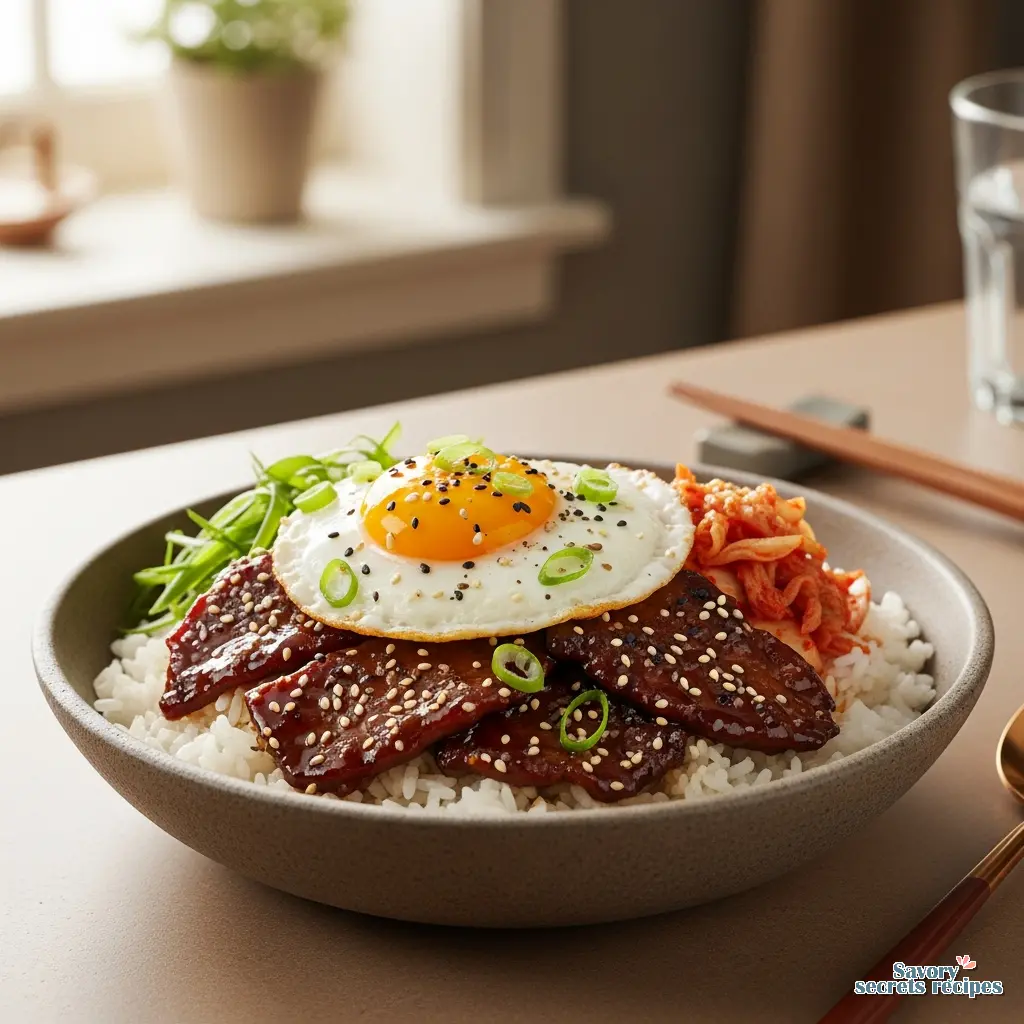
- Arrange the rice, kimchi, greens, and steak in a serving bowl. Top with the egg and garnish with sesame seeds, scallions, and Yum Yum Sauce.
Nutrition
Notes
This Korean BBQ Rice Is Your New Weeknight Savior
It’s 6 PM. You’ve had a day. The kind of day where the idea of chopping twenty different vegetables feels like a personal attack, but you also don’t want to drop fifty bucks on delivery that’ll arrive cold anyway. I’ve been there. That’s usually when I start craving something salty, sweet, and comforting. That is exactly when this korean bbq rice recipe comes into play.
I grew up watching my abuela Marta manage three different pots on a tiny camp stove in our garage. She taught me that great food isn’t about having the fanciest equipment or the most expensive cuts of meat. It’s about understanding flavor. She’d say, “If it doesn’t have color, it doesn’t have flavor,” and that rule applies just as much to this korean bbq rice as it did to her carne asada. We’re talking about tender strips of beef, a sticky-sweet garlic sauce, and fluffy rice that soaks up every drop of flavor. And the best part? You can pull this off in about 30 minutes. Solid.
This isn’t just a bowl of rice and meat. It’s a complete meal that hits every single taste bud salty soy, sweet pear marinade, spicy kimchi, and that rich, fatty egg yolk. It feels like a restaurant meal, but you’re eating it in your sweatpants. Let’s get into it.
Why This Recipe Works (Speed & Budget)
Look, I love a traditional slow-braised meal as much as the next guy. But on a Tuesday? No way. This korean bbq rice bowl is designed for speed without sacrificing that deep, developed flavor we all want. The secret is thinly slicing the meat before cooking. Because the surface area is larger, it cooks in seconds and absorbs the marinade almost instantly. You don’t need to let this sit in the fridge overnight. Ten minutes while you prep the rice is plenty. Good enough.
From a budget perspective, this recipe is a lifesaver. You don’t need expensive ribeye here. I usually grab top sirloin or even flank steak. Since we’re slicing it thin and marinating it with pear (more on that in a second), even cheaper cuts turn out tender. Plus, you can stretch a pound of meat to feed four people easily when you bulk it up with rice and veggies. In this economy? That’s the one. If you enjoy these flavors but want something even faster, you might also like a korean beef fried rice that uses similar ingredients in a single pan.
The Science of the Pear (The Secret Weapon)
You might see the pear in the ingredient list and think, “Leo, have you lost it?” Hear me out. This is a classic Korean technique, and it’s brilliant. Asian pears (or Bosc pears, which are easier to find in the US) contain an enzyme called calpain. I know, getting a little technical here, but stick with me.
This enzyme acts like a natural pair of scissors on the meat’s protein fibers. It breaks them down, making the beef incredibly tender in a very short amount of time. It also adds a subtle sweetness that balances the salty soy sauce much better than just sugar alone. My abuela used to use orange juice for her pork for a similar reason acid and enzymes do the work for you. So don’t skip the pear. If you can’t find a pear, a kiwi works too, but be careful kiwi is strong and can turn meat to mush if you leave it too long. With the pear, you can just let it ride.
Tips for the Perfect Sear
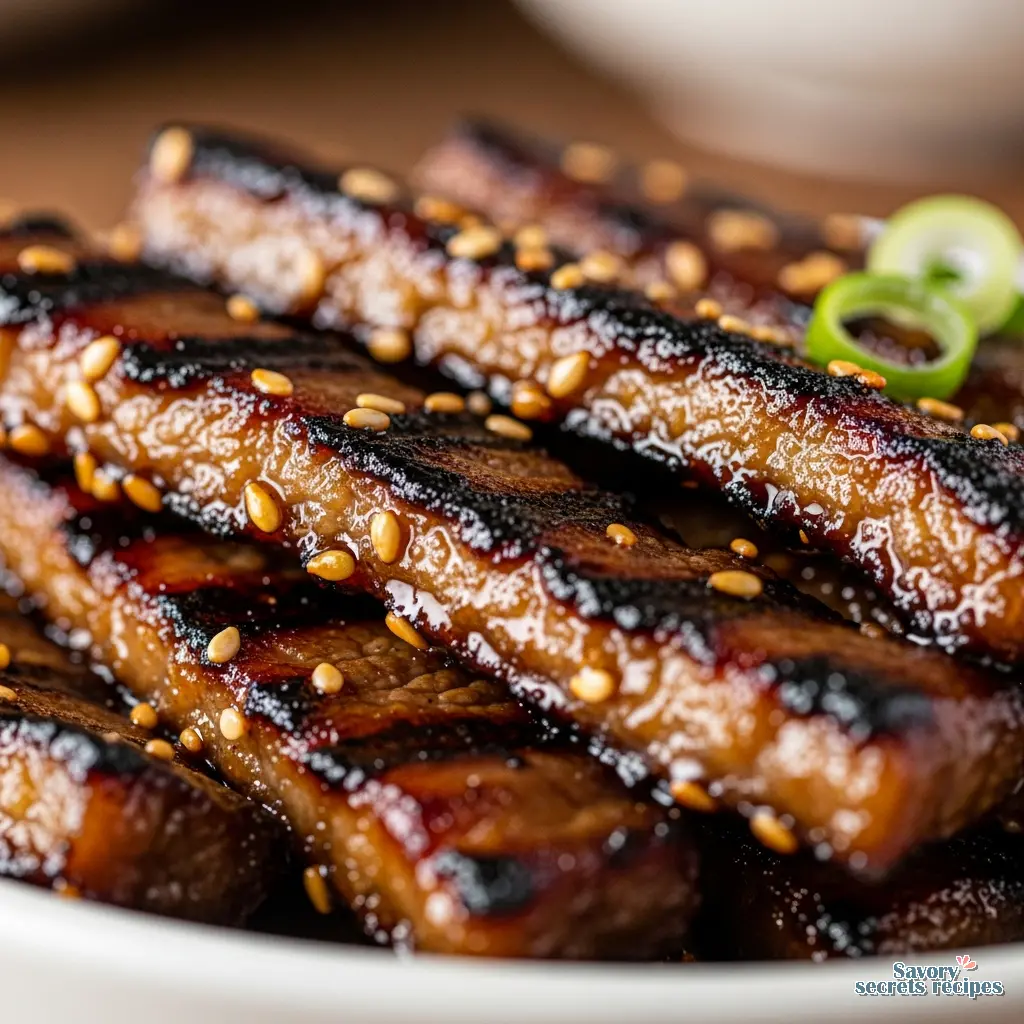
Okay, this is where most people mess up their korean bbq rice. They dump all the meat into the pan at once, and instead of grilling, they end up steaming the beef in its own juices. The result is gray, sad meat. We want dark, caramelized, crispy edges. That’s where the flavor lives.
First, get your skillet hot. Like, really hot. I usually wait until I can feel the heat radiating off it with my hand held a few inches above. Add your oil, and then add the meat in a single layer. Do not crowd the pan. You might have to do this in two or three batches. I know, it takes a few extra minutes, but trust me on this. It makes all the difference.
Once the meat hits the pan, don’t touch it. Let it sear undisturbed for at least a minute or two. You’ll know it’s ready to flip when the edges pull back slightly and you see a deep brown crust forming. If you try to move it and it sticks, it’s not ready. Let the heat do the work. When you toss it, that sugar in the marinade will caramelize and give you that sticky, smoky BBQ finish.
Building the Bowl: Authentic Banchan & Toppings
In Korea, the rice and meat are just the beginning. The meal is defined by the banchan, or side dishes. For our korean bbq rice bowl, we’re keeping it simple but authentic. You absolutely need kimchi. The acidity and spice cut right through the richness of the beef and the sweet marinade. I usually buy a jar from the refrigerated section at Ralphs or Trader Joe’s look for one with active bubbles; that means it’s alive and tasty.
Another non-negotiable for me is an egg. A fried egg with a crispy bottom and a runny yolk acts like a second sauce for the rice. When you break that yolk and mix it with the spicy beef juices… man, that’s the one. You can also add some quick-pickled cucumbers or sautéed spinach with sesame oil if you want to get some greens in there. My kids claim vegetables are “illegal” in rice bowls, but I sneak them in anyway. For even more texture, learning how to cook frozen rice cakes can help you add a chewy element to your bowl.
I also like to drizzle a little “Yum Yum Sauce” or a spicy mayo over the top. It adds a creamy element that ties everything together. Just mix some mayo with a little garlic chili paste or sriracha. Simple. Using a spicy base is common in many dishes, including a flavorful gochujang fried rice which offers a different kind of heat.
Troubleshooting: Common Mistakes
Common Mistakes & Fixes
Mistake: The beef is tough and chewy.
Solution: You likely sliced it with the grain instead of against it. Always look for the direction the muscle fibers run and slice perpendicular to them. Or, you skipped the pear!
Mistake: The rice is mushy or wet.
Solution: You used too much water. For short-grain rice, I usually do a 1:1 ratio or slightly more water. Rinse your rice until the water runs clear to remove excess starch.
Mistake: The sauce is bland.
Solution: You might be using a “lite” soy sauce that lacks depth. Add a splash of fish sauce or a pinch more salt. Season in layers taste as you go.
Storage & Reheating Instructions
If you have leftovers (which, honestly, is rare in my house), this korean bbq rice stores beautifully. I actually think the flavors in the beef get better after sitting in the fridge for a day. Store the rice and beef in separate airtight containers if you can. The rice tends to dry out in the fridge, and keeping them separate lets you reheat them properly.
To reheat, don’t just nuke the rice dry. It’ll turn into pebbles. Place a damp paper towel over the rice bowl and microwave it for about 60-90 seconds. The steam from the towel will rehydrate the grains, making them fluffy again. For the beef, a quick toss in a hot skillet is best to bring back that texture, but the microwave works too just don’t overdo it or the meat will toughen up.
Frequently Asked Questions
Conclusion
When you finally sit down with this bowl of korean bbq rice, you’re going to wonder why you ever bothered with takeout. The kitchen will smell like toasted sesame and garlic, the rice will be steaming, and that first bite of sweet-savory beef with the creamy egg yolk? That’s the one. It’s comforting, it’s fast, and it’s impressive enough that your family might actually think you planned it days in advance.
Give this a shot tonight. Don’t worry about getting the plating perfect or having every authentic side dish. Just get that sear on the meat and enjoy the process. If you make it, snap a pic and tag me I love seeing how you guys spin these recipes. You’ve got this. Now go enjoy that homemade magic.
For more inspiration, check out my Pinterest boards where I save all my favorite weeknight wins.
Reference: Original Source