



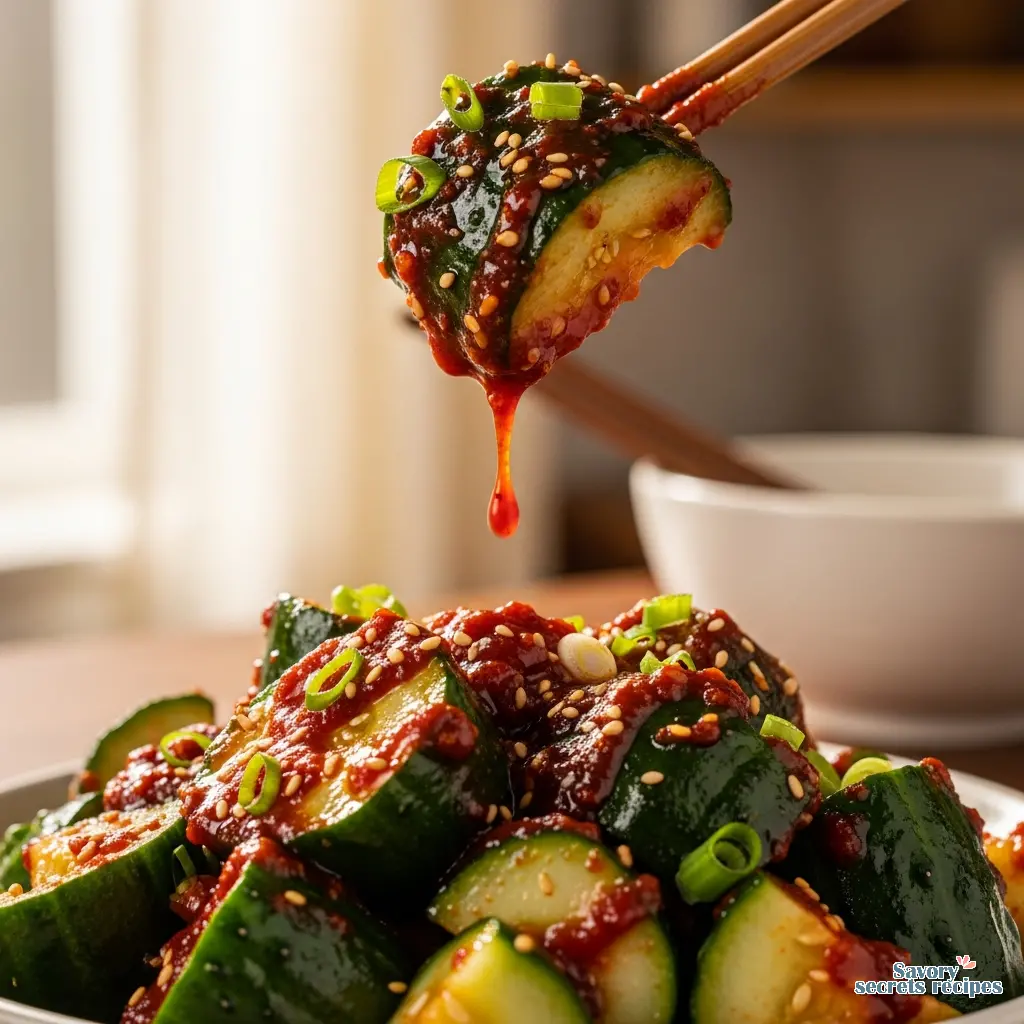
Crushed Korean Gochujang Cucumber Salad Recipe
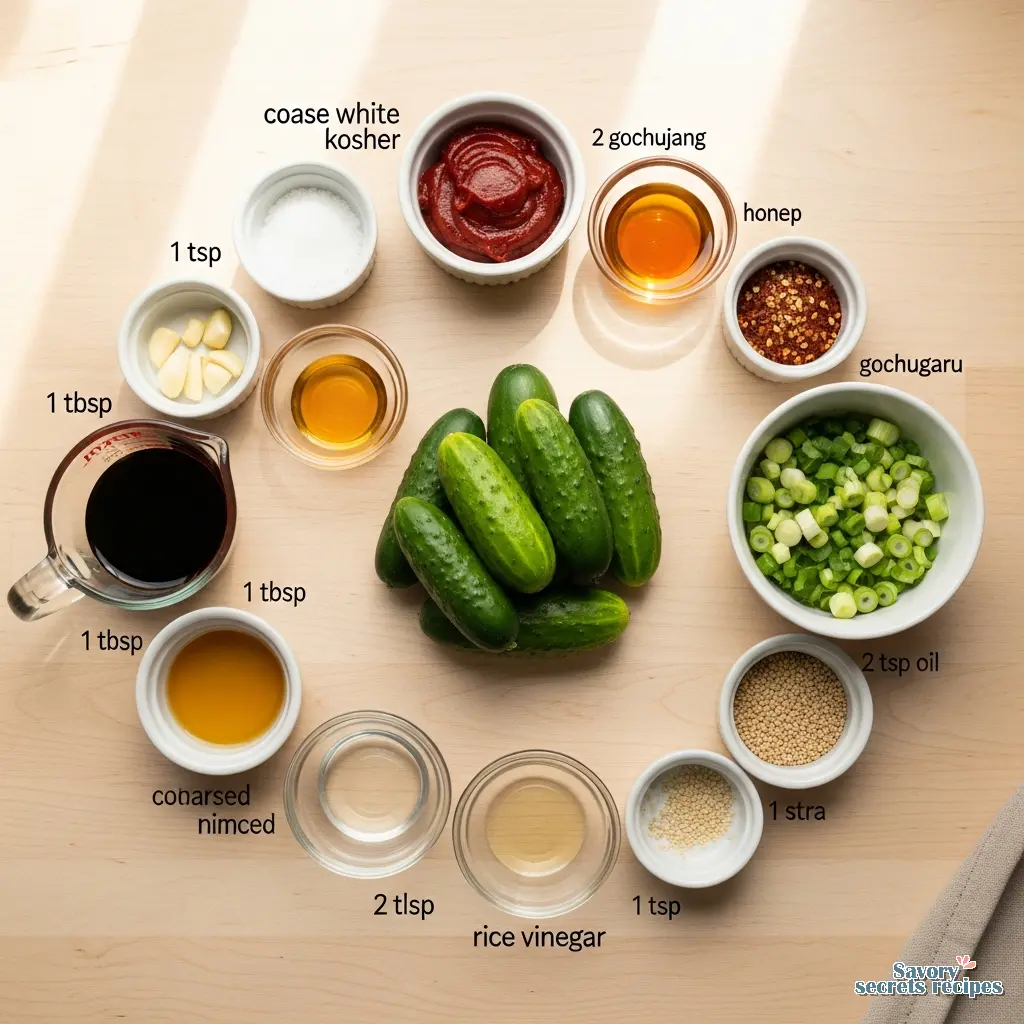
Ingredients
Method
- Slice the cucumbers into pieces between 1/4 and 3/4 inches thick, according to your preference.
- Place the cucumber slices in a strainer over a catch basin, toss with salt to coat, and let sit for at least 30 minutes; for best results or if preparing ahead, let them sit for up to an hour to release more liquid.
- Combine all dressing ingredients in a bowl and adjust the seasonings to your taste.
- Drain the excess water from the cucumbers, transfer them to a large bowl, add the dressing, and toss well.
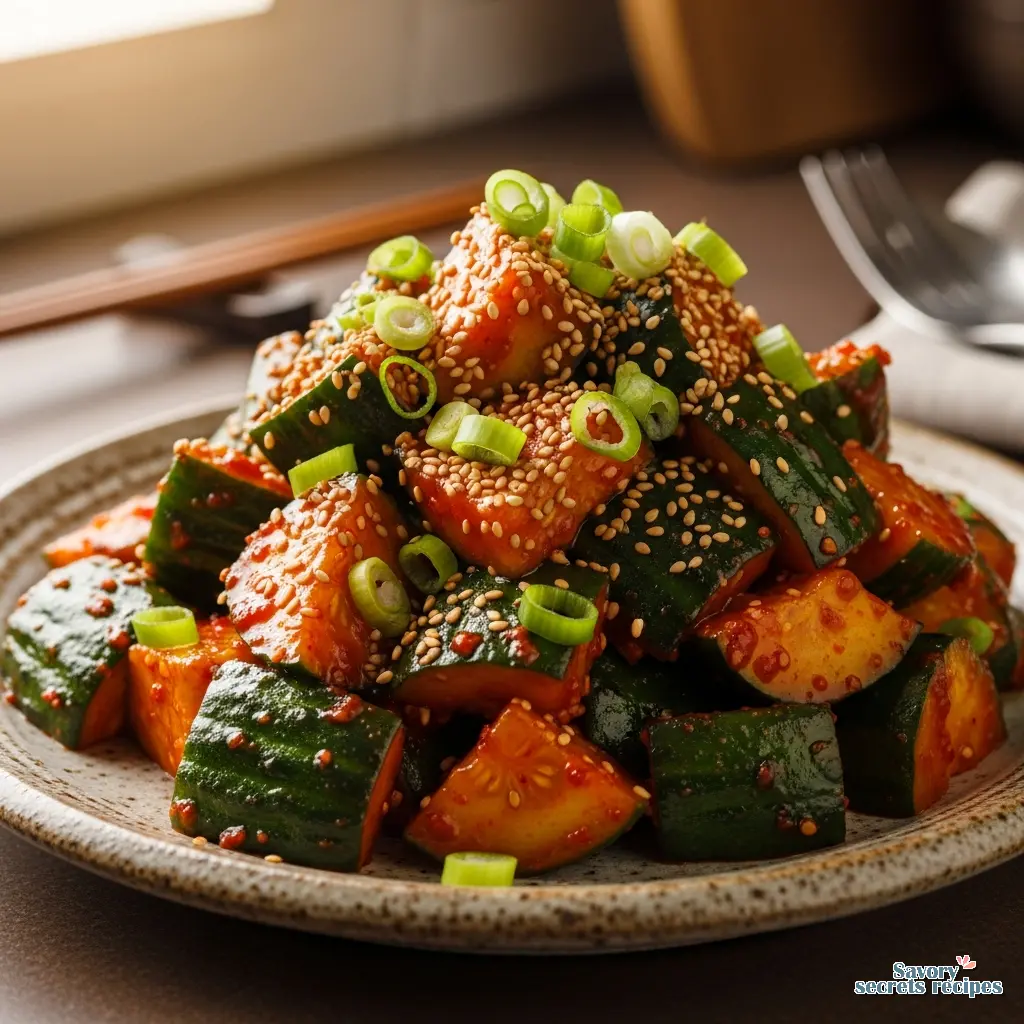
- Garnish with additional sesame seeds if desired and serve cold as a side dish with rice or noodles.
- Store the salad in an airtight container in the refrigerator for up to two weeks.
Nutrition
Notes
Salting the Cucumber
- Salting the cucumbers will help release some of its liquid but it will continue to release liquid as it sits, especially if you prepare this in advance. Don’t worry though because the flavours will be just as good!
Why This Crushed Cucumber Salad Korean Style Belongs in Your Rotation
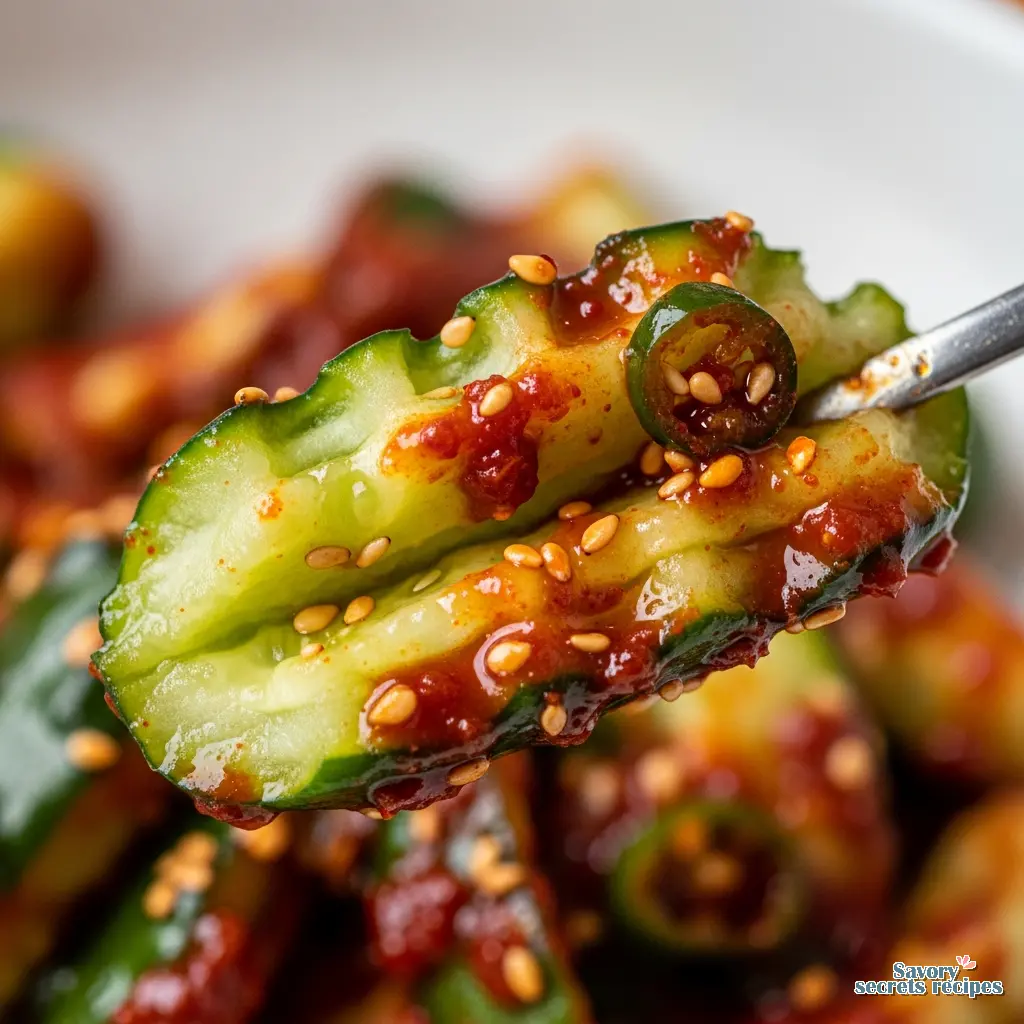
I remember standing in my grandfather’s kitchen in Bari, watching him crush olives with a flat stone. He told me that “flavor lives in the cracks.” He was talking about olive oil, but honestly, that tracks for cucumbers too. If you’ve ever wondered why a restaurant-style crushed cucumber salad korean tastes infinitely better than sliced cucumbers tossed in sauce, it’s all about structural damage. When you slice a cucumber cleanly, the surface is smooth. It’s sealed. The dressing slides right off.
But when you smash it? You create jagged edges, fissures, and valleys. The dressing doesn’t just sit on top; it works its way into the vegetable. It clings. That is the difference between a salad and a garnish. Wednesday night, when I’m staring at a block of tofu and wondering how to make dinner interesting in five minutes, this is what I turn to. It’s aggressive, it’s messy, and it wakes up the palate immediately. My sense is that once you start smashing your cucumbers, you won’t go back to slicing them. It’s therapeutic, too. The acidity and crunch also make it a fantastic accompaniment to a savory jeon recipe.
The Science of Smashing: Texture Over Technique
Nonna Giulia used to say that your hands remember what your eyes forget. When you make this crushed cucumber salad korean, you need to feel the cucumber give way under the knife. The goal isn’t to obliterate it. You want a controlled fracture. I use the flat side of my chef’s knife or a rolling pin if I’m feeling particularly frustrated with the L train delays and give it a firm whack. You should hear a snap.
Why does this matter? Scientifically, you are breaking the cell walls. This does two things. First, it releases the internal water immediately (which we’ll deal with in a second). Second, it creates a sponge-like texture that absorbs the gochujang dressing. If you just slice rounds, the dressing sits on the surface like oil on water. Smashing creates an emulsion of vegetable and sauce. It’s messy, sure. But perfection is rarely neat.
The Salting Step: The “Ice Weighting” Method
Here is where most home cooks lose the battle. If you skip salting, your salad will be a watery tragedy in ten minutes. The salt draws out moisture through osmosis. It concentrates the cucumber flavor and keeps the crunch intact for days. But I’m impatient. Waiting 30 minutes feels like an eternity when I’m hungry. A similar salting process is vital when making cucumber kimchi to prevent the final dish from becoming too soggy.
So, here is a trick I developed in the test kitchen: the Ice Weighting method. Toss your smashed cucumbers with salt in a colander. Then, place a bowl filled with ice on top of them. The weight presses the liquid out mechanically, while the cold temperature keeps the cell structure crisp. It cuts the draining time in half. Give it 15 minutes instead of 30. You’ll see a pool of green liquid at the bottom. Discard that liquid or save it for a martini, I won’t judge and pat those cucumbers dry. If they aren’t dry, the sauce won’t stick. Simple physics.
Ingredient Guide: Gochugaru vs. Gochujang
I’ve seen recipes swap these two like they’re interchangeable. They aren’t. Let me walk that back a bit they both bring heat, but they serve different structural roles in this dish.
Gochujang is a fermented paste. It’s savory, sweet, and funky. It provides the “body” of the dressing. It’s the glue. Without it, you have a vinaigrette. With it, you have a sauce. Brands matter here. I prefer CJ Haechandle for a balanced sweetness, or Sunchang if you want more depth. If you see a tub that says “Extra Spicy,” believe it.
Gochugaru is the chili flake. It provides the clean heat and that vibrant red color without the heaviness of the paste. In this crushed cucumber salad korean, we use both. The paste for texture and umami, the flakes for a sharp kick. If you only have the paste, the salad will be too thick and cloying. If you only have the flakes, it won’t coat the cucumbers properly. It’s a partnership.
Gochujang Brand Heat Comparison
Not all red tubs are created equal. I learned this the hard way when I used a new brand for a dinner party and nearly blew everyone’s palate out. Here is what I’m seeing in the current market:
- Mild / Brown Tub (Doenjang-heavy): Too earthy for this salad. Avoid.
- Medium / Red Tub (CJ Haechandle): The gold standard. Balanced sweetness, moderate heat. Perfect for beginners.
- Hot / Red Tub with “Maewoon” (Spicy) label: This has a kick. Use 1 tablespoon instead of 2 if you’re sensitive.
- Ghost Pepper / Specialty Brands: Use sparingly. Seriously. Taste it really taste it before you commit a quarter cup to the bowl.
My advice? Start with less. You can always add more heat, but you can’t take it out. Season as you go, not at the end.
Visual Troubleshooting: What Went Wrong?
Even with a simple recipe, things happen. If your salad looks off, here is likely why.
The Soup Effect: If your bowl has half a cup of red water at the bottom, you didn’t salt the cucumbers long enough, or you didn’t dry them. The salt in the dressing pulled out the remaining water. Next time, use the ice weight method and squeeze them dry with a paper towel. Trust the process.
The Slide-Off: If the sauce is sliding off the cucumbers leaving them bare, you probably sliced them too smoothly or didn’t dry them. The rough surface from smashing is essential for grip. Or, your cucumbers were waxed. I always buy Persian or English cucumbers for this reason no wax, thin skin. If you only have standard American slicers, peel them first.
Storage & Serving: The Banchan Lifestyle
In Korea, this is often served as banchan one of those delightful side dishes that magically appear with your meal. It’s meant to be eaten cold. I actually prefer this salad on day two. The crunch softens slightly, but the flavor penetrates deeper. It becomes more like a quick pickle.
Store it in an airtight glass container. Plastic will stain red forever (I have lost many Tupperware containers to gochujang). It will keep for 3 to 4 days in the fridge. After that, it loses its integrity. Serve it alongside fatty meats it cuts through the richness of pork belly or a ribeye beautifully. Or, do what I do: put it on top of hot white rice with a fried egg. That’s a 5-minute dinner that feels like a hug.
Frequently Asked Questions
Final Thoughts
Cooking doesn’t always have to be a project. Sometimes, the best thing you can put on the table is a bowl of cold, spicy, crunchy vegetables that took you ten minutes to make. When you serve this crushed cucumber salad korean, you’ll realize that the effort-to-reward ratio is heavily in your favor. It wakes up a simple bowl of rice, it saves a boring takeout meal, and honestly, smashing vegetables is cheaper than therapy.
Give it a try tonight. Don’t overthink the smashing technique just give it a good whack. I’d love to see how yours turns out, so if you make it, let me know. For more inspiration on quick vegetable sides, check out my Pinterest boards where I collect all my favorite banchan ideas.
Reference: Original Source
Can I make crushed cucumber salad korean ahead of time?
Yes, but with a caveat. You can smash and salt the cucumbers a day in advance store them dry in the fridge. Mix the sauce separately. Combine them just before serving to maintain maximum crunch. If you mix it all, it becomes more pickle-like by the next day.
How do I store leftover crushed cucumber salad korean?
Keep it in an airtight glass container in the refrigerator. Glass is crucial because gochujang stains plastic aggressively. It stays good for 3 to 4 days. The cucumbers will release more water over time, so you might need to drain a little liquid before serving leftovers.
What is the difference between this and cucumber kimchi?
Great question. Traditional cucumber kimchi (oi sobagi) is stuffed and fermented for days to develop sourness. This crushed cucumber salad korean recipe is a “quick kimchi” or fresh salad (oi muchim). It’s eaten immediately and relies on vinegar for tang rather than fermentation.
Can I substitute gochugaru for gochujang?
Not exactly. Gochujang is a wet paste (flavor + body), while gochugaru is a dry flake (heat + color). If you swap them directly, the texture fails. If you only have gochugaru, add a little miso paste and sugar to mimic the gochujang texture. It’s a hack, but it works.
Why do you need to crush the cucumbers?
It’s all about surface area and absorption. Slicing leaves smooth walls that repel dressing. Crushing creates jagged fissures and cracks. The sauce gets trapped in those cracks, seasoning the cucumber from the inside out. Plus, the texture is just superior more crunch, less slip.
Is this recipe vegan?
Almost always, yes. Most gochujang is vegan, but check the label as some brands might include seafood extract. My recipe uses honey, so swap that for maple syrup or sugar if you are strictly vegan. Otherwise, it’s naturally plant-based and dairy-free.
What are the best cucumbers to use?
Persian or mini cucumbers are the top choice thin skin, small seeds, great crunch. English (hothouse) cucumbers are a close second. Avoid standard American “pole” cucumbers unless you peel them and scoop out the seeds; their skin is too tough and bitter for this delicate salad.