




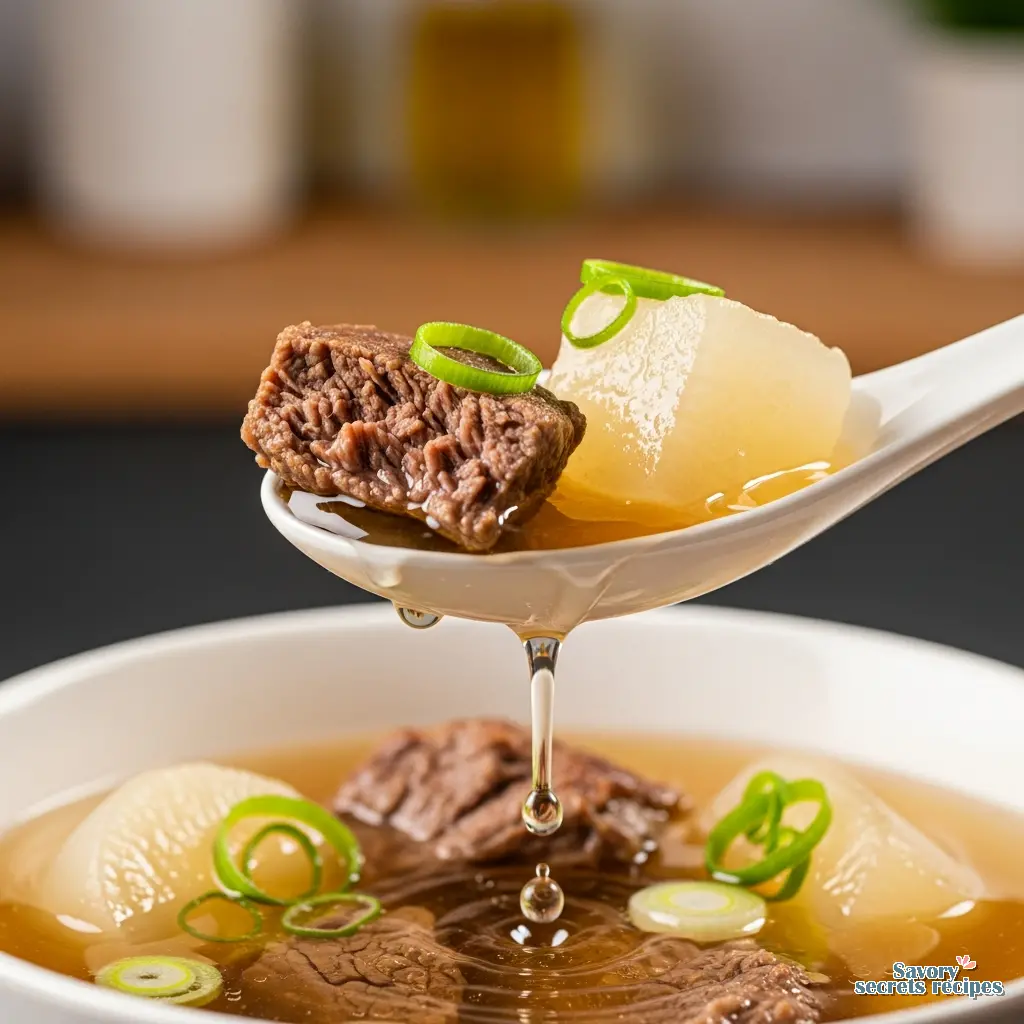
Warm Korean Beef Radish Soup
Ingredients
Method
- Heat oil in a large saucepan over medium-high heat. Add 1¾ cups radishes and onion; cook, stirring frequently, until onions begin to brown and radishes are translucent, about 5 minutes. Stir in potato, milk, salt, and pepper. Bring to a boil, then reduce heat to a simmer. Cover and cook, stirring occasionally, until the potato is tender, about 5 minutes more.
- Puree the mixture in batches using a blender or an immersion blender until smooth, taking care when handling the hot liquid.
- Slice the remaining ¼ cup radishes into matchsticks. Serve the soup garnished with 1 tablespoon sour cream, radish matchsticks, and radish greens or parsley.
Nutrition
Notes
Why This Beef Daikon Soup is Your Winter Savior
Honestly, there are days in February here in Dearborn where the cold just settles into your bones and refuses to leave. You know the feeling. It’s that damp, gray chill that makes you want to wrap yourself in a blanket and never come out. On those days, I don’t want a complicated project. I want something that feels like a hug. On particularly cold nights, I often serve this alongside a savory pancake from my favorite jeon recipe to make the meal even more substantial.
That is exactly where this beef daikon soup (or soegogi muguk, as it’s traditionally known) comes in. It is the ultimate comfort food. I remember my Teta Samira making her version of clear soups when I was little. She would say that a good broth should be clear enough to read a love letter through. While I’m not writing any letters with my soup, I’ve kept her obsession with clarity and depth of flavor.
This recipe is my go-to for busy weeknights because it delivers that deep, slow-simmered taste in under an hour. It is a one pot meal that balances the rich, savory depth of beef chuck with the refreshing, slightly sweet bite of Korean radish. Plus, if you have picky eaters like my daughter Layla, the mild flavors usually win them over without a fight. Let me walk you through how to get that restaurant-quality clear broth at home.
The Secret is in the Radish (Choosing the Right Mu)
Let’s talk ingredients because this is where most people get tripped up. The star of this show is the radish. In Korean cooking, we use a variety called “Mu.” It is different from the long, slender Japanese daikon you might see at standard grocery stores. This particular radish is also the primary ingredient used to make a crisp and refreshing white radish kimchi.
Korean radishes are shorter, rounder, and usually have a light green shade near the top. They are denser, juicier, and significantly sweeter than regular daikon. If you use a regular spicy radish or a turnip, the flavor profile changes completely. It won’t ruin the soup, but it won’t be that authentic beef daikon soup you are craving.
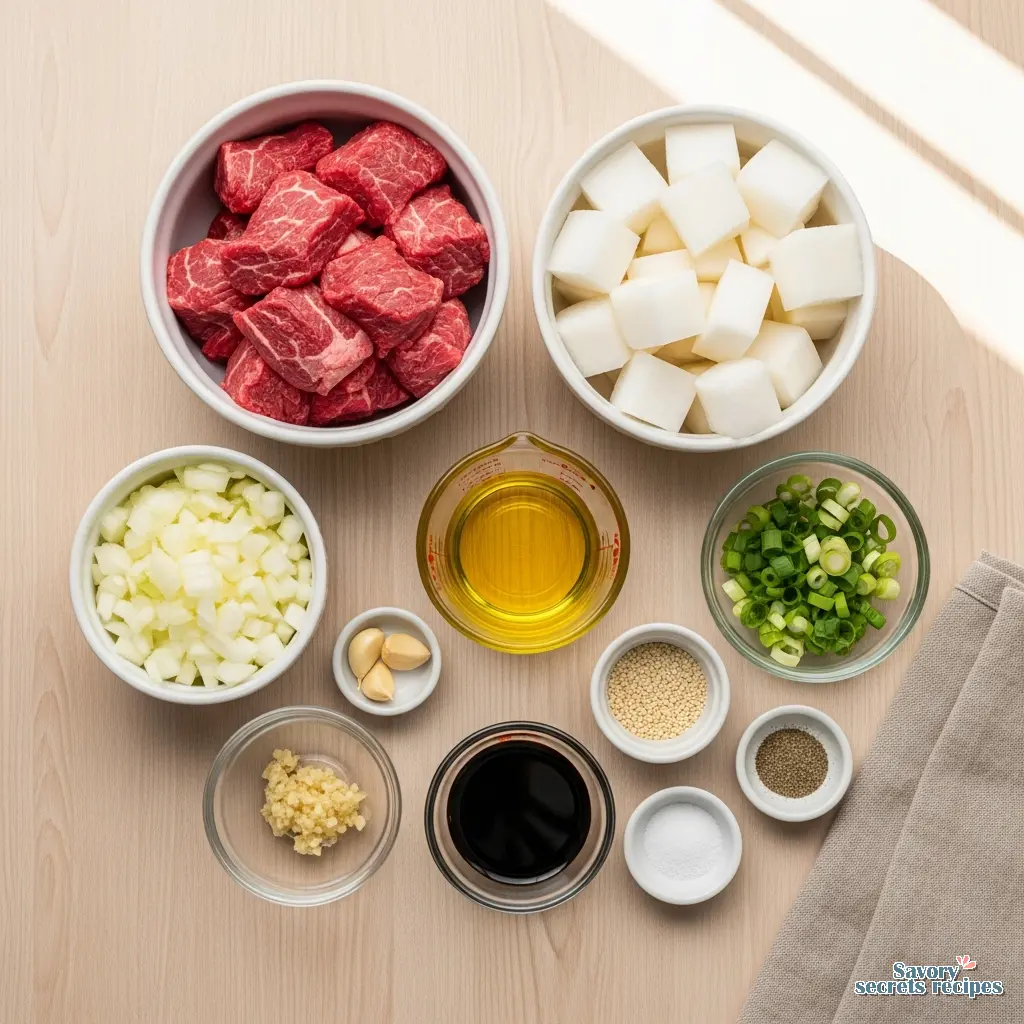
Here is what I’ve found works when shopping:
Look for a radish that feels heavy for its size. That weight means it is juicy. The skin should be smooth and firm, not wrinkly. If you can only find the long Japanese daikon, that is totally fine. Just know it might be a little softer when cooked. Avoid regular red radishes or small turnips; they are too peppery and soft for this. If you happen to find smaller, younger radishes, they are better suited for making young radish kimchi rather than this soup.
Prep Work: Slicing for Tenderness
I used to just chop the beef into random cubes and wonder why it was chewy. It turns out, how you cut the beef matters as much as how long you cook it. This tracks with my experience testing hundreds of stew recipes. You want to slice the beef against the grain. Look for the lines of muscle fiber running through the meat and cut perpendicular to them. This shortens the fibers and makes every bite tender.
For the radish, I like to cut them into thin, bite-sized squares. Teta always said the vegetables should fit on the spoon with the meat. If you cut the radish too thick, it takes forever to cook. Too thin, and it dissolves. Aim for about a quarter-inch thick. Trust the process here; uniform cutting leads to uniform cooking.
Building Flavor: The Sauté Step
Here is a technique that changes everything. Don’t just throw everything in water and boil it. We are going to build a flavor base first. I heat sesame oil in the pot and sauté the beef and radish together with garlic before adding any liquid. This does two things. First, it sears the beef slightly, locking in some savory notes. Second, the radish starts to soften and release its juices, which mingle with the beef fat. The smell at this stage is incredible. It smells like savory, nutty perfection.
Once the beef loses its red color, that is your checkpoint. That is when you add the water. This step is what gives the broth that milky, rich appearance initially, which then clarifies into a deep, golden soup as it simmers.
Simmering & The Skim
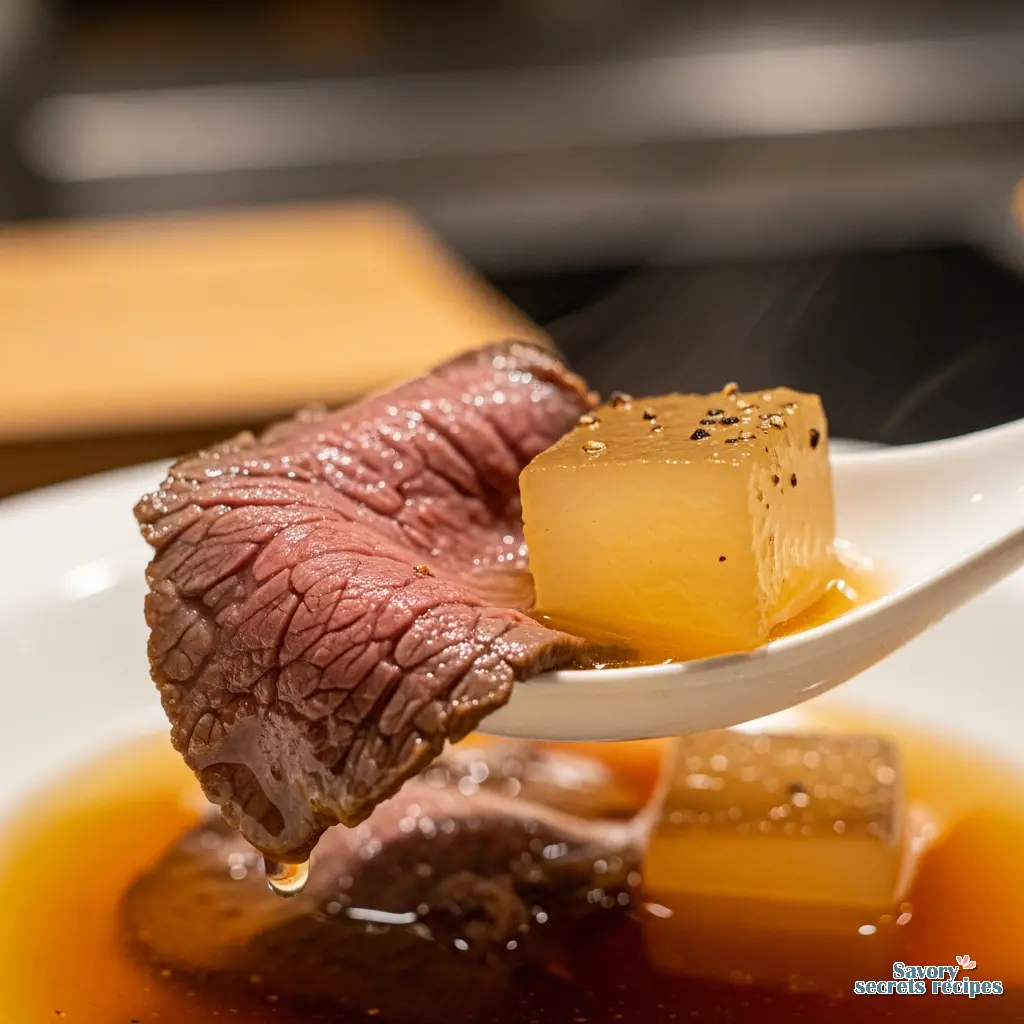
Once you add the water, bring it to a boil. You will see foam rising to the top. This is blood and proteins from the beef. For a clean, clear broth, you need to skim this off. I stand there for about five minutes with a spoon, just skimming. It is kind of meditative, honestly. If you skip this, your soup will be cloudy and might have a slightly funky taste. We want clean and crisp.
After skimming, lower the heat to a simmer. Cover it and let it go. The magic number is usually around 20 to 30 minutes. You want the radish to turn translucent. That is your visual cue. If it looks white and solid, it’s not done. If it looks like clear glass, you are golden.
Instant Pot & Slow Cooker Adaptations
I know not everyone has time to watch a pot simmer. I hear you. I’ve tested this in the Instant Pot and it works beautifully, though the broth comes out a little cloudier due to the high pressure.
Instant Pot Method: Use the Sauté function for the beef and radish step. Then add water, seal it, and cook on High Pressure for 10 minutes. Let it natural release for 10 minutes. The beef gets incredibly tender this way.
Slow Cooker Method: Sauté the beef and radish in a pan on the stove first (don’t skip this, flavor matters!). Transfer to the slow cooker, add water and seasonings, and cook on Low for 6-7 hours or High for 3-4 hours. It is the perfect meal to come home to after a long workday.
Troubleshooting Common Issues
Let’s troubleshoot this together. Sometimes things don’t go exactly to plan, and that is okay.
Problem: The soup tastes bland.
This usually means it needs more salt or fish sauce. I use soy sauce for color and depth, but salt is what actually makes the flavors pop. Add salt gradually. Taste as you go. My daughter helps me with this part; she has a surprisingly good palate for salt levels.
Problem: The radish is bitter.
This happens sometimes with out-of-season radishes. A teaspoon of sugar can help balance this out. It sounds weird, but it works. The sweetness counteracts the bitterness without making the soup taste like dessert.
Problem: The beef is tough.
This means it hasn’t cooked long enough. Beef chuck needs time to break down. Just keep simmering. Add a little more water if it’s evaporating too much, and give it another 15 minutes. It will get there.
Storage & Serving
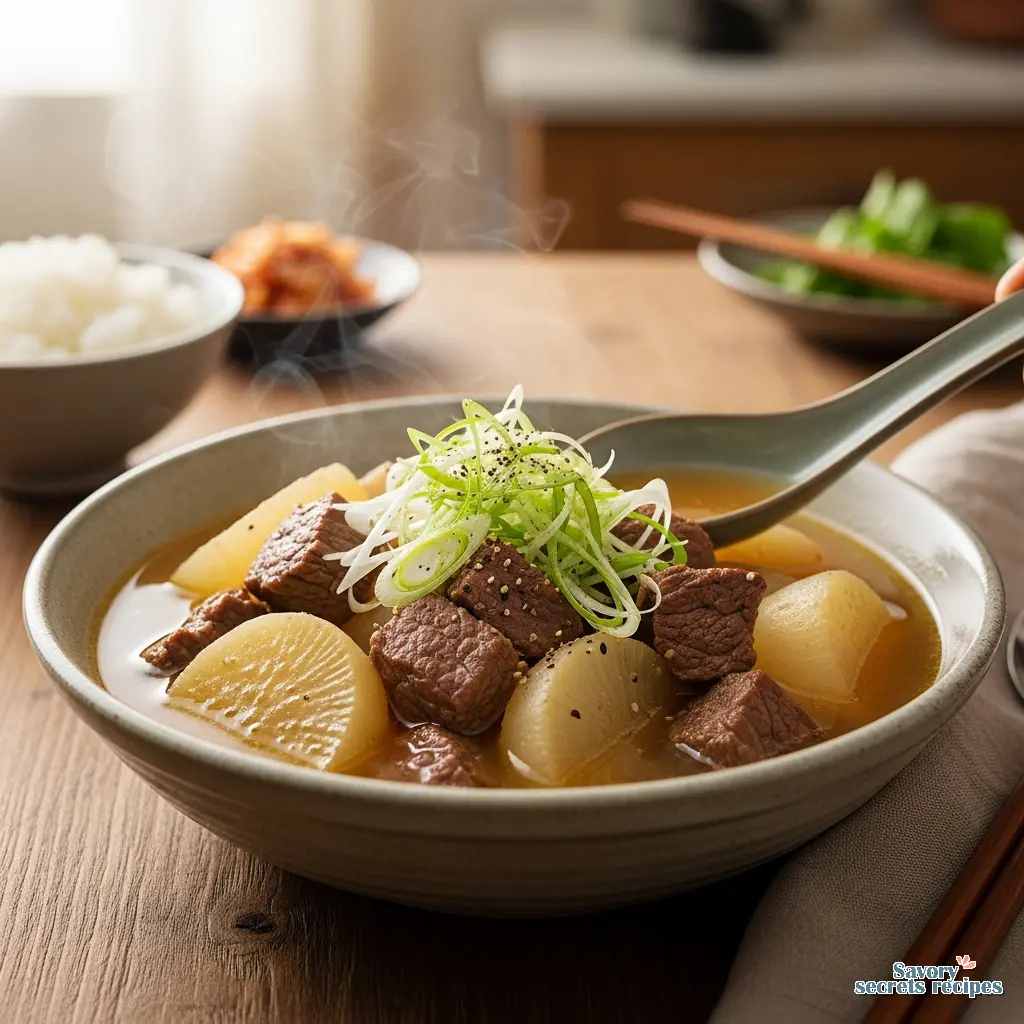
This soup is one of those magical dishes that tastes better the next day. The radish continues to soak up the beef broth, becoming even more flavorful. Store it in an airtight container in the fridge for up to 4 days. If you have leftover rice and kimchi from serving, you can easily learn how to make kimchi bokkeumbap for a quick meal the next day.
To serve, I always pair this with a bowl of steamed white rice and some kimchi. The spicy, acidic kimchi cuts through the rich, savory soup perfectly. It is the classic combination. If you are freezing it, let it cool completely first. It freezes well for up to 3 months. Just note that the radish texture might get a little softer upon reheating, but it is still delicious. For a different kind of crunch, you might also try a traditional korean pickled cucumber recipe to balance the richness of the beef.
Frequently Asked Questions
Final Thoughts
When you serve this beef daikon soup, your family is going to love the deep, comforting flavors. It is simple, honest food that warms you up from the inside out. I hope this becomes a staple in your winter rotation just like it is in mine. If you give it a try, I’d love to see how it turned out. Tag me if you post it!
For more inspiration, check out my Pinterest boards where I save all my favorite comfort food ideas.
Reference: Original Source
Can I make beef daikon soup ahead of time?
Absolutely. In fact, I prefer it. Making this soup a day in advance allows the flavors to meld beautifully. The radish absorbs the savory beef broth overnight, making the leftovers taste even richer than the fresh batch. Just reheat gently on the stove.
How do I store leftover beef daikon soup?
Store your leftovers in an airtight container in the refrigerator for 3 to 4 days. If you need to keep it longer, freeze it in portion-sized containers for up to 3 months. Thaw in the fridge overnight before reheating on the stovetop.
Is this soup gluten-free?
It can be! The main culprit is usually the soy sauce. If you use a certified gluten-free tamari or a gluten-free soup soy sauce, the rest of the ingredients (beef, radish, vegetables) are naturally gluten-free. Always check your labels to be safe.
Is Korean radish soup good for you?
Yes, it’s quite nutritious. Korean radish is packed with Vitamin C and digestive enzymes that help break down fats and starches. Combined with the protein from the beef and the hydrating broth, it’s a balanced, wholesome meal that feels light but satisfying.
What is the best type of radish to use?
Korean radish, or “Mu,” is the gold standard here. It’s shorter, rounder, and has a green top. It’s sweeter and crunchier than other varieties. If you can’t find it, Japanese daikon is a decent substitute, though it’s milder and softer.