





Healthy Kimchi Breakfast Fried Eggs
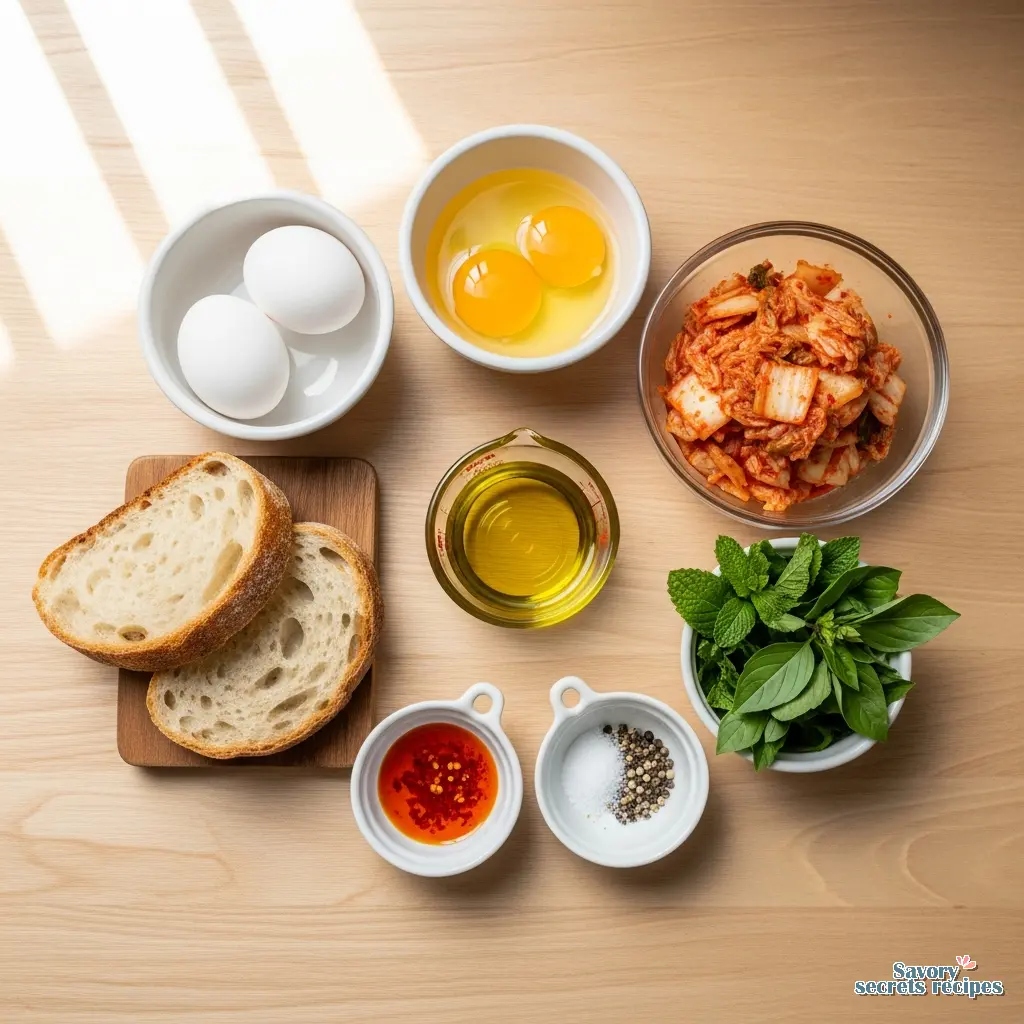
Ingredients
Method
- Toast the bread and set it aside.
- Place a nonstick pan over medium heat, add the oil, and allow it to reach temperature.
- Form the kimchi into two rough circles on the pan to create wells for the eggs, ensuring the pan is hot enough to make the kimchi sizzle.
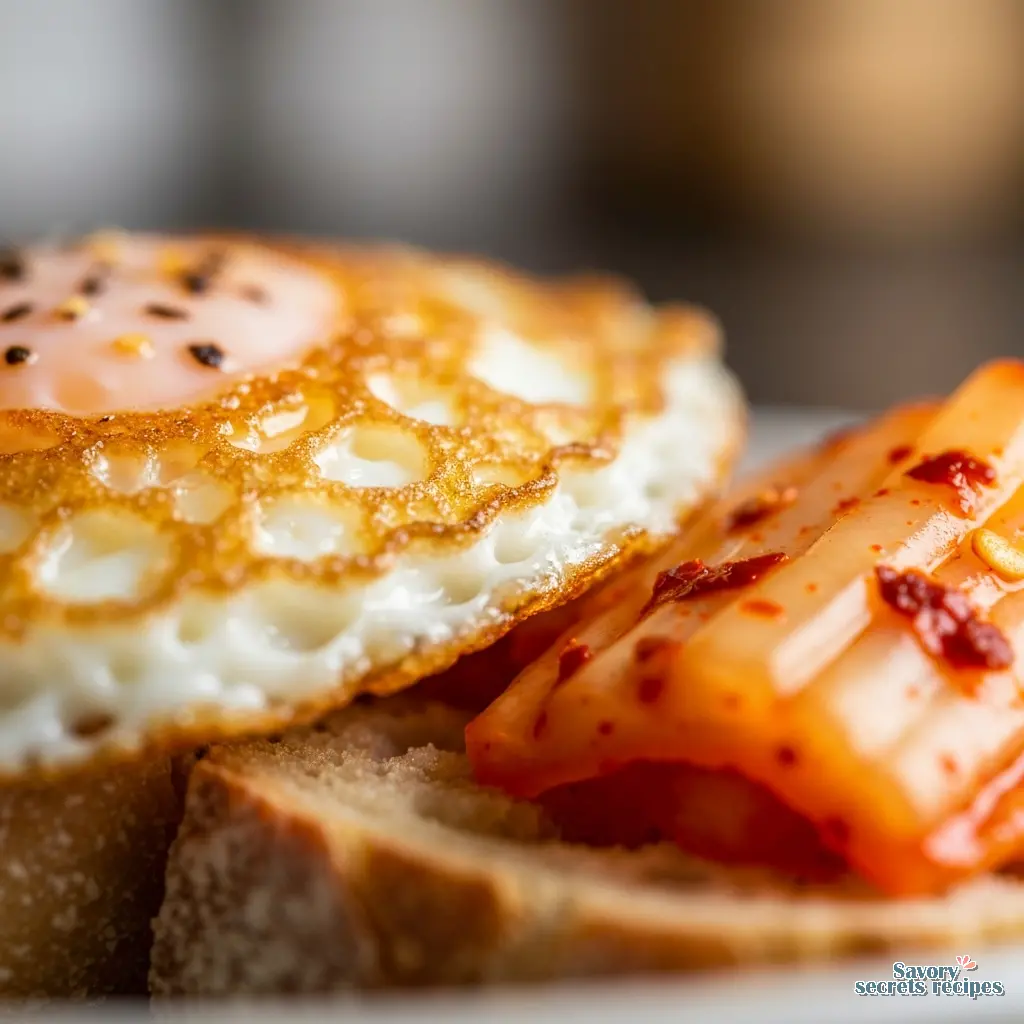
- Crack an egg into the center of each kimchi circle and season with a pinch of kosher salt. Cover and cook for 2 to 3 minutes until the whites are fully set.
- Transfer one egg onto each piece of toast. Drizzle with chili oil, add extra kimchi as desired, garnish with basil or mint, and finish with black pepper. Serve immediately.
Notes
Why Your Morning Routine Needs a Wake-Up Call
Let’s walk it back to this morning. You’re staring into the fridge at 7 AM, eyes half-open, wondering if you can survive on just coffee until lunch. I’ve been there. We’ve all been there. My teta used to say that how you break your fast sets the rhythm for your entire day. She was usually talking about manaeesh, but the principle holds up. You need something that wakes up your palate, not just your caffeine receptors.
That’s where this kimchi breakfast comes in. It’s not just eggs and toast. It is a complete sensory reset. The first time I tried combining fermentation with morning eggs, I was skeptical. Could be wrong here, I thought. Maybe it’s too much flavor for 8 AM? But then I took a bite. The way the sharp, tangy crunch of the cabbage cuts through the rich, fatty yolk? Solid. It works every time. This fusion approach is one of my favorite ways to incorporate more traditional korean dishes into a busy schedule.
If you are looking for kimchi breakfast ideas that don’t require an hour of prep, this is the move. It’s messy, it’s loud with flavor, and it’s exactly what you need to shake off the sleep. Plus, straight up, it’s easier than you think to pull off while the coffee is still brewing.
The Science of Kimchi & Heat: Don’t Kill the Good Stuff
Here’s the thing about cooking with fermented foods. We all know kimchi is packed with probiotics, those good bacteria that make your gut happy. But heat is the enemy of probiotics. If you blast your kimchi on high heat for twenty minutes, you are basically killing off the very thing that makes it a superfood. You’ll still get the fiber and the flavor, but the bacterial benefits? Gone.
In my experience, anyway, there is a sweet spot. You want to warm the kimchi enough to release those aromatic oils and garlic notes, but not so much that you sterilize it. I like to think of it like brewing delicate tea or dialing in a pour-over. Temperature control is everything. If you want to ensure the highest probiotic count, learning how to make kimchi at home is your best bet.
For this kimchi breakfast, we are aiming for “warmed through” or “lightly caramelized,” not stewed. By adding the kimchi to the pan just long enough to heat it up, or even better, adding some cold, fresh kimchi on top at the very end, you get the best of both worlds. You get that deep, savory cooked flavor and the raw, probiotic punch. It’s a balancing act, but trust the process.
Tips for Preventing Scorched Kimchi
I’ve scraped enough burnt cabbage off my pans to know that kimchi is tricky. It’s not just a vegetable; it’s a vegetable soaked in a marinade that often contains sugar, pear, or apple. Sugar burns fast. If you treat kimchi like raw onions and crank the heat to high, you’ll end up with bitter, black char spots before your eggs are even set. Not gonna lie, I learned this the hard way.
To keep your kimchi breakfast tasting amazing, keep your heat at medium or even medium-low. You want to hear a gentle sizzle, not an aggressive crackle. If you see the edges of the cabbage turning dark brown too quickly, pull the pan off the heat immediately. Dial it in until it’s right.
Another tip? Chop your kimchi. I know, it feels like an extra step when you’re rushing, but giant leaves of cabbage are hard to eat on toast. Plus, smaller pieces cook more evenly. Aim for bite-sized pieces so you get a little bit of that spicy crunch in every single forkful.
Balancing the Acid: Why It Works
Kimchi is acidic. It’s got that sharp tang that makes your mouth water. But for breakfast, sometimes that acid can be a lot. That is why we pair it with fat. It’s the same reason I put olive oil on my labneh or milk in my coffee. The fat rounds out the edges of the acid.
In this recipe, the egg yolk acts as that creamy buffer. When you break that yolk and it mixes with the spicy, tangy kimchi juices, it creates a sauce that is rich and savory. If you are using cream cheese on your toast (which, honestly, is the move), that dairy fat does the same thing. It coats your tongue and mellows out the spice.
If you find your kimchi is particularly sour (which happens with older kimchi), don’t panic. You can balance it with a tiny pinch of sugar or a drizzle of honey. It sounds weird, but it brings everything back into alignment. The ratio’s off? Fix it with a little sweetness.
Troubleshooting: Common Mistakes & Fixes
Even simple recipes can go sideways if you aren’t paying attention. Here are a few things that might trip you up and how to fix them.
Mistakes to Avoid
Mistake: The toast gets soggy immediately.
Solution: You probably didn’t drain the kimchi enough. Before cooking, give the kimchi a little squeeze or let it sit in a strainer for a minute. You want flavor, not wet bread.
Mistake: The dish is way too salty.
Solution: Kimchi is already packed with salt. If you salt your eggs like normal, it might be too much. Taste your kimchi first, then season your eggs gently. You can always add more salt at the table.
Mistake: The cream cheese is lumpy and won’t spread.
Solution: Trying to mix cold cream cheese with kimchi juice results in a weird, clumpy mess. Let your cream cheese sit out while you make your coffee, or microwave it for 10 seconds to soften it up.
Variations & Substitutions
Cooking isn’t rigid. It’s about using what you have. If you don’t have every ingredient listed, don’t sweat it. Here is how you can adapt this kimchi breakfast to fit your kitchen.
Make it Gluten-Free: The kimchi itself is usually gluten-free (just check the label for hidden wheat in thickeners), but the bread is the issue. Swap in your favorite GF toast. Alternatively, skip the bread entirely and serve this over a bowl of brown rice or quinoa. It becomes a savory breakfast bowl that is just as satisfying.
Make it Vegan: Traditional kimchi often uses fish sauce or salted shrimp. Look for a vegan-certified brand; they are pretty common now at places like Whole Foods or Trader Joe’s. Swap the egg for scrambled firm tofu with a little turmeric for color. It mimics the texture surprisingly well.
Add More Veggies: I love adding asparagus or green beans to this. Just trim the woody ends off the asparagus (snap them where they naturally break) and toss them in the pan with the kimchi. They add a nice earthiness that grounds the spicy flavors. For a lighter morning option, you could even serve the toppings alongside a fresh kimchi salad instead of toast.

Storage & Serving: Fresh is Best
I’m not totally sure, but I think this is one of those meals you really need to eat fresh. The contrast between the hot, crispy toast and the cool, creamy toppings is what makes it work. If you try to meal prep the whole thing, you’re going to end up with soggy bread. And nobody wants that.
However, you can prep the components. You can mix your kimchi and cream cheese (if using) and store it in an airtight container in the fridge for up to 2 days. When you are ready to eat, just toast your bread and fry your egg. It cuts the prep time down to about five minutes. That’s the one.
If you have leftovers (which is rare in my house), store the toppings separate from the bread. When reheating, use a skillet for the kimchi to wake up the texture. Avoid the microwave if you can; it turns everything into a steamy, limp mess.
Frequently Asked Questions
Your New Morning Ritual
Mornings are chaotic. I get it. Between getting the coffee dialed in and finding where my daughter hid her shoes, breakfast often takes a backseat. But this kimchi breakfast changes the equation. It feels like a weekend brunch dish, but it takes ten minutes on a Tuesday.
Give it a shot tomorrow morning. You might just find that a little spice is exactly what you’ve been missing. And hey, for more inspiration on how to upgrade your morning routine, check out my Pinterest boards where I collect all my favorite quick recipes.
Let me know how it goes. Did you go for the fried egg or the scramble? Did you accidentally burn the kimchi (it happens to the best of us)? Your new favorite breakfast is just a skillet away.
Reference: Original Source
Can you eat kimchi for breakfast?
Absolutely. In Korea, breakfast often looks like dinner, including rice, soup, and side dishes (banchan) like kimchi. It’s a savory, nutrient-dense way to start the day. Plus, the probiotics in a kimchi breakfast are great for waking up your digestion.
Can I use scrambled eggs instead of fried eggs in a kimchi bowl?
For sure. I actually do this for my daughter all the time. Soft scrambled eggs are fantastic because they fold around the kimchi pieces. Just cook the kimchi slightly first, then pour your whisked eggs right over it in the pan. Works every time.
Do I need to peel asparagus before I cook it?
Generally, no. If you have very thick stalks, the skin can be tough, so a quick peel helps. But for the thin pencil asparagus usually found in spring? Just snap the woody ends off and throw them in the pan. No need to overcomplicate it.
Can I cook kimchi instead of eating it raw?
Yes, but with a caveat. Cooking creates a deeper, sweeter flavor (like caramelized onions), but high heat kills the beneficial bacteria. For a healthy kimchi breakfast, add it at the very end just to warm it through, or use raw kimchi as a garnish.