



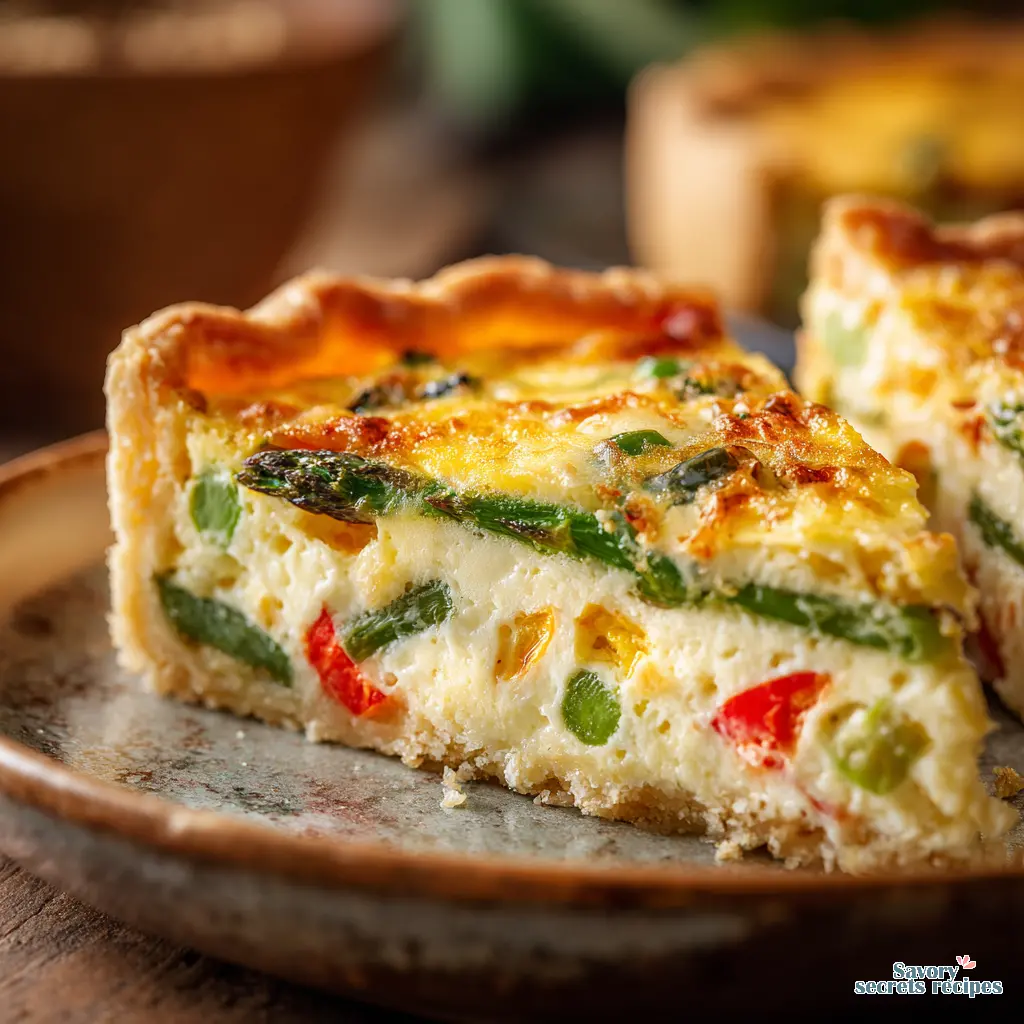
Make Your Homemade Spring Vegetable Quiche from Scratch
Ingredients
Method
- Preheat the oven to 375°F (190°C).
- Heat olive oil in a skillet over medium heat, sauté the asparagus, bell peppers, and green onions for 5-7 minutes until tender, then remove from heat and set aside.
- Whisk the eggs, heavy cream, salt, and pepper in a large bowl, then stir in the sautéed vegetables and shredded cheese.
- Pour the filling into the pre-made pie crust and spread it evenly.
- Bake in the preheated oven for 30-35 minutes until the quiche is set and the top is lightly golden.
- Cool the quiche for several minutes, then slice and serve warm.
Nutrition
Notes
The Only Spring Vegetable Quiche You’ll Ever Need
I remember standing on a step stool next to my grandmother’s stove when I was maybe seven years old. She had me smell the shallots at every stage of cooking. Raw, sweating, just beginning to color. I got impatient and said they all smelled the same. She made me start over. I can still smell the difference now without thinking about it, and that specific allium sweetness mixed with dairy fat is exactly what comes to mind when I start prepping this Spring Vegetable Quiche.
With Easter brunch season approaching here in LA, I know the panic that sets in when you’re hosting. You want a gorgeous centerpiece. You want a brunch menu that feels thoughtful. But most of all, you want to avoid the dreaded soggy bottom crust that plagues so many home bakers. I’ve been there. Early in my career, I served a homemade quiche recipe that looked beautiful on top but collapsed into a wet, doughy mess the second I sliced into it. I wanted to disappear.
This is where most people rush it. They throw raw, wet vegetables into an unbaked crust, pour in the eggs, and hope for the best. That’s a recipe for disaster. Today, we’re going to build a foolproof Spring Vegetable Quiche from scratch. I’ll show you exactly how to manage moisture, blind bake the flaky pastry, and achieve a perfectly set savory custard. Worth the extra step? Absolutely. Let me walk you through it.
The ‘No-Soggy-Bottom’ Par-Baking Guide
Let me think on that for a second. Actually, no, I don’t need to think about it. Par-baking the crust is the single most critical step in this entire process. If you skip this, your Spring Vegetable Quiche will fail. I tend to think home cooks are intimidated by pastry, but it’s actually quite forgiving if you follow the rules.
First, keep your unsalted butter ice cold. When you cut it into your all-purpose flour, those little pockets of cold fat will turn into steam in the oven, creating those flaky layers we all want. Refrigerate dough at every stage (mixing and shaping) for at least an hour to prevent shrinking. This isn’t being fussy. It’s the difference between a crust that holds its shape and one that slides down the pan.
Here’s what I wish someone had told me years ago. Use aluminum foil pressed flush against the dough and filled with pie weights or dry beans to prevent crust slipping. Blind bake the crust for 10 minutes to prevent a soggy bottom. Watch for the moment when the edges just start to look dry. If you’re using a particularly wet filling (which we aren’t, but still), you can even use a sheet or two of phyllo dough to insulate the crust from the filling. It’s a brilliant little trick I picked up in the test kitchen.
Equipment Deep-Dive: Glass, Ceramic, or Metal?
I prefer making pan sauces in stainless steel over nonstick, and I have similarly strong opinions about my quiche pan. You’ll see gorgeous ceramic dishes all over Instagram. They look incredibly rustic and charming for a spring brunch table. But honestly? Metal is superior for a homemade quiche recipe.
A metal tart pan with a removable bottom conducts heat much faster and more evenly than glass or ceramic. That rapid heat transfer is exactly what you need to crisp up the bottom of your flaky pastry before the liquid custard has a chance to soak in. Ceramic heats up too slowly. By the time the dish is hot enough to bake the dough, your crust has already absorbed the moisture from the eggs.
If you only have a glass pie dish, you can still make this Spring Vegetable Quiche. Just make sure you blind bake it thoroughly, and maybe place the glass dish on a preheated heavy baking sheet in the oven to give the bottom an extra blast of immediate heat. You’ve got this.
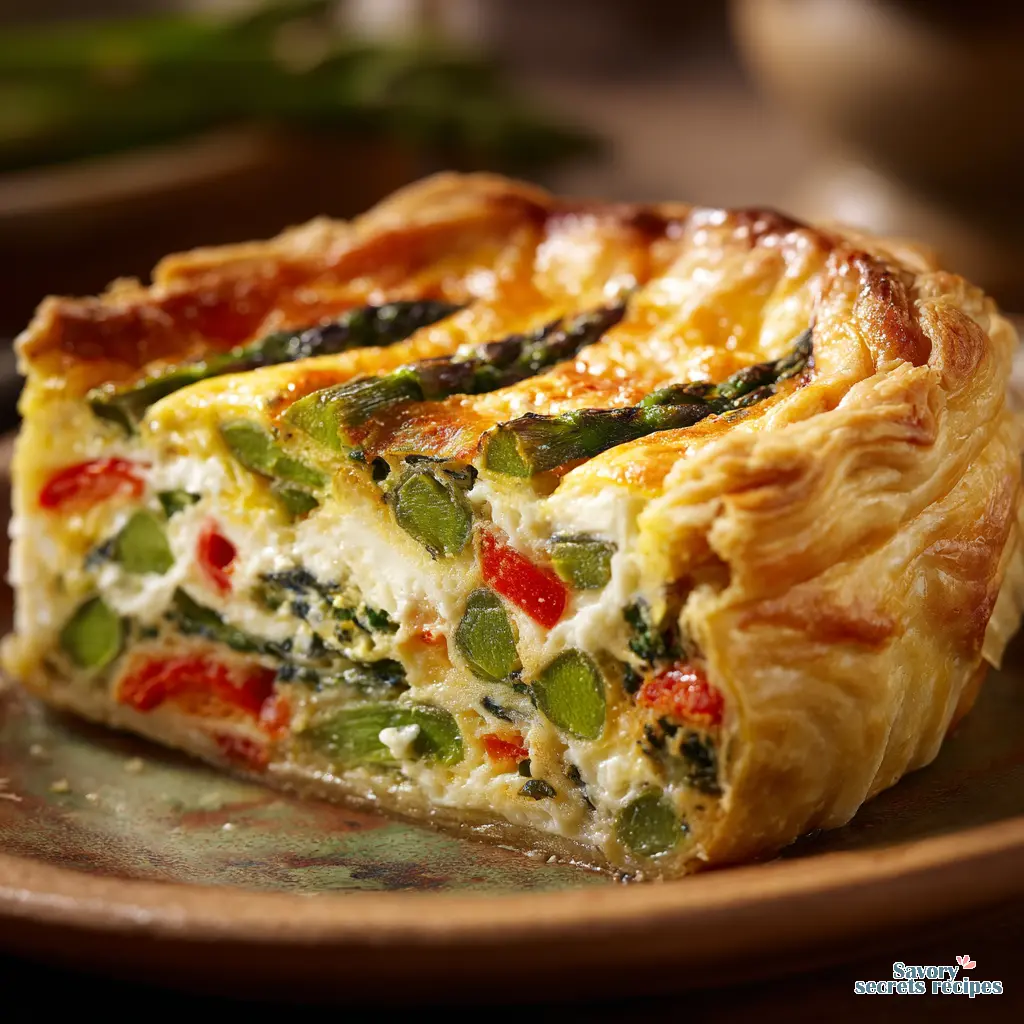
The Science of the Perfect Custard Ratio
I go back and forth on whether home cooks really need to obsess over exact ratios. Professionally, yes, absolutely. But for a weekend brunch? Well, actually, yes. The custard is where a Spring Vegetable Quiche lives or dies. Too many eggs, and it turns rubbery and tough. Too much milk, and it never sets. Mastering this ratio ensures a perfectly baked vegetable quiche with a creamy, set center.
In my experience, the golden rule for a savory custard is one part large eggs to two parts dairy by volume. I strongly suggest using heavy cream. You can use half-and-half if you must, but heavy cream gives you that luxurious, silky texture that feels like a proper French tart. And please, use room temperature eggs. Cold eggs will drop the temperature of your mixture and cause it to bake unevenly.
Seasoning the custard is non-negotiable. A pinch of freshly grated nutmeg, kosher salt, and white pepper (if you have it) elevates the whole dish. Once you pour the custard over your vegetables and gruyere cheese, you need to bake it gently. Pull from the oven when edges are set but the center is still wobbly to avoid dry texture. We call this the jiggle test. It will continue to cook as it cools. Trust the process on this one.
Spring Vegetable Substitution Matrix
The beauty of a Spring Vegetable Quiche is its flexibility. As long as you respect the moisture content, you can adapt this to whatever looks good at the Santa Monica Farmers Market this week. The key is removing the water before the vegetables ever touch the pastry. This adaptability makes it a versatile vegetarian quiche dish that can change with the seasons.
I love using fresh asparagus spears, spring peas, and leeks. But here’s the trick. You have to sauté them first. I melt a little unsalted butter in a pan and sweat the leeks until they’re translucent. That smell takes me straight back to my grandmother’s kitchen. Then I add the asparagus and cook it just until it’s crisp-tender. If you put raw vegetables into the quiche, they will release all their water during baking and ruin your beautifully blind-baked crust.
If you don’t have leeks, shallots work beautifully. Don’t have asparagus? Try spinach, but make sure you wring it out in a kitchen towel until it’s bone dry. For the cheese, I’m a purist. Gruyere cheese melts perfectly and has that nutty flavor that pairs brilliantly with fresh dill and spring vegetables. Fontina or a sharp white cheddar will also do the job nicely.
Visual Troubleshooting
Mistake: The custard cracks on top.
Solution: You likely cooled it too quickly or overbaked it. Cool the quiche slowly in the oven with the door propped to prevent custard cracking.
Mistake: The crust shrinks down the sides of the pan.
Solution: The dough was too warm when it went into the oven. Always chill your shaped dough for at least an hour before blind baking.
Mistake: The filling is leaking out of the crust.
Solution: You probably have a tear in the dough. Blast in a hot oven for 10 minutes if the quiche springs a leak to set the escaping custard quickly.
Make-Ahead Strategy for Brunch Hosting
We host Marc’s family for Easter, and I refuse to be stressed out on a Sunday morning. The good news is that a Spring Vegetable Quiche is incredibly make-ahead friendly. You just have to stage it correctly.
You can make the dough up to three days in advance and keep it wrapped tightly in the fridge. Better yet, roll it out, fit it into your tart pan, and freeze the whole thing unbaked. You can blind bake it straight from frozen (just add a few minutes to the bake time). I usually sauté my leeks and asparagus spears the day before and keep them in an airtight container. I’ll even grate the gruyere cheese and whisk the heavy cream and eggs together the night before.
When brunch morning arrives, all I have to do is assemble. I blind bake the frozen crust, layer in the pre-cooked vegetables and cheese, pour over the cold custard mixture, and bake. It makes you look like an absolute professional with minimal morning effort.
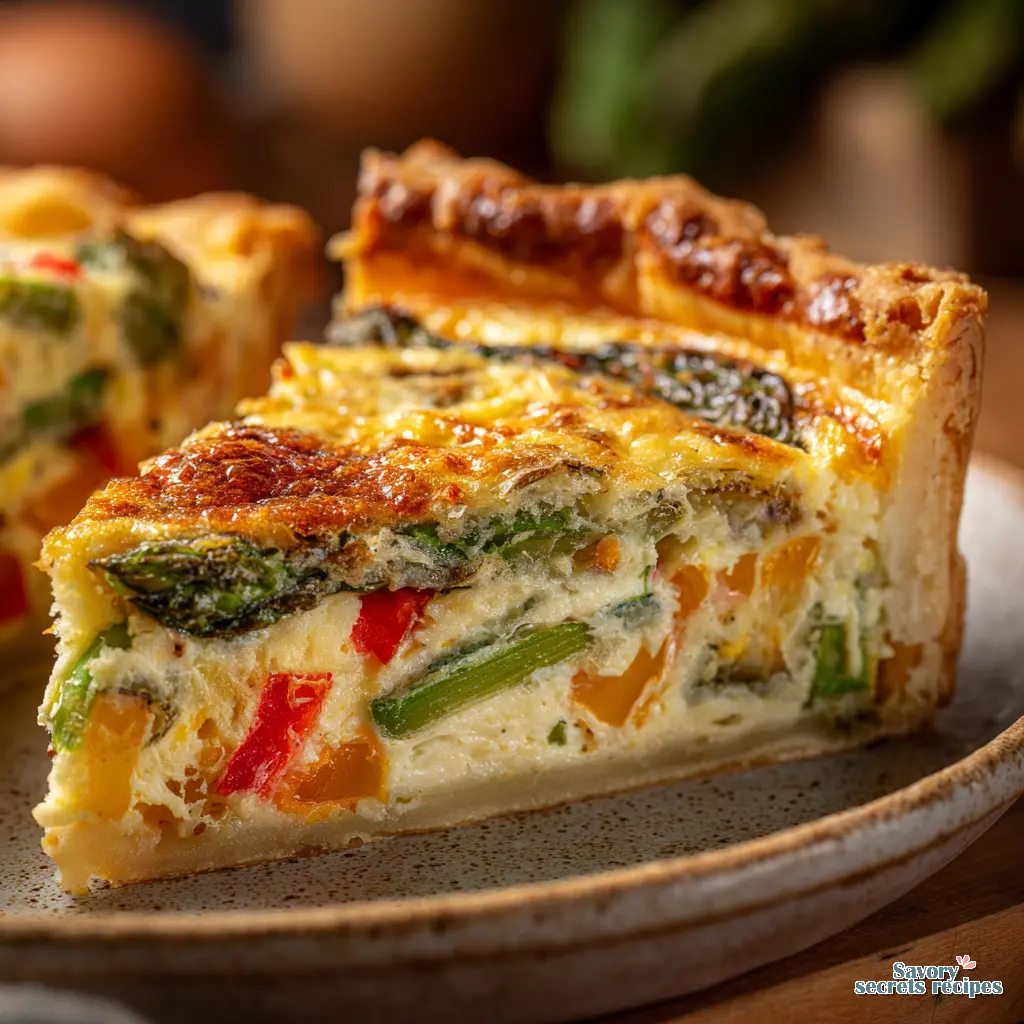
Comprehensive Reheating & Storage Guide
This is the part that most recipes gloss over, and it drives me crazy. A Spring Vegetable Quiche is a delicate balance of dairy and eggs. If you just throw leftovers in the microwave on high, you’ll end up with rubbery eggs and a soggy crust. It’s a waste of good ingredients.
To store it, let the quiche cool completely to room temperature. This is crucial. If you wrap it while it’s warm, condensation will build up and destroy your flaky pastry. Once cool, wrap it tightly in plastic wrap or place slices in an airtight container. It will keep in the fridge for up to four days.
When you’re ready to reheat, the oven is your best friend. Preheat your oven to 325°F. Place the slices on a baking sheet lined with parchment paper. If you’re worried about the crust getting too dark, you can tent it loosely with foil. Bake for about 15 minutes until it’s just warmed through. The gentle heat will revive the custard without turning it to rubber, and the dry heat of the oven will crisp the crust right back up.
Frequently Asked Questions
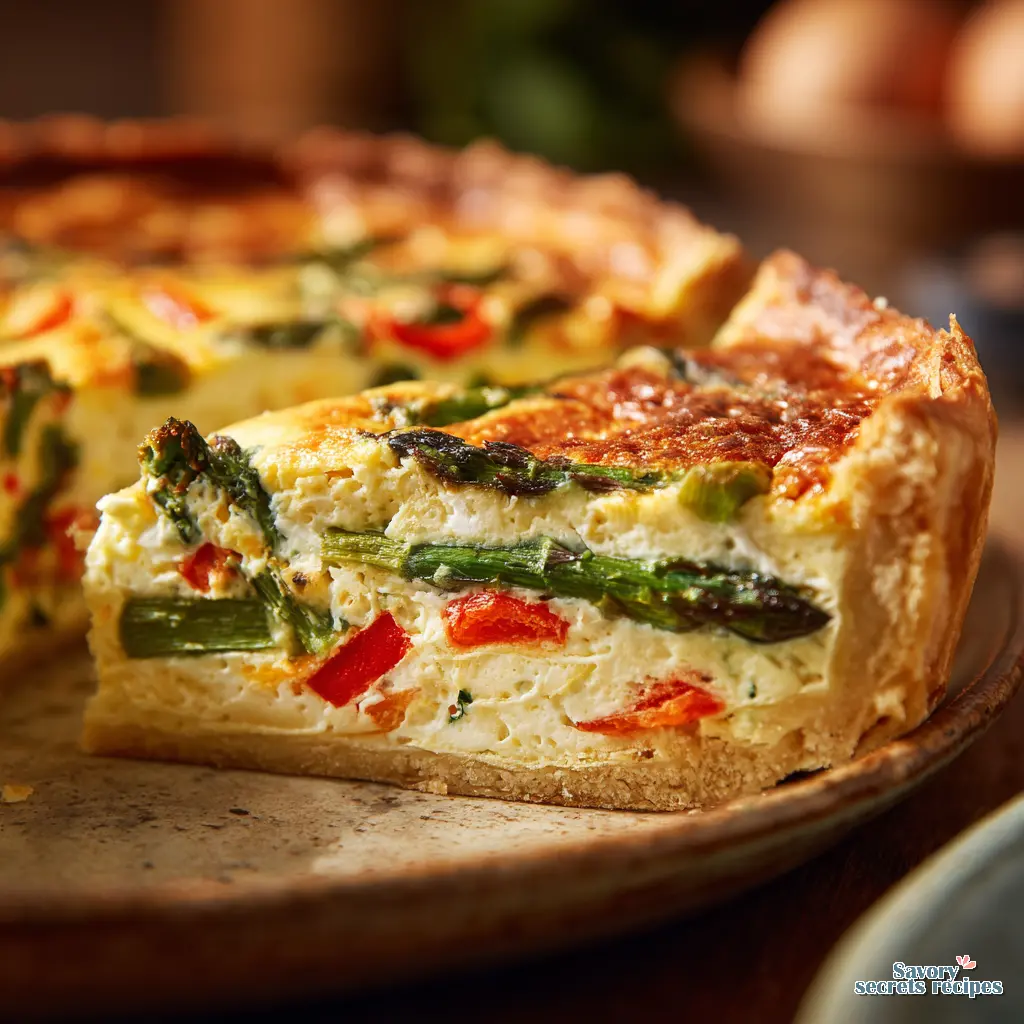
Bringing It All Together
There’s a specific moment when you pull this Spring Vegetable Quiche out of the oven. The crust is the color of peanut butter, the gruyere cheese is bubbling slightly around the edges, and the whole kitchen smells like butter and roasted alliums. It’s the same thrill every single time. Serve this with a fresh baby spinach and orange tomato salad lightly dressed with California olive oil and lemon.
I know pastry can feel intimidating, but once you understand the basic rules of moisture and temperature, it becomes second nature. You’ll be making this for every spring gathering. I share tons of variations and seasonal ideas on my Pinterest boards, so come say hello over there and let me know how your blind bake turned out.
Reference: Original Source
How do you make a spring vegetable quiche from scratch for a family brunch?
The secret is preparation. I always blind bake my crust first to prevent sogginess. Sauté your vegetables to remove moisture, use room temperature eggs, and mix with heavy cream. Bake until the edges are set but the center still has a slight jiggle. It’s foolproof.
What are the best vegetables for a spring quiche recipe to ensure a fresh flavor?
In my experience, asparagus spears, leeks, and spring peas are unmatched. They offer that vibrant, fresh flavor. Just remember to sauté them in a little unsalted butter first. Raw vegetables will release water during baking and ruin your perfectly blind-baked crust.
Does this Spring Vegetable Quiche contain gluten?
Yes, the traditional flaky pastry uses all-purpose flour. However, you can easily adapt this by using a high-quality, store-bought gluten-free pie crust. Just be sure to check the labels on all your ingredients, especially any pre-shredded cheeses, to ensure they are fully gluten-free.
What is the secret to achieving a perfectly creamy custard in a Spring Vegetable Quiche?
It comes down to the ratio and temperature. I use one part large eggs to two parts heavy cream by volume. Keep your eggs at room temperature so they blend smoothly, and don’t overbake. The jiggle test is your best indicator for a silky, savory custard.