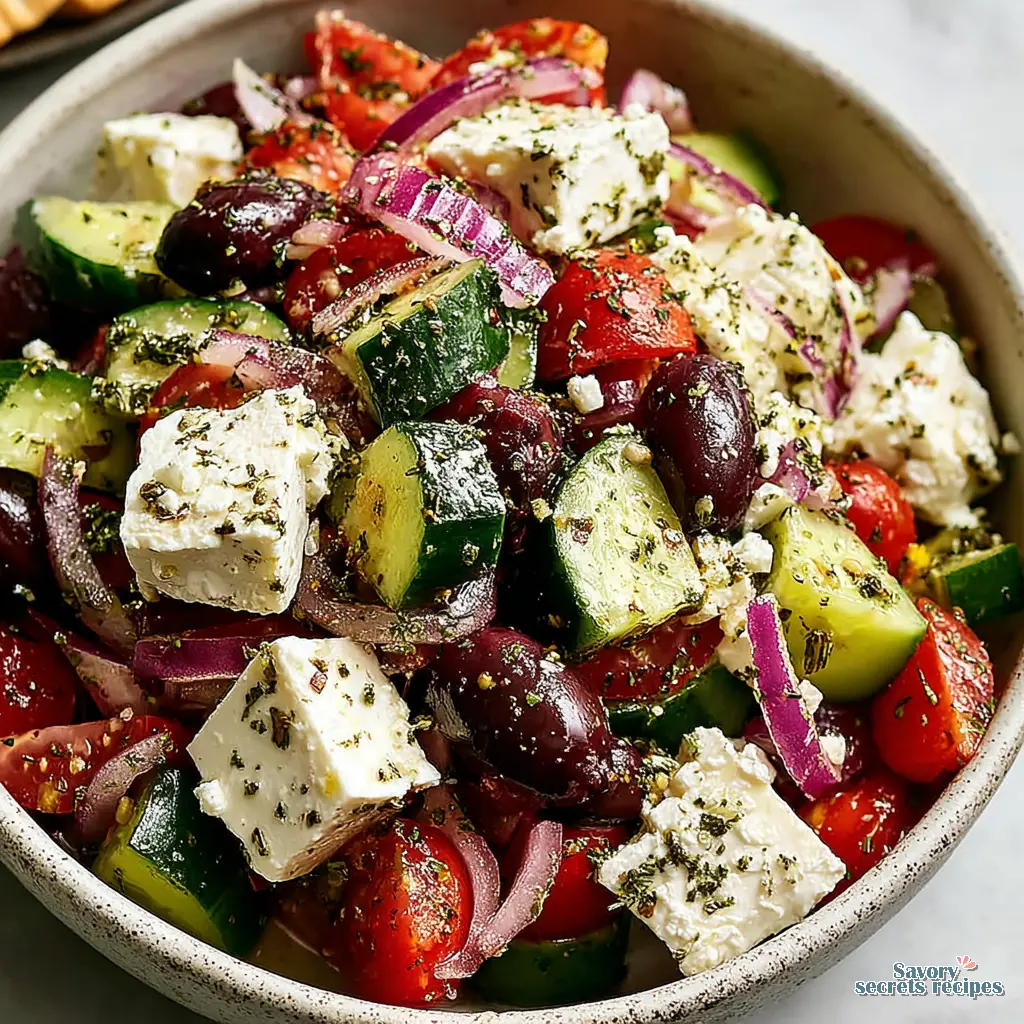
Authentic Greek Salad Recipe No Lettuce
Ingredients
Method
- Gather all ingredients and wash the cucumber, peeling it if desired.
- Cut the cucumber into bite-sized slices and halve the grape tomatoes.
- Dice the bell pepper into uniform pieces and thinly slice the red onion.
- Combine the cucumber, tomatoes, bell pepper, and red onion in a large mixing bowl.
- Gently fold the Kalamata olives and crumbled feta into the salad.
- Whisk the apple cider vinegar, lemon juice, Dijon mustard, and minced garlic in a separate bowl.
- Season with oregano, salt, and pepper, then slowly whisk in the olive oil until emulsified.
- Pour the dressing over the salad and toss gently to combine.
Nutrition
Notes
The Only Side Dish Your Easter Lamb Needs
I know that sounds like a bold claim. But let me think about that for a second. Yes, it’s absolutely the truth. If you’re serving roasted meat this spring, a proper Greek Salad is exactly what you want on the table.
I didn’t always know how to make this right. Growing up in California, my idea of this dish was a sad, watery bowl of iceberg lettuce topped with black rings from a can and pre-crumbled cheese that tasted like chalk. It wasn’t until a family trip to the Mediterranean that I realized I’d been eating a lie. We sat down at a tiny seaside taverna, and the waiter brought out a shallow bowl bursting with vibrant reds, deep greens, and a massive slab of creamy cheese right on top. No lettuce in sight.
I took one bite of a sun-ripened tomato soaked in rich olive oil. That’s the move right there. I realized immediately that an authentic greek salad recipe no lettuce is a completely different experience. It’s not just a side dish. It’s a masterclass in letting good ingredients speak for themselves.
During these cooler LA winter months when we actually use our ovens for roasting, or in the spring when Easter rolls around, this fresh summer salad brings the perfect bright, acidic contrast to heavy meals. It takes maybe ten minutes to throw together, but your family will think you spent all day sourcing ingredients. Let’s build it.
The “No-Lettuce” Rule for Authentic Horiatiki
People always ask me if a traditional Greek Salad has greens in it. The short answer is no. The long answer is absolutely not.
In Greece, this dish is called Horiatiki, which translates to “village salad.” It was originally a rustic farmer’s breakfast or lunch made from whatever was ripe in the garden. Adding lettuce is an American restaurant trick to bulk up the portion size cheaply. But there’s a culinary reason we leave it out.
Lettuce simply can’t handle the weight of the dressing. When you toss delicate greens with heavy extra virgin olive oil and thick blocks of cheese, the leaves wilt into a sad, soggy mess within minutes. Horiatiki is designed to be sturdy. You want ingredients that hold their crunch and actually improve as they sit in the juices. Trust me on this. Skip the greens.
How to Cut Vegetables for Traditional Horiatiki
If you’re wondering how to cut vegetables for traditional horiatiki, the secret is to go chunky. Over-chopping is a rookie mistake.
You want everything cut into similar-sized pieces, roughly 1-inch squares or thick half-moons. This creates a perfect “jumble” in the bowl, ensuring you get a little bit of everything in each bite. I prefer using Persian cucumbers or English cucumbers because their skin is thin and sweet. You don’t need to peel them. Just slice them into thick rounds and maybe cut those in half. Maintaining these larger pieces is essential when building a healthy greek salad bowl that stays crisp for several hours.
Here’s what I’d do if your cucumbers are particularly large: scoop out the seeds with a spoon before slicing. The seeds hold a lot of water, and removing them keeps your salad crisp instead of turning it into a swamp.
Visual Guide to Tomato Varieties for Salads
The tomatoes make or break this dish. I learned this the hard way after serving a mealy, pale winter tomato to guests. Never again.
If it’s peak summer and you have access to gorgeous, heavy heirloom tomatoes, use those. Cut them into thick wedges. But for the rest of the year, cherry tomatoes or grape tomatoes are your best friends. They are bred to be sweet and firm year-round. Plus, cutting cherry tomatoes in half releases just enough juice to mingle with the oil without flooding the bowl.
Whatever you do, keep your tomatoes on the counter. Refrigerating them kills the flavor compounds and turns the texture mealy. Room temperature is mandatory.
Common Mistakes & Fixes
Mistake: The salad is sitting in a pool of water.
Solution: You likely used watery Roma tomatoes or didn’t seed your cucumbers. Switch to cherry tomatoes and scoop out cucumber seeds to control moisture.
Mistake: The raw onion flavor overpowers everything else.
Solution: You skipped the soaking step. Always soak your sliced red onion in ice water for 10 minutes before adding them to the bowl.
Mistake: The cheese turned into a mushy paste when tossed.
Solution: You used pre-crumbled cheese and over-mixed. Use block feta and gently lay it on top, or cut it into large, sturdy cubes.
The Onion Soaking Trick
I love red onion, but raw onion breath is nobody’s friend. My daughter used to pick every single slice out of her bowl until I started using this technique.
Slice your red onion as thin as you possibly can. Then, drop the slices into a bowl of ice water for about 10 to 15 minutes while you prep the rest of the ingredients. The cold water crisps them up and leaches out that harsh, sulfurous bite. When you drain them, they’ll be sweet, crunchy, and mild enough to eat by the handful. Makes sense to me to take the extra two minutes.
Why Block Feta Matters
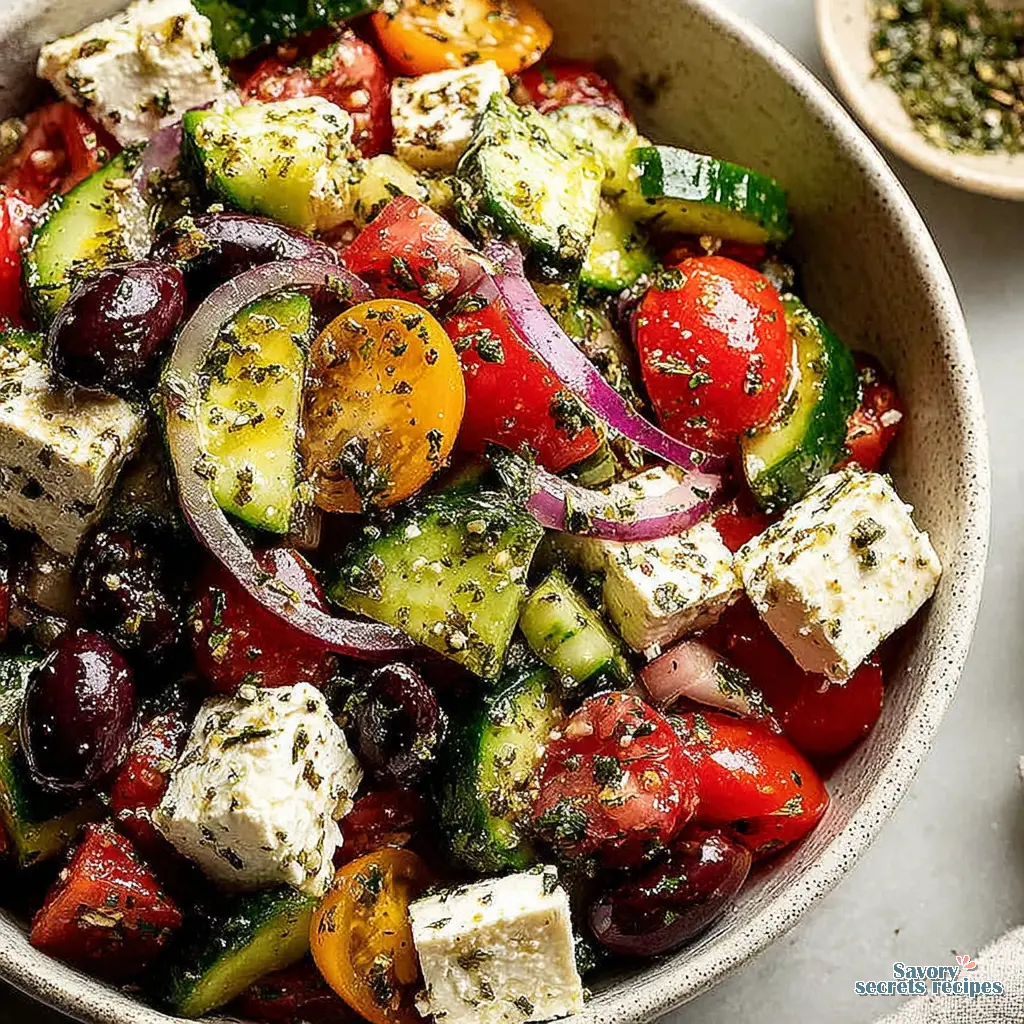
Look, I’ll be honest. Pre-crumbled cheese is a tragedy. It’s coated in anti-caking agents so it doesn’t stick together in the plastic tub, which means it also won’t melt in your mouth. It stays rubbery and dry.
You need to buy block feta packed in brine. The brine keeps it incredibly moist and preserves that sharp, salty tang. When you’re at the store, check the label. You’re looking for sheep’s milk feta, or a blend of sheep and goat’s milk. Cow’s milk feta tends to be sour and lacks the rich, creamy complexity of the real deal.
For a traditional presentation, don’t even chop it. Just take a massive slab of the cheese and lay it right across the top of the vegetables. Drizzle it heavily with oil and sprinkle it with dried oregano. When you serve it, everyone breaks off a piece of the slab with their fork. It feels generous. It feels like a celebration. This simple presentation is the core of a traditional feta cucumber tomato salad that highlights quality cheese.
Alcohol-Free Dressing Guide (The Citrus Swap)
The dressing is barely a dressing. It’s more of a philosophy. You don’t need a blender or a whisk. You build the layers right in the bowl. This method is quite different from a standard mediterranean salad recipe, which often relies on pre-mixing the dressing.
A lot of older recipes call for specific vinegars, but I actually prefer to keep this completely bright and alcohol-free. Fresh lemon juice is my go-to acid here. If lemons are expensive or out of season, a splash of raw apple cider vinegar works beautifully to provide that necessary punch. If it needs more acid, it needs more acid. Taste as you go, adjust at the end.
But the real star is the extra virgin olive oil. This is not the time to use the cheap cooking oil you fry eggs in. You want the good stuff. The dark green, peppery, grassy oil that comes in a dark glass bottle. Pour it generously. It should almost pool at the bottom of the bowl.
Finally, the herbs. Fresh mint is lovely, but dried oregano is non-negotiable. Here’s a trick my grandmother taught me with spices: put the dried oregano in the palm of your hand and rub your hands together briskly over the bowl. The friction heats up the essential oils in the dried leaves. You’ll smell that incredible earthy, savory aroma hit the air before it even touches the oil. Perfect.
Don’t Waste the “Salad Soup”
By the time you get to the bottom of the bowl, you’ll be left with a mixture of tomato juices, olive oil, lemon juice, and little crumbles of salty cheese. In Greek, this liquid gold is called “zoumi.”
Do not throw this away. I repeat, do not throw this away.
You have two options here. The first is the “dips.” Grab a heel of warm, crusty bread and drag it through the juices. It’s arguably the best part of the entire meal. My family will literally fight over who gets to wipe the bowl clean.
The second option is to use it as a marinade. That leftover liquid is packed with acid, salt, and fat. Pour it over some chicken breasts or a piece of white fish, let it sit for thirty minutes, and throw it on the grill. It’s an instant flavor upgrade for tomorrow’s dinner.
Storage & Make-Ahead Tips
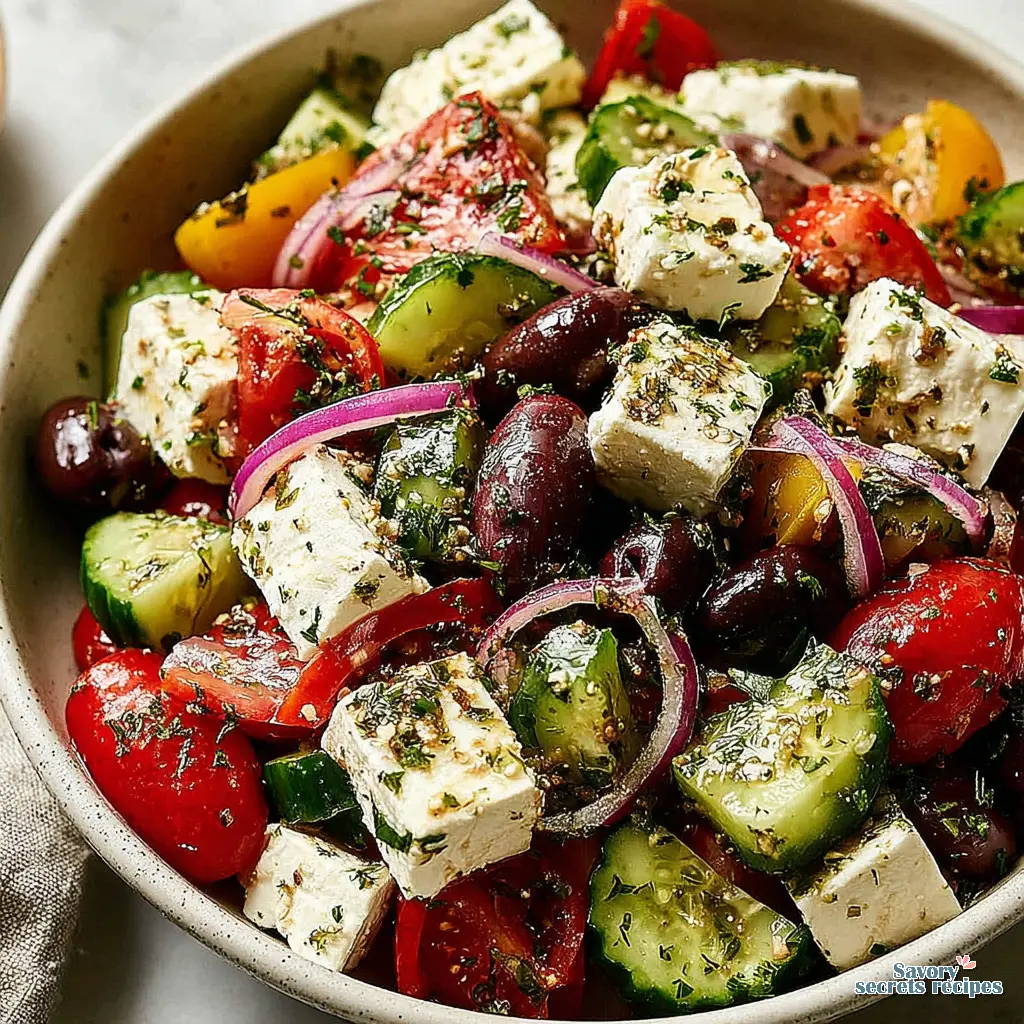
I usually tell people that a Greek Salad is best eaten the moment it’s made. The vegetables are at their absolute crispest. But life happens, and meal prep is a reality.
If you need to make this ahead for a potluck or a busy weeknight, here is the secret: prep the vegetables and store them in an airtight container in the fridge for up to three days. Keep the Kalamata olives, cheese, and dressing completely separate. The salt in the cheese and the acid in the dressing will break down the vegetables if they sit together too long. When you’re ready to eat, toss it all together in a large bowl. Give it another minute to let the flavors marry, and you’re good to go.
If you have fully dressed leftovers, store them in the fridge. The cucumbers will lose a bit of their crunch by day two, but the flavor actually deepens. Just let the bowl sit on the counter for 15 minutes before eating. Cold olive oil congeals in the fridge, and it needs a little time to wake back up and become liquid again.
Frequently Asked Questions
Bring the Mediterranean Home
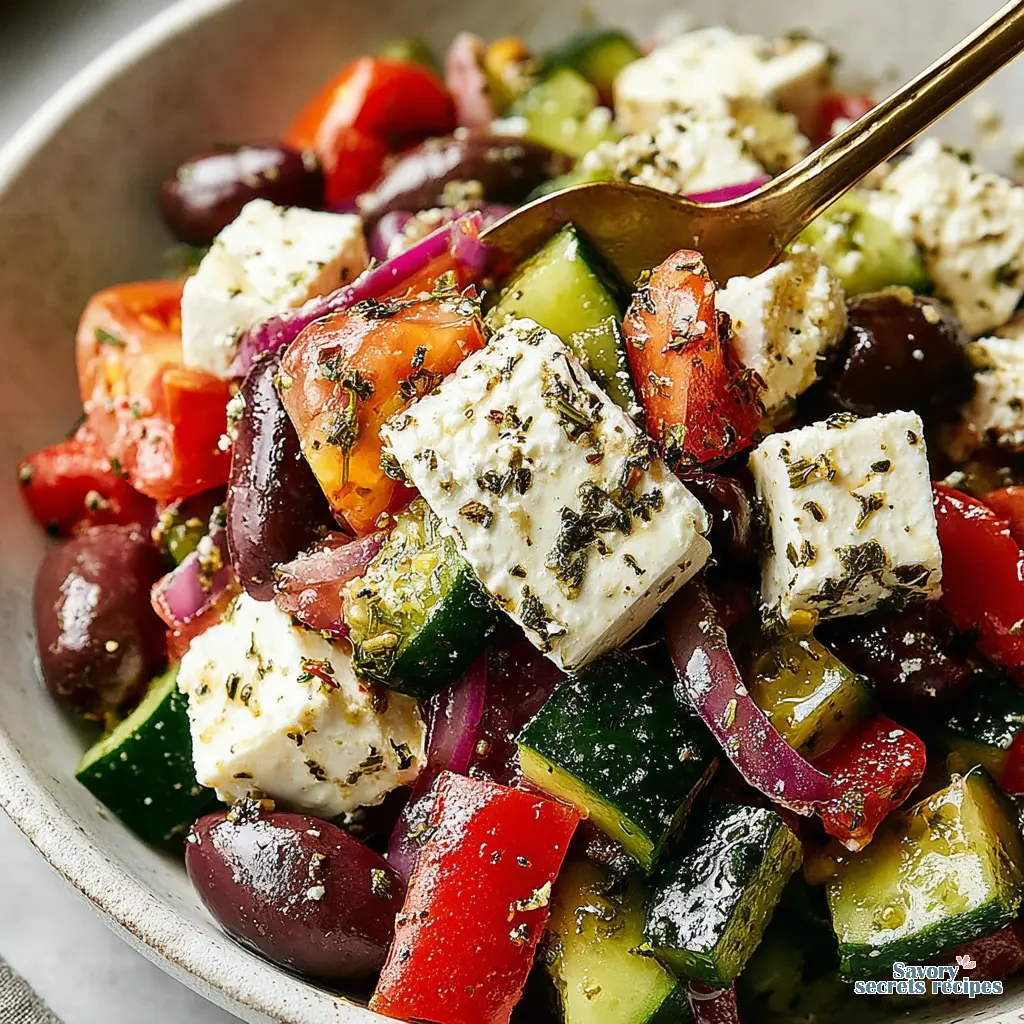
Cooking is mostly about paying attention, not just blindly following steps. Once you understand the basics of balancing the salty Kalamata olives with the sweet tomatoes and the sharp acid, you’ll never need to look at a recipe again. You’ll just know when it feels right.
Pair this vibrant bowl with some grilled chicken souvlaki, a piece of roasted fish, or that Easter lamb we talked about earlier. Just don’t forget the crusty bread for the juices at the bottom. That’s a non-negotiable in my house.
If you give this a try, I’d love to see how your spread turns out. I share tons of variations on my Pinterest boards if you want more ideas for your next dinner party. Grab some good olive oil on your next grocery run, and treat yourself to a proper Greek Salad.
Reference: Original Source
Does an authentic Greek salad recipe include lettuce?
Absolutely not. Traditional Horiatiki relies on sturdy vegetables like cucumbers and tomatoes. Lettuce wilts almost immediately under the heavy olive oil and thick blocks of cheese. Skipping the greens keeps your Greek Salad crisp, fresh, and historically accurate.
How do you cut vegetables for traditional horiatiki to ensure the best texture?
You want everything chunky. Aim for 1-inch squares or thick half-moons. Dicing the vegetables too small turns the dish into a salsa. Chunky cuts ensure each bite of your Greek Salad has distinct, satisfying textures that hold up to the dressing.
What are the essential ingredients for a classic Greek salad?
The foundation is simple: ripe tomatoes, crisp cucumbers, red onion, green bell peppers, Kalamata olives, and a large piece of block feta. You finish it with high-quality extra virgin olive oil, a splash of lemon juice, and dried oregano.
Why is Greek salad considered the ultimate fresh summer salad?
It relies entirely on raw, seasonal produce at its peak. Because there’s no cooking involved and no heavy mayonnaise-based dressings, it remains incredibly hydrating and refreshing on hot days. It’s the perfect cooling side dish for grilled meats.
How long can you store a homemade Greek salad in the refrigerator?
Undressed, the chopped vegetables will last up to 3 days in an airtight container. Once dressed with oil and acid, you really should eat it within 24 hours. The tomatoes will start to break down and release too much water if left sitting.
Should I peel the cucumbers for my Greek Salad?
I wouldn’t. If you use Persian cucumbers or English cucumbers, the skin is thin, sweet, and adds great crunch. If you only have thick, waxy slicing cucumbers, you might want to peel them in alternating stripes to remove some toughness.