



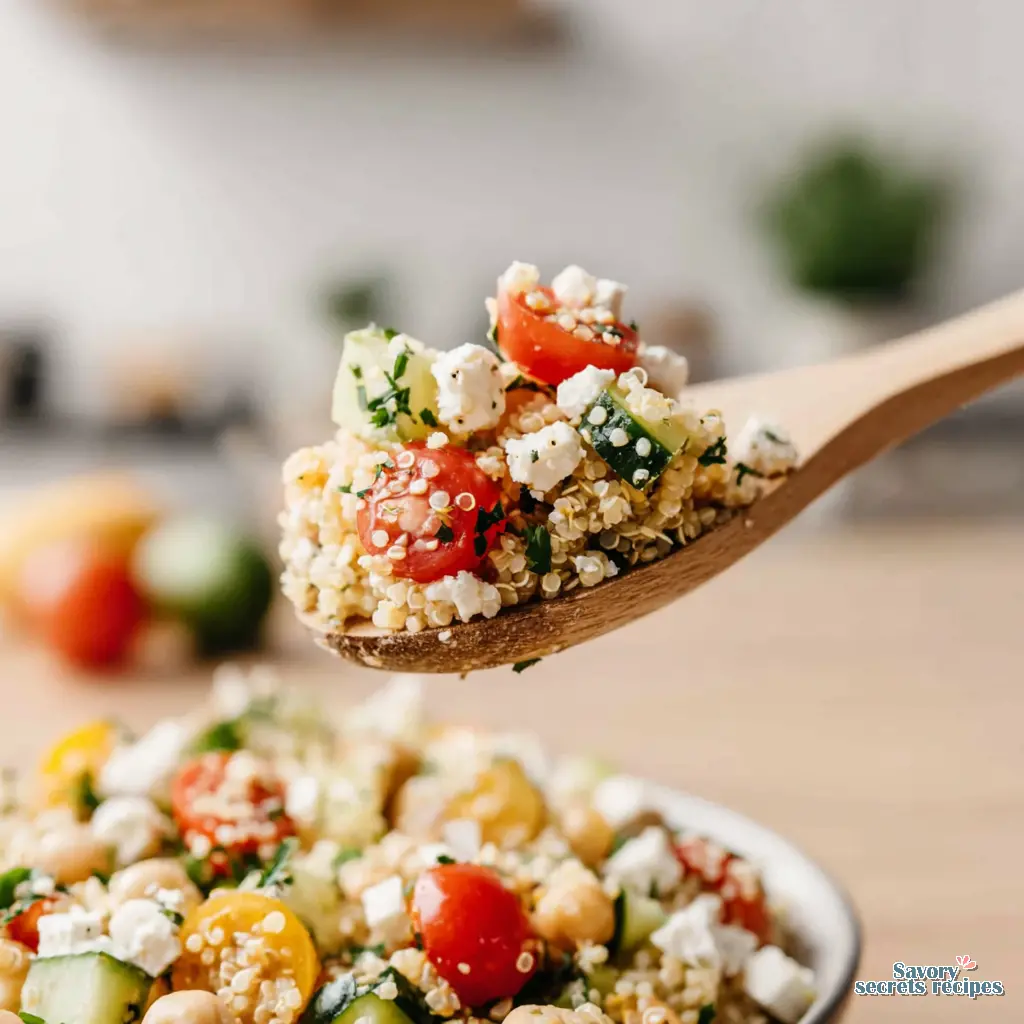
Spring Quinoa Salad with Vegetables for Weight Loss
Ingredients
Method
- Cook the quinoa as you normally do, fluff with a fork, and let it cool a bit. Don’t rush this step or you’ll end up with a gluey mess—trust me on this.
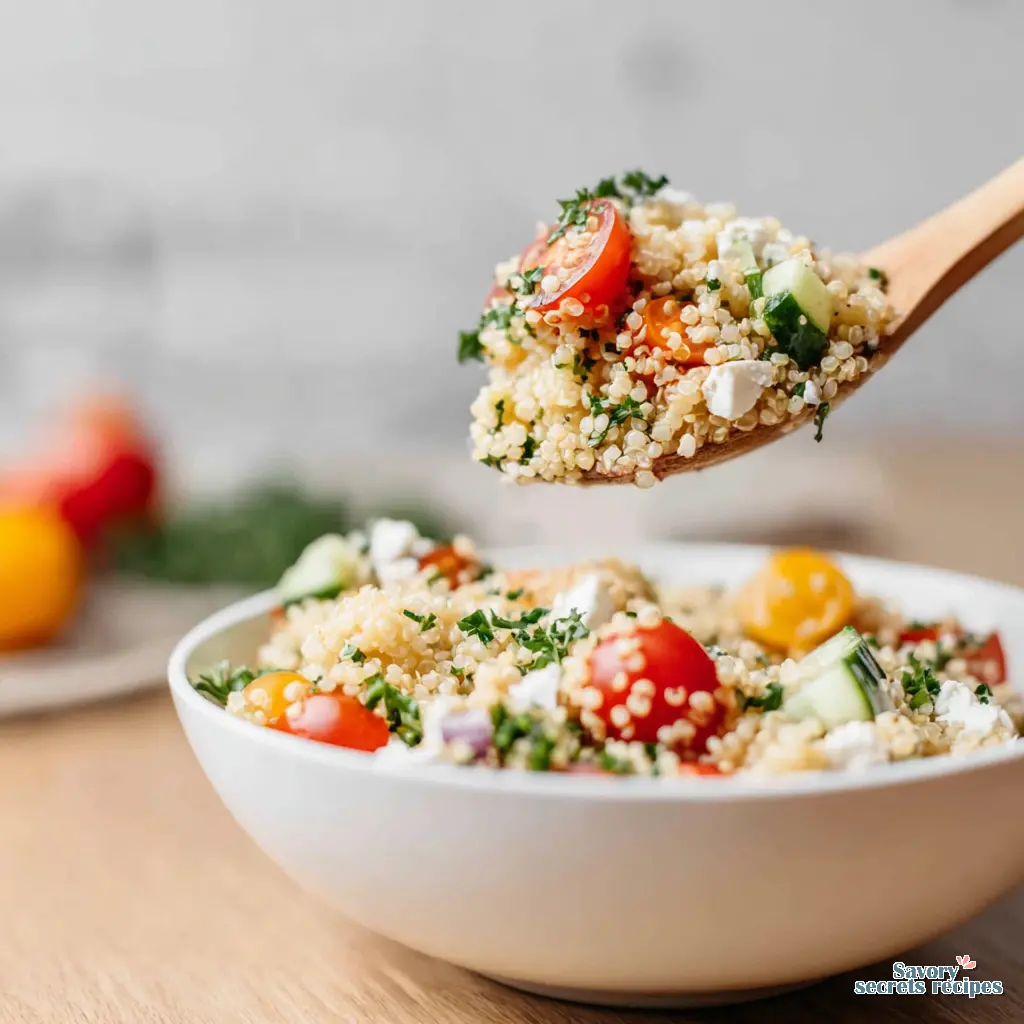
- In a large bowl, toss in chickpeas, tomatoes, cucumber, red onion, and parsley. If you’re feeling fancy, add olives or roasted peppers for extra personality.
- Whisk together olive oil, lemon juice, vinegar, garlic, salt, and pepper. This is your flavor base—give it a little jazz hands energy.
- Pour the dressing over the veggies and chickpeas. Mix well until everything shines and looks happy.
- Fold in the cooled quinoa and feta if using. Give it one last toss and taste. Adjust salt or lemon if needed.
- Chill for 15–30 minutes if you can swing it; otherwise, dive in now. Either way, it’s delicious!
Nutrition
Notes
The Sad Desk Lunch Dilemma
Let’s talk about the sad desk salad phenomenon. It’s Tuesday at 1:30 PM. You’re staring at a plastic container of wilted greens and pale tomatoes, wondering why you’re still hungry. We’ve all been there. I know I have. But with the Spring Equinox right around the corner, it’s the perfect time for a reset. You deserve a meal that actually fills you up without weighing you down.
A truly healthy quinoa salad is the perfect solution to this midday slump. It gives you that vibrant, Instagram-worthy colorful plate, but more importantly, it delivers real, sustained energy. I used to struggle with eating enough vegetables during the workday. I’d get bored with basic steamed veggies and confused by all the conflicting diet advice out there. Then I started treating my salads like actual meals.
This isn’t just another boring bowl of grains. It’s a nutrient-dense, fiber-rich powerhouse that makes you feel light but energized long after you’ve finished eating. And honestly, the crunch of fresh bell peppers mixed with the fluffy texture of perfectly cooked grains is incredibly satisfying. Let’s fix your lunch routine. Transitioning to an easy quinoa recipe is the most effective way to enjoy a fresh quinoa lunch every day.
The ‘Fluffy Quinoa’ Secret (Rinsing & Cooling)
Every Sunday, my grandmother made thieboudienne. I’d watch her toast the rice in oil before adding anything else. One week I asked her why she did it. She looked at me and said, “So each grain remembers it’s separate.” I’ve never forgotten that. Technique is about respecting what an ingredient is supposed to be. I apply that exact same logic to this healthy quinoa salad.
Toasting dry quinoa in a skillet for 5 minutes before boiling gives it a beautiful, nuttier flavor. But before you even think about the stove, rinsing quinoa is absolutely non-negotiable. You have to rinse it thoroughly under cold water to remove the bitter natural coating called saponins. If you’ve ever had a soapy or bitter aftertaste from a healthy quinoa salad, skipped rinsing is exactly why. Trust your nose on this one. You’ll know it’s ready when the water runs completely clear.
Here’s what I’ve found works for the perfect ratio. Use 1 cup of dry quinoa to 1.75 cups of water. Bring it to a boil, then drop it to a gentle simmer. That 1 cup dry yields approximately 3 cups of cooked quinoa. The biggest mistake people make is dumping their fresh vegetables into the pot while the grains are still hot. You must cool the quinoa completely before adding fresh vegetables or greens to prevent wilting. I like to spread the cooked quinoa on a baking sheet to cool faster and prevent clumping.
Visual Troubleshooting: Gummy vs. Fluffy Quinoa
We need to talk about texture. Overcooking the quinoa into a gummy mess by using too much water is the most common pitfall I see. I’ll admit, the first time I tried making a healthy quinoa salad years ago, I ended up with a solid block of mush. I hadn’t learned to read the ingredient yet.
Common Mistakes & Fixes
Mistake: Adding vegetables while the grains are still warm.
Solution: This causes instant wilting and sogginess. Spread your cooked base on a sheet pan and pop it in the fridge for 15 minutes before mixing.
Mistake: Not rinsing the seeds first.
Solution: This leads to a soapy or bitter aftertaste. Always use a fine-mesh strainer and rinse until the water runs clear.
Mistake: Overcooking into a gummy mess.
Solution: You likely used a 1-to-2 ratio of water. Dial it back to 1-to-1.75. If it’s already gummy, spread it out on a baking sheet and bake at 300°F for 10 minutes to dry it out.
Mistake: Under-dressing the salad.
Solution: Quinoa is highly absorbent. Use a generous amount of dressing because the grains will soak up the flavor overnight.
Look for the color change, that’s your signal. You’ll know it’s perfectly cooked when the grains become slightly translucent and you can see the little spiral “tail” pop out of the seed. That tiny tail is the germ separating from the seed. Perfect. Worth it. That tracks with what I’ve seen in every successful batch.
The Science of Quinoa: A Complete Protein
I’m genuinely excited about this one. People often call quinoa a grain, but it’s actually a seed. And it’s one of the few plant-based foods that is considered a complete protein. That means it contains all nine essential amino acids our bodies can’t produce on their own. When you’re trying to build a healthy quinoa salad for weight loss, this protein density is what keeps you full and stops that 3 PM sugar craving. This unique nutritional profile makes it the perfect base for a protein quinoa bowl.
Whether you use standard white, red, or tri-color quinoa depends on what you’re going for. White is the fluffiest and cooks the fastest. Red holds its shape better and has a heartier chew, which is brilliant for meal prep. Tri-color quinoa gives you the best of both worlds and looks incredibly vibrant in the bowl. It’s exactly the sort of thing I love to dig into when I want a meal that works hard for my body.
Creating an Alcohol-Free Dressing
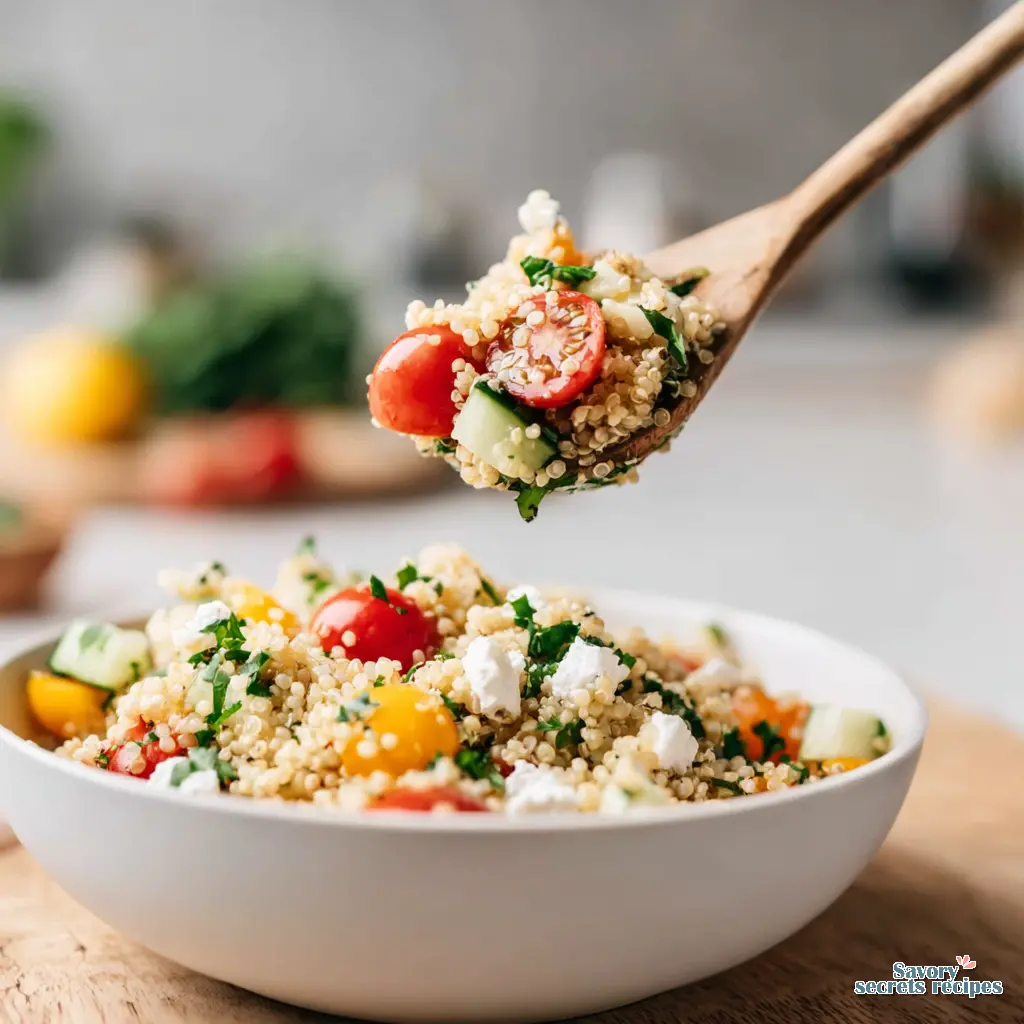
That’s a good question, actually. How do you make a healthy quinoa salad taste good without using oil or heavy, alcohol-based vinegars? Many traditional vinaigrettes rely heavily on white wine vinegar or cooking wines. We’re skipping those completely. I prefer ingredients that can do multiple jobs, and fresh citrus is the absolute champion here.
To get that bright, zesty punch without wine vinegar, I use a combination of fresh lemon juice, heavy lemon zest, and raw apple cider vinegar. The zestiness of the lemon hitting the warm quinoa (if you’re dressing it slightly warm) is an incredible smell. If you’re avoiding oil entirely for a low calorie approach, a tahini dressing is your best friend. Whisk together two tablespoons of tahini, lemon juice, a minced garlic clove, and warm water until it reaches the color of peanut butter. It creates a creamy, rich texture that coats every single grain perfectly.
Customizable Mix-in List & Dietary Adaptations
My daughter went through a phase where she’d only eat “white foods.” It was a nightmare for someone who works with ingredients all day. I started letting her help me label things in the pantry, and suddenly she was interested in trying the colorful things. We call this our “rainbow bowl” now.
For maximum volume and crunch, dice all vegetables and fruits into similar bite-sized pieces for better flavor distribution. English cucumber, bright bell peppers, cherry tomatoes, and sharp red onion are my go-to base. If you want to make this healthy quinoa vegetable salad more filling, sauté chickpeas with a little olive oil and salt instead of using them straight from the can. It completely transforms their texture. (Though, if you’re rushing after a Trader Joe’s run, store-bought roasted chickpeas are a brilliant time-saving shortcut).
This recipe is naturally gluten-free and vegetarian. If you need a vegan version, simply omit the feta cheese and add extra kalamata olives or sun-dried tomatoes for that salty, briny kick. Want a tropical variation? Add diced mango and avocado with a lime dressing. Just remember, don’t toss the avocado too vigorously, or it’ll turn into mush. Be gentle. These ingredients are the foundation of a delicious mediterranean quinoa salad.
Herb Storage Hacks for Longevity
Fresh herbs are what make a healthy quinoa salad taste like it came from a farm-to-fork restaurant in Los Angeles. Flat-leaf parsley is my favorite here, but mint or basil work beautifully too. The problem is, herbs wilt quickly once chopped and mixed with dressing.
Here’s the trick. Store your fresh herbs separately and add them just before serving to maintain their vibrancy. When I bring parsley home from the farmers market, I trim the stems and place them in a glass of water in the fridge, like a bouquet of flowers, loosely covered with a plastic bag. They’ll last for two weeks this way. When you’re ready to eat your meal prep, just tear a handful of fresh leaves directly over your bowl.
Meal Prep & Storage Guide
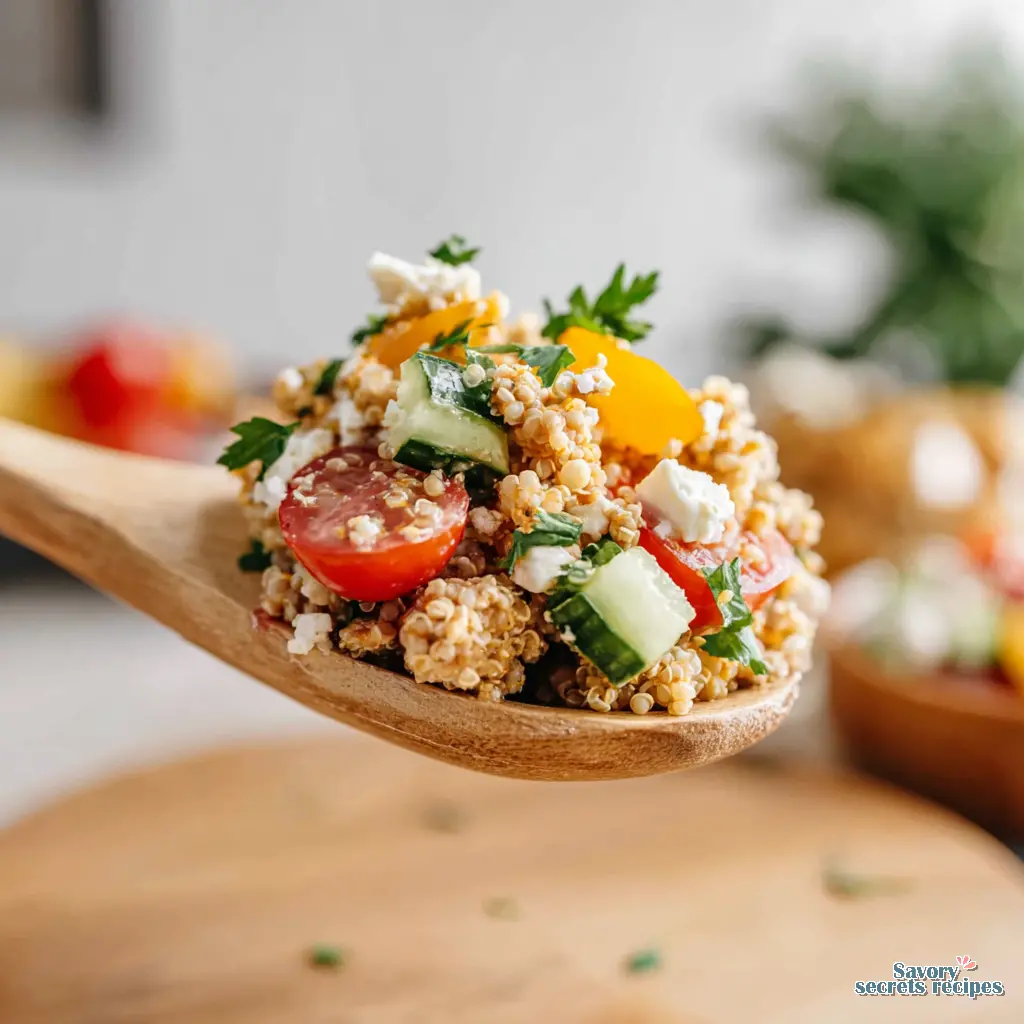
I’m not entirely sure who invented meal prep Sundays, but they were onto something. A healthy quinoa salad is the ultimate make-ahead meal because the grains actually benefit from sitting in the dressing. They absorb the lemon juice and apple cider vinegar, becoming more flavorful by day two or three. Mastering an easy quinoa recipe is the first step toward successful weekly planning.
Store the base salad in a sealed, airtight container in the refrigerator. It will keep beautifully for up to 4 days. However, you need to be strategic. Keep your wet ingredients (like the dressing and tomatoes) slightly separated from delicate greens (like arugula or spinach) if you’re using them. I like to pack my dressing at the bottom of a mason jar, add the chickpeas and quinoa, then layer the cucumbers and bell peppers, keeping the fresh herbs right at the top. Serve it chilled or at room temperature. Reheating is generally not recommended for these fresh versions, as it ruins the crunch of the cucumbers.
Frequently Asked Questions
Bringing It All Together
You’ve got this. Making a truly satisfying healthy quinoa salad isn’t about following rigid rules. It’s about understanding how to treat the ingredients. Once you master the rinse, the perfect water ratio, and the art of the zesty dressing, you’ll never look at a sad desk lunch the same way again. You deserve to eat food that makes you feel vibrant and energized.
I’d love to see how your rainbow bowls turn out. Play around with the vegetables, trust your nose with the herbs, and listen to your body. For more inspiration and variations on this kind of seasonal eating, check out my Pinterest boards. I share tons of practical meal prep ideas there.
Happy cooking, and enjoy that spring reset!
Reference: Original Source
Can I make this spring healthy quinoa salad ahead of time for meal prep?
Absolutely. In my experience, it actually tastes better on day two. The grains absorb the citrus dressing beautifully. Just keep delicate greens and fresh herbs stored separately, and toss everything together right before you eat to maintain that perfect crunch.
What are the best vegetables to put in a healthy quinoa salad for weight loss?
I always lean toward high-water, crunchy vegetables for maximum volume. English cucumbers, bell peppers, and cherry tomatoes are brilliant. They add massive texture and hydration without heavy calories, keeping you full and satisfied much longer than a standard lettuce mix.
How do you make quinoa salad taste good without using oil?
That’s a great question. I use a heavy hand with fresh lemon zest and apple cider vinegar for brightness. If you need creaminess without olive oil, whisking a little tahini with warm water and garlic creates a rich, satisfying dressing that coats every grain.
What protein can I add to this healthy quinoa vegetable salad to make it more filling?
While the seed itself is a complete protein, I love adding chickpeas. Sauté them briefly with a pinch of salt to improve their texture. You could also serve this alongside grilled portobello mushrooms or add some roasted almonds for an extra protein boost.
How do I keep my healthy quinoa salad from becoming a gummy mess?
It all comes down to the water ratio and cooling process. Use 1.75 cups of water per 1 cup of dry seeds. Crucially, you must let the cooked grains cool completely on a baking sheet before adding any fresh vegetables to prevent steaming and wilting.