



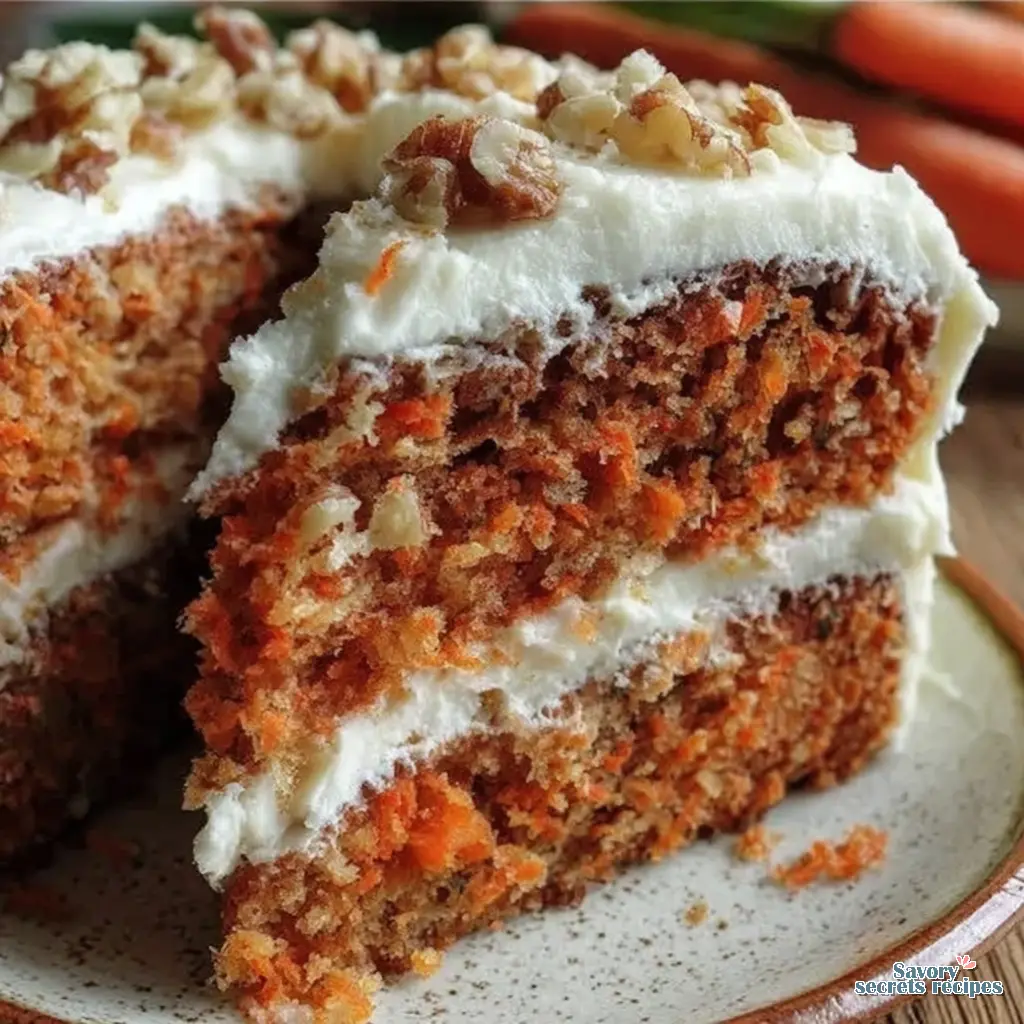
Classic Carrot Cake with Cream Cheese Frosting
Ingredients
Method
- Preheat oven to 350°F (175°C). Grease and flour two 9-inch round cake pans.
- In a medium bowl, sift together flour, baking powder, baking soda, cinnamon, nutmeg, and salt.
- In a large bowl, beat eggs and sugar until light and fluffy. Gradually add oil while mixing.
- Stir in grated carrots, crushed pineapple, walnuts (if using), and vanilla extract.
- Gradually fold dry ingredients into the wet mixture until just combined.
- Divide batter evenly between the prepared pans and bake for 30-35 minutes or until a toothpick inserted in the center comes out clean.
- Allow cakes to cool in pans for 10 minutes, then turn out onto a wire rack to cool completely.
- For the frosting, beat cream cheese and butter together until smooth. Gradually add powdered sugar and vanilla extract, continuing to beat until creamy.
- Once cakes are fully cooled, spread frosting on the first layer, place the second layer on top, and frost the top and sides of the cake.
- Refrigerate the cake for at least 1 hour before serving to set the frosting.
Notes
The Only Classic Carrot Cake You Need for Easter Sunday
Growing up, the smell of warm cinnamon and nutmeg in our small apartment kitchen meant something truly special was happening. I remember standing on a step stool in my grandmother’s kitchen in Casablanca, watching her work with precise temperatures and careful measurements. She always told me that temperature is doing the heavy lifting here, and that tracks with exactly what I’ve seen in my own baking over the years. Layer cakes can feel incredibly intimidating. I absolutely get it. You’re worried about the middle sinking, or the layers sliding around, or wasting expensive ingredients on a fail. But this classic carrot cake is the number one requested Easter dessert in the US for a very good reason. Let me walk you through this.
With spring arriving and those gorgeous bunches of fresh produce hitting the Santa Monica Farmers Market, it’s the perfect time to bake. You are going to get a professional bakery-level result that will completely steal the show at your Easter brunch. No sinking. No sliding layers. Just a tall, beautiful centerpiece cake with perfectly balanced sweetness and spice. I know this sounds like a big promise, but once you understand the basic science behind the ingredients, it’s actually quite forgiving. You’ll be the designated holiday baker before you know it.
Why Vegetable Oil Makes the Best Classic Carrot Cake
People constantly ask me why we use oil instead of butter in a classic carrot cake. In my experience, though yours might differ, oil is the absolute secret to that signature texture. Here is the science behind it. Butter is only about 80% fat, with the remaining 20% being water and milk solids. When you bake with butter, that water evaporates, which can leave a denser cake. Vegetable oil, on the other hand, provides 100% fat and remains liquid at room temperature. This guarantees a significantly moister, softer crumb that stays fresh for days.
If you’re doing your weekly grocery run at Ralphs or Trader Joe’s and want a slightly different flavor profile, you can easily substitute avocado oil as a neutral alternative for vegetable oil. It works beautifully. We are looking for that perfect moisture balance, and oil delivers it every single time. It’s so satisfying when it comes together with the brown sugar and granulated sugar to create that deeply caramelized, tender base. For those looking for a quicker preparation, this easy carrot cake dessert is a great alternative.
The Absolute Importance of Freshly Grated Carrots
Look, I’ll be honest. Grating carrots by hand takes a little elbow grease. But please, I am begging you, grate fresh carrots rather than using pre-shredded bagged ones for better moisture. Those pre-shredded matchsticks you find in the produce aisle are coated to prevent sticking, which means they are incredibly dry. They will not melt into your cake layers properly. You want those fine, wet shreds that instantly release their sweet juice into the batter.
If you are meal prepping for a busy week, you can definitely do this step early. Just keep grated carrots in a zip-lock bag if prepping ahead, and store them in the fridge. They hold their moisture perfectly this way.
Using fresh carrots also ensures the best results for a spiced carrot cake where the vegetable’s natural sweetness balances the heat of the spices.
Carrot-to-Cup Conversion Guide
I always get questions about exactly how many carrots to buy. Here is a quick reference guide so you aren’t guessing at the store:
- 1 medium carrot = roughly ½ cup finely grated
- 1 large carrot = roughly ¾ cup finely grated
- 1 pound of whole carrots = roughly 2.5 to 3 cups grated
Always buy slightly more than you think you need. You can always toss the extras into a salad.
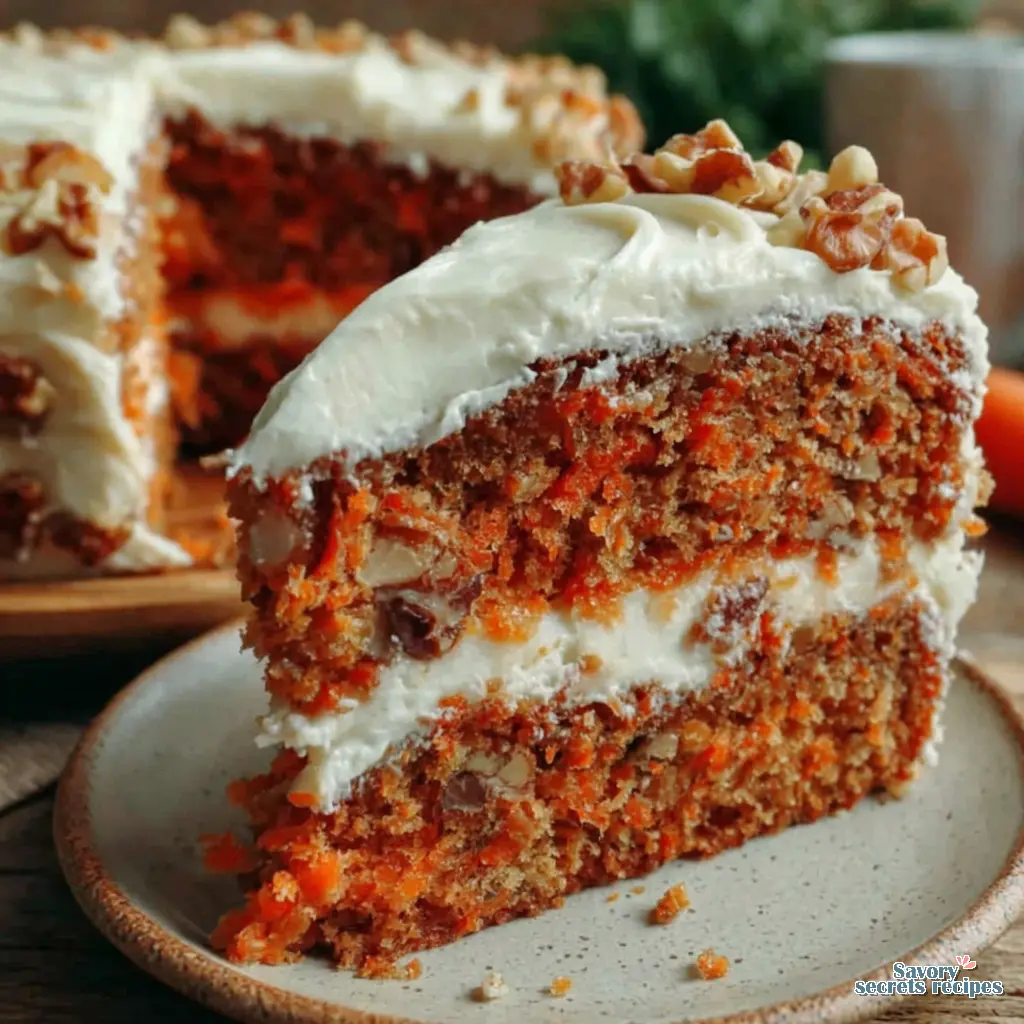
The ‘Cold Ingredient’ Cream Cheese Frosting Method
My daughter Salma and I have this Sunday tradition where we test new desserts together. Watching her figure out textures made me realize she has better intuition for structure than I did at her age. She’s studying architecture, but she has these hands that just understand how things stack. That’s how I feel about this cream cheese frosting. The structure is everything.
You’re looking for that ribbon stage where it holds its shape perfectly. To get there, you need the ‘cold ingredient’ method. Use a food processor to make frosting quickly with cold cream cheese and unsalted butter. Friction creates heat, and if you use a stand mixer for too long, the frosting turns into soup. The food processor blends the confectioners sugar and cold dairy so fast that it stays perfectly thick. If things do get a bit warm in your kitchen, chill frosting for 20 minutes before icing if it becomes too runny during mixing. Give it a minute to settle in the fridge. That texture is exactly what we’re after.
Visual Troubleshooting Guide for Classic Carrot Cake
I once tried to rush a layer cake for a quick weeknight story, and it was a complete disaster. The layers slid apart, the middle was totally raw, and I felt terrible. Let’s troubleshoot together so that never happens to you.
❌ Mistake: The cake sinks right in the middle after baking.
✅ Solution: You likely over-mixed the all-purpose flour, baking powder, and baking soda, or you took it out too early. Use the toothpick test. It should come out with a few moist crumbs attached, not completely clean, but definitely not wet.
❌ Mistake: The cake layers are dense and soggy.
✅ Solution: If you’re adding fruit, you must drain excess liquid from crushed pineapple before measuring. Too much water destroys the delicate crumb structure.
❌ Mistake: The nuts inside the cake are soft and chewy.
✅ Solution: Always toast walnuts or pecans to enhance flavor and prevent sogginess. A quick 8 minutes in a 350°F oven makes a massive difference. Let them cool on a cooling rack before adding to the batter.
❌ Mistake: The frosting is melting right off the sides.
✅ Solution: You are frosting warm cake layers. You absolutely must chill cake layers for 30 minutes before frosting to prevent crumbs and melting. Cold cakes build strong structures.
Advanced Decoration and Flavor Variations
This is the part I love. Decorating a classic carrot cake is where you can really make it your own. If you want to go the traditional bakery route, little marzipan carrots are adorable. Just remember to add parsley stems to marzipan decorations only at the last minute to prevent wilting. Nobody wants sad, droopy parsley on their beautiful Easter cake.
If you have dietary restrictions or just want to play with the flavor profile, you have so many options. You can use pecans in place of English walnuts, or swap in raisins in place of crushed pineapple. For the vanilla, since we are keeping things strictly alcohol-free, use a high-quality alcohol-free vanilla extract substitute or vanilla bean paste. It gives you those beautiful little black specks in the frosting. You can even omit the nuts entirely for an allergy-friendly version. And when you are ready to assemble, tuck parchment paper under the cake edges while frosting to keep the plate clean. It pulls right out when you’re done, leaving a flawless presentation.
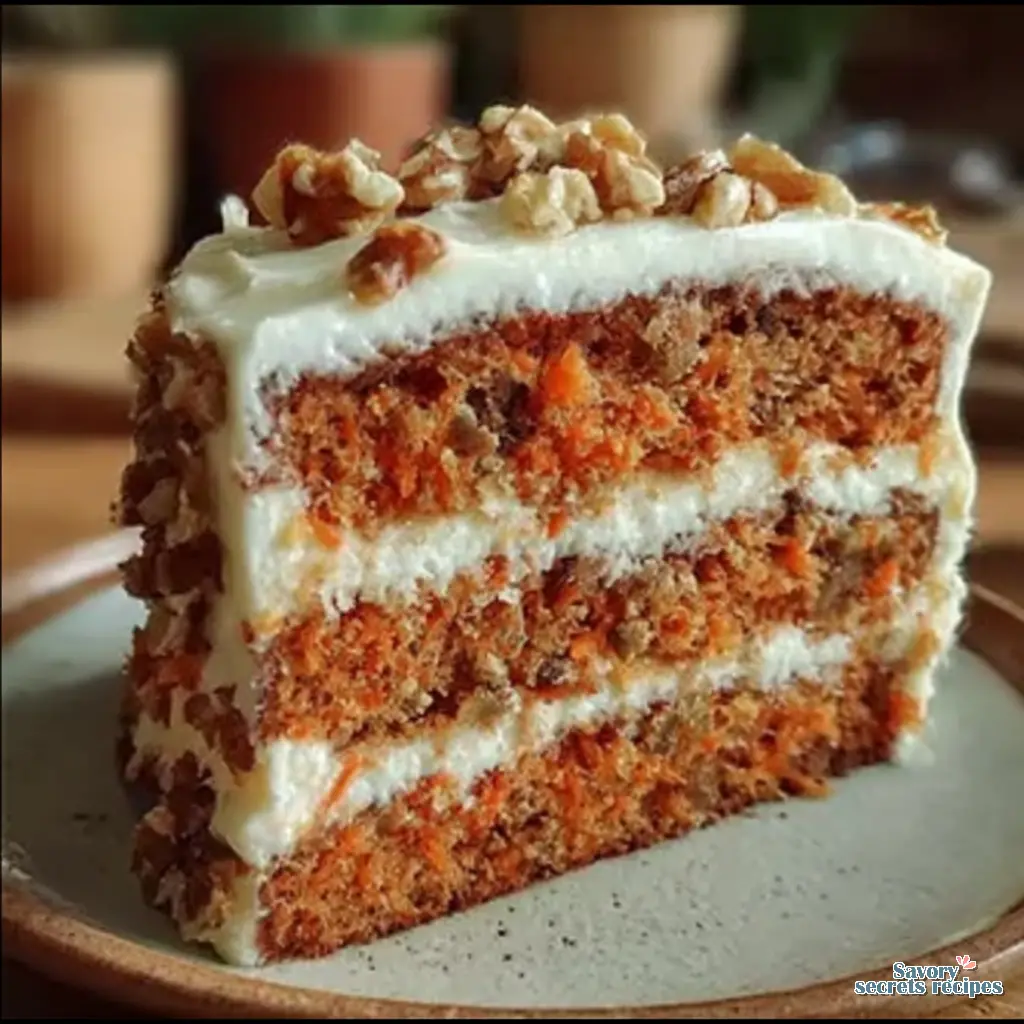
Freezing and Storage Guide for Classic Carrot Cake
My nephew Omar refuses to eat anything that has been sitting in the fridge too long, so I’ve become an absolute expert on cake storage. Because of the dairy in the frosting, you cannot leave this out on the counter. You must refrigerate it in an airtight container. A properly stored frosted classic carrot cake will stay fresh for 3 to 5 days in the fridge.
If you want to bake the layers ahead of time, let them cool completely on a cooling rack. Wrap the unfrosted layers tightly in plastic wrap, then a layer of foil. They will freeze beautifully for up to 2 to 6 months. When you are ready to serve, thaw the layers in the fridge overnight. Never thaw frozen cake too quickly at room temperature, or it will become mushy. On the day you plan to eat it, bring the frosted cake to room temperature for about 1 hour before serving. Use a sharp knife and wipe between slices for clean cuts. Serve it at cool room temperature for the absolute best texture.
Frequently Asked Questions
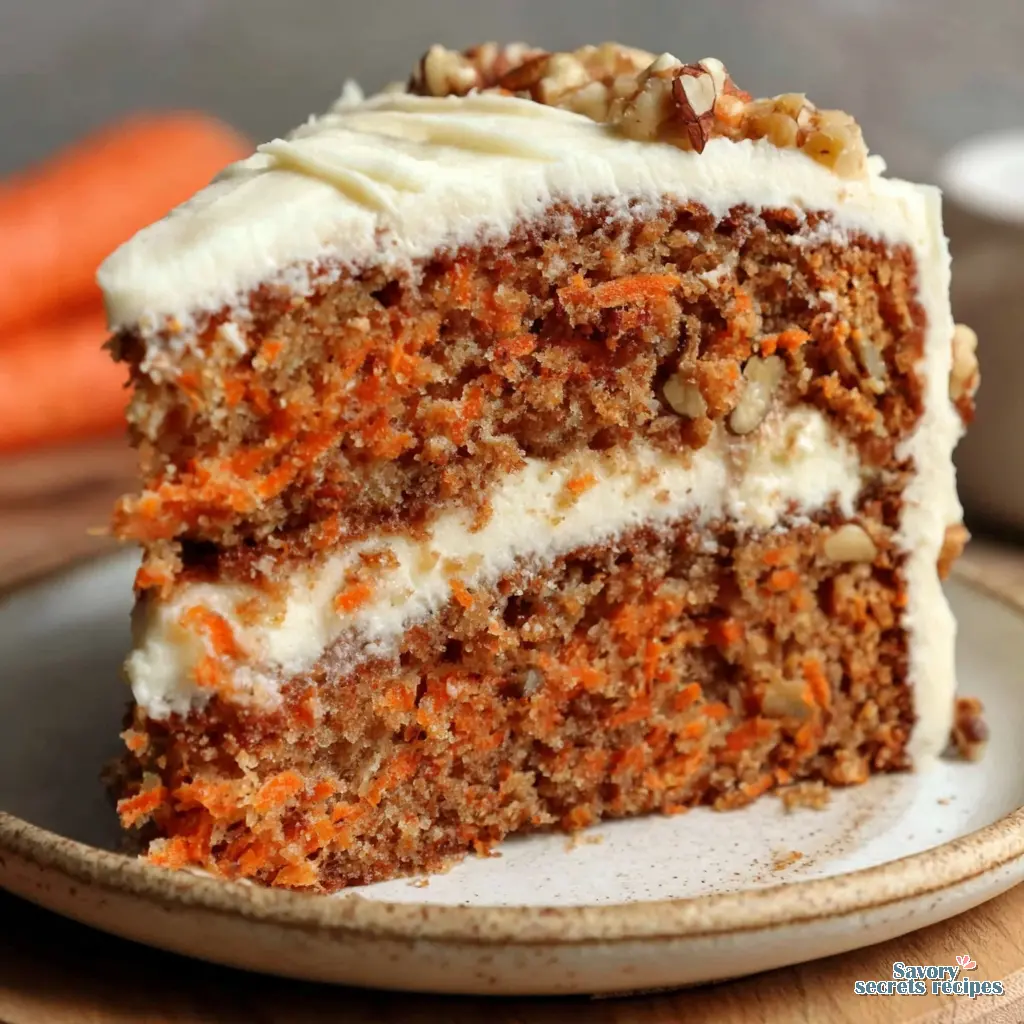
Ready to Bake?
There is nothing quite like the moment when you slice into a perfectly constructed layer cake and see all those beautiful textures holding together. The silence at the table when everyone takes that first bite is the best compliment a baker can get. Don’t forget to take a photo of your masterpiece before you slice into it. You’ve earned the bragging rights.
I love when readers share their baking wins with me. If you are looking for more inspiration, or want to see how I adapt this recipe into cupcakes and sheet cakes, I share tons of variations on my Pinterest boards. Grab your cake pans, preheat that oven, and let the smell of cinnamon take over your kitchen. You’ve got this.
Reference: Original Source
Can I make classic carrot cake ahead of time?
You absolutely can. In fact, I think the flavors deepen overnight. You can bake the layers and store them at room temperature overnight, or refrigerate them for up to 2 days before you even start making the cream cheese frosting. It makes holiday prep so much easier.
How do I freeze classic carrot cake?
Your mileage may vary depending on your freezer, but generally, you want to wrap completely cooled, unfrosted layers tightly in plastic wrap, followed by a layer of aluminum foil. They will keep perfectly for 2 to 6 months. Always thaw them slowly in the refrigerator, never on the counter.
How can I reduce the calories in a classic carrot cake?
Instead of just cutting a smaller slice, you can make some smart ingredient swaps. Try substituting half of the vegetable oil with unsweetened applesauce. You can also skip the walnuts and coconut to lower the fat content, while keeping all those beautiful warm spices intact.
Is it important to chill the frosting before icing the cake?
Yes, it is crucial. If your kitchen is warm or you over-mixed the cream cheese, the frosting will lose its structure. Popping it in the fridge for 20 minutes gives the butterfat time to firm back up, ensuring your classic carrot cake layers won’t slide around while decorating.
Why use oil instead of butter in classic carrot cake?
Vegetable oil is 100% fat and stays liquid at room temperature, which guarantees a significantly moister, softer crumb. Butter contains water that bakes out, leaving a denser texture. Oil is the secret to that perfectly tender, bakery-style layer cake we are all chasing.