



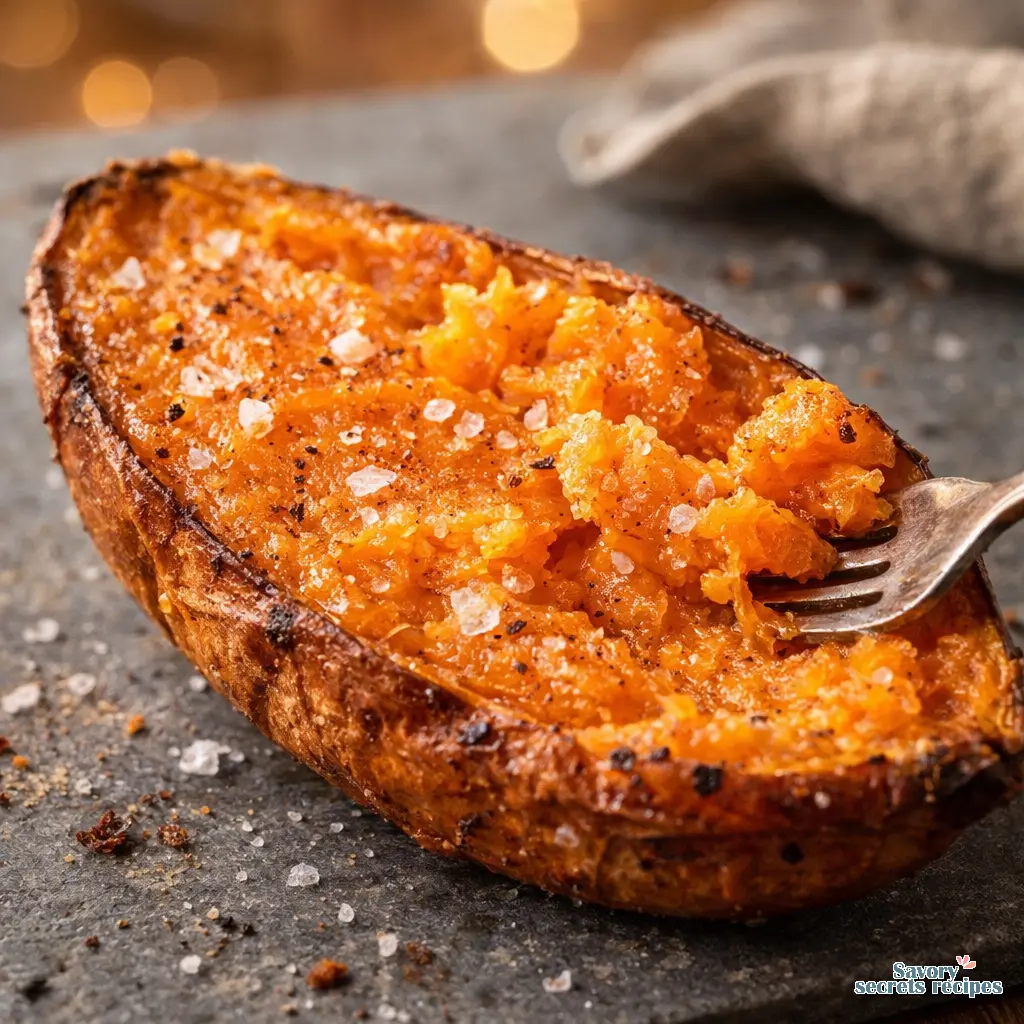
Caramelized Oven Baked Sweet Potatoes Recipe
Ingredients
Method
- Preheat the oven to 400°F.
- Lightly oil a baking sheet or line it with parchment paper or a silicone mat.
- Halve the sweet potatoes lengthwise, brush with oil, and season with salt.
- Arrange the sweet potatoes cut-side down on the prepared baking sheet.
- Bake for 25 to 35 minutes until tender when pierced with a fork.
- Remove from the oven, let cool slightly, and fluff the flesh with a fork.
- Add desired toppings and serve immediately.
Nutrition
Notes
The Secret to Restaurant-Quality Oven Baked Sweet Potatoes
I have eaten a lot of sad, wet sweet potatoes in my life. You probably have too. For years, I struggled with soggy skins and dense, starchy centers that tasted more like a chore than a side dish. But with Easter just around the corner, and the spring produce hitting the Santa Monica Farmers Market, I realized something important. If you are planning a holiday menu or just a simple weeknight dinner, these oven baked sweet potatoes are the only side dish you actually need this year. Learning the right technique transforms a basic tuber into a simple sweet potato dish that feels gourmet.
My Opa Klaus, who emigrated from Düsseldorf in 1968, taught me that good tools last generations. He used to write every recipe test and measurement in a small leather notebook. He was obsessed with consistency. I still have that notebook in my Milwaukee kitchen. I apply that same rigorous testing to everything I cook today. I want to show you exactly how to achieve a fluffy, mashable interior with slightly charred, crispy skin. No guesswork. Just solid performance across the board.
In my testing, getting perfect oven baked sweet potatoes comes down to a few non-negotiable rules. First, you have to ditch the aluminum foil. Wrapping them traps steam and ruins the skin. Second, always use a heavy-duty baking sheet lined with parchment paper to catch the natural sugars that bubble out. Third, you need high heat. I am talking 400 to 425 degrees Fahrenheit. Finally, a good scrubbing brush and a fork are your best friends here. Clean them well, poke them thoroughly, and let the oven do its work.
Why the “No-Foil” Method Wins Every Time
People always ask me, do you wrap sweet potatoes in foil to bake them? My answer is a definitive no. I used foil for years because my mother did, and her mother did before her. I thought it was just how things were done. Then I started testing the thermal dynamics of wrapped versus unwrapped vegetables.
When you tightly wrap a potato in aluminum foil, you are creating a miniature steam room. The moisture inside the potato heats up, turns to vapor, and has nowhere to go. It condenses right back onto the skin. The result is a slimy, wet exterior and a boiled interior. That tracks if you are making baby food, but it is not what we want for a premium side dish.
By leaving them uncovered, the dry heat of the oven evaporates the surface moisture. The skin dehydrates slightly, crisps up, and forms a delicious, edible shell. The interior roasts rather than steams, concentrating the natural sugars. If you want that satisfying crackle when you squeeze the potato open, the foil stays in the drawer.
Preparation: Setting Up for Success
A chef I interviewed for a knife review once told me that preparation matters more than the actual cooking. That is certainly true for oven baked sweet potatoes. Start with a stiff vegetable brush. You want to scrub the skin thoroughly under cold water. We are going to eat the skin, so it needs to be perfectly clean. Dry them completely with a kitchen towel. Any leftover water will create steam, and we just talked about why we hate steam.
Next, grab a fork. You need to poke holes in oven baked sweet potatoes before putting them in the oven. I usually do six to eight deep punctures all around. This allows the internal steam to escape slowly. If you forget this step, the potato can literally explode in your oven. I learned this the hard way during a busy Tuesday dinner rush. Cleaning caramelized potato shrapnel off heating elements is an experience I do not recommend.
Finally, rub the dry, poked potatoes with a little olive oil and a generous pinch of kosher salt. The oil conducts heat evenly across the surface and encourages crisping. The coarse salt adds a necessary crunch and balances the sweetness. Place them on a rimmed baking sheet lined with parchment paper. Trust me on the parchment. As they bake, a thick, sticky syrup will ooze out. If that hits a bare metal pan, you will be scrubbing for days.
The Science of Sweet Potato Caramelization
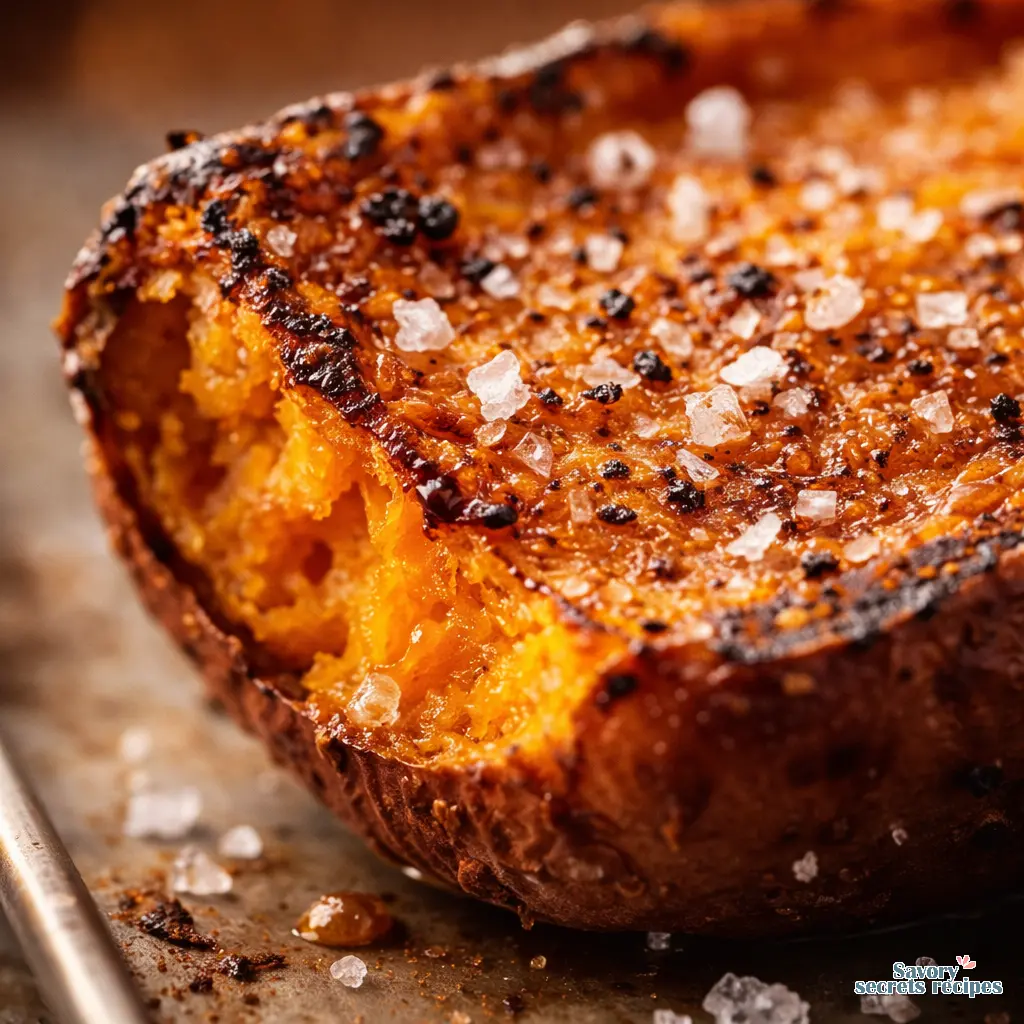
I love when a tool or technique does exactly what it promises. Baking at a high temperature is the only way to trigger the Maillard reaction properly on the skin. This is the chemical reaction between amino acids and reducing sugars that gives browned food its distinctive flavor.
Sweet potatoes are packed with an enzyme called amylase. As the potato heats up, this enzyme breaks down the complex starches into simple sugars like maltose. This process peaks between 135 and 170 degrees Fahrenheit. If you bake them at a low temperature, like 350 degrees, they spend too much time in this zone and become overly mushy. By pushing the oven to 425 degrees, we move through that enzyme activation window quickly. The result is a fluffy texture inside, while the exterior gets hot enough to caramelize those newly formed sugars.
You will know it is working when your kitchen starts to smell like roasting sugar and toasted nuts. It is exactly what you want to see and smell. Good browning takes patience, but the high heat makes it foolproof.
Time and Temperature: Nailing the Bake
How long does it take to bake sweet potatoes at 425 degrees? I get this question constantly. I think probably around 45 to 55 minutes for an average medium-sized potato. However, your mileage may vary depending on the exact weight and thickness.
Here is a reliable breakdown based on my testing:
- Small (6 to 8 ounces): 35 to 40 minutes
- Medium (8 to 12 ounces): 45 to 55 minutes
- Large (12 to 16 ounces): 60 to 70 minutes
How can you tell when a baked sweet potato is done and perfectly soft? You can use the fork tender test. A fork should slide into the thickest part with zero resistance. But if you want to be completely objective, use a digital meat thermometer. The tool should disappear in your hand and give you instant confidence. You are looking for an internal temperature of 205 to 212 degrees Fahrenheit. At this temp, the starches have completely gelatinized.
Common Mistakes & Fixes
Mistake: The center is still hard and woody.
Solution: You underbaked it. Even if the skin looks done, trust the internal temperature or the fork test. Put it back in for 15 more minutes.
Mistake: The sugar burned onto the pan and smoked up the house.
Solution: You forgot the parchment paper. Always line your baking sheet. If it starts smoking, your oven might be running hot. Drop it to 400 degrees.
Mistake: The skin is pale and soggy.
Solution: You either wrapped it in foil, crowded the pan too much, or did not dry the skin after washing. Space them out so air can circulate.
Variety Guide: Garnet vs Jewel
Not all sweet potato varieties are created equal. When I run to Ralphs or Trader Joe’s here in LA, I usually see three main types. Knowing the difference changes how you cook them.
Jewel sweet potatoes have copper skin and light orange flesh. They are moderately sweet and hold their shape reasonably well. Garnet sweet potatoes have dark red-purple skin and deep, vibrant orange flesh. They have higher moisture content and yield the absolute best fluffy texture and oozing syrup. If I have a choice, I buy Garnet.
You might also spot Japanese sweet potatoes with purple skin and white flesh. These are much drier and starchier. They are fantastic, but they require a slightly different approach and do not get quite as syrupy as the orange varieties. Stick to Garnet or Jewel for the classic oven baked sweet potatoes experience. Both varieties work perfectly when you need a healthy sweet potato side that is high in fiber and flavor.
Air Fryer vs Traditional Oven
I recently tested six air fryer models side by side. Naturally, I used sweet potatoes as my control variable. The air fryer is essentially a compact convection oven, meaning it circulates hot air rapidly. It absolutely works, but there are trade-offs.
An air fryer will cook a medium potato in about 35 to 40 minutes, shaving off some time. The skin gets incredibly crispy. However, because the heat is so intense and the cooking time is shorter, the interior does not have quite as much time to develop those deep, complex caramel notes. The oven baked sweet potatoes simply taste sweeter. Plus, you can only fit two or three in an air fryer basket. If you are doing meal prep for the week, the traditional oven is still the undisputed champion. This technique is my go-to easy baked potato recipe when I want consistent results.
Sweet vs Savory Toppings
Once you pull these beauties out of the oven, let them rest on a wire rack for five minutes. This allows the steam to settle and prevents you from burning your mouth. Then, slice them open. The sound of the skin crackling is incredibly satisfying. My daughter insists on rating the crunch of these potato skins, much like she rates our pizza cutter on Fridays. She does not know she is doing product testing, but that tracks.
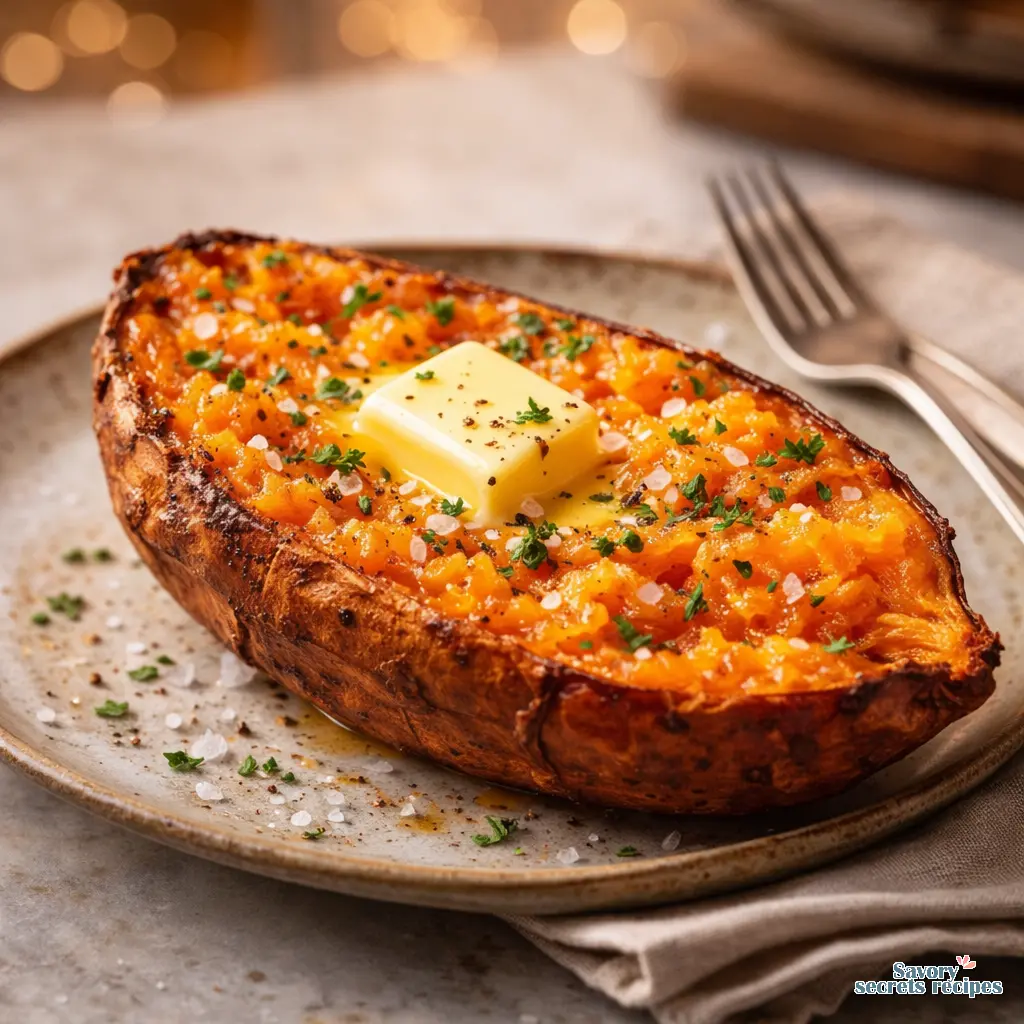
For a classic sweet approach, you cannot beat a pat of butter, a sprinkle of brown sugar, and some toasted pecans. It smells like the holidays.
For a savory dinner, I treat them like a canvas. I love loading them with black beans, fresh avocado, a dollop of Greek yogurt, and some fresh cilantro. The contrast between the sweet, vitamin A-rich flesh and the salty, acidic toppings is exactly what you want to see on a plate. It is a hearty, budget-friendly meal that feels substantial without being heavy. This makes for a satisfying roasted sweet potato dinner that the whole family will love.
Storage and Reheating for Maximum Crispness
If you are making a batch of oven baked sweet potatoes on Sunday for the week ahead, storage is simple. Let them cool completely to room temperature. If you put warm potatoes in the fridge, the condensation will ruin everything we just worked for. Store them in an airtight container in the refrigerator for up to four days.
Reheating them properly is where most people fail. The microwave is fast, but it destroys the skin texture. To restore that beautiful, crispy exterior, preheat your oven to 400 degrees. Place the cold potatoes directly on a wire rack set over a baking sheet. Bake for about 15 to 20 minutes until heated through. The dry heat will re-crisp the skin perfectly. Clean as you go or regret it later, so do not forget to line that bottom pan again.
Frequently Asked Questions
Final Thoughts From the Test Kitchen
Mastering oven baked sweet potatoes is really about respecting the ingredients and letting the oven do the heavy lifting. Once you stop using foil and start trusting the high heat, you will never look back. It is the kind of simple, reliable technique that makes weeknight cooking actually enjoyable. Whether you are serving these alongside a holiday roast or stuffing them with black beans for a quick Tuesday dinner, you have got this.
I would love to see how yours turn out and what creative toppings you come up with. For more inspiration, check out my Pinterest boards where I save all my favorite variations and kitchen equipment tests. Happy roasting.
Reference: Original Source
How long to bake sweet potatoes at 425 degrees?
In my testing, a medium eight to twelve ounce potato takes about 45 to 55 minutes at 425 degrees. Smaller ones finish in 35 minutes, while massive ones might need over an hour. Always rely on the fork tender test rather than just the clock.
Do you wrap sweet potatoes in foil to bake them?
Absolutely not. Wrapping them in foil traps steam, which leaves you with wet, soggy skin and a boiled texture inside. For the best oven baked sweet potatoes with crispy skins and caramelized edges, leave them completely uncovered on a parchment-lined baking sheet.
How to tell when baked sweet potato is done?
You can tell they are done when the skin looks wrinkled and a thick, sticky syrup begins oozing from the poke holes. A fork should easily pierce the thickest part with zero resistance. For exact precision, an internal thermometer should read 210 degrees Fahrenheit.
Should you poke holes in oven baked sweet potatoes?
Yes, you must poke holes before baking. I recommend six to eight deep pierces with a standard fork. This creates vents for the internal steam to escape safely. If you skip this step, the pressure builds up and the potato can literally explode in your oven.
Can I make a baked sweet potato in the microwave?
You can, but it compromises the texture. The microwave cooks via rapid steam, so you will never get crispy skin or deep caramelization. If you are in a rush, microwave it for five minutes to soften the center, then finish it in a hot oven to crisp the outside.
What is the best way to get caramelized edges?
High heat and a light coating of olive oil. Baking at 425 degrees is the sweet spot. It forces the natural sugars to seep out and caramelize on the hot parchment paper. Let them rest for five minutes after baking so those sugary edges cool into a chewy texture.