Aesthetic Mango Smoothie Bowl Recipe with Your Best Toppings
Ingredients
Method
- Place all ingredients into the blender.
- Blend at high speed until the mixture reaches a smooth consistency.
- Transfer the smoothie to a bowl and garnish with your preferred toppings.
- Serve immediately and enjoy.
Nutrition
Notes
- Use as many frozen ingredients as possible (frozen mango chunks and frozen yogurt cubes are great in this recipe).
- Use less liquid (just enough to help blend the ingredients together).
- Use a high powered blender.
The Secret to a Perfect Mango Smoothie Bowl Recipe
I remember my grandmother Elaine arranging green beans on a white plate, turning it slightly, moving one single bean. I was maybe seven. I asked her why she was doing it. She looked at me and said, so your eye knows where to land. I think about that every single shoot. A truly great mango smoothie bowl recipe works exactly the same way. It’s about color, texture, and giving your eye a clean read before you even pick up your spoon.
Spring in Los Angeles means we’re finally seeing decent produce at the Santa Monica Farmers Market again. It reminds me of those apricots from Elaine’s tree, how the fruit would warm in your hand and smell intensely like honey. You want a breakfast that captures that feeling. Something that looks like an aesthetic breakfast, but actually keeps you full until lunch.
I know this sounds fussy, but the visual composition of your food changes how you experience eating it. I’ve directed enough photo shoots to know that if a bowl looks muddy, your brain thinks it tastes muddy. We eat with our eyes first. This mango smoothie bowl recipe is my absolute go-to because the bright, saturated orange base gives you perfect contrast against toasted toppings. It’s beautiful. And honestly, it’s easier than you think.
The ‘Frozen Fruit Only’ Rule (And Why It Matters)
Here’s what I wish someone had told me years ago. The secret to a thick mango smoothie isn’t a magical powder. It’s temperature control. You must use only frozen fruit to ensure a thick, creamy texture. Period.
I see people using fresh fruit and throwing in a handful of ice cubes. Please don’t do this. That’ll photograph flat and taste completely watered down. Do not use ice to cool it down as it makes the bowl watery as it melts. Ice is the enemy of a velvety, sorbet texture.
I like to buy fresh Ataulfo mangoes when they’re cheap, peel them, and flash freeze the fruit slices in a single layer on a parchment-lined baking sheet to prevent clumping. Once they’re solid, I transfer them to individual bags. Pre-slice and freeze fruit in individual bags for faster prep. It saves me so much time on a Tuesday morning when Dash is waiting for his walk and I have exactly fifteen minutes to make breakfast.
When you’re building the base for your mango smoothie bowl recipe, you have to be ruthless about your liquid ratio. Add liquid to the blender first to help the blades move, but use minimal liquid. I’m talking maybe 1/8 cup (about 1 fluid ounce) of coconut milk or almond milk per cup of frozen fruit. Any more than that, and you’ve got soup. Not quite there yet? Add another splash, but wait. Let it sit for a second. The fruit will start to yield.
Blender Troubleshooting & The Tamper Technique
Look, I’ll be honest. Blending a proper mango smoothie bowl recipe is a workout for your machine. You really want to use a high-powered blender like a Vitamix for the smoothest results. But if you don’t have one, you can absolutely still do this.
If your blender isn’t powerful, you’ll need to use a blender tamper or stop to scrape down the sides frequently. This isn’t a set-it-and-forget-it situation. You have to work the frozen fruit down into the blades. It sounds aggressive, but you’re basically forcing the mango to purée without adding extra liquid.
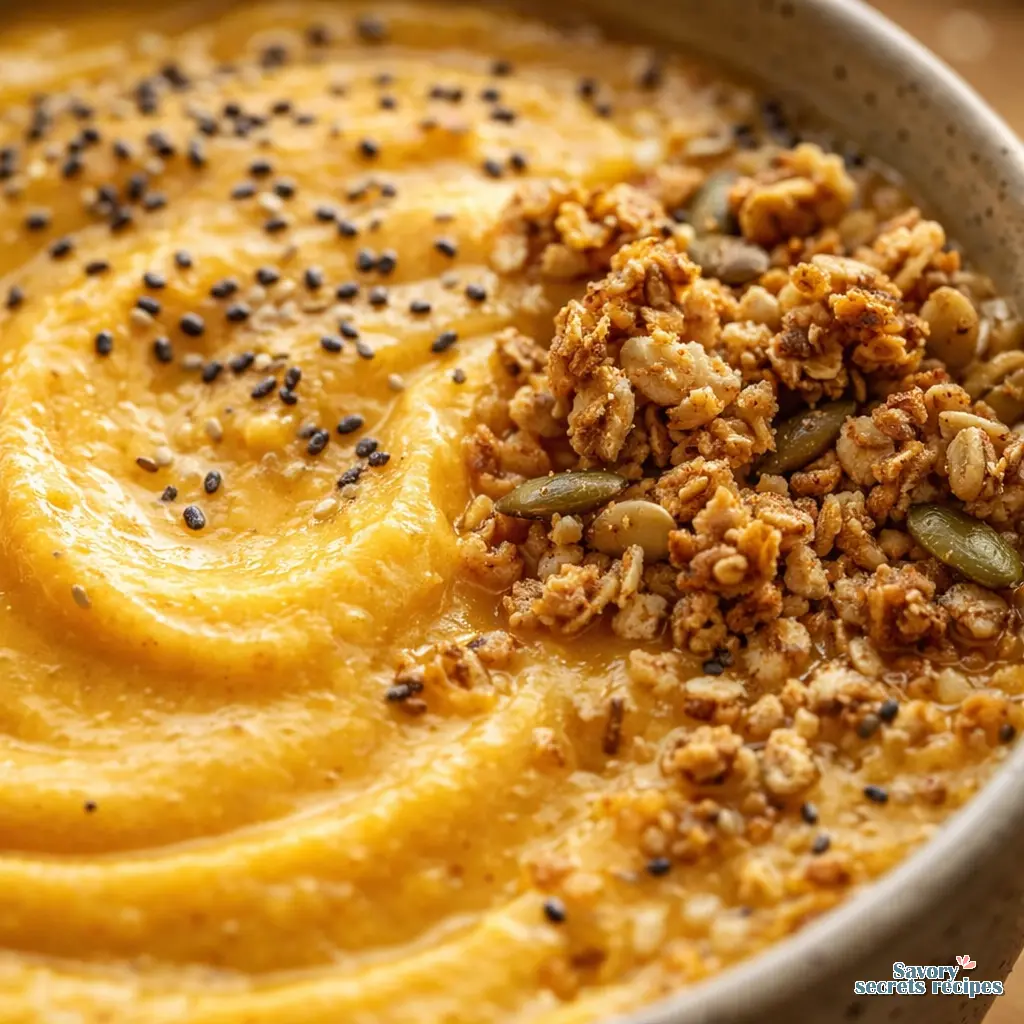
I’ve learned this the hard way. Early in my career, I burned out a cheap blender trying to make a thick bowl for a test shoot. The trick is patience. Start on low. Use the tamper. Once the blades finally catch the fruit, turn up the speed. Turn up the speed once pureeing starts to incorporate air for a fluffy texture. You’re looking for that perfect four-blade swirl at the top. That’s the one.
If you’re lucky enough to own a Ninja Creami, the ninja creami mango smoothie bowl recipe method is basically a cheat code. You just freeze your base solid in the pint, spin it on the ‘Sorbet’ setting, and it comes out scoopable and flawless every single time. It’s actually quite forgiving.
The Science of Chewing Your Smoothie
Why do we even bother making bowls instead of just drinking our breakfast on the commute? I’m not totally sure about the deep science, but nutritionists always talk about how chewing your food activates digestion. Smoothies are drinkable via a straw. Bowls are spoonable and thick enough to hold toppings. That physical act of chewing makes your brain register that you’ve actually eaten a meal.
Plus, a straight fruit smoothie can spike your blood sugar. You need to build in layers. By adding fats and proteins through your toppings, you slow down that absorption. It’s why I always include hemp hearts or a heavy drizzle of almond butter. It balances the whole dish out.
The Topping Cheat Sheet (Rule of Thirds)
This is where the magic happens. A stylist named Chen once taught me that every element on a plate earns its place or it’s out. When you’re decorating your mango smoothie bowl recipe, you need to balance three things: Crunch, Fruit, and Fat.
First rule: prepare garnishes and toppings before blending because the bowl melts quickly. I can’t stress this enough. If you’re chopping almonds while your bowl sits on the counter, the color’s not holding and the texture is turning to soup.
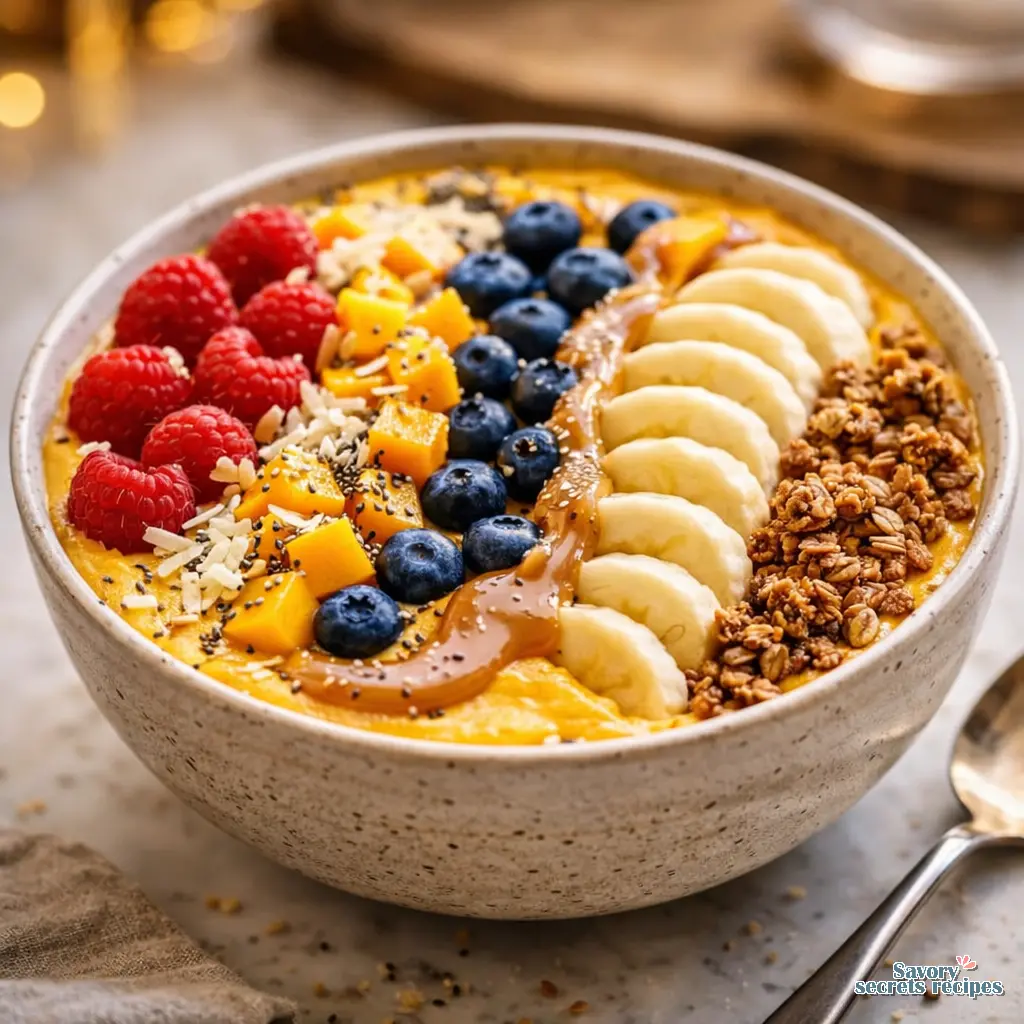
- The Crunch: You need something that shatters when you bite it. Granola, toasted pumpkin seeds, or cacao nibs.
- The Fresh Fruit: Something tart to cut the sweetness of the mango. Needs more acid, always. Fresh raspberries, kiwi slices, or dragon fruit cubes work beautifully.
- The Fat: Chia seeds, hemp hearts, shredded coconut flakes, or a thick ribbon of peanut butter.
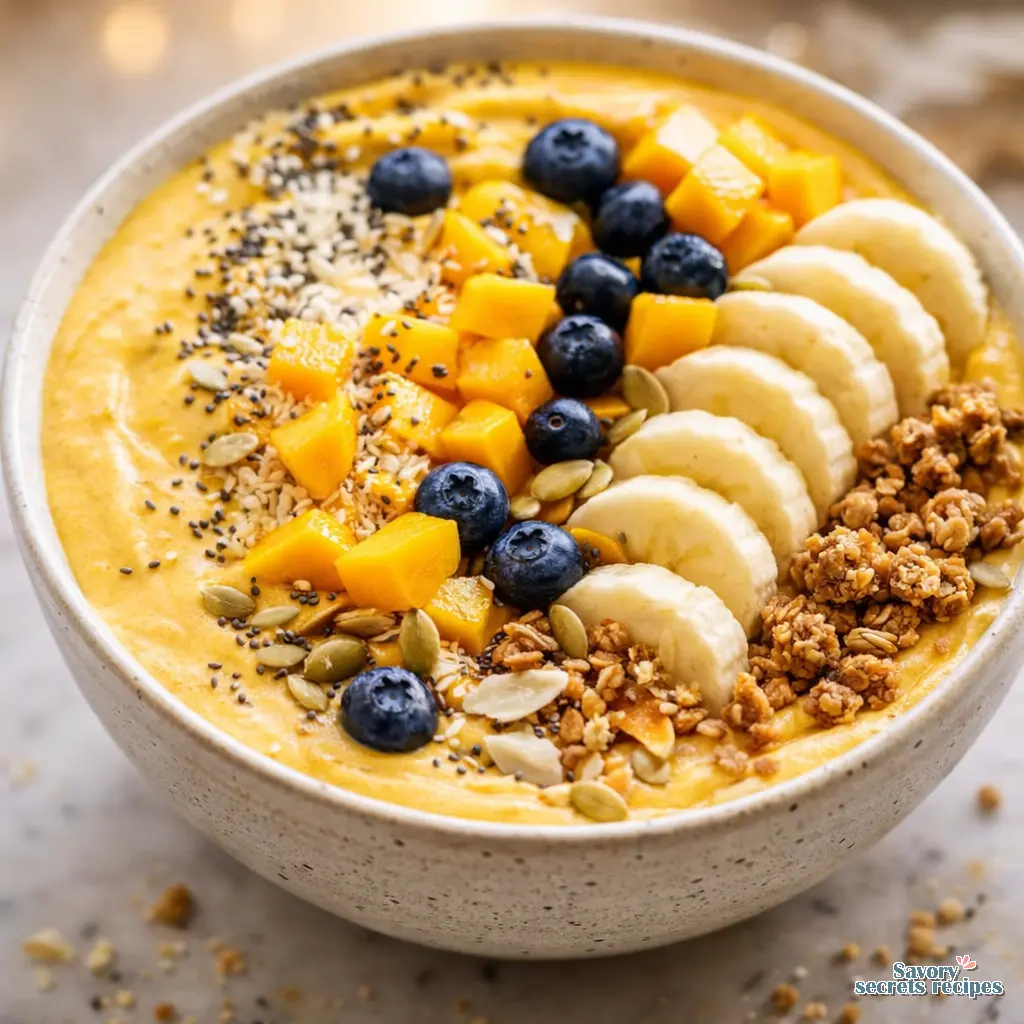
When styling, use the rule of thirds. Don’t just dump everything in the middle. Arrange your toppings in a crescent shape along one side of the bowl. It leaves negative space so you can actually see that beautiful, bright yellow mango base. Clean read.
Meal-Prep: Freezing Smoothie Pucks for Later
This might not work for everyone, but if you hate dealing with the blender tamper at 7 AM, try this. Make a massive batch of this mango smoothie bowl recipe base on Sunday. Pour the thick mixture into a silicone muffin tin and freeze it into solid pucks.
During the week, pop three pucks into a wide bowl, let them sit on the counter for about ten minutes while you make your coffee, and then mash them slightly with a spoon. It retains that incredible sorbet texture without having to wash the blender every single day. Worth it.
Common Mistakes & Fixes
Mistake: The bowl is too runny and soupy.
Solution: You likely used non-frozen fruit or added too much liquid at the start. Always use frozen mango and stick to the 1/8 cup liquid rule per cup of fruit.
Mistake: The flavor is completely washed out.
Solution: You used ice cubes instead of frozen fruit. Ice dilutes the flavor and ruins the texture. If it’s too thick, add a tiny splash of coconut water, never ice.
Mistake: All the toppings sank to the bottom.
Solution: The base wasn’t thick enough to support them, or you waited too long to add them. Prep your garnishes beforehand so you can top the bowl immediately after blending.
Frequently Asked Questions
Storage & Serving
Honestly, a mango smoothie bowl recipe is best eaten the exact second you finish making it. The texture degrades quickly at room temperature. But if you have leftovers, you can pour the base into a silicone ice cube tray and freeze it. Next time you want a bowl, just pop the cubes back into the blender with a tiny splash of milk.
When serving, I like to use wide, shallow bowls rather than deep ones. It gives you more surface area for toppings, which means you get a little bit of crunch in every single bite. Perfect.
I genuinely love the problem-solving of making food look appealing, and this bowl is just so naturally beautiful. Give this mango smoothie bowl recipe a try this week. Don’t stress if your first swirl isn’t perfectly photogenic. Even when they’re slightly messy, they taste incredible.
For more visual inspiration and plating ideas, check out my Pinterest boards where I save all my favorite aesthetic breakfast references.
Reference: Original Source
How do you make a mango smoothie bowl thick enough to hold toppings?
The trick is entirely in the temperature and liquid ratio. Use exclusively frozen mango chunks and barely any liquid, just enough to get the blades moving. If you use a tamper to push the fruit down, you’ll get that perfect, scoopable mango smoothie bowl recipe texture.
What thickens a smoothie bowl without banana?
I know a lot of people hate bananas. You can easily thicken a mango smoothie bowl recipe by adding a tablespoon of chia seeds, some frozen cauliflower rice (you won’t taste it, I promise), or just relying on extra frozen mango and zero liquid.
Are smoothie bowls supposed to be thick?
Absolutely. That’s the main difference between a smoothie and a smoothie bowl. A standard smoothie is drinkable through a straw. A proper bowl should have the consistency of soft-serve ice cream so it can support heavy toppings like granola without them sinking.
What are the best toppings for an aesthetic mango smoothie bowl?
For that perfect contrast, I love toasted coconut flakes, fresh blueberries, and a sprinkle of hemp hearts. The dark colors pop beautifully against the bright orange base. Edible flowers are amazing if you’re feeling fancy. Just remember to build in layers of texture.
Can I make this mango smoothie bowl recipe using a Ninja Creami?
Yes, and it’s honestly the best method. Just blend your mango and a splash of coconut milk, freeze it solid in the Creami pint for 24 hours, and spin it on the Sorbet setting. It creates the most incredible, dense texture I’ve ever seen.
Are smoothie bowls healthy?
They can be, but it depends entirely on your portions and toppings. A mango base is full of vitamins, but if you load it with sugary commercial granola and honey, it becomes a dessert. Balance it with healthy fats and proteins to keep blood sugar stable.
How many calories are in a mango smoothie bowl?
A basic mango smoothie bowl recipe base is around 200 calories. Once you add typical toppings like a quarter cup of granola, some coconut, and chia seeds, you’re looking at about 374 calories. It’s a solid, filling breakfast if you portion it right.
What liquid should I put in my smoothie bowl?
I prefer full-fat coconut milk for a tropical vibe, but almond milk, oat milk, or even coconut water works beautifully. Just remember to use very little of it. Start with an ounce and only add more if your blender is completely stuck.
Is mango smoothie without banana good for weight loss?
It can be a great option because mangoes are naturally sweet, so you don’t need added sugars. Skipping the banana lowers the overall carbohydrate load slightly. Just make sure to add protein, like Greek yogurt or a scoop of protein powder, to keep you satiated.