



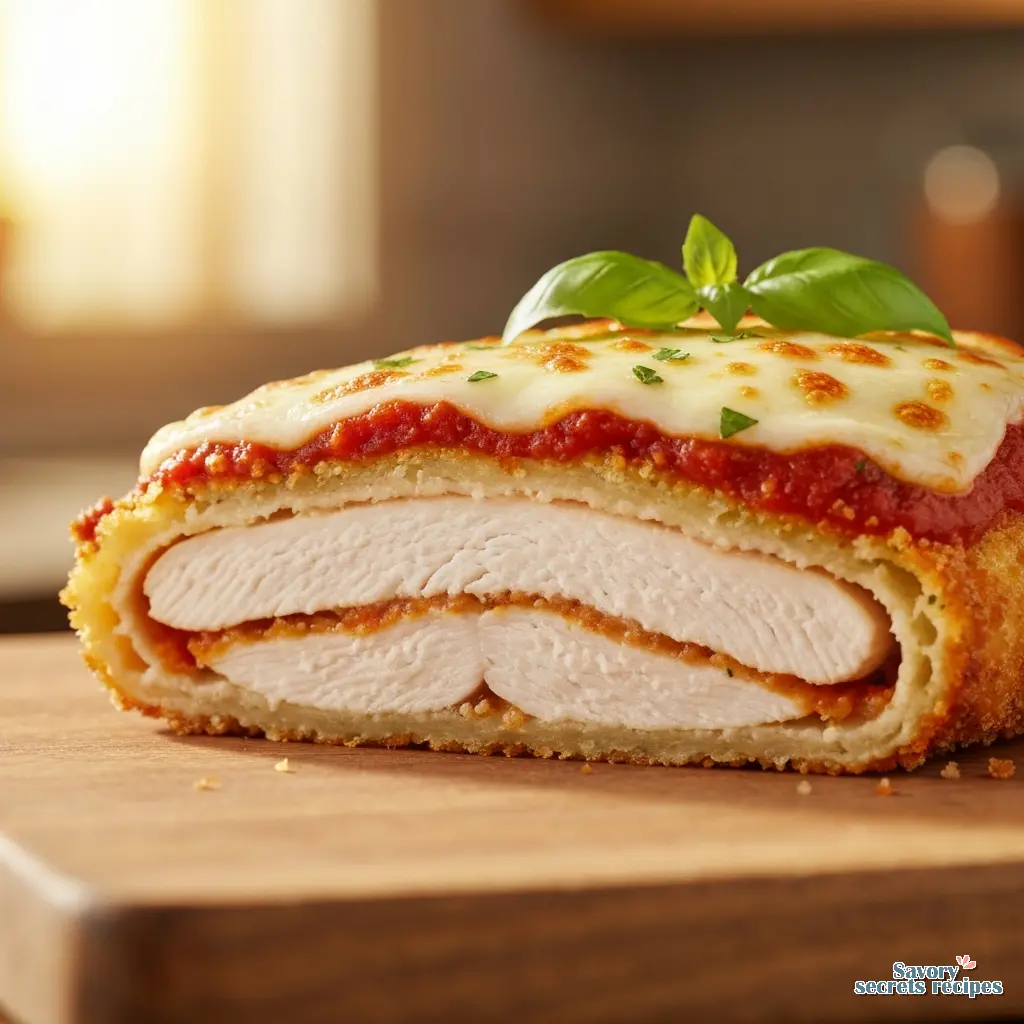
Crispy Oven Baked Chicken Parmesan Recipe No Frying
Ingredients
Method
- Preheat oven to 400°F and lightly grease a baking sheet with cooking spray. Slice each chicken breast in half lengthwise to create four pieces, then pound each to a uniform 1/2-inch thickness and set aside.
- Combine Italian breadcrumbs, Panko, Parmesan, garlic powder, and pepper in a wide, shallow bowl. Whisk egg whites in a separate bowl until lightly foamy, and divide the mozzarella into four equal portions.
- Organize a workstation with the chicken, egg whites, breadcrumb mixture, and baking sheet in order. Dip each chicken piece into the egg whites, shake off excess, and coat thoroughly with breadcrumbs, patting gently to ensure even coverage.
- Place chicken on the baking sheet and lightly spray the tops with cooking oil. Bake for approximately 15 minutes until the crumbs are brown and the internal temperature reaches 160°F.
- Remove from the oven, top each piece with 2 tablespoons of sauce and a portion of mozzarella, then return to the oven for 3 to 5 minutes until the cheese is melted.
- Garnish with basil and serve immediately, adding extra sauce as desired.
Nutrition
Notes
- TO STORE: This recipe is best enjoyed the day it is baked, but leftovers can be refrigerated in an airtight storage container for up to 2 days.
- TO REHEAT: Leftover chicken can be reheated in a lightly greased pan over medium heat.
- TO FREEZE: Freeze chicken in an airtight freezer-safe storage container for up to 3 months.
The Truth About Baked Chicken Parmesan
We’ve all been there. You pull a pan out of the oven on a busy Wednesday night, hoping for that satisfying, audible crunch. Instead, you get a soggy, sad piece of meat where the breading slides right off the minute your fork touches it. That tracks. In my years of testing kitchen equipment and writing reviews, I’ve realized that home cooks usually blame themselves for these failures. Honestly, you should blame the technique.
During these cooler LA winter months when we actually want to turn our ovens on, a classic baked chicken parmesan sounds like the perfect comfort food. It’s hearty enough for December, but baking it keeps things lighter than the traditional deep-fried version. The problem? Most recipes set you up for failure. They treat the oven like a magical frying pan, and it simply isn’t one.
Today, we’re fixing that. I’m going to show you how to get a crispy chicken parmesan entirely in the oven. No deep fryer. No oil splatters all over your stove. Just a reliable, meal prep friendly method that delivers an honest-to-goodness crunch. Your family won’t believe this came out of the oven. Let’s get to work.
The Equipment: Setting Up for Success
I learned a crucial lesson about preparation from a line cook at Mader’s Restaurant back in Milwaukee. He showed me how to make proper beef rouladen, and the biggest takeaway was that pounding the meat to an even thickness matters far more than the filling. It’s a lesson in preparation over ingredients. Case in point: chicken cutlets.
If you toss uneven chicken breasts into the oven, the thin ends will dry out into shoe leather before the thick centers even reach a safe internal temperature. You need a heavy meat mallet. The tool should disappear in your hand, feeling substantial but not fatiguing. Pound those cutlets until they’re an even half-inch thick. If you don’t have a mallet, butterfly the breasts by slicing them in half lengthwise. It’s not being fussy. It’s just good cooking.
Now, let’s talk about the dredging station. It’s a simple assembly line. First bowl: all-purpose flour mixed with garlic powder and ground black pepper. Second bowl: the egg wash. Here’s a trick I picked up during a rather messy product test. Use mostly egg whites with just a splash of water. Egg whites help the breading stick like glue while keeping the fat content down. If you start to run out of the mixture while breading, just whisk in a tiny bit more water.
The Secret to Crispy Breading
You can’t achieve a truly classic chicken parmesan in oven without addressing the breading. Standard breadcrumbs turn to mush. You need structure. In my testing, a fifty-fifty blend of Italian seasoning breadcrumbs and whole wheat Panko breadcrumbs yields the best results. The Panko provides that jagged, airy texture that crisps up beautifully.
But here is the real secret. You have to toast the Panko breadcrumbs in a dry skillet or in the oven until they hit the color of peanut butter before they ever touch the chicken. I know this sounds like an annoying extra step. I really do. But good browning takes patience. If you skip this, your baked chicken parmesan will look pale and sad.
Once your chicken is coated, give it a quick spritz with olive oil spray. Or, if you want to feel a bit indulgent, brush a little melted butter directly onto the chicken before applying the crumbs. It helps the coating crisp up and mimic that fried texture we all desperately want.
The Wire Rack Method: 360-Degree Crispness
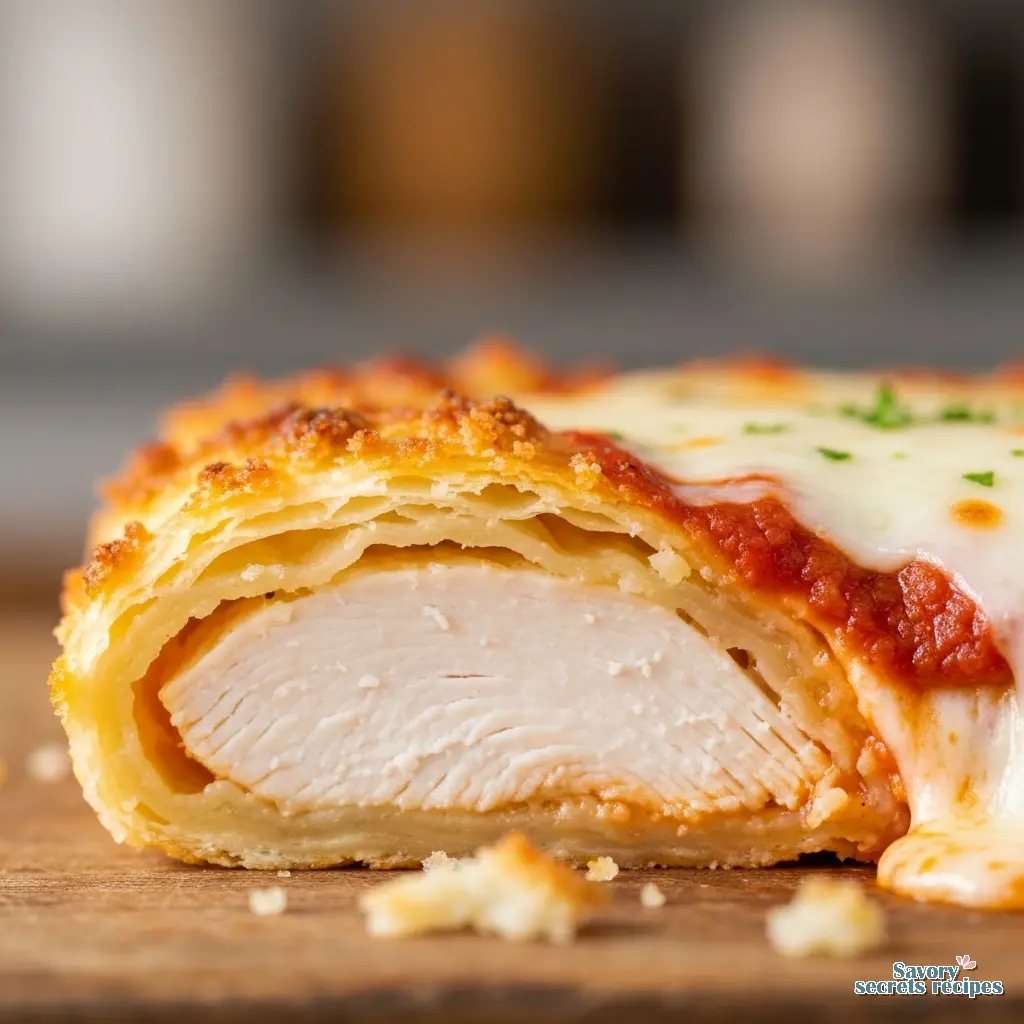
This is where most recipes fail you. If you place breaded chicken directly onto a baking sheet, the bottom is going to steam in its own juices. It’s basic thermodynamics. You’ll end up with a top that looks great and a bottom that falls apart. That’s exactly what you don’t want to see.
The solution is a wire cooling rack set inside a rimmed baking sheet. This allows the hot oven air to circulate completely around the meat. It’s the same principle I look for when testing convection ovens. Airflow equals crispness. Spray the wire rack generously with oil so the chicken doesn’t stick. Clean as you go or regret it later, right? So line the baking sheet underneath with foil to catch any drips.
Bake at 400°F. This high heat is non-negotiable. A 350°F oven will just slowly dry out the chicken before the crust ever has a chance to set. We want a fast, aggressive heat to lock in that texture.
The Sauce Trap and Temperature Control
Let’s talk about the sauce. My Opa Klaus made sauerbraten every Christmas Eve, and he was incredibly strict about how sauces were applied. He’d say you never drown a good piece of meat. The same applies here. The biggest mistake people make with classic baked chicken parmesan is treating it like a casserole.
If you completely cover the chicken in marinara sauce, you instantly destroy the crispy crust you just worked so hard to build. Instead, spoon a modest stripe of high-quality jarred tomato sauce directly down the center of the cutlet. Leave the edges entirely exposed. This gives you the flavor of the sauce while preserving that essential crunch on the perimeter.
Next, the cheese. Avoid fresh mozzarella packed in water or brine. It releases too much moisture as it melts, creating a puddle that ruins the breading. Stick to low-moisture, part-skim mozzarella. Top it off with a handful of freshly grated parmesan for that sharp, salty bite.
To prevent dry chicken, you need an instant-read thermometer. I’m not convinced that most home cooks need a two-hundred-dollar thermometer, but you absolutely need a reliable twenty-dollar one. Pull the chicken out when the internal temperature hits 160°F. The residual heat will carry it up to the safe 165°F mark while it rests. If you wait until it hits 165°F in the oven, it’s already overcooked.
Common Mistakes & Fixes
Mistake: The breading completely falls off when you cut into it.
Solution: You likely didn’t pat the chicken dry before dredging, or you skipped the flour step. The flour creates a dry surface for the egg wash to grip. Let the breaded chicken sit for five minutes before baking to let the coating set.
Mistake: The bottom of the chicken is soggy and pale.
Solution: You baked it flat on a pan. Elevate the chicken on a wire cooling rack so air can circulate underneath. Trust the process here.
Mistake: The chicken is incredibly dry and stringy.
Solution: You overcooked it. Chicken breasts have very little fat and dry out quickly. Pull them from the oven at 160°F and let them rest.
Make-Ahead and Freezing Guide
If you’re into meal prep, this oven baked chicken parmesan recipe no frying required is a lifesaver. You can easily freeze the unbaked, breaded cutlets for later.
Just do the full dredging process, then place the breaded cutlets on a parchment-lined baking sheet in the freezer for about two hours. Once they’re solid, transfer them to an airtight freezer bag. They’ll keep for up to three months. When you’re ready for dinner, you don’t even need to thaw them. Just add about ten extra minutes to your baking time. It’s the kind of practical design that makes sense for busy families.
Storage and Reheating Masterclass
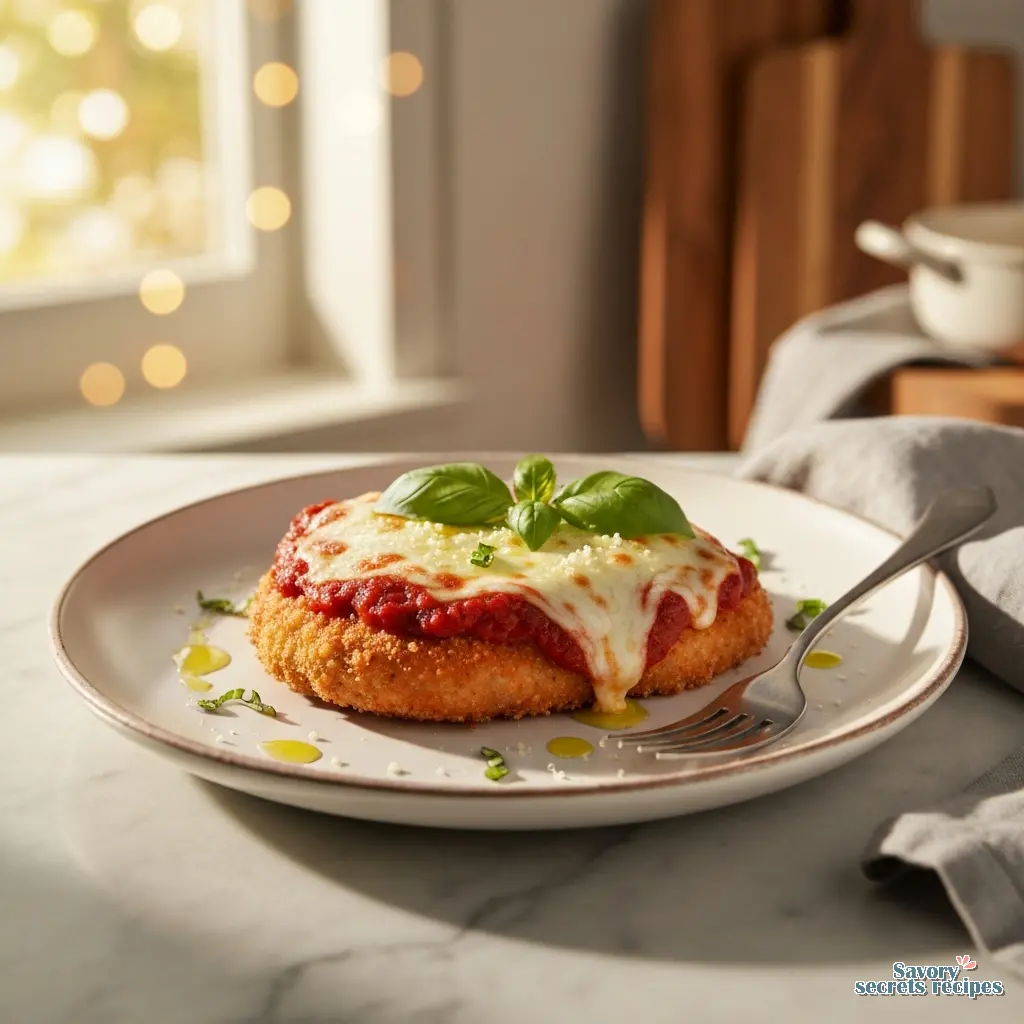
Let’s be clear. The microwave is the enemy of crispy chicken parmesan. If you microwave leftovers, the moisture from the sauce and the chicken will turn that beautiful panko crust into a damp sponge. It’s a tragic end to a good meal.
For the best reheating results, use an air fryer if you have one. Set it to 350°F and heat the chicken for about five to seven minutes until the bubbling cheese is revived and the crust snaps back to life. In practice, this method performs exceptionally well.
If you don’t have an air fryer, a lightly greased skillet over medium heat works wonders. Place the chicken in the pan, cover it with a lid to trap the heat and melt the cheese, and let the bottom crisp up for about five minutes. Store any leftovers in an airtight container in the fridge for up to four days.
What to Serve With Classic Baked Chicken Parmesan
You have options here depending on how heavy you want the meal to be. A side of al dente pasta tossed in olive oil and garlic is the traditional route. My daughter insists on spaghetti, and honestly, I can’t argue with the classics.
If you want to keep things lighter, especially after a heavy Trader Joe’s snack haul, zucchini noodles are a fantastic alternative. Just give them a quick sauté so they don’t get watery. A large green salad with a sharp vinaigrette also cuts through the richness of the melted cheese perfectly.
Frequently Asked Questions
Switching It Up: Variations and Subs
If you’re looking for a meatless option, this method works perfectly for eggplant. Slice the eggplant into rounds, salt them to draw out the moisture, and follow the same dredging and wire rack process. It’s just as satisfying. For a low-carb night, I usually skip the pasta and serve this over a pile of sautéed zucchini noodles or a crisp arugula salad with a squeeze of lemon.
You can also try this in the air fryer. I’ve run dozens of tests on air fryers for my review columns, and they’re basically small, high-powered convection ovens. Cook the breaded chicken at 400°F for about eight minutes, flip it, add your sauce and cheese, and give it another two or three minutes. It’s incredibly fast and gets that crust very tight and crispy.
Expert Notes & Data Insights
When we look at the mechanics of this dish, the difference between a mediocre meal and a restaurant-quality one comes down to moisture management. My testing shows that using egg whites instead of whole eggs reduces the fat slightly but, more importantly, creates a stronger protein bond between the flour and the crumbs. It’s like a culinary glue. Also, remember the carryover cooking. Meat is a thermal battery. If you pull it at 165°F, it will keep climbing to 170°F or higher while it sits on your plate, which is how you end up with dry, woody chicken.
I’ve found that using a high-quality, low-moisture mozzarella is the single biggest factor in preventing the “sauce slide” where the cheese and breading just fall away. Stick to the blocks you grate yourself. It takes two minutes and the melt is vastly superior to the pre-shredded bags that are coated in potato starch. This recipe isn’t about being fancy. It’s about using the right tools and a little bit of science to get the result you actually want.
How do you get crispy chicken parmesan in the oven without frying?
The trick is using a wire cooling rack set inside your baking sheet. This allows the 400°F oven air to circulate entirely around the chicken, preventing a soggy bottom. Also, toasting your whole wheat panko breadcrumbs beforehand guarantees a golden, crunchy exterior.
What is the best way to reheat a classic baked chicken parmesan to keep it crunchy?
Never use the microwave. I highly recommend an air fryer set to 350°F for about six minutes. If you don’t have one, use a lightly greased skillet on the stove over medium heat with a lid to re-melt the cheese while crisping the bottom.
Can I use chicken thighs instead of breasts for this oven baked chicken parmesan recipe no frying?
You absolutely can, and they’re incredibly forgiving since they have more fat. Just make sure you pound them to an even thickness and increase the baking time slightly. Use your instant-read thermometer and pull them when they reach 165°F to 170°F internal temperature.
How do you prevent the breading from falling off when making classic chicken parmesan in oven?
Always pat the chicken dry with paper towels before starting. The three-step dredging station is mandatory. The all-purpose flour gives the egg wash something to grip, and using mostly egg whites acts like a binder for the panko. Let it rest for five minutes before baking.
faq-item”>
Can I freeze the chicken after breading but before baking?
How long do you actually bake chicken parmesan?
In a 400°F oven, thin cutlets usually take about 15 to 20 minutes. If you’re using thicker breasts, it might take 25. The clock doesn’t matter as much as the internal temperature, though. Pull them at 160°F and you’re golden.