



["Buldak Tteokbokki Recipe and Ingredients"]
Ingredients
Method
- Soak the rice cakes in warm water for 10 minutes, unless using fresh, tender rice cakes.
- Boil the soup stock in a shallow pot over medium-high heat and stir in the tteokbokki sauce until dissolved. Add the rice cakes, fish cakes, and onion, then boil for 3 to 5 minutes until the rice cakes are cooked through. Simmer over low heat for an additional 2 to 4 minutes to thicken the sauce and develop the flavor.
- Stir in the sesame oil, sesame seeds, and green onion, then serve immediately while warm.
Nutrition
Notes
" Rice Cake Prep: I've discovered that soaking the rice cakes is essential if they've been chilled, as it ensures they get that perfect chewy texture without staying hard in the center.",
" Heat Control: If you find the gochugaru makes it a bit too spicy for your palate, I suggest starting with half the amount and tasting as you go because it's much easier to add heat than to take it away.",
" Sauce Consistency: I love a thicker sauce that really clings to the cakes, so I often let it simmer for an extra minute or two while stirring to prevent any sticking on the bottom.",
" Ingredient Swap: When I'm out of fish cakes, I've used sliced cabbage or even hard-boiled eggs: the eggs are a personal favorite because the yolks soak up the spicy sauce beautifully.",
" Storage Secrets: Tteokbokki is best eaten fresh, but if I have leftovers, I reheat them with a splash of water or extra stock to keep the sauce from getting too thick or dry.",
" Stock Shortcut: While I prefer a rich homemade stock, I've found that a light vegetable broth works well in a pinch when I'm craving this but need to save time.",
" Serving Suggestion: I always serve this with a side of yellow pickled radish to provide a cool, crunchy contrast to the soft, spicy rice cakes."
]
Why This Spicy Comfort Dish Works
Ever craved something spicy and comforting on a cold night? I definitely have. It usually hits me around 9 PM on a Tuesday, right when I’m exhausted but need something that feels like a hug. That’s when I turn to this dish. Honestly, figuring out the right balance of buldak tteokbokki ingredients was a bit of a journey for me. I remember the first time I tried making it; I just threw everything into a pot and hoped for the best. It was edible, sure, but it lacked that deep, complex flavor I’d tasted in restaurants.
The secret isn’t just in the heat. It’s in the texture. It’s about how the starch from the rice cakes thickens the sauce as it simmers, creating a glossy, clinging coating that you just can’t get from a packet alone. In my experience, once you understand the role of each component, from the gochujang to the sugar, you stop following a recipe and start cooking by feel. That’s the goal here. I want you to feel confident enough to look at your sauce and know exactly what it needs.
With winter settling in here in Maryland, and I know for you folks in LA it’s getting cooler in the evenings too, this is the perfect time to master a one-pot meal that warms you from the inside out. Let’s break down exactly what you need.
The Essential Buldak Tteokbokki Ingredients Checklist
Before we even turn on the stove, let’s talk about what’s going into your pot. My grandmother Fatoumata used to say that you have to respect your ingredients before you cook them. She was talking about dried fish in Dakar, but the principle applies perfectly to Korean rice cakes too. Here is what I’ve found works best for a truly satisfying bowl.

When you are shopping, especially if you’re hitting up H-Mart or your local Asian grocer, having a clear list helps. You don’t need the specific “Buldak” brand sauce packet to make this. In fact, making your own sauce gives you way more control. Here are the core buldak tteokbokki ingredients you need to gather:
- Rice Cakes (Garaetteok): The star of the show. Look for the cylindrical ones.
- Fish Cakes (Eomuk): These add a savory depth that is essential. They usually come in sheets in the freezer section.
- Gochujang (Korean Chili Paste): This provides the base flavor and body.
- Gochugaru (Korean Chili Flakes): For that sharp heat and vibrant red color.
- Soy Sauce & Sugar: To balance the heat with savory and sweet notes.
- Aromatics: Green onions and garlic are non-negotiable for me.
- Stock: Anchovy or dashi stock is traditional, but chicken stock or water works in a pinch.
Rice Cakes: The Texture Foundation
Let’s talk about the rice cakes. This is where most people get tripped up. You’ll generally find two types: wheat-based (mil-tteok) and rice-based (ssal-tteok). Rice-based ones are chewier and denser, while wheat ones are softer and soak up sauce faster. I prefer rice-based for that classic chew, but it’s totally up to you.
If you buy them frozen, and let’s be real, most of us do, you absolutely must soak them. I learned this the hard way when I tried to boil frozen cakes directly and they split down the middle like they were angry at me. Soak them in cold water for about 20 minutes before cooking. If they are fresh from the store, a quick rinse is all you need.
The texture changes as you cook. They go from hard to soft, and then if you overcook them, they can get mushy. You want to catch them right when they are tender but still have a bit of fight in them. Trust your teeth on this one. Taste one before you pull the pot off the heat.
The Sauce: Homemade vs. The Packet
A lot of recipes rely on the Buldak ramen sauce packet. And look, I get it. It’s convenient. But relying on a packet means you’re stuck with that specific spice level, which can be nuclear if you aren’t prepared. My daughter calls the original packet “angry spicy,” and she’s not wrong.
By assembling your own buldak tteokbokki ingredients, you control the heat. The combination of gochujang and gochugaru is magic. Gochujang gives you that fermented, savory funk, while gochugaru brings the clean heat. If you want it less spicy, pull back on the flakes. If you want it sweeter, add a touch more sugar or corn syrup. I promise, making the sauce from scratch takes maybe two minutes longer than opening a packet, and the flavor is so much deeper.
Stock vs. Water: Why It Matters
I’m going to be a bit of a purist here for a second. Please don’t use plain water if you can help it. My grandmother always said water is a missed opportunity for flavor. Using an anchovy and kelp stock (dashima) is traditional and adds a subtle umami backbone that makes the dish taste like it came from a street stall in Seoul.
If making stock sounds like too much work for a Tuesday night, I hear you. You can use a dashi powder packet, or even chicken broth. In a pinch, water works, but you might need to bump up the soy sauce or add a little MSG to compensate. The liquid is what the rice cakes drink up, so you want that liquid to taste good on its own.
Texture Science: Getting the Sauce Right
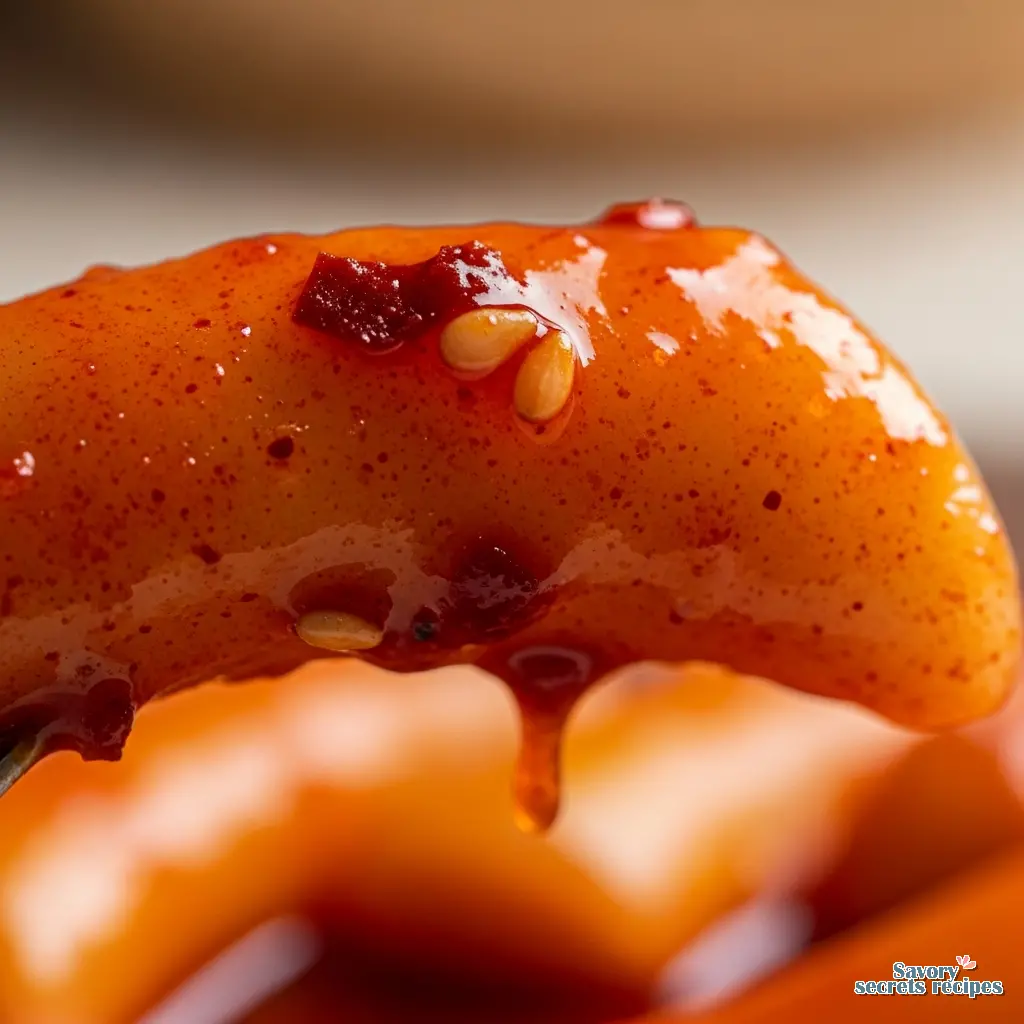
This is the part that fascinates me. When you first mix your buldak tteokbokki ingredients in the pan, it looks like soup. You might panic and think you added too much liquid. Don’t worry. As the rice cakes cook, they release starch into the broth.
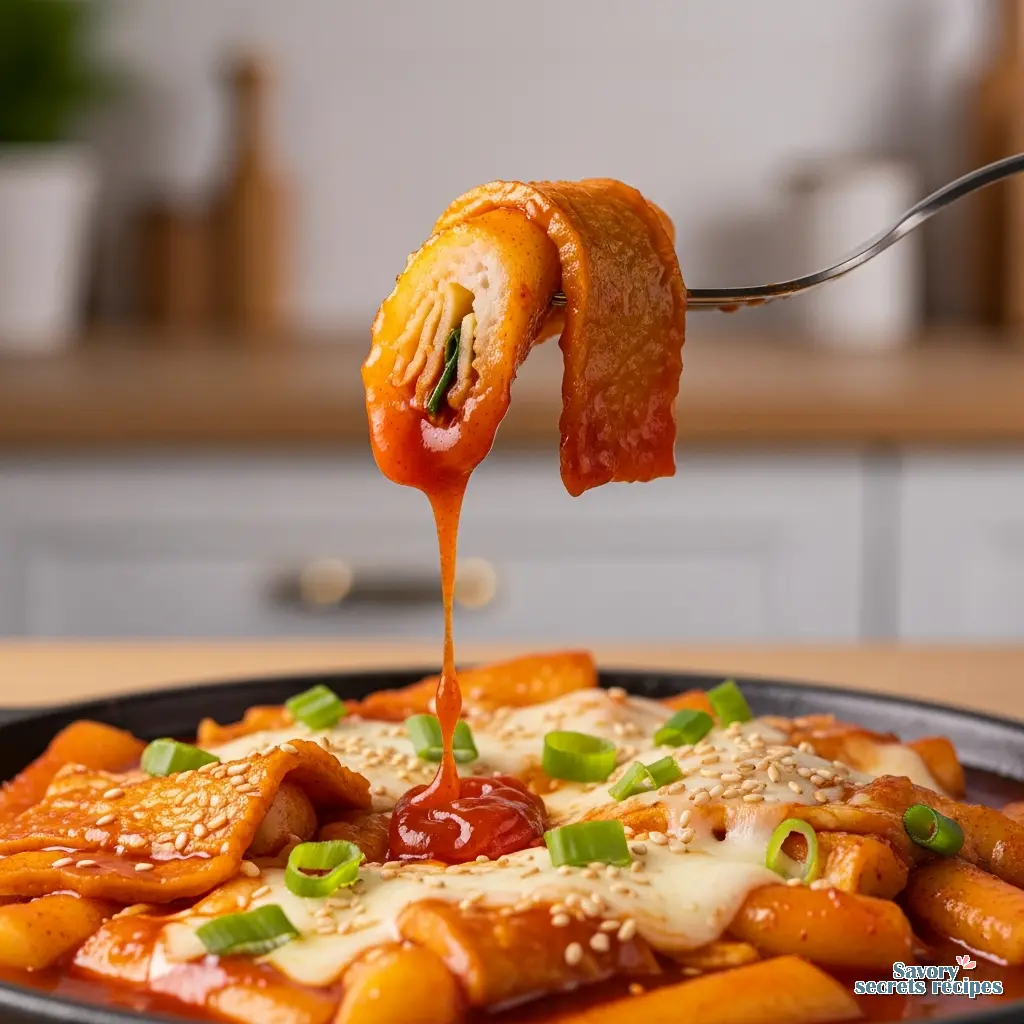
This starch acts as a thickener. You’ll notice the bubbles changing from fast and watery to slow and glossy. That’s your signal. You want the sauce to coat the back of a spoon. If it’s too runny, keep simmering. If it gets too thick and looks like paste, splash in a little more stock. It’s a living thing, so you have to watch it.
Variations You Should Know
One of the things I love about this dish is how adaptable it is. Once you have your base, you can go in so many directions. Here are a few that I’ve tried and loved:
Rabokki: This is just adding ramen noodles to the pot. It’s great for bulking up the meal. Just add the noodles when the sauce is halfway thickened so they don’t get soggy.
Rosé Tteokbokki: If the spice is too much, or you just want something richer, add heavy cream or milk to the sauce. It turns this beautiful pink-orange color and tastes incredibly luxurious. My daughter actually prefers this version because the dairy cuts the heat.
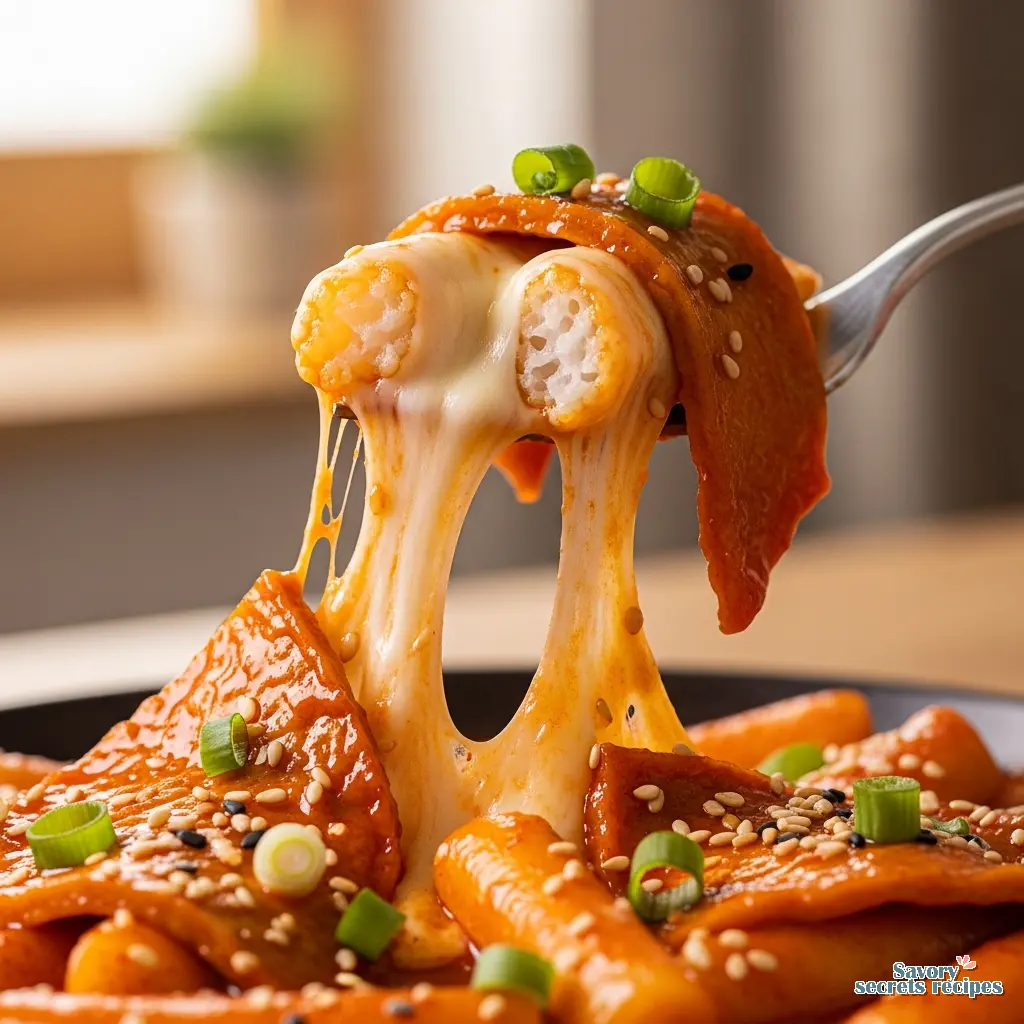
Cheese Tteokbokki: Everything is better with cheese, right? A handful of mozzarella on top right at the end, covered with a lid for two minutes to melt. The cheese pull is extremely satisfying.
Common Mistakes & Troubleshooting
I’ve messed this up plenty of times, so you don’t have to. Here are the most common issues I see with buldak tteokbokki ingredients:
❌ Mistake: Rice cakes are splitting or cracking.
✅ Solution: You likely boiled them frozen or didn’t soak them enough. Soak in cold water, not hot, to thaw them gently.
❌ Mistake: The sauce is too thin and watery.
✅ Solution: Be patient. Keep simmering. The starch needs time to release. If it’s still thin after 15 minutes, you can crush one or two rice cakes into the sauce to thicken it manually.
❌ Mistake: It’s way too spicy to eat.
✅ Solution: Don’t panic. Add a splash of heavy cream, a slice of cheese, or a little more sugar. Dairy is the best neutralizer for capsaicin.
Storage and Reheating
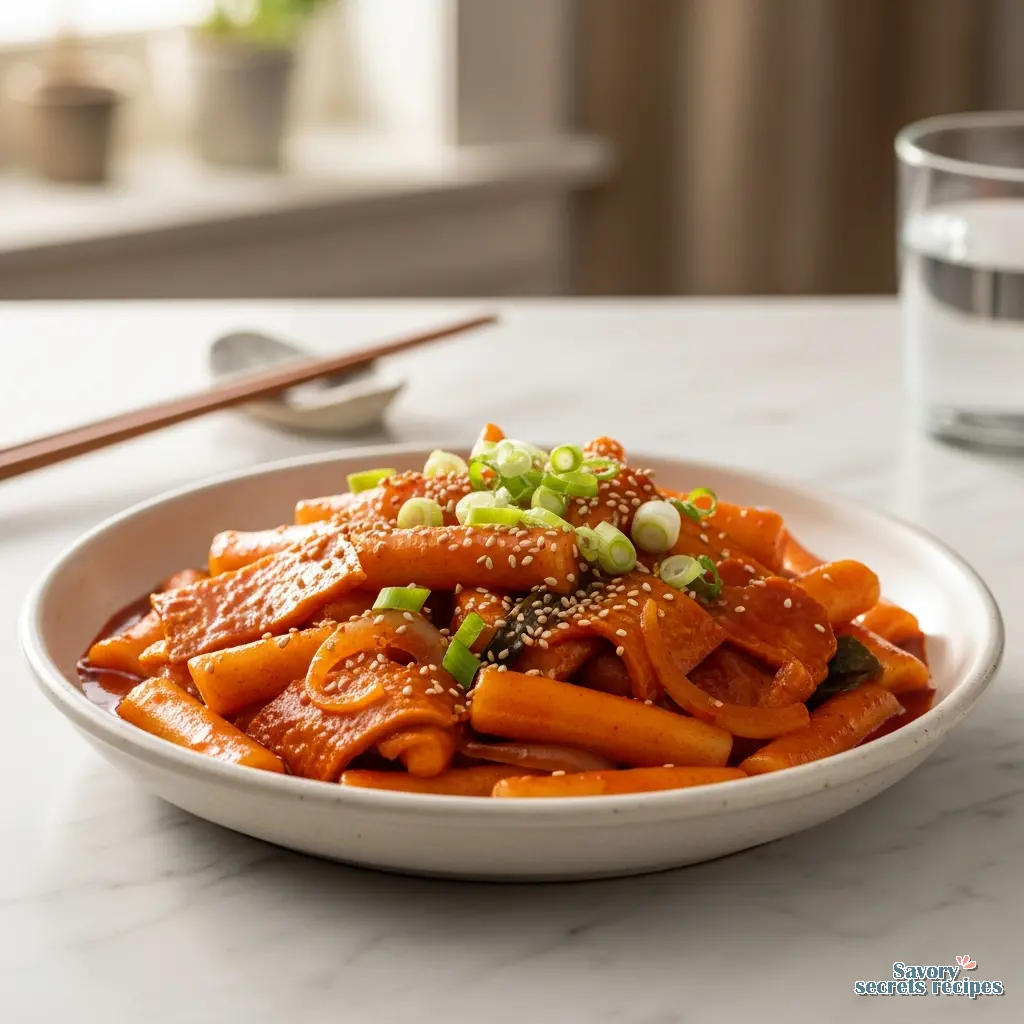
Leftovers can be tricky with rice cakes. When they get cold, they turn hard and waxy. It’s just the nature of rice starch. Store them in an airtight container in the fridge for up to 3 days.
To reheat, do not use the microwave if you can avoid it. It tends to make them rubbery. Instead, put them back in a small pan on the stove with a splash of water or stock. Cover and simmer gently until they soften up again. They won’t be quite as perfect as fresh, but they’ll still be delicious.
Frequently Asked Questions
Final Thoughts
When you serve this, your family (or just you, no judgment) will love the heat. There is something so satisfying about mastering a dish that feels like takeout but tastes homemade. Don’t stress if your sauce isn’t perfectly glossy the first time or if your spice level needs adjusting. That’s part of the process. You’ve got this.
For more inspiration and visual guides on organizing your pantry for Korean cooking, check out my Pinterest boards. I’m always pinning new variations there.
Go warm up your winter with this spicy delight. Enjoy!
Can I use frozen rice cakes without thawing?
How do I make the sauce less spicy?
What is the difference between Tteokbokki and Rabokki?
Can I make buldak tteokbokki ingredients ahead of time?
Is buldak tteokbokki healthy?
Reference: Original Source