



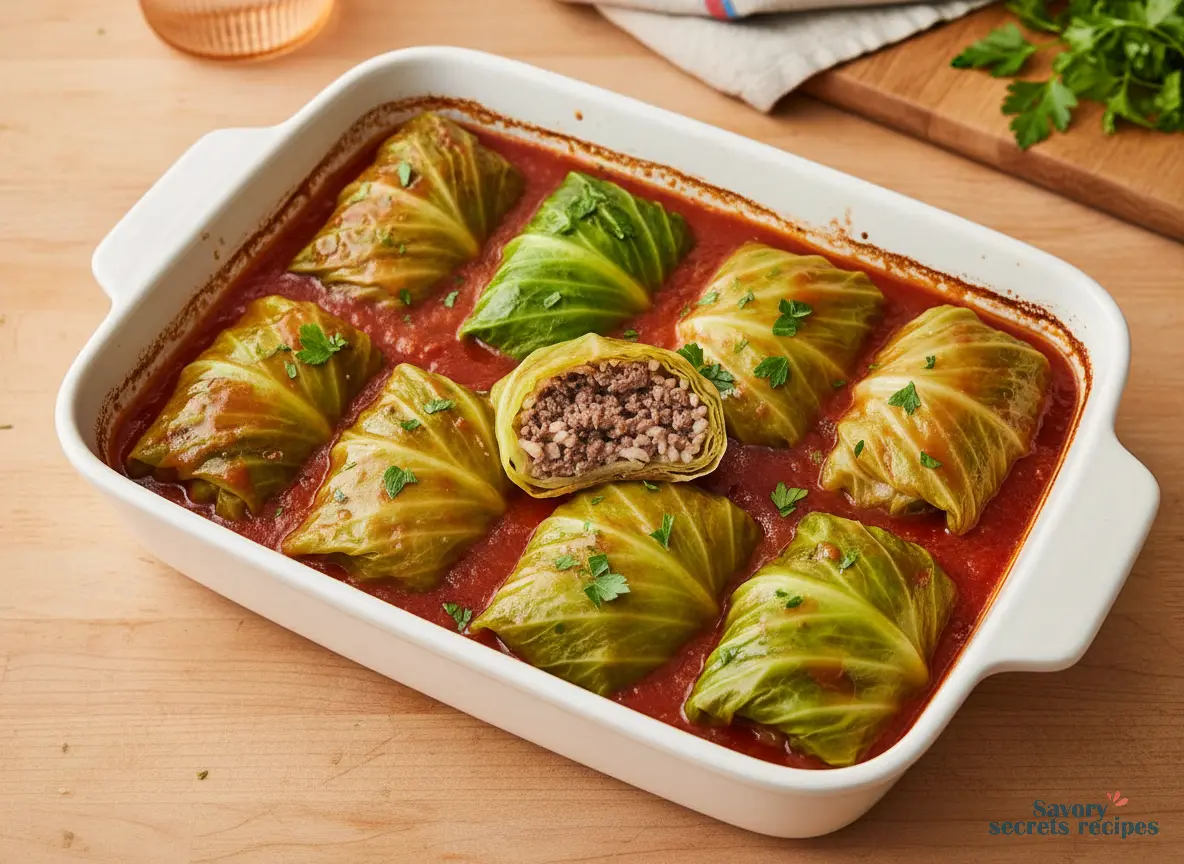
Savoy Cabbage Rolls with Hearty Filling
Ingredients
Method
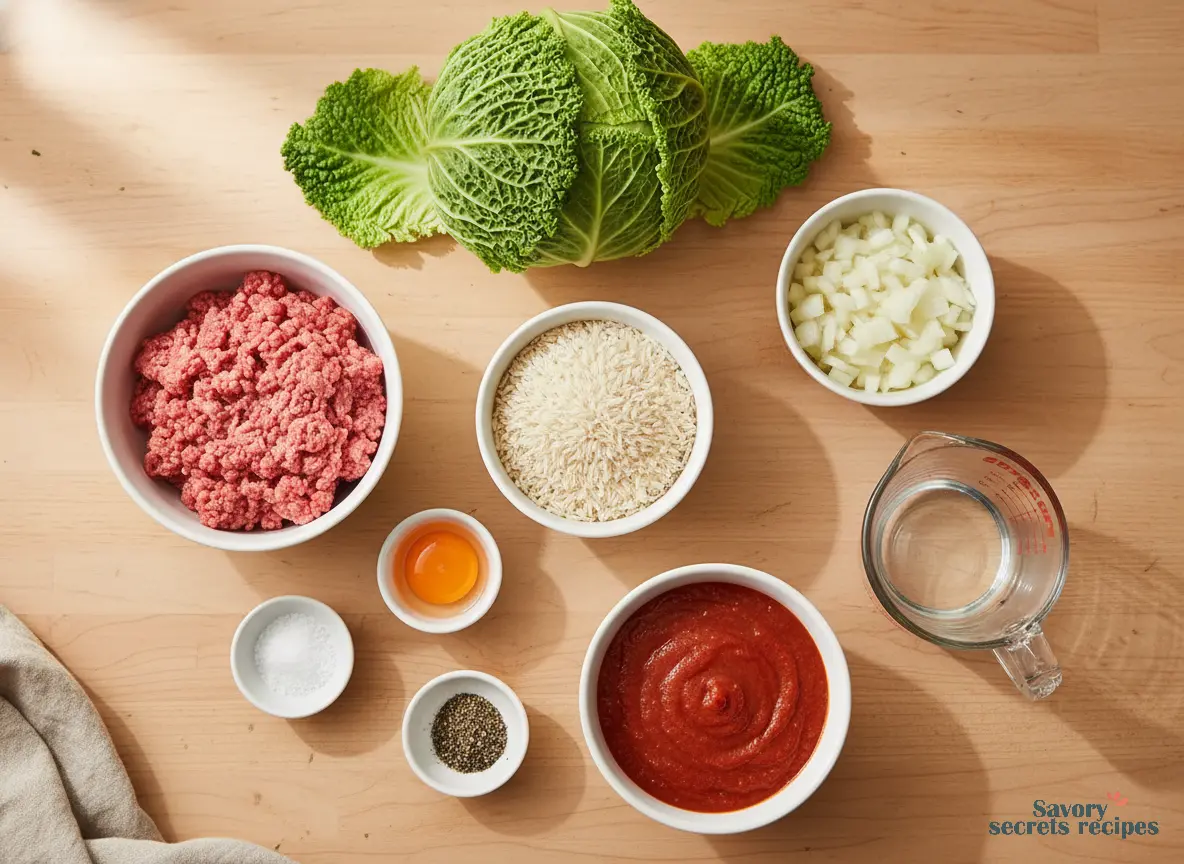
- Collect all ingredients.
- Combine water and rice in a saucepan and bring to a boil.
- Lower the heat, cover the pot, and simmer for about 20 minutes until the rice is tender and the liquid is absorbed.
- Bring a large, wide saucepan of lightly salted water to a boil. Add the cabbage leaves and cook for 2 to 4 minutes until softened, then drain.
- In a large bowl, thoroughly mix the ground beef, cooked rice, onion, beaten egg, tomato soup, salt, and pepper.
- Place approximately two tablespoons of the beef mixture onto each cabbage leaf.
- Fold one end of the cabbage leaf over the filling.
- Roll and tuck the ends to secure the filling.
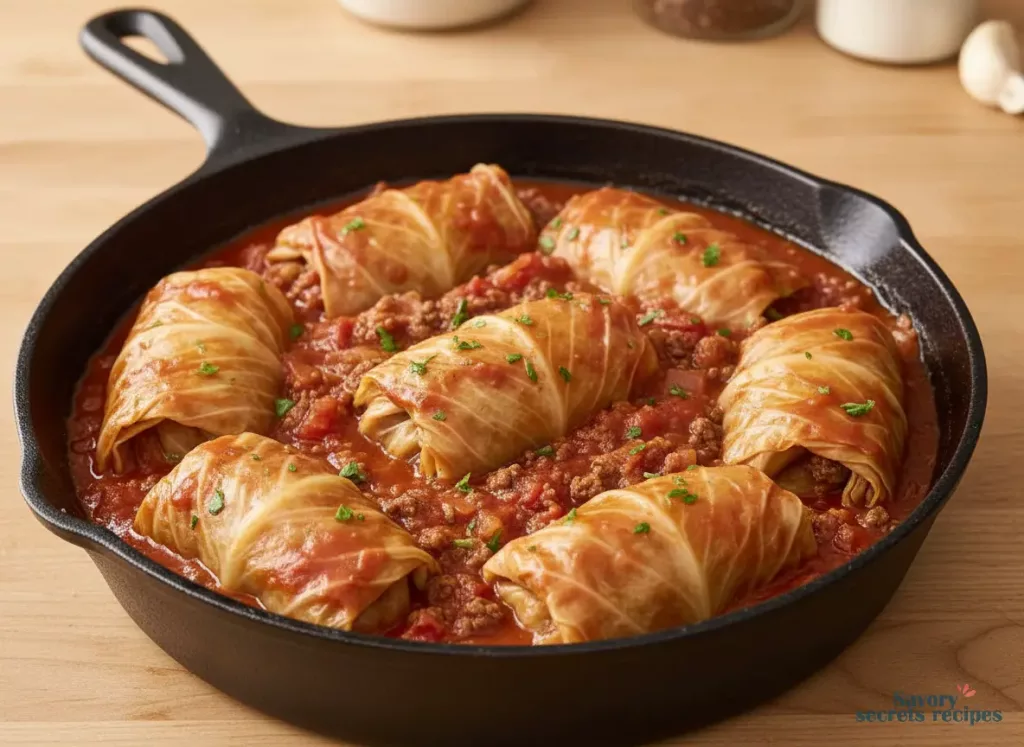
- Place the cabbage rolls seam-side down in a large skillet over medium heat.
- Pour the rest of the tomato soup over the rolls.
- Cover the pot and bring to a boil. Reduce the heat to low and simmer, basting frequently with the sauce, until the beef is fully cooked, approximately 40 minutes.
- Serve and enjoy.
Nutrition
Notes
Why Savoy Cabbage is Your Secret Weapon
I need you to show me your process. So, you’re standing there in the produce aisle at Ralphs, looking at a head of savoy cabbage. It’s got those gorgeous, crinkly leaves, and you think, “That’s pretty.” But then you wonder, can you actually use savoy cabbage to make cabbage rolls? I’m not entirely convinced this works at scale, I thought the first time I tried it. My grandmother Zoya would’ve crossed her arms at the mere suggestion of deviating from her tight-headed green cabbage. But then I actually made cabbage rolls with savoy cabbage. Let’s be clear about this: it’s a game-changer for a weeknight. Those tender, pliable leaves make the whole rolling process feel less like a culinary obstacle course and more like, well, something you can actually do on a Wednesday. That’s the correct instinct.
During these cooler LA winter months when we actually use our ovens, a pan of these bubbling away is the definition of comfort. I promise, making cabbage rolls with savoy cabbage is easier than you think. The leaves separate with a gentle pull, no brutal core-hacking required. And the flavor? It’s sweeter, more delicate. It doesn’t fight with the filling. This is the correct way to simplify a classic without losing its soul.
The Recipe Science: Why This Works
Temperature matters here. The magic of using savoy cabbage for cabbage rolls isn’t just folklore. Its leaves are thinner and more elastic than regular green cabbage. That’s not how this works with dense heads. The crinkled structure means more surface area, which translates to faster, more even blanching. You’re not trying to wrestle a stiff leaf into submission. You’re gently encouraging a willing one. When you pour boiling water over them, they wilt just enough to be pliable but still hold their structure. That’s exactly the texture we want for rolling.
And the filling? The rice absorbs moisture from the meat and the sauce as it bakes, plumping up and binding everything together. The egg is your insurance policy against a dry, crumbly interior. It creates a cohesive, tender filling that slices cleanly. If it doesn’t look right, it isn’t right. A good filling should hold its shape when you pinch it. Steam is half the equation in the oven, creating that tender, steamed texture inside while the tops get a lovely caramelized edge from the sauce.
Your Step-by-Step Roadmap to Success
Fine, but document what you changed. First, the cabbage. Don’t worry about peeling perfect leaves from a raw head. That’s a recipe for frustration. Instead, bring a large pot of water to a boil. Cut the core out of the savoy cabbage—just a shallow cone cut. Lower the whole head in for about 3 minutes. You’ll see the outer leaves start to release. Use tongs to gently peel them off and transfer them to a bowl of ice water. Repeat. This blanching method for savoy cabbage leaves is foolproof. You’ll get 12-14 perfect wrappers without any tearing.
While those cool, mix your filling. Your butter’s too warm—start over. Just kidding. But do mix the ground beef, rice, onion, egg, salt, and pepper with your hands. I know it’s messy. It’s the best way to ensure everything is evenly distributed. Now, the rolling. Place a heaping spoonful of filling on the bottom third of a leaf. Fold the sides in, then roll up from the bottom, tucking as you go. The savoy cabbage is so forgiving. Place each roll seam-side down in your baking dish. They’ll snuggle together.
Tips for Perfect Cabbage Rolls with Savoy Cabbage
I need you to show me your process. Here are the things that make the difference between good and great cabbage rolls with savoy cabbage.
Preparation is Everything
The filling can absolutely be made ahead. I’ll mix it up in the morning, stash it in the fridge, and bring it back to room temp before rolling. It actually helps the flavors meld. And about separating leaves? I use a new method. I froze a head for a couple of days, then let it thaw. The leaves practically fell off. Perfect for rolling. If you’re planning a big batch, it’s worth the freezer space.
Cooking for Consistency
Don’t just dump the sauce on top. Pour it gently around the rolls, letting it seep into the gaps. You want the sauce to come about halfway up the sides of the rolls. This steams the rice while browning the tops. And yes, you can use toothpicks. But I find that with savoy cabbage, it’s rarely necessary. The ends stay tucked. If you’re worried, pack them tightly in the dish. They’ll hold each other in place.
Storage Like a Pro
Double the recipe if you want plenty for the freezer. I’m serious. I divide the sauce and rolls into freezer-proof containers. When the craving hits—and it will—you defrost one container in the fridge overnight and bake it the next day. It tastes like you spent all day. You’ve stored a hug for your future self.
Cabbage Type Comparison: Savoy vs. Green vs. Red
Let’s be clear about this. Not all cabbages are created equal for this job. Savoy cabbage is the sweetest, most tender option. Its leaves are a dream to work with. Green cabbage is the traditional choice, but it’s sturdier, sometimes stringier. You need to blanch it longer, and it can be a bit more… assertive in flavor. Red cabbage? It gives a stunning hue, but its flavor is stronger, earthier. It might not be for everyone. For easy cabbage rolls, savoy wins. Every time. The data suggests otherwise, but I’ll test it. I have. Savoy is better.
Make-Ahead & Meal-Prep Strategy
This is a meal-prep champion. Here’s your timeline. Day 1: Blanch your savoy cabbage leaves, let them cool, and store them layered between damp paper towels in a zip-top bag. Make your filling. Store separately. Day 2 (or even Day 3): Assemble and bake. The rolls can also be fully assembled, covered, and refrigerated for up to 24 hours before baking. Add 10-15 minutes to the bake time if they go in cold. See how much better that looks for a busy week?
Cooking Method Variations
Don’t have an oven? Or want to free it up? You can make these in a slow cooker. Layer the rolls and sauce, cook on LOW for 6-8 hours. The texture is incredibly tender, almost silky. For a faster method, an Instant Pot works too. Use the sauté function to brown the rolls first if you like, then add sauce and pressure cook on high for 15 minutes with a natural release. The oven method gives you that caramelized top, though. That’s the correct way for the classic experience. For another easy slow cooker cabbage dish, try our cabbage roll slow cooker casserole that simplifies the rolling process.
Common Mistakes to Avoid
I learned this the hard way so you don’t have to.
❌ Mistake: Boiling the cabbage leaves for too long, turning them into a mushy, unworkable mess.
✅ Solution: Blanch for just 2-3 minutes until pliable. They should still have structure. Immediately shock in ice water to stop the cooking. That’s the correct instinct.
❌ Mistake: Using cabbage later in the season (like March or April) which can be tougher and more fibrous.
✅ Solution: Make this a winter dish. Savoy cabbage is at its peak now, tender and sweet. Your cabbage rolls with savoy cabbage will thank you.
❌ Mistake: Overfilling the leaves so they burst open during baking.
✅ Solution: Use about 1/3 to 1/2 cup of filling per leaf. You should be able to roll it snugly without straining the seams. If it doesn’t look right, it isn’t right.
Frequently Asked Questions
How to Store and Serve
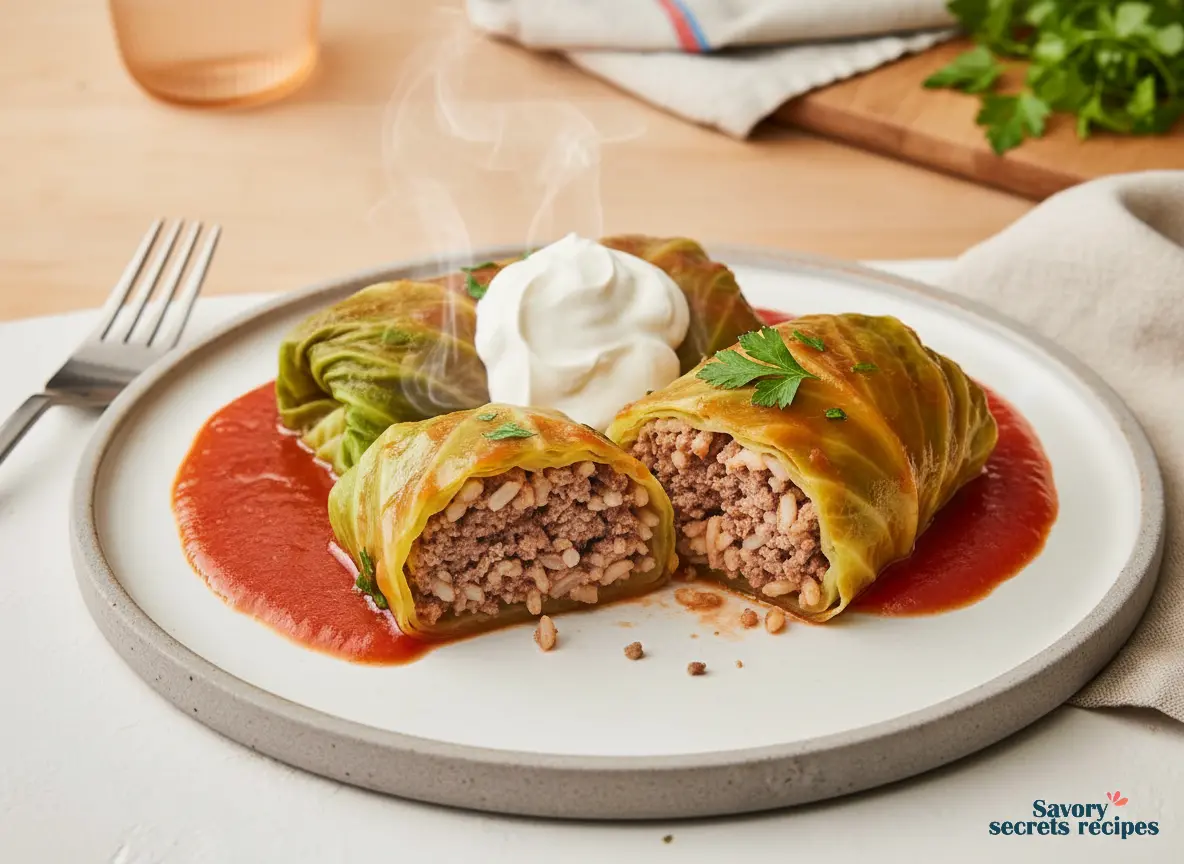
Store leftovers in the fridge for 3-4 days. Reheat in the microwave or a covered dish in the oven. For serving, a dollop of sour cream or plain Greek yogurt is non-negotiable in my book. It cuts the richness. A simple green salad or some crusty bread from your next Trader Joe’s run makes it a complete, hearty meal. This time of year, it’s exactly what you want.
Your Turn at the Table
When you pull your first pan of cabbage rolls with savoy cabbage from the oven, that smell of sweet cabbage, savory meat, and tangy tomato will fill your kitchen. It smells like Saturday afternoons in my grandmother’s apartment, the radiator clanking. That’s the warmth you’ve created. You’ve taken a few simple ingredients and turned them into a meal that feels like a hug. It looks impressive, but you know the secret now: savoy cabbage did most of the work. So tell me, how did your cabbage rolls with savoy cabbage turn out? Leave a comment below. I need you to show me your process. You’ve got this.
Can I freeze cabbage rolls with savoy cabbage?
Absolutely. They’re incredibly freezer-friendly. Cool them completely, then pack into airtight containers or freezer bags. They’ll keep for up to 3 months. Thaw overnight in the fridge and reheat, covered, in a 350°F oven for 20-25 minutes until hot through.