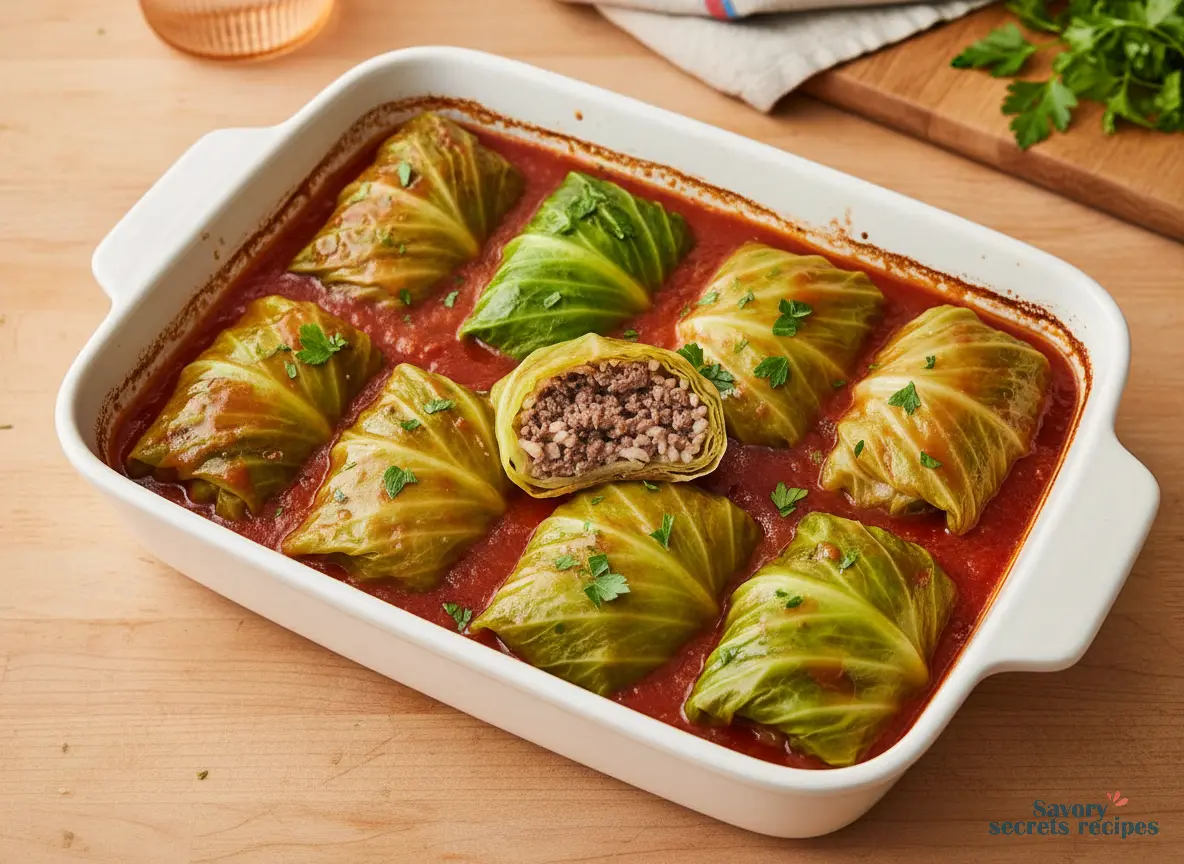
Ingredients
Method
- Collect all ingredients.
- Combine water and rice in a saucepan and bring to a boil.
- Lower the heat, cover the pot, and simmer for about 20 minutes until the rice is tender and the liquid is absorbed.
- Bring a large, wide saucepan of lightly salted water to a boil. Add the cabbage leaves and cook for 2 to 4 minutes until softened, then drain.
- In a large bowl, thoroughly mix the ground beef, cooked rice, onion, beaten egg, tomato soup, salt, and pepper.
- Place approximately two tablespoons of the beef mixture onto each cabbage leaf.
- Fold one end of the cabbage leaf over the filling.
- Roll and tuck the ends to secure the filling.
- Place the cabbage rolls seam-side down in a large skillet over medium heat.
- Pour the rest of the tomato soup over the rolls.
- Cover the pot and bring to a boil. Reduce the heat to low and simmer, basting frequently with the sauce, until the beef is fully cooked, approximately 40 minutes.
- Serve and enjoy.
Nutrition
Notes
Ingredient Swap: I often use ground turkey or a plant-based crumble instead of beef for a lighter version, and it holds together just as well with the egg and rice.
Cabbage Prep Tip: Don't skip boiling the leaves, but watch them closely.
I once let them go too long and they tore when I tried to roll them.
You just want them pliable.
Make-
Ahead Secret: You can assemble the rolls a day in advance.
I layer them in the baking dish, cover tightly, and refrigerate.
They actually soak up the sauce better when baked the next day.
Sauce Consistency: If your sauce seems too thick while simmering, add a splash of water or broth.
I like to keep it a bit loose so it creates a nice gravy for serving over mashed potatoes.
Storage Advice: These keep beautifully.
I store leftovers in an airtight container in the fridge for up to four days.
The flavors meld and get even better.
Rolling Technique: The key is not to overfill.
I use a generous two tablespoons.
If the leaf stem is very thick, I sometimes shave it down with a paring knife so it rolls smoothly.
Equipment Note: If you don't have a skillet large enough, a Dutch oven or any heavy pot with a lid works perfectly.
The goal is a single, snug layer so they cook evenly.