



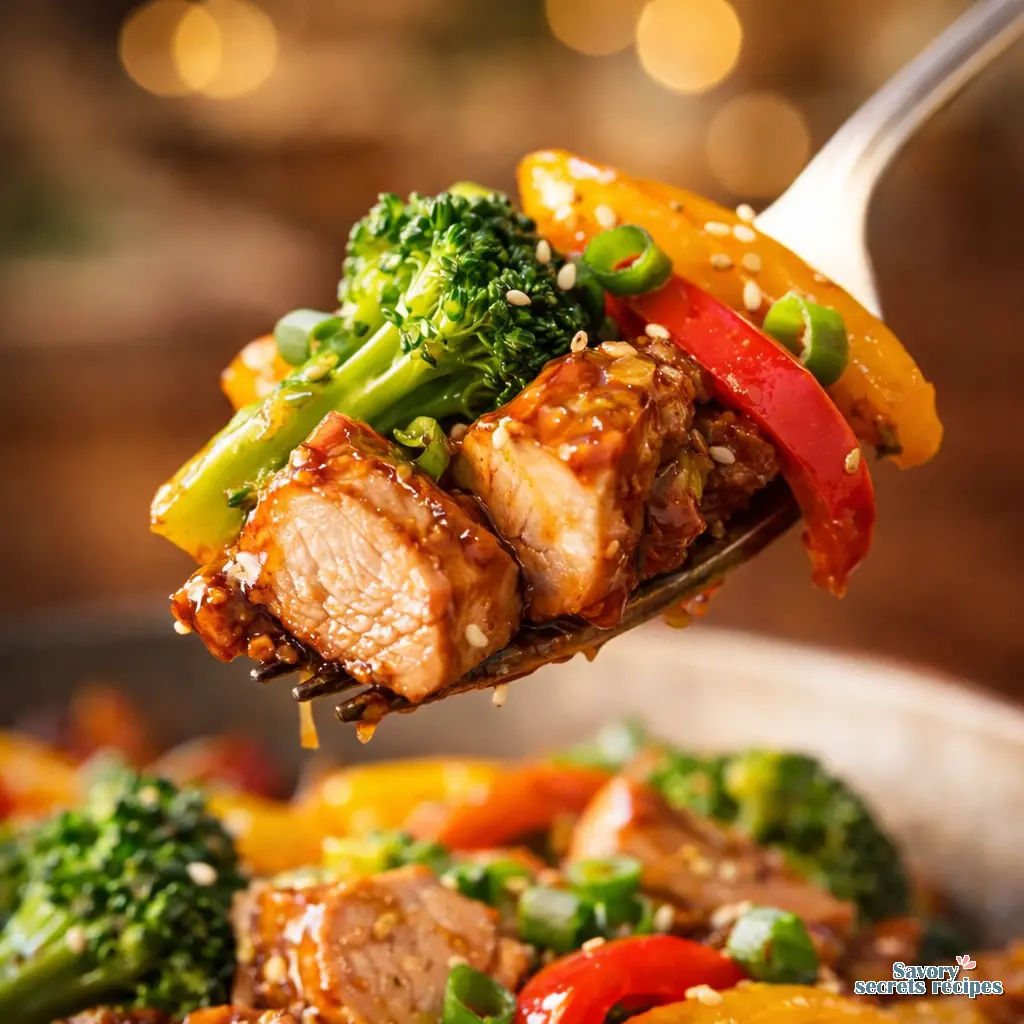
Keto Chicken Stir Fry Sauce No Sugar Recipe
Ingredients
Method
- Combine chicken thighs and 1 tablespoon of oil in a large bowl. Add the remaining ingredients and stir until evenly coated.
- Heat a very large sauté pan over medium-high heat for 2 minutes. Add the remaining tablespoon of oil and heat for 1 minute. Place chicken in the pan in a single layer, avoiding overcrowding. Cook for approximately 3 minutes per side until golden brown and crisp. Remove chicken with a slotted spoon and set aside.
- Add onions and a large pinch of kosher salt to the pan. Cook over medium-high heat for 2 minutes, stirring occasionally. Add bell peppers, broccoli, carrots, sugar snap peas, and the white parts of the green onions. Cook for 5 to 7 minutes until fork-tender, covering with a lid and stirring occasionally. Stir in the water chestnuts halfway through the cooking time.
- Whisk all sauce ingredients together in a small bowl. Pour the sauce into the stir-fry and reduce heat to medium-low. Cook for 2 to 3 minutes, stirring frequently.
- Return the chicken to the pan and add sesame oil and red chili pepper flakes. Cook for approximately 2 minutes, stirring to allow the flavors to meld.
- Adjust seasoning to taste and serve with cauliflower or white rice. Garnish with scallions, the green parts of the green onions, and sesame seeds.
Nutrition
Notes
- Feel free to swap out certain veggies for others you like more. Just be sure to cook everything appropriately.
- You can absolutely use a different type of meat. Just be sure to cook it until it's done... here is a great guide for that!
- You can use soy sauce instead of coconut aminos. However, it is a bit more salty, so I'd keep that in mind when seasoning the dish. Taste, taste, taste.
The Secret to Authentic Takeout at Home
Dreading the Easter sugar rush? Stay in ketosis with this savory chicken stir fry keto recipe. I remember being maybe seven or eight, sitting on the kitchen counter in our Bronx apartment. My grandmother Fatoumata was sorting through dried ingredients, treating every single piece like it had a story. She kept a battered notebook of ingredient substitutions she’d figured out over decades. I inherited that notebook when I was 23, and it’s still the most useful thing in my kitchen.
Well, I updated it a bit. Traditional Chinese takeout is a massive sugar trap. It looks healthy, but the sauces are absolutely loaded with hidden carbs and thickeners. I wanted that classic, sticky takeout taste without the cornstarch or sugar. Here’s what I’ve found works. We can make a guilt-free, high protein chicken stir fry that hits the table in 20 minutes flat. It’s entirely sugar-free and clocks in under 5g net carbs. Now we’re talking.
We have a deal in our house. If I’m testing something for work, my daughter has to try one bite. She tried this keto chicken stir fry sauce no sugar version and didn’t even realize it was a low-carb dish. That’s a massive win in my book. You get a thick, glossy sauce without a single grain of starch. Perfect.
The Keto Velveting Technique
Let me think about that for a second. The biggest complaint with homemade chicken stir fry keto is dry, rubbery meat. Takeout restaurants use a technique called velveting to get that incredibly silky texture. They usually use cornstarch, but we’re doing a keto-friendly velveting technique instead. It’s actually quite forgiving.
Just toss your boneless, skinless chicken thighs in a little egg white and a pinch of baking soda. Give it ten minutes while you prep your veggies. This is the kind of ingredient trick that changes how you cook. The baking soda slightly raises the pH of the meat, which keeps the proteins from binding too tightly when they hit the hot pan. It gives you that tender, melt-in-your-mouth takeout texture.
Equipment matters here, too. I get asked about the wok versus cast iron skillet debate all the time. That’s a good question, actually. A carbon steel wok distributes heat beautifully up the sides if you have a gas stove. But honestly, a heavy cast iron skillet holds heat perfectly for a golden sear on a standard home stove. Either way, this is a one-pan cleanup situation. You’ll love that on a busy weeknight.
Choosing the Right Oil and Veggies
Here’s what I wish someone had told me early on. Prep all your vegetables before turning on the heat because the process moves incredibly fast. Seriously, don’t skip this. Mise en place is essential. The ingredient does most of the work if you let it, but you need to be ready to move.
You’ll know it’s ready when the oil starts to shimmer. Use high smoke point oils like avocado oil or peanut oil. Avoid using sesame oil for high-heat frying. It overpowers the flavor and burns quickly, turning bitter. We’re just going to use a splash of sesame oil at the very end for that toasted aroma.
Let’s talk about the best low carb vegetables for a high protein chicken stir fry. Stick to the safe list. Broccoli florets, mushrooms, zucchini, and bell peppers are fantastic. Avoid starchy things like traditional water chestnuts or baby corn if you’re strictly tracking macros. I like serving this over cauliflower rice or zucchini noodles to keep the net carbs as low as possible. Sometimes I’ll throw in some sugar snap peas for a pop of color and crunch.
The Science of Keto Thickening
How do you thicken a keto chicken stir fry sauce without using sugar or cornstarch? I once spent three weeks testing low-carb sauces and completely failed because I used way too much thickener. It turned into a weird jelly. I learned this the hard way. The absolute best secret is xanthan gum.
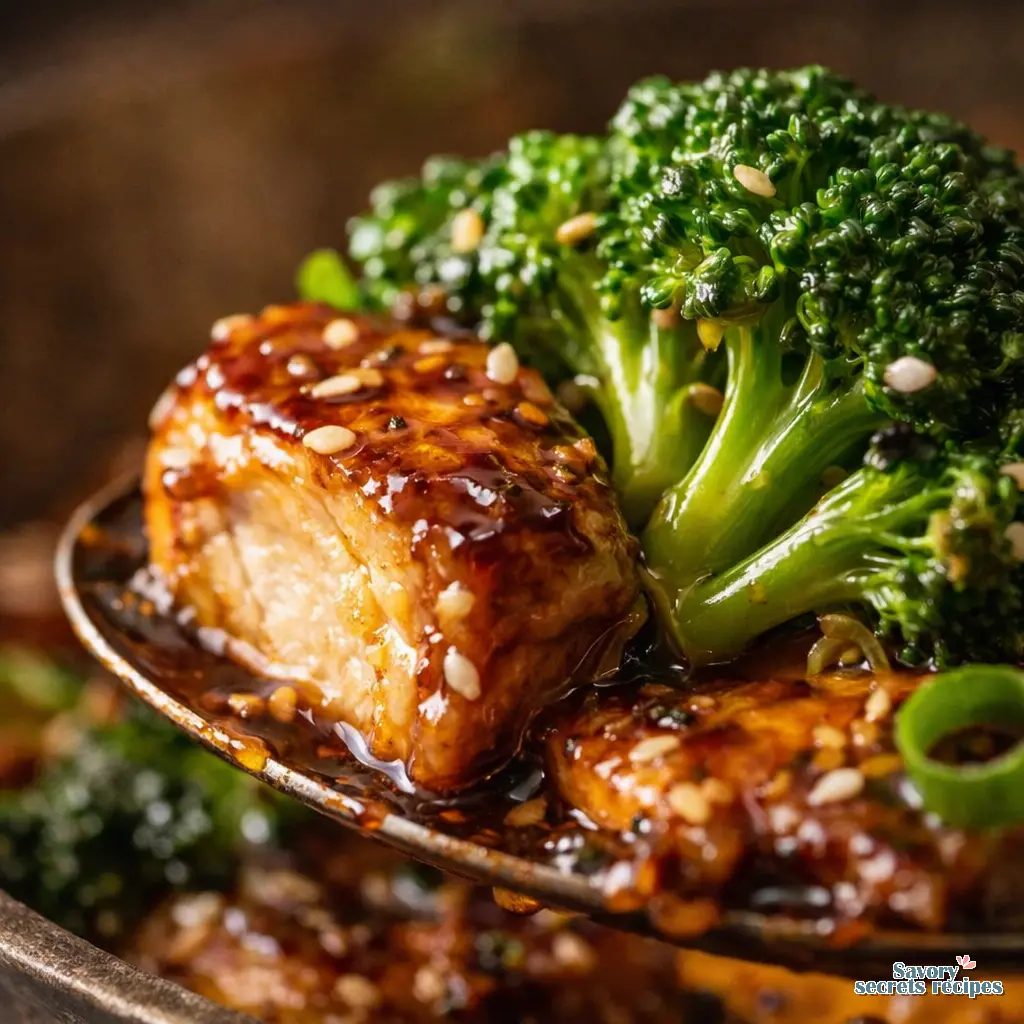
Use exactly 1/4 teaspoon of xanthan gum instead of cornstarch to thicken your sauce without adding carbs. You want to whisk it vigorously into your cold liquids first so it doesn’t clump up. Once it hits the heat, it creates this beautiful, glossy sheen that coats the back of a spoon perfectly.
For that sweet and savory balance you expect from takeout, add a keto-friendly sweetener. I highly recommend monk fruit sweetener or erythritol. They hold up incredibly well to heat. I also prefer using coconut aminos or tamari instead of regular soy sauce for a cleaner, gluten-free option. You can usually find coconut aminos at Trader Joe’s or Whole Foods, right next to the regular soy sauce.
Visual Doneness and Flavor Depth
Fresh ginger root and fresh garlic cloves are completely non-negotiable for flavor depth. Please don’t use the powdered versions here. Give them time to bloom in the hot oil. Trust your nose on this one. The smell is incredible, like walking past a bustling restaurant kitchen.
You’ll want to marinate the chicken to maximize flavor, but here’s a crucial step. Drain the marinade before cooking. This ensures the chicken actually browns rather than just steaming in its own juices. Once the chicken is in the pan, don’t move it too much. Let it sit there to get a beautiful golden sear. Look for the color change, that’s your signal to flip.
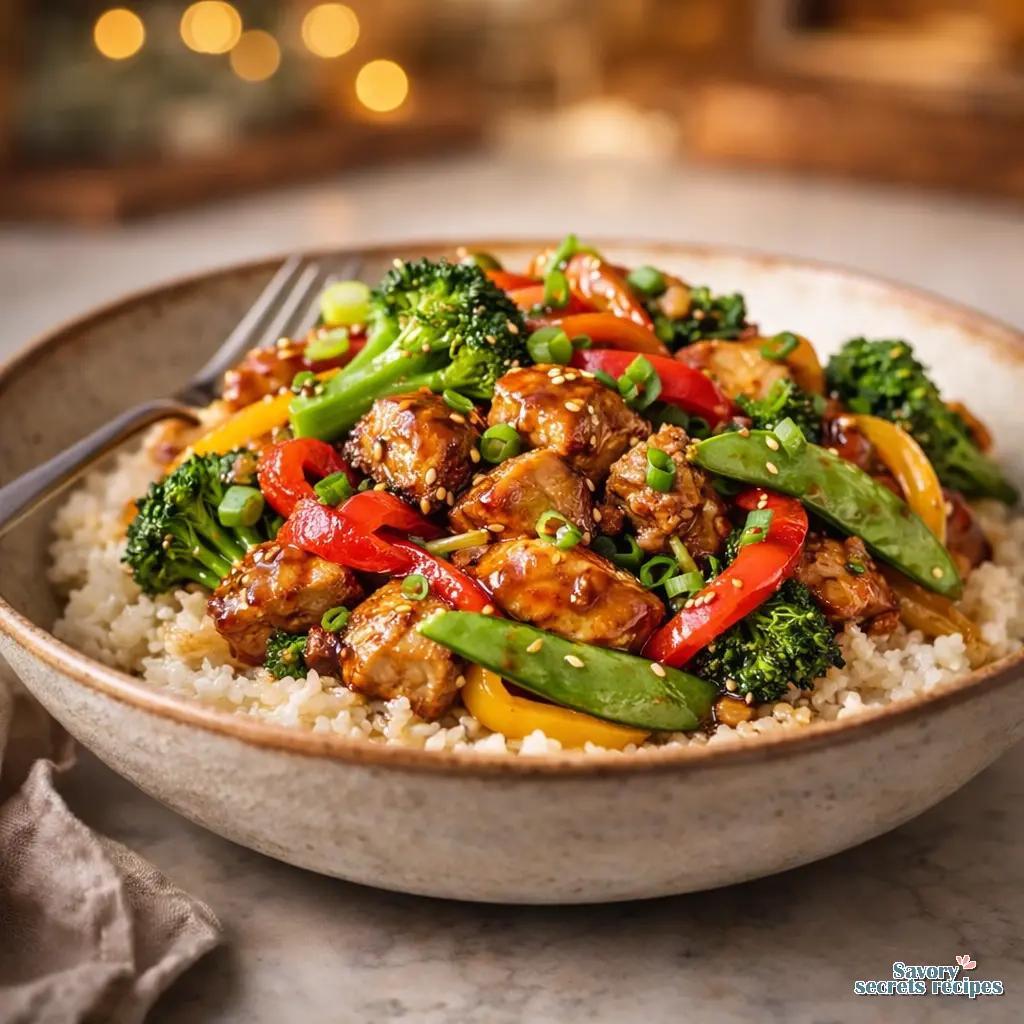
After the chicken is cooked, deglaze the pan with a little chicken broth or water to scrape up all those flavorful browned bits, known as the fond. That’s pure flavor. Finally, you want to barely cook your vegetables to maintain a serious crunch. When you pour the sauce in, it bubbles and tightens up almost instantly. The glossy, sticky sauce coating the chicken and broccoli is just a beautiful sight. It looks fancy but takes barely any time.
Common Mistakes & Fixes
❌ Mistake: Using frozen broccoli.
✅ Solution: This results in a mushy, watery texture that ruins the sauce. Always stick to fresh broccoli florets for a proper crunch.
❌ Mistake: Moving the chicken too much.
✅ Solution: You likely prevented it from browning. Let it sit undisturbed in the hot pan for a couple of minutes to develop a nice crust.
❌ Mistake: Using cornstarch to thicken.
✅ Solution: This adds unnecessary hidden carbs. Swap it out for 1/4 teaspoon of xanthan gum whisked into your sauce base.
❌ Mistake: Frying with sesame oil.
✅ Solution: Sesame oil has a very low smoke point and will turn bitter. Cook with avocado oil, then drizzle sesame oil at the very end for flavor.
❌ Mistake: Chopping veggies while the chicken cooks.
✅ Solution: High-heat cooking moves too fast. Prep all your ingredients before you even turn on the stove to avoid burning anything.
Storage, Serving, and Reheating Leftovers
I usually make a double batch of this chicken stir fry keto recipe for meal prep. It’s an absolute lifesaver during a busy work week. Store your leftovers in an airtight container in the refrigerator. It stays perfectly fresh for 3 to 7 days. I mean, if it even lasts that long in your house.
When it’s time to reheat, skip the microwave if you can. The microwave tends to make the chicken rubbery and turns the vegetables into soup. Instead, toss everything back into a skillet over medium heat for about three minutes. Add a tiny splash of water or broth to help the sauce loosen up and regain that glossy texture. It tastes just as good on day three as it did on day one.
If you’re freezing this, be aware that freezing can slightly change the texture of vegetables like zucchini and bell peppers. They’ll be a bit softer upon thawing. Store it in a freezer-safe container for up to two months, and always let it thaw overnight in the fridge before reheating.
Frequently Asked Questions
Final Thoughts on Your New Favorite Dinner
Once you understand the basics of this chicken stir fry keto recipe, you’ll never need to order takeout again. It’s fast, it’s fresh, and it keeps you entirely on track with your health goals. A standard serving gives you roughly 32g of protein, 18g of healthy fats, and only 5g of net carbs. That tracks perfectly with what I look for in a satisfying weeknight dinner.
I genuinely get excited when a recipe comes together this easily. Grab some fresh veggies on your next Trader Joe’s run and give this a try. I promise it’s easier than you think. For more inspiration and weeknight dinner ideas, check out my Pinterest boards where I save all my favorite low-carb variations. You’ve got this.
Reference: Original Source
Is soy sauce ok with a chicken stir fry keto diet?
That’s a good question, actually. Traditional soy sauce is technically low in carbs, but many keto folks avoid it due to gluten and soy content. I prefer using coconut aminos or tamari. They give you that deep, salty umami flavor while keeping your macros perfectly aligned.
Is stir-fry high in carbs?
Restaurant versions definitely are, mostly because of cornstarch thickeners and sugary sauces. But this homemade chicken stir fry keto recipe clocks in at under 5g net carbs per serving. By swapping out the sugar and starch, you get all the flavor without the carb crash.
How long will it last and how can I store it?
In my experience, it keeps beautifully in an airtight container in the fridge for 3 to 7 days. It’s fantastic for Sunday meal prep. Just reheat it gently in a skillet over medium heat rather than microwaving it, which preserves the texture of the chicken.
Can I make it in the Instant Pot?
I wouldn’t recommend it. An Instant Pot traps moisture and steams the ingredients, which completely ruins the crispy sear on the chicken and turns the vegetables into mush. A hot skillet or wok is essential for that authentic, slightly charred takeout flavor.
Can I use dried ginger or garlic?
I mean, you could, but I really advise against it. Dried powders burn quickly in hot oil and leave a gritty texture. Fresh minced garlic and grated ginger root provide a bright, pungent flavor that powdered spices simply can’t replicate. It’s worth the extra minute of chopping.
Can I use frozen vegetables?
Please don’t. Frozen veggies release way too much water into the pan as they cook. This dilutes your carefully measured keto sauce and causes the chicken to boil instead of sear. Always use fresh, crisp vegetables for a proper chicken stir fry keto meal.
How do you thicken the sauce without cornstarch?
Xanthan gum is your best friend here. Use just 1/4 teaspoon whisked thoroughly into your cold sauce ingredients before adding them to the hot pan. It thickens beautifully without adding a single carbohydrate. Just be careful not to use too much, or it gets gummy.