



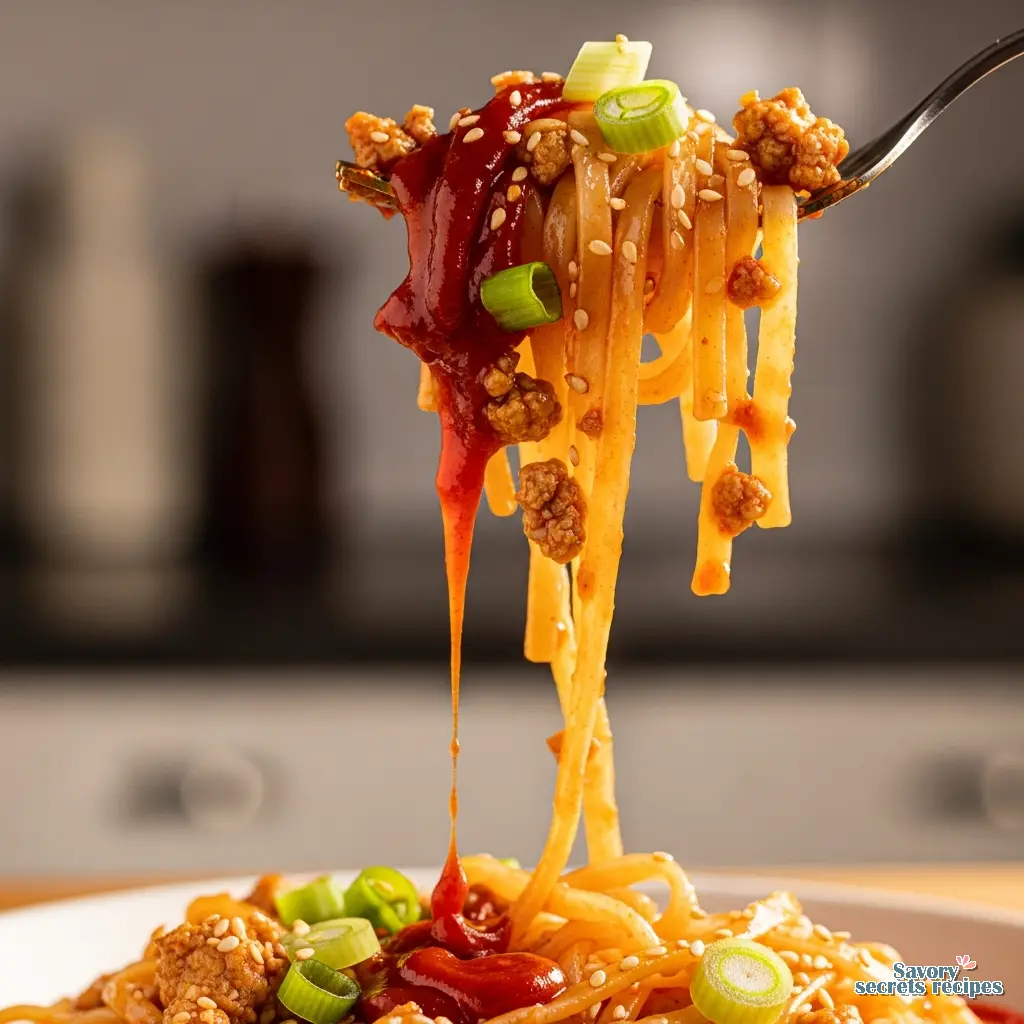
Easy Gochujang Sauce for Spicy Korean Noodles
Ingredients
Method
- Boil a pot of salted water and cook the noodles according to package instructions. Drain, rinse, and toss with 2 tablespoons of butter to prevent sticking.
- Sauté the ground meat in a large skillet until thoroughly cooked.
- Whisk all sauce ingredients together in a bowl and set aside, allowing any coconut cream chunks to melt later when combined with the noodles.
- Add approximately half of the sauce to the noodles and toss to combine.
- Incorporate the ground meat and the remaining sauce. Toss until well coated and simmer over low heat for a few minutes to meld the flavors.
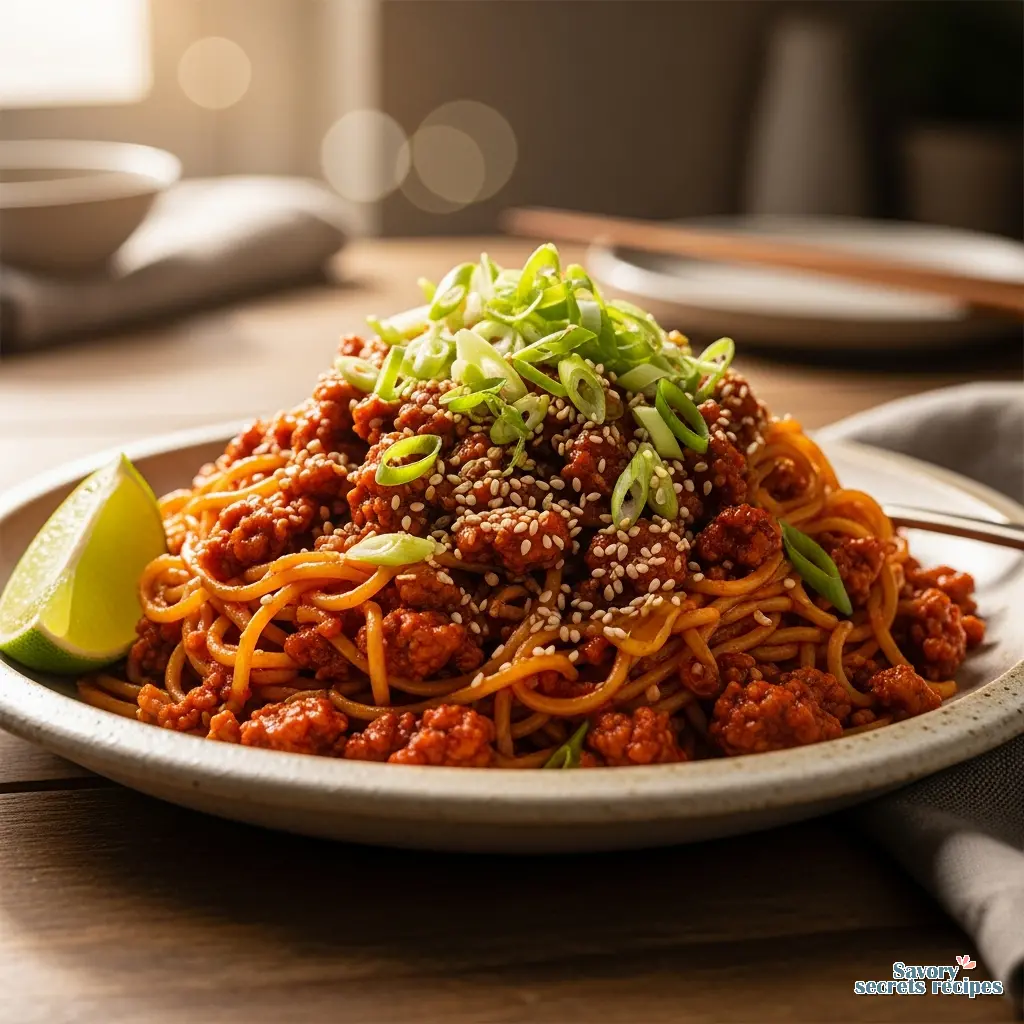
- Garnish with chopped scallions, sesame seeds, cilantro, or red pepper flakes and serve.
Nutrition
Notes
Why This Easy Gochujang Sauce Will Save Your Weeknight
I remember being maybe seven or eight, sitting on the kitchen counter in our Bronx apartment while my grandmother Fatoumata sorted through jars of spices. She used to say that a good sauce doesn’t just coat your food, it wakes it up. Fast forward a few decades to my kitchen in Silver Spring, and I found myself staring at a red tub of gochujang paste last Wednesday, totally unsure what to do with it. It was 6 PM, everyone was hungry, and I needed a flavor win that didn’t take an hour.
That is exactly where this easy gochujang sauce comes in. It is the kind of ingredient that changes how you cook. Honestly, once you nail the balance of sweet, spicy, and savory, you will want to put it on everything from roasted veggies to quick stir-fry noodles. It is easier than ordering takeout and ready in minutes. If you have ever felt intimidated by that bright red tub in the grocery store aisle, trust me, I have been there. But this sauce is your bridge to confident, bold Korean flavors right at home. Mastering these basics is essential for anyone looking to expand their collection of cheap korean food recipes.
With the winter chill settling into the evenings here, there is nothing quite like a warm, spicy bowl of comfort food. This recipe is perfect for those nights when you want something that tastes like it simmered for hours but actually came together while the noodles were boiling. Let’s get into it.
What Exactly Is Gochujang?
If you are new to this ingredient, let me introduce you. Gochujang is a savory, sweet, and spicy fermented chili paste that is a staple in Korean cooking. Think of it as the soul of the dish. It is made from chili powder, glutinous rice, fermented soybean powder, and salt. The fermentation process gives it this incredible depth that you just cannot get from regular hot sauce.
One thing I learned the hard way involves the heat level. Not all tubs are created equal. In my experience, brands like Bibigo tend to be a bit hotter and more approachable for beginners, while others might lean saltier or funkier. If you grab a tub of P.F. Chang’s brand, it is usually much milder. Check the packaging for a spice indicator. It usually looks like a little thermometer or pepper scale. If you are sensitive to spice, start with mild.
It is important to know the difference between the paste and the sauce. The paste (what is in the tub) is super concentrated. You generally do not want to eat it straight off a spoon. This easy gochujang sauce recipe takes that intense paste and thins it out with aromatics, sweetness, and acid to make it pourable and balanced.
The Science of the Sauce: Why It Works
My grandmother always told me that cooking is just balancing contrasting forces. This sauce is the perfect example. You have the heat and umami from the gochujang, which provides the base notes. But if you stop there, it is too harsh.
That is why we add a sweetener. Whether you use honey, brown sugar, or maple syrup, that sugar cuts through the heat and helps caramelize the sauce when it hits a hot pan. Then comes the acid. A splash of rice vinegar brightens everything up. It is like turning on a light in a dark room. Finally, the fat from the sesame oil carries the flavor and gives the sauce that glossy, restaurant-quality sheen. While this sauce is spicy, fans of savory glazes might also want to try an authentic bulgogi sauce recipe for a different flavor profile.
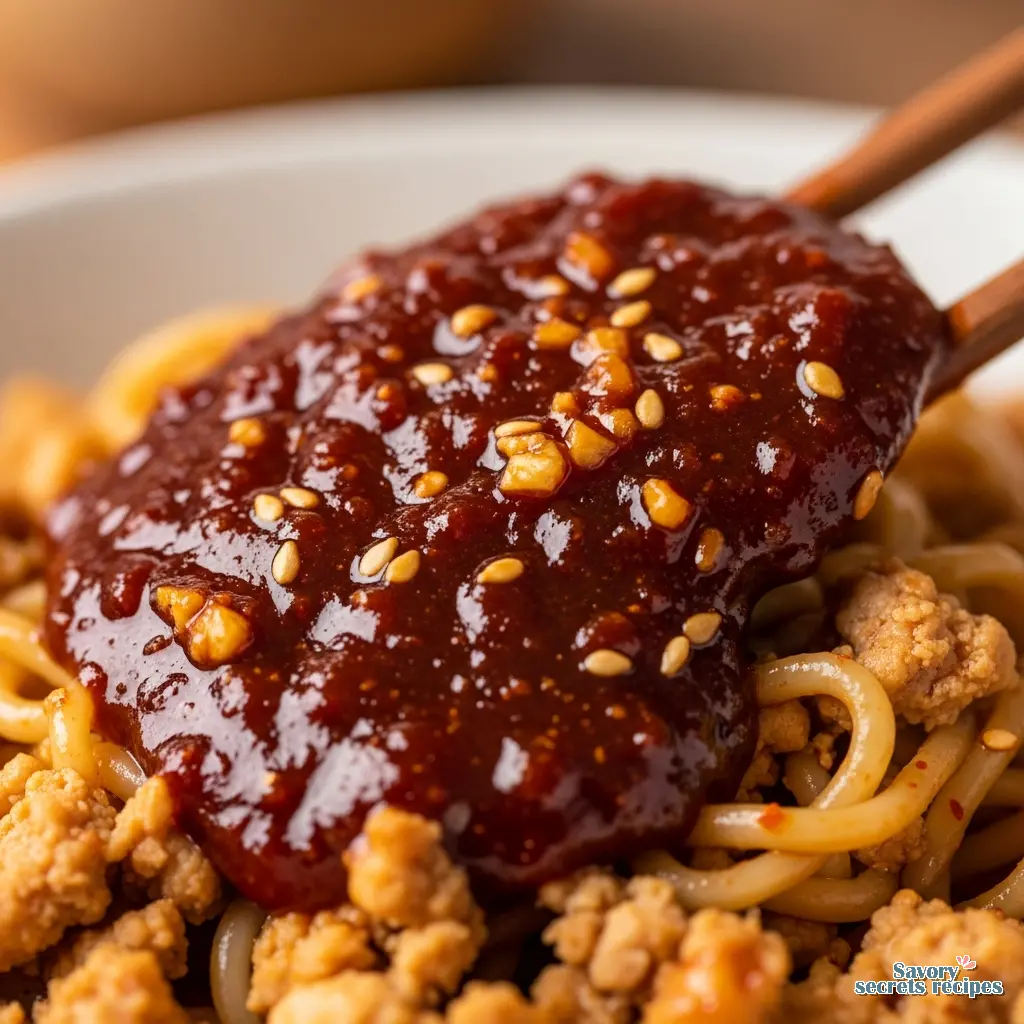
When you whisk these together, you are creating an emulsion. Whisking well ensures no lumps of paste remain, giving you a smooth, velvety texture that clings perfectly to noodles or chicken. It is simple chemistry, but the result is magic.
Ingredients & Smart Substitutions
I inherited a notebook from my grandmother full of ingredient swaps she figured out over decades. It is still the most useful thing in my kitchen. Here is what I have found works for this easy gochujang sauce if you do not have everything on hand.
The Salty Element: The recipe calls for soy sauce, but I often use Tamari to keep it gluten-free. If you are watching your sodium, low-sodium soy sauce is a must because the gochujang paste already packs a salty punch. Coconut aminos work too if you want it soy-free, though it will be slightly sweeter.
The Sweetener: Honey is my go-to because it has a floral note that plays nice with the chili. But brown sugar works beautifully and adds a molasses depth. In a pinch, I have even used agave or maple syrup. It depends on what you are going for.
The Acid: Rice vinegar is traditional and mild. If you are out, apple cider vinegar is a decent substitute, though it is a bit fruitier. White vinegar is a bit too harsh, so use less if that is all you have.
The Creaminess: To make this a creamy sauce (like a rosy pasta sauce but Korean-style), coconut cream is fantastic. It keeps it dairy-free but adds luxury. Heavy cream works too if dairy isn’t an issue for you.
Step-by-Step Cooking Tips
Let’s talk about how to actually make this happen without stressing out. First off, grab a mixing bowl and a whisk. No fancy equipment needed. I like to mix my sauce ingredients in a jar or bowl before I start cooking anything else. This way, the flavors have a minute to meld, or “bloom” as my chef friends say. Trust your nose on this one; you will smell when the garlic and ginger start to get friendly with the sesame oil.
When you are cooking your protein, whether it is ground chicken, turkey, or beef, do not rush it. Let it get some color. That browning adds flavor that the sauce will pick up later. If you are frying chicken pieces, do it in small batches. If you crowd the pan, the temperature drops, and you get soggy, steamed chicken instead of crispy goodness. I learned that from a line cook in College Park, and it changed my frying game forever.
Here is a trick for the noodles: toss them with a little butter or oil before adding the sauce. It prevents sticking. And when you combine the sauce with the noodles or meat, lower the heat. You want to simmer it, not boil it aggressively. The sugars in the sauce can burn quickly if the heat is too high. You will know it is ready when the sauce thickens slightly and coats the back of a spoon. It should look glossy, not runny. For those who enjoy a bit of texture, this sauce pairs beautifully with a korean beef strips recipe for a quick weeknight meal.
Troubleshooting Your Sauce
Even with an easy gochujang sauce, things can go sideways. I have been there. Here is how to fix the most common issues.
Common Mistakes & Fixes
Mistake: The sauce is too thick or sticky.
Solution: This happens if it simmers too long. Just whisk in a tablespoon of warm water or broth at a time until it loosens up. No big deal.
Mistake: It is way too spicy.
Solution: Don’t panic. Add more sweetener (honey/sugar) or a splash of fat like coconut cream or butter. The fat coats your tongue and calms the heat.
Mistake: The flavor feels flat.
Solution: It probably needs acid. A tiny squeeze of lime juice or a drop more rice vinegar usually wakes it right up.
Serving Suggestions & Variations
The beauty of this sauce is its versatility. While I love it on noodles, my daughter has discovered it is amazing on roasted potatoes. We have a deal where she has to try one bite of whatever I’m testing, and let’s just say the potatoes didn’t last long. This sauce is quite similar to the heat profile found in buldak tteokbokki ingredients, making it a versatile pantry staple.
Vegetarian/Vegan: Use tofu or tempeh instead of chicken. I like to crumble the tofu to mimic the texture of ground meat. Just make sure to press the water out of the tofu first so it crisps up. For a veggie-forward version, throw in bok choy, snap peas, or zucchini noodles.
The “Big Batch” Method: I often make a double batch of just the base sauce and keep it in a jar in the fridge. It is a lifesaver for meal prep. You can drizzle it over a grain bowl, use it as a marinade for salmon, or toss it with roasted Brussels sprouts.
Creamy Fusion: If you want something richer, maybe for a pasta night, stir in a little peanut butter or tahini. It gives it a nutty depth that reminds me of Dan Dan noodles but with a Korean twist.
Storage & Reheating: The Golden Rule
If you have leftovers (and that is a big if), store them in an airtight container in the fridge for up to 3-4 days. But here is the thing: the sauce will thicken up significantly in the cold. It turns into a paste.
When you go to reheat it, whether in the microwave or on the stovetop, you must add a splash of water. I cannot stress this enough. About a tablespoon of water per serving helps bring the sauce back to its silky glory. If you don’t, you will end up with a sticky, dry clump of noodles. I usually cover the bowl with a damp paper towel if I am microwaving it to steam it gently.
You can freeze the sauce on its own for up to 3 months, but I do not recommend freezing it once it is mixed with noodles. The texture of the noodles just gets mushy and sad. Nobody wants sad noodles.
Frequently Asked Questions
Ready to Cook?
When you make this, your weeknight dinner rotation will never be the same. Go grab that bowl and unleash your inner sauce boss. It is one of those recipes that makes you feel like a culinary genius with minimal effort. Snap a pic and tag me I’d love to see your creation!
For more inspiration, check out my Pinterest boards where I save all my favorite spicy comfort foods.
Reference: Original Source
What is easy gochujang sauce made of?
It is primarily a mix of gochujang paste (fermented chili paste), a sweetener like honey or brown sugar, soy sauce (or tamari), aromatics like garlic and ginger, sesame oil, and a splash of rice vinegar to balance the heat. Simple pantry staples.
Is gochujang spicy?
It depends on the brand! Brands like Bibigo can be quite spicy, while others are milder. The paste itself is spicy, but once you turn it into an easy gochujang sauce with sugar and oil, the heat mellows out significantly.
Can I make this gluten-free?
Absolutely. Just swap the soy sauce for Tamari or coconut aminos. Also, double-check your gochujang tub label. While many are wheat-free, some brands use barley malt or wheat flour as a thickener, so read carefully.
What is the difference between gochujang sauce and paste?
Think of the paste as the concentrate it is thick, salty, and intense. The sauce is the diluted, balanced version that is ready to eat. You generally cook with the paste to make the sauce.
Can I make this in an air fryer?
You can cook the protein (chicken or tofu) in the air fryer at 400°F for 10-14 minutes to get it crispy. Then, toss it with the prepared sauce in a bowl. Do not put the sauce directly in the air fryer; it will burn.
How do I store and reheat leftovers?
Store in an airtight container in the fridge for 3-4 days. To reheat, microwave with a splash of water to loosen the sauce, or warm gently on the stove. The water is key to getting that creamy texture back.
Can I freeze gochujang noodles?
I wouldn’t recommend freezing the finished noodle dish; rice noodles tend to turn into mush when thawed. However, you can freeze the sauce itself or the cooked meat in a freezer-safe bag for up to 3 months.