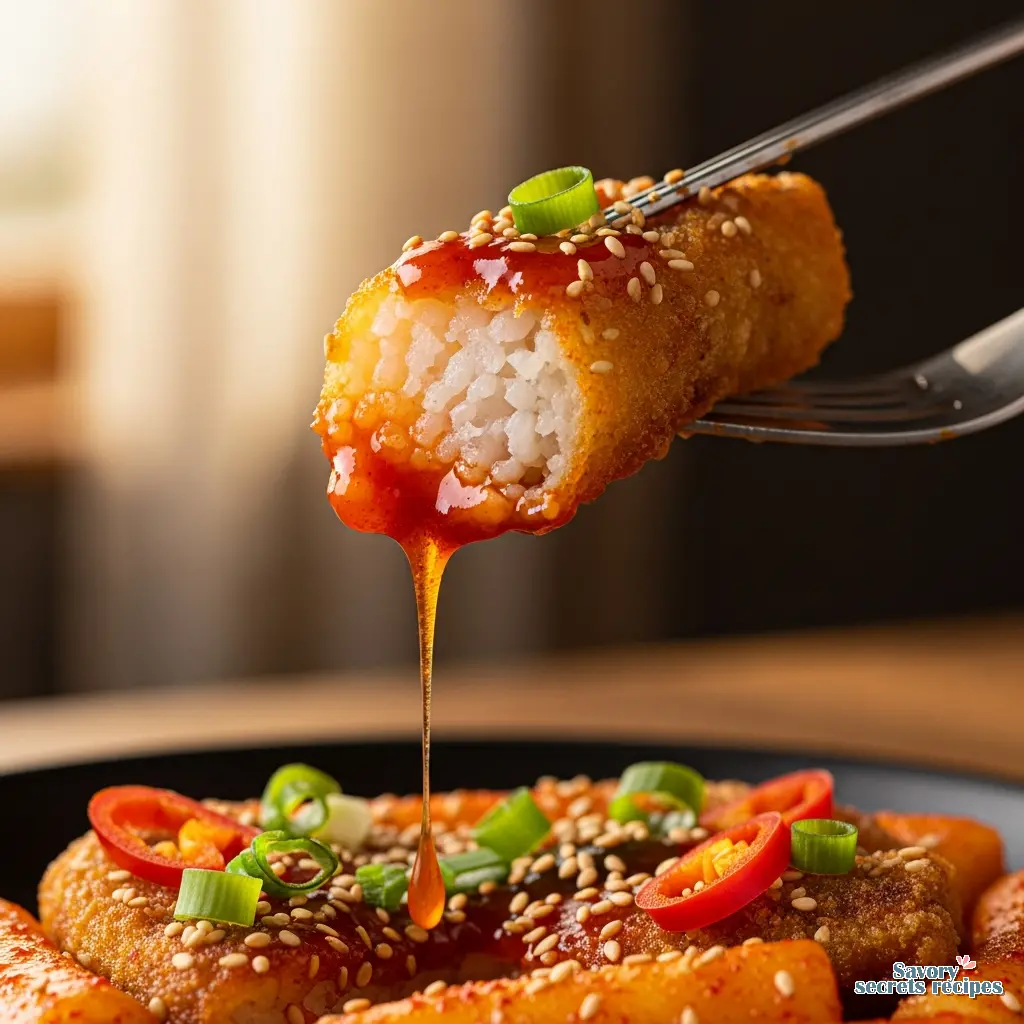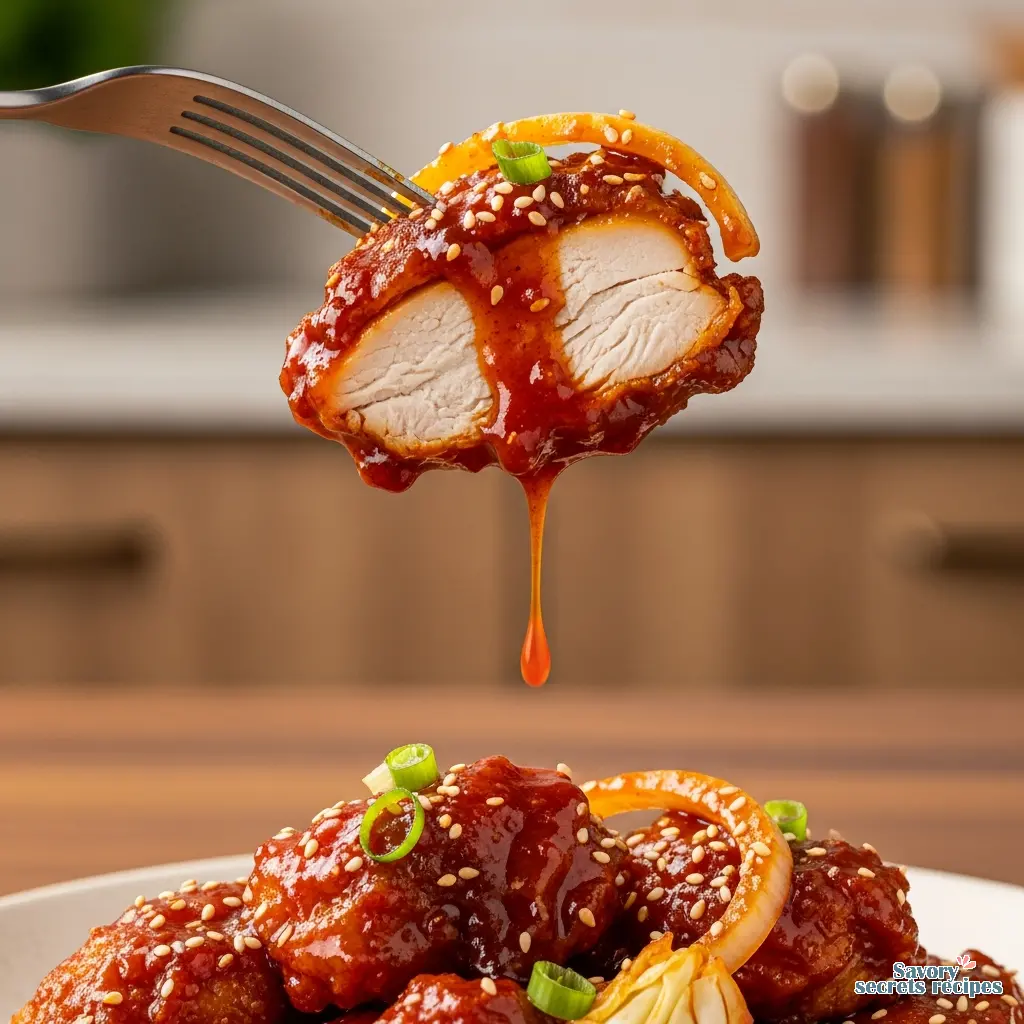




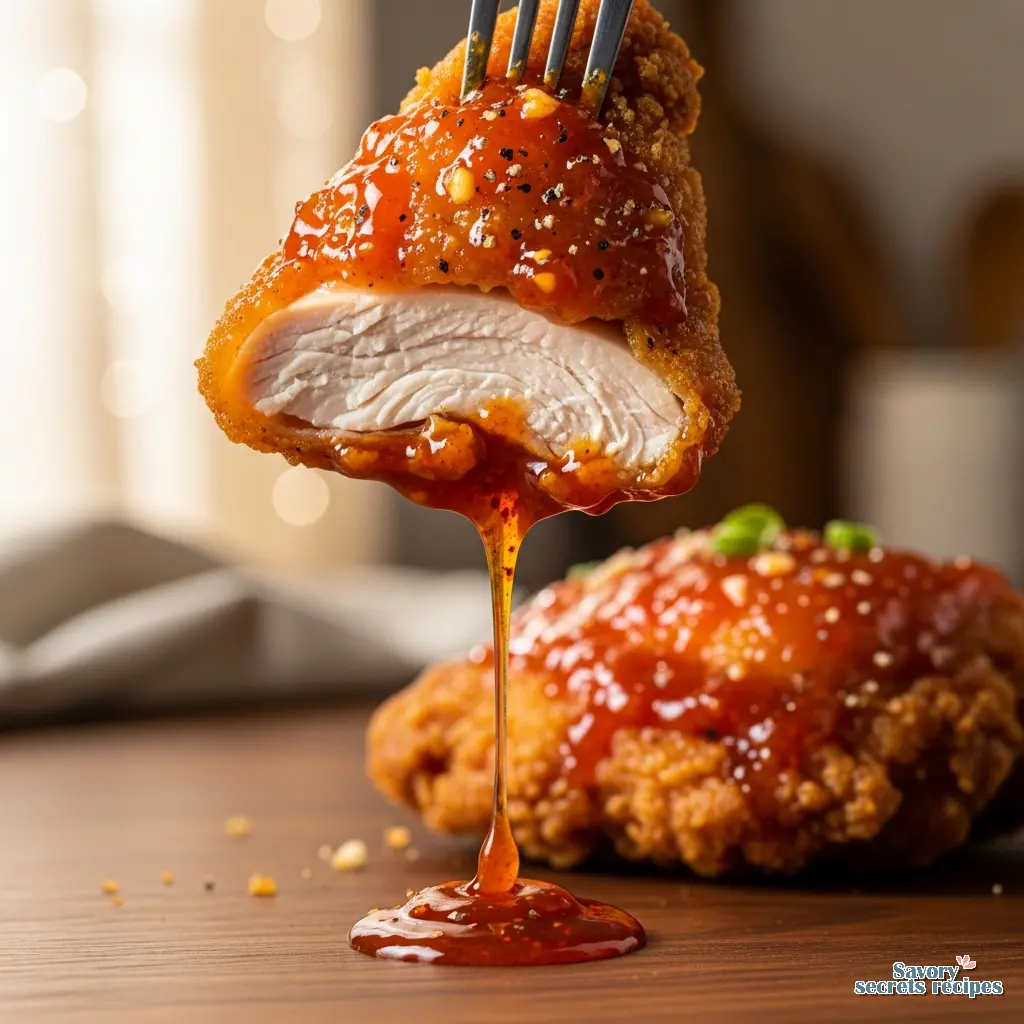
Easy Spicy Sauce for Fried Chicken
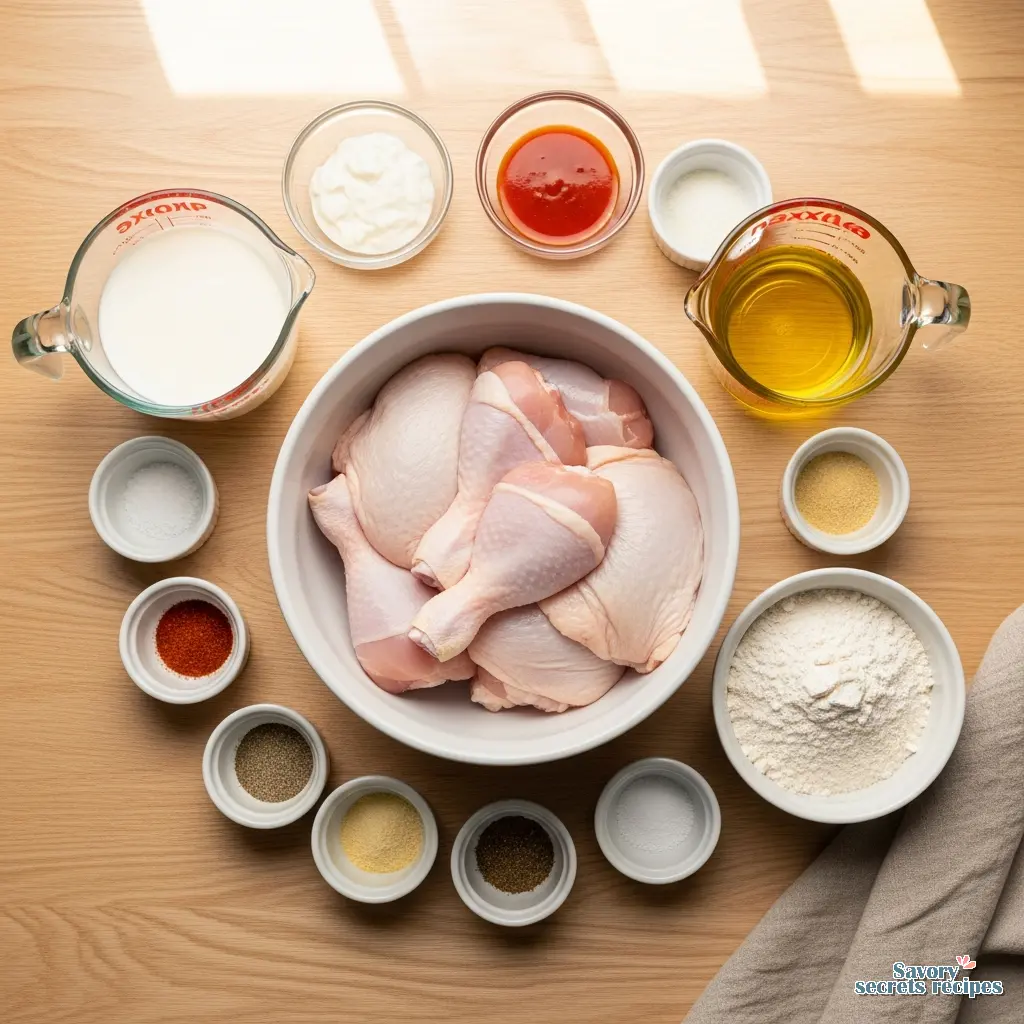
Ingredients
Method
- Combine buttermilk, hot sauce, salt, black pepper, cayenne, and garlic powder in a large bowl. Submerge chicken pieces in the mixture to coat thoroughly. Marinate in the refrigerator for 8 to 24 hours.
- Remove chicken from the refrigerator. Mix flour, black pepper, cayenne, salt, and garlic powder in a sturdy bag. Shake chicken pieces in the flour mixture a few at a time until coated. Tap off excess flour and rest on a platter at room temperature for 20 to 30 minutes.
- Heat 1/2 inch of oil in a heavy-bottomed skillet over medium heat to 325°F, or until a pinch of flour sizzles. Keep a lid nearby for safety and ensure the oil does not smoke.
- Fry chicken in batches until golden brown, about 8 to 10 minutes per side, flipping with tongs. Verify the internal temperature reaches 165°F using a digital thermometer.
- Transfer chicken to a wire rack or paper-towel-lined platter to drain. Serve warm.
Nutrition
Notes
The Weeknight Savior You Didn’t Know You Needed
Let me think about that for a second. It is Wednesday night. You have been running around Oakland or stuck in traffic on the 405, and you are staring at a package of plain chicken. You need something that hits hard with flavor but does not require a culinary degree or a trip to a specialty market. That is exactly where this easy spicy sauce for chicken comes in. It is the kind of recipe that feels like a cheat code.
My grandmother Fatima taught me to cook in Casablanca during childhood summers. She never measured anything. She just tasted and adjusted, which drove me crazy as a kid but makes complete sense now. This sauce channels that spirit. It is forgiving. It is adaptable. And honestly, it saves dinner more often than I care to admit. Whether you are tossing it with crispy fried chicken or drizzling it over a simple roasted breast, it transforms “just food” into a meal you actually want to sit down for.
I remember the first time I made a version of this for my daughter. She was going through a phase where she would only eat “white foods.” I tweaked the heat down, added a bit more honey, and suddenly, the “scary red sauce” became her favorite thing. That is the beauty here. You are in control. This isn’t just a recipe. It is a technique you will keep in your back pocket for those chaotic evenings when you need a win.
Why This Foolproof Foundation Works
Here is the thing about making an easy spicy sauce for chicken. It is all about the balance between fat and acid. In my experience, people overcomplicate this. They add twelve different spices when all you really need is a solid hot sauce base and a fat to carry the flavor. The fat (usually butter or oil) mellows out the sharp bite of the vinegar in the hot sauce, creating that smooth, clingy texture we all love.
I’d probably say this is the most versatile component in your kitchen. You don’t need to be frying chicken to use it. I use it as a marinade for grilled thighs or a dipping sauce for tenders. It works because it hits every part of the palate. You get the heat, the tang, and the savory depth all at once. Plus, using garlic powder instead of fresh garlic here is actually better. I know, fresh is usually best, but in a smooth sauce or a dredge, powder distributes evenly and doesn’t burn. It is even delicious when drizzled over braised tofu for a quick plant-based meal.
Taste as you go, adjust at the end. That is the golden rule. If it is too spicy, add a little more butter or a splash of cream. If it tastes flat, it needs more acid, so splash in some vinegar. You are building layers, not just following a list.
The Secret to the Coating (Don’t Skip This)
If you are using this sauce on fried chicken, there is one step you absolutely cannot skip. I learned this the hard way after watching my breading slide right off the meat into the fryer oil. Tragedy. The secret is resting. It sounds passive, but it is active cooking.
After you dredge your chicken in the flour mixture, let it sit on a wire rack for at least 20 to 30 minutes. Think of it like making couscous. My mother showed me how the semolina needs time to absorb the water to become fluffy. The flour on the chicken needs time to hydrate from the moisture in the chicken and the buttermilk. It forms a glue. If you fry it immediately, the moisture pushes the coating off as steam. If you wait, it fuses. Getting the texture right is just as important as knowing how to cook frozen rice cakes for that perfect crunch.
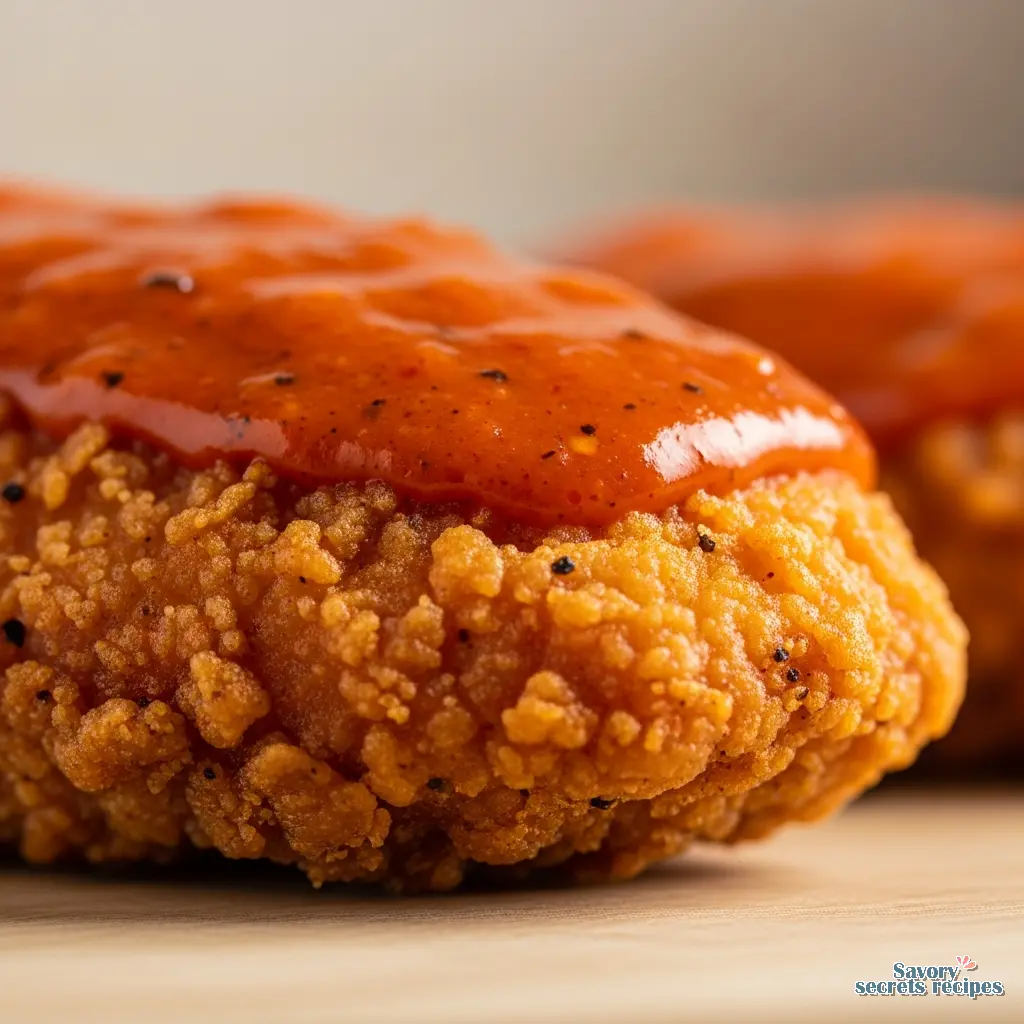
When you look at the chicken after 20 minutes, it should look a bit pasty and tacky, not dry and powdery. That is the move right there. That pasty look means you are going to get that shatteringly crisp crust that stays on the bird, not in the pan.
How to Customize Your Heat Level
We all have different tolerances. My father could eat raw chilies without flinching, while my neighbor thinks black pepper is “zesty.” This easy spicy sauce for chicken is designed to be adjustable. Here is what I’d do to tweak it.
For the Mild Crowd: Start with a vinegar-based hot sauce like Frank’s RedHot or Louisiana style. These are lower on the Scoville scale and have more flavor than burn. You can also cut the sauce with more melted butter or even a tablespoon of honey. The sugar in the honey helps counteract the capsaicin. If you love these flavors, you should also try making a gochujang fried rice recipe for an extra kick of heat.
For the Heat Seekers: If you want it to hurt a little (in a good way), swap the standard hot sauce for something habanero-based. Or, simply add a teaspoon of cayenne pepper directly to the liquid sauce while it simmers. I sometimes add a pinch of smoked paprika too. It adds a depth that makes people wonder what the secret ingredient is.
The “Nashville” Style: If you want that specific oily, spicy glaze, you use the frying oil itself. Take a half cup of the hot cooking oil and whisk it into your spice blend (cayenne, brown sugar, garlic). It is intense, but it is authentic.
The ‘No-Fry’ Variation
Look, I love fried chicken. But I do not love the smell of frying oil lingering in my apartment for three days. Sometimes you want the flavor without the production. This easy spicy sauce for chicken works incredibly well on roasted or air-fried birds too.
For a roasted version, I coat the chicken in the spice rub and roast it at 400°F until the skin is crispy. While that is happening, I simmer the sauce ingredients (butter, hot sauce, spices) in a small saucepan for about 5 minutes. You just want it to thicken slightly. When the chicken comes out, brush the sauce on immediately. The heat from the chicken will help the sauce adhere.
This is actually how I prep meals for the week. I roast a tray of thighs, keep the sauce in a jar, and just combine them when I am ready to eat. It keeps the chicken from getting soggy in the fridge. That tracks for anyone doing meal prep.
Visual Troubleshooting: What to Look For
Cooking is visual. You need to know what “right” looks like. Here is a quick breakdown of the stages for the perfect coated chicken.
Common Mistakes & Fixes
Mistake: The flour looks dry and powdery before frying.
Solution: You didn’t let it rest long enough. Mist it lightly with water or wait another 10 minutes until it looks tacky.
Mistake: The sauce is too thin and watery.
Solution: Simmer it longer. Low and slow does the work for you. It should coat the back of a spoon without running off instantly.
Mistake: The chicken is dark brown but raw inside.
Solution: Your oil was too hot. Aim for 325°F to 350°F. If it happens, finish the chicken in a 350°F oven for 10 minutes.
Storage & Reheating (The Air Fryer is King)
Leftover fried chicken with sauce can get sad and soggy if you aren’t careful. I used to think cold fried chicken was the only way to eat leftovers, but technology has saved us. If you have an air fryer, this is its moment to shine.
Store the chicken in an airtight container. It will last 3 to 5 days. When you are ready to eat, do not use the microwave. Just don’t. It steams the breading and makes it rubbery. Instead, place the chicken in the air fryer at 375°F for about 4 to 6 minutes. Give it another minute if it isn’t sizzling. You’ll smell when it’s ready. The circulating air crisps up the sauce and breading perfectly.
If you have extra sauce, keep it in a jar in the fridge. The butter will solidify, so it will look like a solid block. That is normal. Just microwave it for 30 seconds and whisk it back together. It is good as new.
Frequently Asked Questions
You’ve Got This
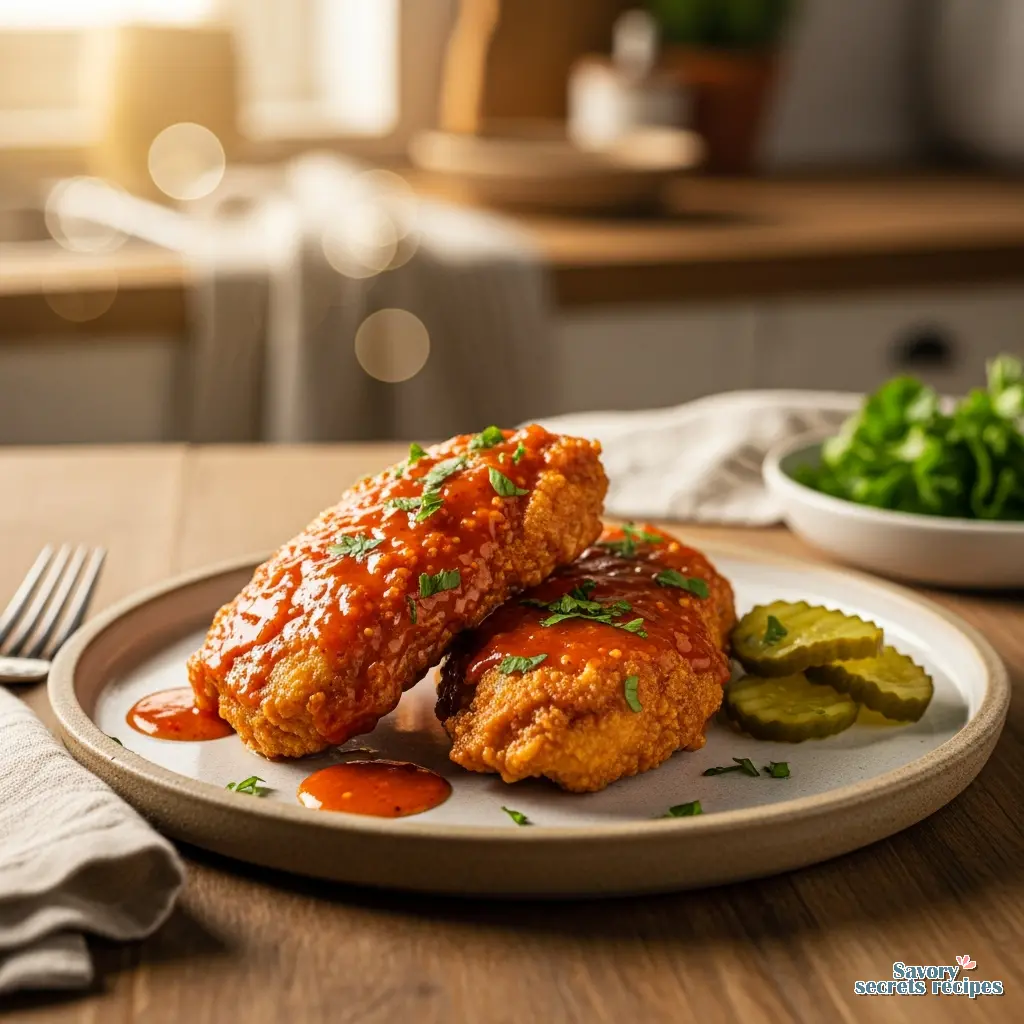
When you serve this, watch those smiles appear. There is something primal and satisfying about sticky, spicy chicken that just makes people happy. It reminds me of those Friday couscous gatherings at my grandmother’s house, where the food was just the excuse to be together. You don’t need to be a professional chef to pull this off. You just need a few pantry staples and the confidence to trust your taste buds.
If you make this easy spicy sauce for chicken, I want to see it. Snap a pic and tag me I love seeing your wins. And if you burn it a little? No worries. It adds character. You’ve got this, and dinner’s sorted.
For more inspiration, check out my Pinterest boards where I save all my favorite spicy experiments.
Reference: Original Source