



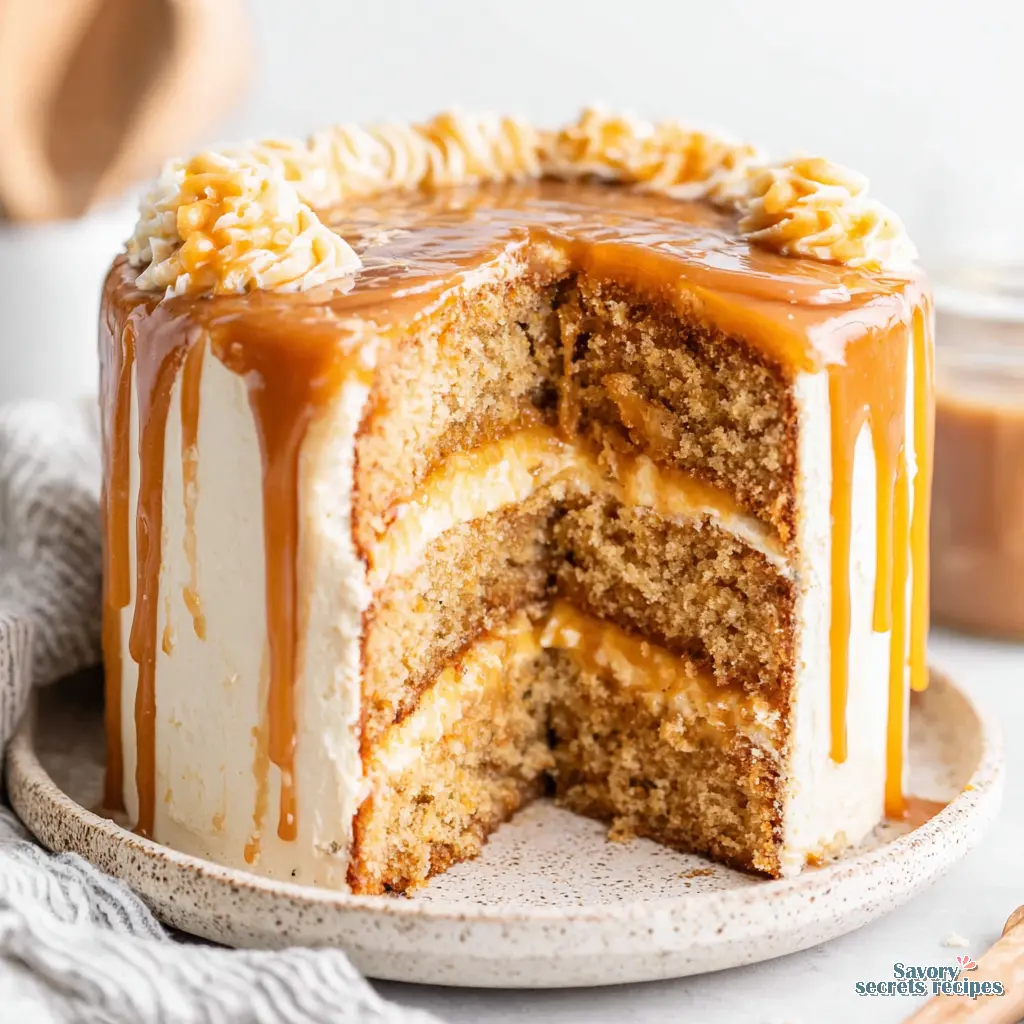
Moist Eggless Caramel Cake Recipe
Ingredients
Method
- Preheat the oven to 180°C and line three 6-inch cake pans with cooking spray and baking paper.
- Combine the white vinegar and dairy-free milk in a small bowl and set aside. In a large bowl, whisk together the white sugar, vanilla, and canola oil.
- Sift the flour and baking powder into a separate bowl and stir to combine. Whisk half of the dry ingredients and half of the milk mixture into the wet ingredients until combined. Add the remaining dry ingredients and milk, stirring until just combined while avoiding overmixing. Whisk in the salted caramel sauce until fully incorporated.
- Distribute the batter evenly among the three pans and bake for 18-20 minutes, or until the cakes spring back when lightly pressed.
- Remove the cakes from the oven and allow them to cool in the pans for 10 minutes before transferring to a wire rack to cool completely.
- Beat the dairy-free butter and salted caramel sauce with a mixer for 1-2 minutes until creamy. Add 2 cups of icing sugar and beat on medium speed until combined, adding dairy-free milk as needed to manage thickness. Incorporate another 2 cups of icing sugar and more milk until the frosting is smooth and thick, adding an extra ½-1 cup of icing sugar if the consistency is too thin.
- Secure the first cake layer to a stand with a small amount of buttercream and spread a thick layer of frosting over it. Add the second layer, more frosting, and the final layer upside down to ensure a flat top. Apply a crumb coat to the top and sides, smooth with a scraper, and chill the cake in the fridge for 30-60 minutes.
- Apply a second layer of buttercream to the top and sides, smoothing it with a scraper. Chill the cake again and transfer any remaining frosting to a piping bag fitted with an open star tip.
- Thicken the caramel in the fridge until it reaches the desired consistency. Use a squeeze bottle to carefully apply drips around the top edge of the cake, then spoon the remaining caramel over the top to coat it completely.
- Pipe the remaining buttercream around the top of the cake and store it in the refrigerator to allow the caramel drip to set.
Nutrition
Notes
Why You’ll Love This Eggless Caramel Cake Recipe
I know the struggle of baking a vegetarian dessert that actually tastes good. You want a tender texture. You want a moist crumb. Instead, you often end up with something that crumbles like dry sand the moment your fork hits it. I’ve been there. I remember trying to bake an allergy friendly cake for a spring potluck a few years ago. I didn’t verify my leavening ratios, and I ended up with a dense, flat disk. That’s exactly why I developed this eggless caramel cake recipe. It is a foolproof method that delivers a light, airy sponge every single time.
My grandmother, Babcia Helena, used to say that baking is just edible biology. She was a master of preserving and fermentation in her Milwaukee kitchen, but her rules applied to cakes too. You trust your hands, but you verify with your tools. This recipe relies on specific chemical reactions. We use Greek yogurt and baking soda to create the lift that eggs normally provide. That fizzing reaction in the bowl? That is a textbook reaction right there. It creates the beautiful air pockets you need for a perfect sponge.
If you are planning a weekend brunch or a spring gathering, this is the cake to make. Even in our mild California spring weather, it holds up beautifully on a dessert table. You won’t even miss the eggs. I promise you that.
Essential Ingredients for Your Eggless Caramel Cake Recipe
Before you run to Trader Joe’s or Ralphs, let’s talk about what makes this cake work. The ingredient list is simple, but each item plays a critical role in eggless baking. I prefer weighing ingredients over using volume measurements. A cup of flour can vary drastically depending on how you scoop it. If you don’t have a scale, you must use the spoon and level method for your plain flour. Better to err on the side of caution.
You will need sweetened condensed milk for richness. The milk solids in the condensed milk help mimic the fat and flavor profile that egg yolks usually provide. For the liquid, a combination of room temperature dairy-free milk and a splash of vinegar creates a buttermilk effect. This acidity is non-negotiable. It activates your leavening agent.
For the flavor, do not skimp on the vanilla extract. A high-quality vanilla extract bridges the gap between the sweet cake and the deep, roasted notes of the caramel frosting. You’ll also need standard pantry staples like baking powder, baking soda, white sugar, and canola oil.
The Science of Eggless Rise: Curd vs. Yogurt
I sometimes wonder if my insistence on kitchen science is overkill for home bakers. But understanding the “why” prevents failures. In traditional baking, eggs provide structure and leavening. Without them, we need an egg substitute that can do both heavy lifting and binding.
According to the guidelines of vegan baking, you can use either traditional curd or Greek yogurt. I prefer Greek yogurt. The protein structure in thick yogurt creates a much stronger binding network in the batter. When the lactic acid in the yogurt meets the baking soda, it creates carbon dioxide bubbles. You will actually see the batter puff up slightly before it even hits the oven.
I’d want to verify first that your yogurt is at room temperature. Cold yogurt will shock the melted butter or oil in your batter, causing it to clump. We want a smooth, homogenous mixture. This is active biology, not magic.
How to Make Eggless Caramel Cake
1. Making the Perfect Caramel
Caramelizing sugar terrifies people, but it shouldn’t. You just need patience and the right equipment. Use a large pan with a flat bottom for even sugar melting. If you use a small saucepan, the sugar piles up and melts unevenly, leading to crystallization.
Place your sugar over medium heat. Never use high heat. I once tried to rush a batch of caramel because we were having people over. I cranked the heat, the sugar burned in seconds, and my kitchen smelled like a campfire. You can’t negotiate with time. Let the sugar melt slowly. You are looking for a dark brown color for your syrup to ensure the flavor carries through the cake.
It is crucial to distinguish between caramel syrup and caramel sauce. Syrup is just sugar and water cooked down. We use this to flavor the cake layers. Sauce involves sugar, heavy cream, and butter. We use the sauce for the topping and frosting. Knowing the difference guarantees proper texture control.
2. Preparing the Moist Cake Batter
Once your wet ingredients are combined with your yogurt and leaveners, it is time to add the dry ingredients. Here is where most people ruin their eggless caramel cake recipe. Do not use an electric mixer for this step.
Mix the batter with a wooden spoon instead of an electric beater. Overbeating cake flour or plain flour develops too much gluten. In an eggless recipe, overdeveloped gluten causes the center of the cake to sink dramatically as it cools. Just fold the batter gently until no dry streaks remain. A few small lumps are perfectly fine.
To ensure a perfectly flat cake, use cake strips around your pans. Soak the fabric strips in water and wrap them around the outside of your baking tins. This insulates the edges, allowing the center and the sides to rise at the exact same rate. It completely eliminates the need for leveling the cakes later.
3. Whipping the Caramel Frosting
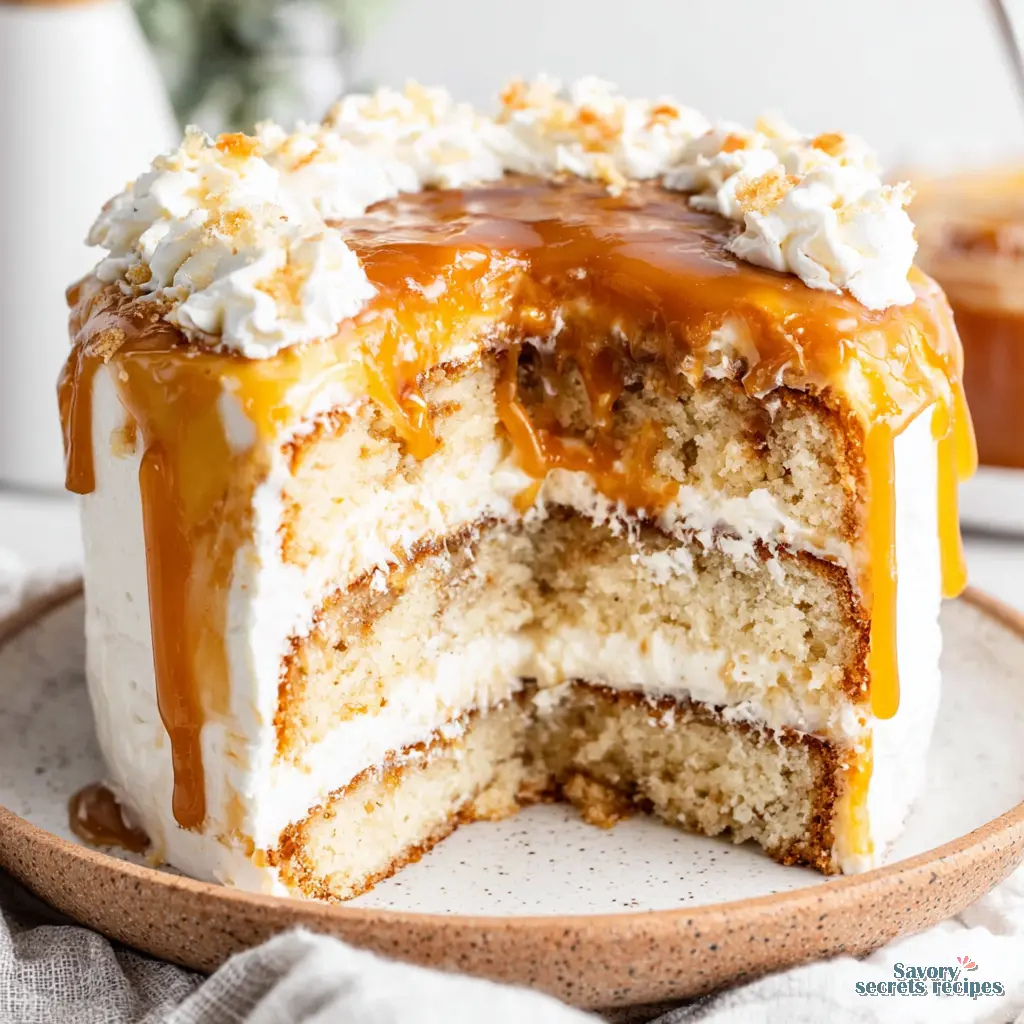
The frosting is where this cake truly shines. We are making a browned butter caramel frosting. Brown the butter immediately before making the caramel to allow adequate cooling time. You want the browned butter to solidify slightly before you whip it, otherwise, your frosting will turn into soup.
If you are using salted butter in the recipe, do not add extra salt to the frosting. The data suggests that salted butter varies wildly by brand. Adding more salt without tasting first usually results in an inedible, overly salty frosting. I learned that the hard way. Taste as you go.
When you assemble the cake, apply a thin crumb coat first. Then, chill the cake in the fridge for at least one hour. This sets the caramel and the crumbs before you apply the final, beautiful layer of frosting. It makes decorating infinitely easier.
Common Mistakes & Fixes
❌ Mistake: My caramel has burnt sugar.
✅ Solution: There is no way to save burnt sugar. Throw it out and start over. Next time, use medium heat, not medium-high, and do not rush the process.
❌ Mistake: My caramel is grainy.
✅ Solution: This is usually a butter separation issue or undercooking. Reheat the mixture to a rolling boil for 30-45 seconds while whisking vigorously to bring it back together.
❌ Mistake: My cake sank in the middle.
✅ Solution: You likely overmixed the batter with an electric mixer. Always use a wooden spoon to gently fold the dry ingredients into the wet.
Expert Tips for Success
I’ve tested this eggless caramel cake recipe dozens of times. Just to be safe, I always recommend checking your oven temperature with a standalone oven thermometer. Built-in oven sensors are notoriously inaccurate. Baking at the exact right temperature ensures that golden brown crust without drying out the interior.
If your sugar isn’t melting properly in the pan, resist the urge to stir it aggressively with a whisk. Swirl the pan gently instead. Stirring introduces cool air and causes the sugar to crystallize into hard clumps. Let the heat do the work.
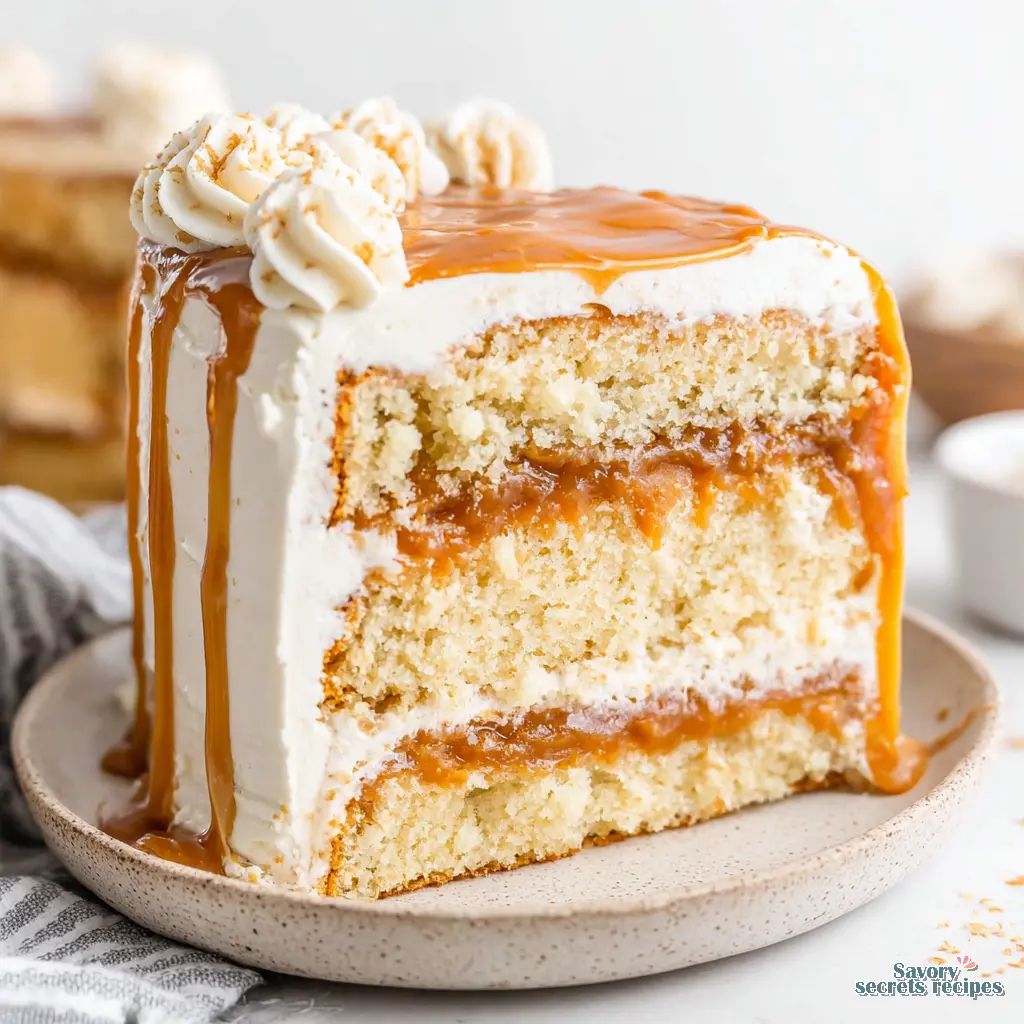
For the absolute best visual presentation, top the finished cake with a gooey caramel glaze. Let the cake chill completely so the buttercream is firm. Then, pour room-temperature caramel sauce over the top, letting it drip naturally down the sides. It looks incredibly professional.
Recipe Variations & Substitutions
I prefer working with established protocols, but this base recipe is incredibly versatile. If you want a Caramel Turtle Cake, simply add crushed pecans between the layers and drizzle a dairy-free chocolate ganache over the top. The crunch of the pecans balances the soft sponge perfectly.
For my gluten-free readers, you can easily adapt this. I’d probably want to test your specific flour blend first, but in my experience, King Arthur measure-for-measure gluten-free flour works best. Add a tablespoon of cornstarch to the mix to improve the tender texture.
If you are baking for a fully vegan crowd, swap the Greek yogurt for a thick, dairy-free yogurt (like oat or coconut based). Use vegan butter and a heavy vegan cream for the caramel sauce. It works beautifully, though you might need to boil the vegan caramel just a minute longer to reach the right consistency.
Storage and Freezing Instructions for Eggless Caramel Cake Recipe
Proper storage is essential to keep an egg-free cake from drying out. Because we rely on yogurt and oil for moisture, this cake actually tastes better on the second day. Store the assembled cake in an airtight container at room temperature for up to three days. If your kitchen is warmer than 75°F, you should move it to the refrigerator.
If you refrigerate the cake, it will last up to six days. However, cold temperatures harden the butter in the frosting and firm up the crumb. Always let individual slices sit at room temperature for 30 minutes before serving. The texture needs to relax.
For freezing, I prefer a make-ahead strategy. Bake the cake layers, let them cool completely, wrap them tightly in plastic wrap, and freeze them for up to two months. Make the caramel sauce and frosting fresh on the day you plan to serve. Thaw the cake layers at room temperature for an hour before assembling.
Frequently Asked Questions
Happy Baking
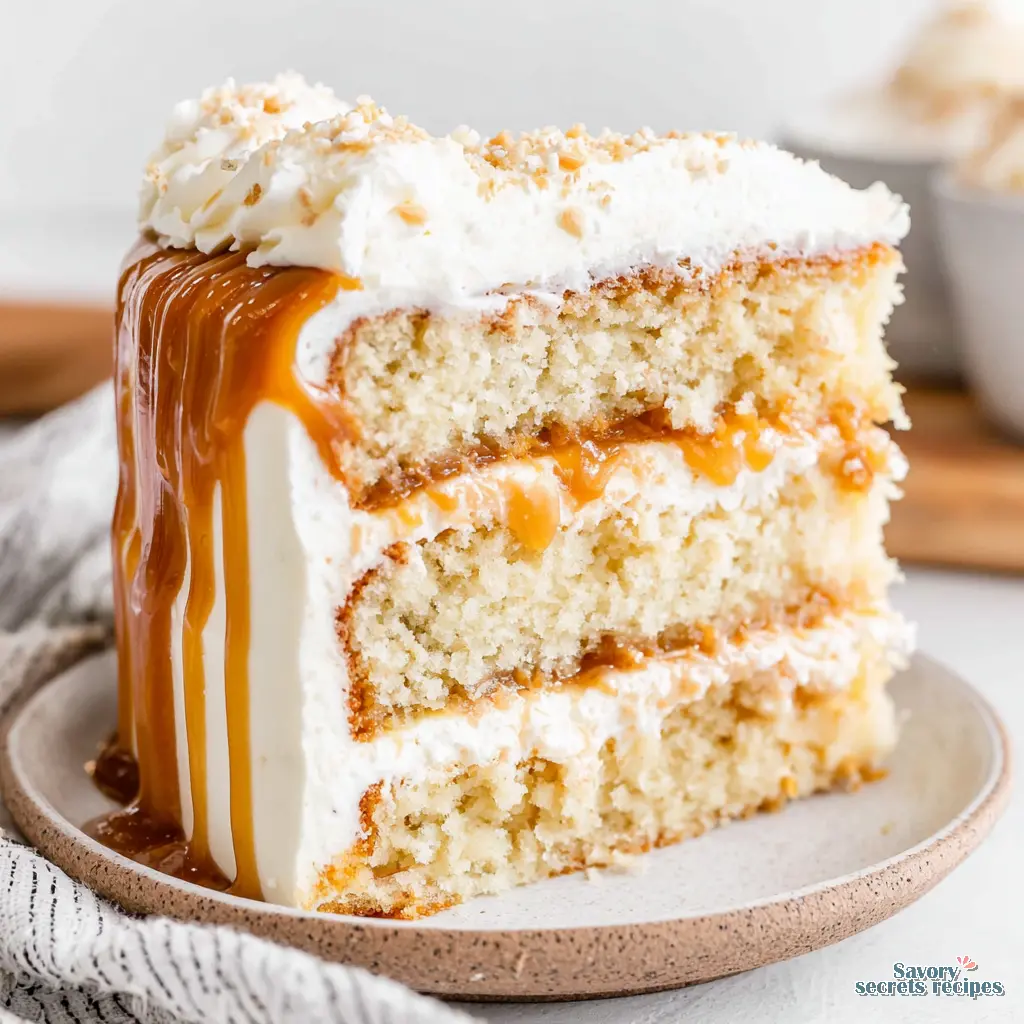
I genuinely love the moment you cut into this cake and see those perfect, fluffy layers. It proves that you don’t need eggs to create a masterpiece in the kitchen. Whether you are baking for someone with allergies or just ran out of eggs on a Sunday morning, this eggless caramel cake recipe will not let you down. Trust the process, watch your caramel temperatures closely, and enjoy the results.
If you try this recipe, please let me know how it turns out. I love hearing about your kitchen wins. I share tons of variations and baking science tips on my Pinterest boards if you want more ideas for your next weekend project. Happy baking, everyone.
Source: Nutritional Information
What is the secret to making a moist eggless caramel cake recipe from scratch?
The real secret is the combination of Greek yogurt and oil. The yogurt provides necessary proteins for structure, while the oil coats the flour proteins to prevent gluten formation. This guarantees a tender, moist crumb that doesn’t dry out after baking.
How can I make an eggless cake moist with caramel while keeping it light and fluffy?
You need to activate your baking soda properly. I use a splash of white vinegar mixed with room temperature milk. This creates a strong acidic base that reacts aggressively with the baking soda, creating the carbon dioxide bubbles needed for a fluffy texture.
What is the best egg substitute for caramel cake to ensure a perfect sponge texture?
Based on my testing, full-fat Greek yogurt is the absolute best substitute. It mimics the fat content of egg yolks while providing enough acidity to activate the leavening agents. Applesauce makes cakes too dense, but yogurt yields a perfect sponge.
Can I use condensed milk to make a rich eggless caramel cake without eggs?
Yes, absolutely. Sweetened condensed milk is fantastic in this eggless caramel cake recipe. The concentrated milk solids caramelize slightly in the oven, deepening the flavor profile, while the thick syrup provides incredible moisture and binding properties to the batter.
How long can you store a vegetarian caramel cake before it starts to lose its moisture?
Stored properly in an airtight cake dome at room temperature, it stays perfectly moist for three days. If you need to keep it longer, wrap it tightly and refrigerate it for up to six days, but always bring it back to room temperature before eating.
Can I make this eggless caramel cake recipe gluten free?
Yes, you can. Swap the plain flour for a high-quality measure-for-measure gluten-free blend containing xanthan gum. I recommend adding one extra tablespoon of milk to the batter, as gluten-free flours tend to absorb more liquid during the resting phase.