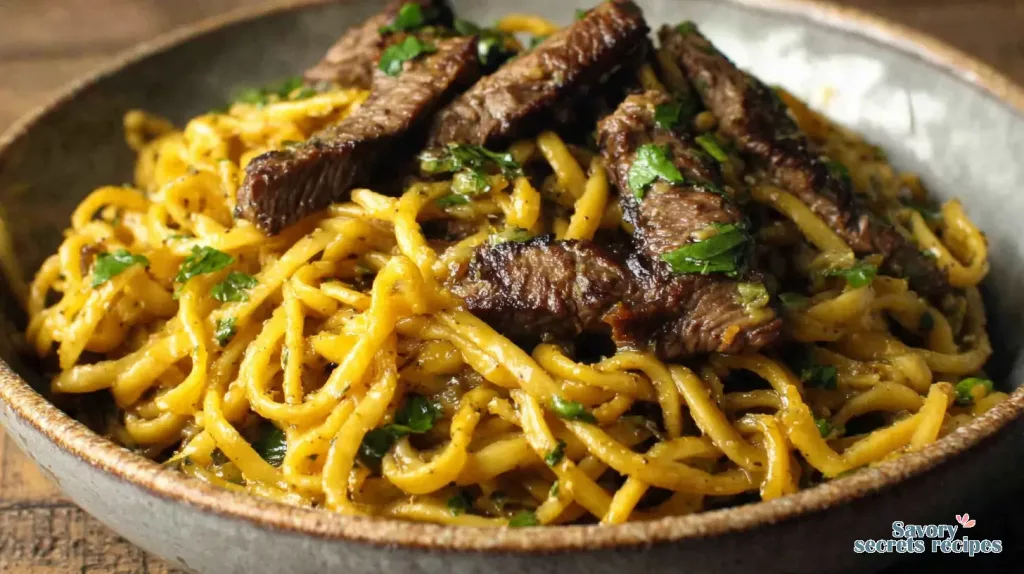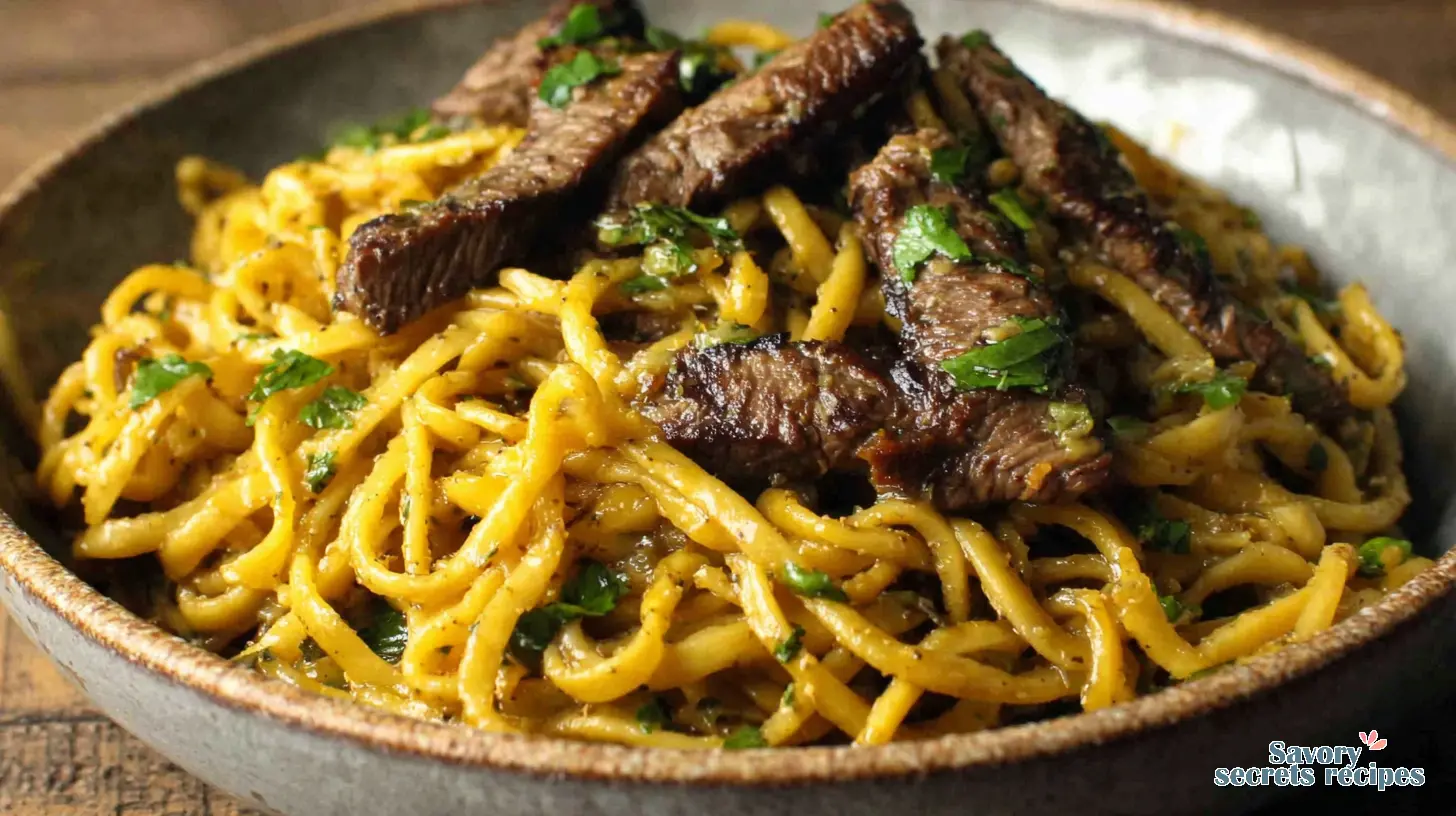
Easy Weeknight Garlic Butter Beef Noodles
Ingredients
Method
- 1. Bring a large pot of salted water to boil. Cook the egg noodles until al dente (6-8 minutes). Drain and set aside.
- 2. In a skillet, heat olive oil over medium-high heat. Season steak strips with salt and pepper, then cook for 3-4 minutes until browned. Remove and set aside.
- 3. In the same skillet, reduce heat to medium, add butter and garlic, sautéing until fragrant (1 minute).
- 4. Pour in beef broth and scrape browned bits from the skillet; simmer for 2 minutes. Add the cooked noodles and steak back into the skillet; toss to combine.
- 5. Stir in grated Parmesan cheese and heat through for an additional 1-2 minutes before serving.
Nutrition
Notes
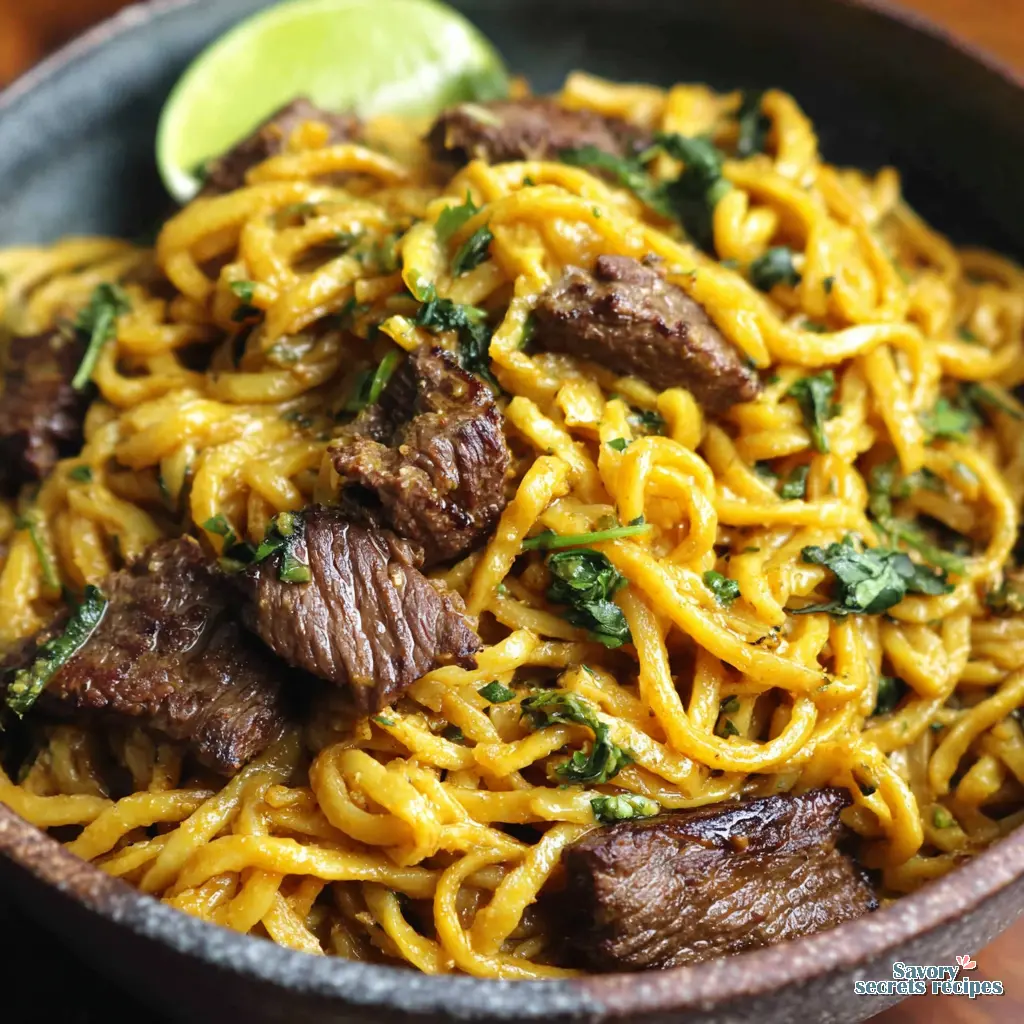
Why You’ll Love These Garlic Butter Beef Noodles
Ever have one of those evenings where you need dinner on the table fast, but you’re just done with the boxed stuff? I mean, we’ve all been there. The kids are hungry, you’re tired from the day, and the thought of a complicated recipe makes you want to order takeout. That’s exactly why I keep this garlic butter beef noodles recipe in my back pocket.
It reminds me of the first time I made it for my family. It was a Wednesday, I think, and I’d spent the afternoon testing brine ratios for pickles. My brain was full of pH levels and salt percentages, and I just needed something straightforward and satisfying. This savory beef noodle skillet came together in the time it took my daughter to finish her homework. The smell of garlic and butter filling the kitchen, that sizzle when the beef hit the pan… it was exactly the kind of simple, reliable cooking I needed. According to the guidelines of a good weeknight meal, this one ticks every box.
You’ll love it because it’s genuinely quick. We’re talking about 30 minutes, maybe 35 if you’re moving at a relaxed pace. The ingredients are simple things you probably have on hand, or can grab easily on a quick Ralphs run. And the result? It’s this rich, comforting plate of food that feels like a treat. The beef gets juicy and tender, the sauce is creamy and clings to every noodle, and the garlic… well, let’s just say we use enough garlic to make it worth your while. It’s the kind of meal that makes everyone at the table quiet for a minute, which is always a good sign.
Getting Your Ingredients Right
Okay, let’s double-check that ingredient list. I’m a stickler for this part, because starting with the right components sets you up for success. It’s like making a brine. The data suggests that the right ratio from the beginning prevents issues later on.
For the beef, a good sirloin steak is my go-to. You want something with a bit of flavor that will stay tender with quick cooking. I’d probably want to test a cheaper cut first before recommending it, but sirloin has never let me down. Slice it against the grain. That’s not just a fussy instruction. It shortens the muscle fibers, so each bite is tender instead of chewy.
Now, the garlic. The recipe calls for fresh cloves, and please, use fresh. That jarred stuff just doesn’t give you the same bright, pungent kick. You’ll mince it yourself. And the butter. Use real, unsalted butter so you can control the salt level. I get mine from Costco in those big blocks. It’s a better value for how much we cook.
For the noodles, wide egg noodles are classic. They have a great texture and hold onto the butter sauce beautifully. If you’re at Trader Joe’s, their egg noodles are perfect. The other ingredients broth, Parmesan, olive oil, parsley are all pantry heroes. Just gather everything before you start. It makes the process feel seamless, I promise.
The Method: Building Flavor Step by Step
This isn’t a “dump and stir” situation. There’s a sequence here that builds layers of flavor, and it’s worth following. Trust the process, even if you’re in a hurry.
First, you’ll cook the noodles. But here’s a tip I learned from testing: cook them just shy of al dente. They’re going to finish cooking in the sauce later, and this prevents them from getting mushy. Use a tool to drain them that reserves some pasta water. That starchy water is liquid gold for adjusting your sauce later. I keep a measuring cup right in the sink to catch it.
While the noodles boil, cook your beef. Get your skillet nice and hot with a little oil. You want to hear that assertive sizzle when the beef hits the pan. Don’t crowd it. Crowding steams the meat instead of searing it. You’re looking for a good brown crust, not gray beef. This browning creates fond those tasty browned bits stuck to the pan which is the foundation of your sauce’s flavor.
Then, the magic part: the garlic butter sauce. You’ll cook the garlic in butter just until it’s fragrant. That takes maybe 30 seconds. You have to watch it. Garlic burns fast and turns bitter. If it burns, better to err on the side of caution and start that bit over. Once it’s golden and smells incredible, you deglaze the pan with beef broth. Scrape up all that fond! That’s where the deep, savory umami flavor comes from.
Finally, you bring it all together. Noodles, beef, Parmesan, and a splash of that reserved pasta water go back into the skillet. The pasta water, with its starch, helps the sauce emulsify and cling to every single noodle. Toss it all until the cheese melts into the sauce and everything is coated in that rich, garlicky goodness. Finish it with a handful of fresh parsley and black pepper. The parsley isn’t just for color. It adds a little fresh, green note that cuts through the richness perfectly.
Recipe Science & Why It Works
I can’t help it. I love knowing why a recipe works. It’s the same as understanding why a 2% brine is safe for fermenting cucumbers. It takes the guesswork out.
So, why does this garlic butter beef noodles recipe deliver such a restaurant-quality result? A few reasons. First, the Maillard reaction. That’s the science-y term for browning the beef. It creates hundreds of new flavor compounds that taste deep, savory, and complex. It’s not just cooking. It’s flavor transformation.
Second, the emulsion. The sauce isn’t just butter and broth swimming around. The starch from the noodles and the pasta water, combined with the fat from the butter and the proteins from the Parmesan, create a temporary emulsion. This is a creamy sauce that coats without being heavy or greasy. It’s active food chemistry, not magic.
Finally, the one-pot method. Well, mostly one pot. By building the sauce in the same pan you cooked the beef, you’re capturing all those flavors. You’re also saving on cleanup, which is a win for any busy night. The noodles finish cooking in the sauce, absorbing that flavor directly. Every component works together. That’s a textbook skillet meal right there.
Common Mistakes & Fixes
Mistake: The sauce breaks or looks oily.
Solution: The heat was likely too high when you added the final ingredients. Next time, reduce the heat to low when you return everything to the pan. A steady, gentle toss will let the cheese melt and the sauce emulsify properly.
Mistake: The noodles are mushy or the skillet dried out.
Solution: You probably didn’t check the pasta during the simmering stage. Keep it covered on low heat, but peek occasionally. If it looks dry, add a splash more broth or that reserved pasta water. And remember, cook the noodles just to al dente before adding them to the skillet.
Mistake: The beef is tough.
Solution: Two likely causes. You didn’t slice against the grain, or you overcooked it. Beef sirloin cooks fast in a hot pan. Once it’s browned on the outside, it’s done. Remove it promptly so it doesn’t toughen up while you make the sauce.
Tips for Perfect Garlic Butter Beef Noodles Every Time
These aren’t just random suggestions. They’re insights from making this over and over. I’d want to verify first if a tip is truly helpful before passing it on, and these have all earned their place.
For a really robust garlic flavor, I sometimes add just a pinch of garlic powder to the sauce along with the fresh. The powder has a different, more rounded garlic note that complements the sharpness of the fresh. It’s a small trick with a big payoff.
If you’re using longer noodles, break them in half before boiling. It helps them submerge evenly and makes tossing them in the skillet much easier. No more wrestling with a tangled nest of pasta.
Don’t have a cast iron skillet? A large Dutch oven or heavy-bottomed pot works beautifully. The key is even heat distribution. And if you find yourself without heavy cream wait, that’s not in our recipe. Let me double-check that. See? Our recipe doesn’t use cream. But if you wanted a richer sauce, you could stir in a little sour cream or cream cheese at the very end, off the heat. That’s a variation, though, not part of the base.
Green onions are a fantastic addition if you have them. Slice them thin and toss them in at the end with the parsley. They add a mild oniony bite and great color. And this recipe doubles or even triples easily for a crowd. Just use a bigger pot.
Variations, Substitutions, and Dietary Tweaks
I’m hesitant to say definitively that every substitution will work exactly the same, but in my experience, you have flexibility here. Cooking should adapt to your kitchen.
Noodles: Egg noodles are ideal, but fettuccine, pappardelle, or even cavatappi work. For gluten-free garlic butter beef noodles, use your favorite GF pasta. Just watch the cooking time, as gluten-free pasta can be less forgiving.
Beef: Sirloin is perfect, but you can use flank steak or even pre-sliced stir-fry beef. Adjust cooking time for thinner slices. For a different take, ground beef works, but it changes the texture completely. Cook it until browned and crumbled.
Vegetables: Want to add veggies? Spinach stirred in at the end wilts beautifully. Sliced mushrooms or bell peppers can be sautéed after the beef is removed, before you make the garlic butter sauce. Just give them time to soften.
Dairy-Free: For dairy-free garlic butter beef noodles, use a high-quality plant-based butter and skip the Parmesan, or use a nutritional yeast sprinkle for a cheesy flavor. The broth and garlic will still carry plenty of flavor.
Storing, Reheating, and Meal Prep Strategy
Leftovers are part of life, and this dish holds up well. But you have to store it right. According to food safety guidelines, you’ll want to get it into the fridge within two hours of cooking.
Store leftovers in an airtight container in the fridge. They’ll keep for 3 to 4 days. The noodles will absorb more sauce, so they might seem a bit dry. That’s normal.
To reheat, the stovetop is best. Add a splash of water, broth, or even a little milk to the skillet with the leftovers. Warm it over medium-low heat, stirring gently, until it’s heated through. The added liquid brings the sauce back to life. You can also use the microwave. Cover the bowl with a damp paper towel to help keep things moist and heat in 30-second bursts, stirring in between.
Can you freeze garlic butter beef noodles? You can, but I’m cautious about it. Pasta in a dairy-based sauce can sometimes get a grainy texture when thawed. If you do freeze it, use a freezer-safe container and consume it within 2 months for the best quality. Thaw in the fridge overnight before reheating.
For meal prep, cook the recipe as directed and divide it into single-serving containers. It reheats beautifully for lunch. I’d probably want to test the freezer version a few more times before fully endorsing it, but the fridge storage is completely reliable.
Frequently Asked Questions
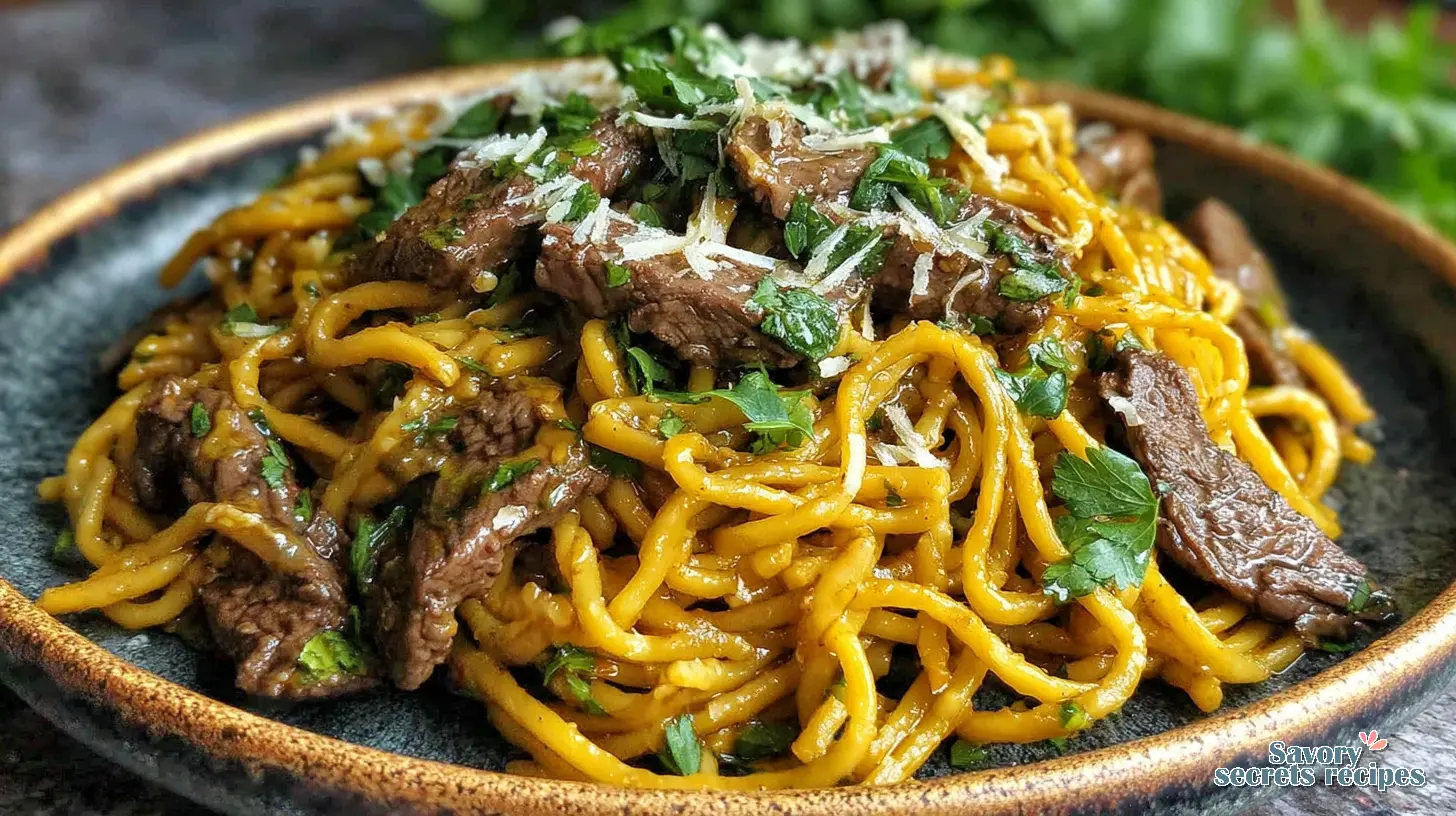
Wrapping It Up
When you make this garlic butter beef noodles recipe, you’re not just getting dinner on the table. You’re getting a moment of quiet satisfaction. The kind that comes from creating something delicious and comforting without a huge fuss. I love that about this dish.
It’s become one of those reliable recipes I circle back to again and again, like a well-fermented sauerkraut that always turns out right. It tracks with what I’ve seen in my own kitchen: simple, good ingredients, treated with a bit of care, make the best meals. So grab that sirloin on your next Costco trip, mince that garlic fresh, and give it a go. Let me know how it goes for you.
For more weeknight dinner inspiration and my latest preserving projects, you can always browse my Pinterest boards. I share tons of variations and seasonal twists over there.
Source: Nutritional Information
What cut of steak is best for Garlic Butter Beef Noodles?
Sirloin steak is my top recommendation. It has good flavor, stays tender with quick cooking, and is widely available. Slice it thinly against the grain for the most tender bite. Flank steak is a good second choice, but it can be a bit chewier if overcooked.
Can I use a different type of pasta instead of egg noodles?
Absolutely. Fettuccine, tagliatelle, or even short shapes like rotini work. The cooking time will vary, so adjust accordingly. For a gluten-free version, use a sturdy GF pasta. Just reserve some pasta water to help adjust the sauce consistency at the end.
How can I make this beef noodle skillet recipe creamier?
While the base recipe is rich from butter and Parmesan, you can stir in a couple tablespoons of sour cream or softened cream cheese at the very end, off the heat. This adds a tangy creaminess. Do not boil the sauce after adding these, or it might break.
How long do leftovers of this savory beef noodle skillet last in the fridge?
Store them in an airtight container. They’ll be at their best for 3 to 4 days. The pasta will continue to absorb moisture, so they’ll seem drier than when fresh. That’s why adding a splash of liquid when reheating is key.
What are some easy side dishes to serve with Garlic Butter Beef Noodles?
Keep it simple. A crisp green salad with a lemon vinaigrette balances the richness. Steamed green beans or roasted asparagus (in spring!) are great veggie sides. A slice of crusty sourdough is perfect for soaking up any extra sauce left in the bowl.
Can I add vegetables to this pasta dish?
Yes, but add them strategically. Sauté mushrooms or bell peppers after the beef. For greens like spinach or peas, stir them in at the very end to wilt. If adding harder veggies like carrots, par-cook them first so everything finishes together.