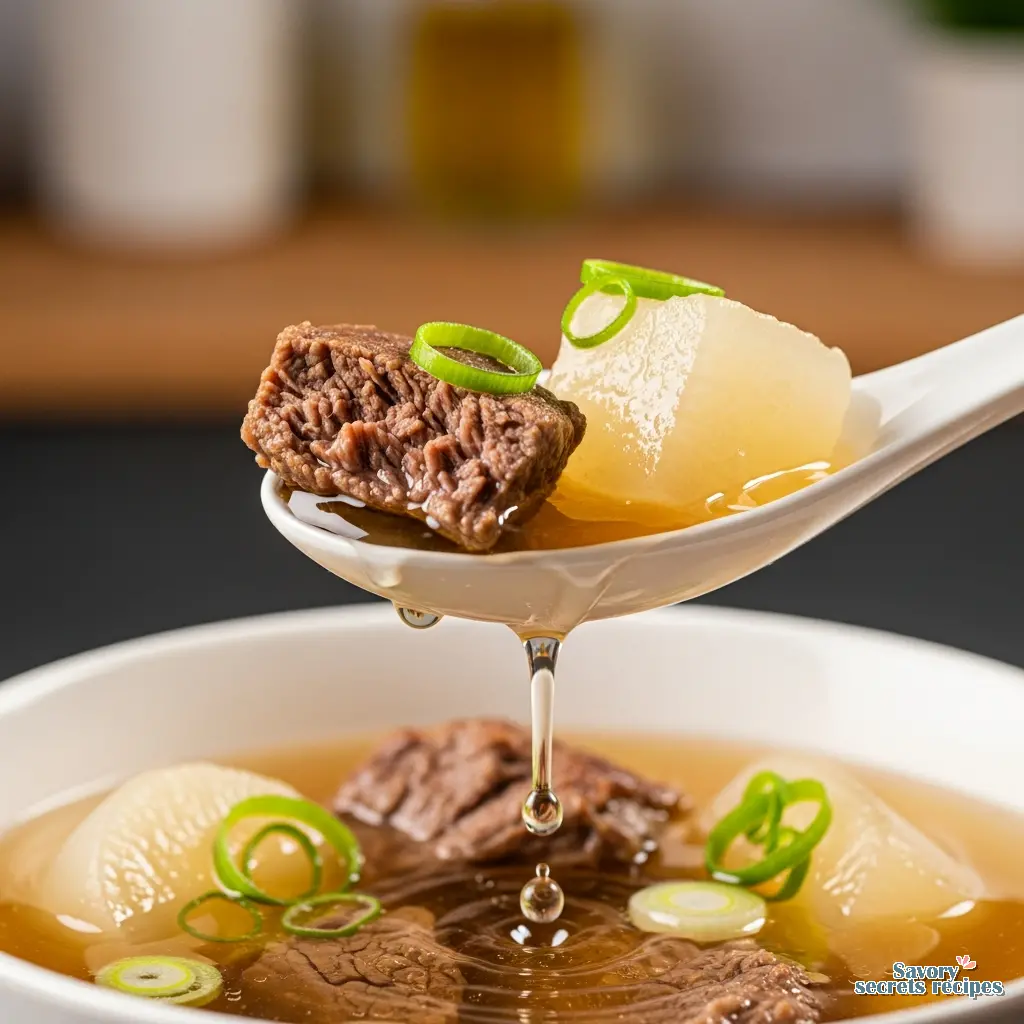




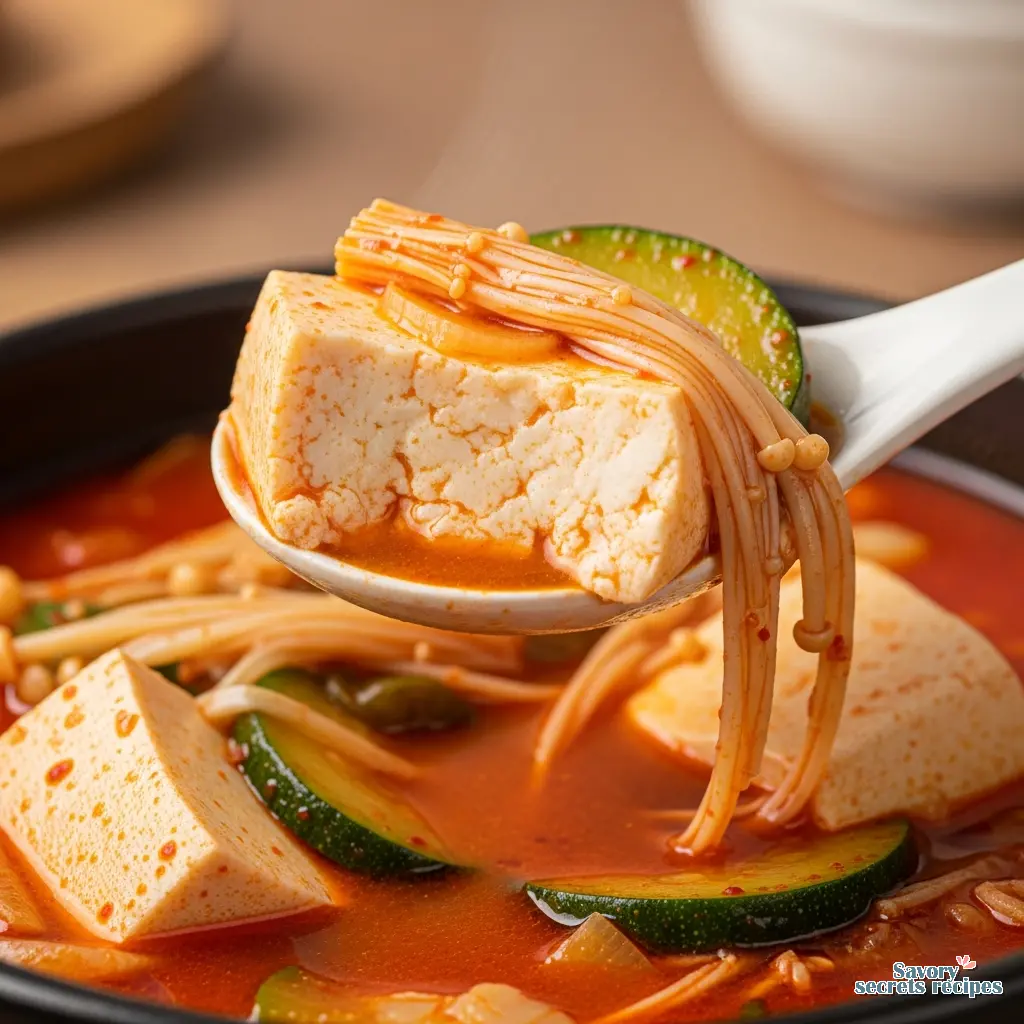
Vegetarian Soondubu Jjigae Korean Tofu Soup Recipe
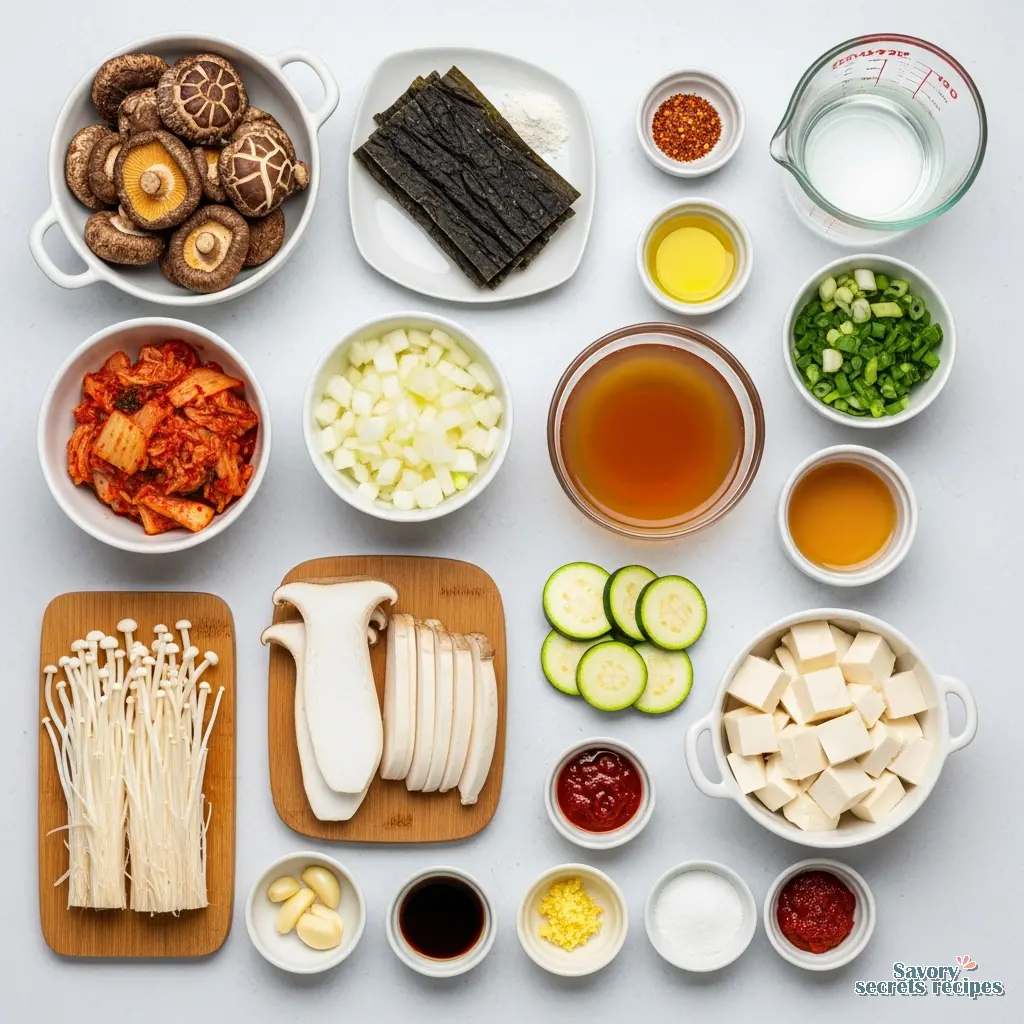
Ingredients
Method
- Prepare the broth by cutting five 1-inch (2.5 cm) slits on each side of the kombu with scissors. Do not wash the kombu, as the white powdery layer provides essential umami. Soak the mushrooms and kombu in room temperature water in the refrigerator overnight for the best flavor.
- Alternatively, boil the mushrooms and kombu in water for 10 to 15 minutes, let them steep for another 10 to 15 minutes, and then remove them from the broth.
- Reserve the kombu and mushrooms; slice the rehydrated mushrooms to include in the jjigae and save the leftover kombu for making Kombu Tsukudani or other simmered dishes.
- Slice the vegetables and any additional mushrooms being used.
- Prepare the soft tofu by slicing the tube or block into pieces, or simply break it into smaller chunks when adding it to the stew later.
- Heat a medium-sized pot or a Korean ttukbaegi over medium heat.
- Add the oil once the pot is hot.
- Sauté the onion and scallions for 2 to 3 minutes until translucent. Stir in the gochugaru and cook for 1 to 2 minutes to develop the chili oil.
- Add the kimchi and sauté for 2 to 3 minutes. Pour in the soy sauce and rice wine over high heat, cooking until the liquid slightly evaporates.
- Add the king oyster or shiitake mushrooms along with some of the enoki mushrooms, and sauté for approximately 3 minutes until lightly cooked.
- Stir in the zucchini and cook for 2 to 3 minutes.
- Pour in the prepared vegetable broth or water.
- Cover the pot and bring to a boil over medium-high heat for about 7 minutes.
- Once the vegetables are tender, taste the soup and season with salt and a pinch of sugar as needed.
- Stir in the minced garlic.
- Add the soft tofu and the remaining enoki mushrooms on top, then boil for an additional 2 to 3 minutes.
- Garnish the dish with the reserved green parts of the scallions.
- Serve hot with steamed rice, kimchi pancakes, and various Korean side dishes.
Nutrition
Notes
- you can add some kimchi to this stew to make a sundubu kimchi jjigae! The kimchi adds a nice layer of flavour and extra texture. Fermented kimchi really works best for the best flavour. I have a vegan kimchi recipe here.
- If using only dried shiitake mushrooms, rehydrate additional pieces to add to your jjigae. Remember not to discard the water since you can add this to the soup base/broth!
- If you don’t have gochugaru, feel free to use gochujang, which is the fermented chili paste. You may just have to adjust the soy sauce and lessen it a little since some gochujang brands are heavily salted.
- If you don’t have kombu, you can use just dried mushrooms. You can also just use vegetable broth or use water and add a vegetable cube or bouillon and dissolve it in the soup base.
- Feel free to season with more salt or soy sauce, to taste if needed.
Why You Need This Soup Tonight
Let me walk you through a scenario that might feel familiar. It is Wednesday, you are staring into the fridge at a block of tofu, and the LA winter chill which, let’s be honest, is anything below 60°F for us has settled into your bones. You need something that feels like a hug but takes less time than ordering delivery. That is exactly where this gochujang tofu soup comes in.
In my testing, I have found that most people think Korean stews (jjigae) require hours of simmering or complex meat stocks. The truth? You can build incredible depth of flavor in about twenty minutes if you understand how to layer your ingredients. This recipe is my go-to “emergency comfort food.” It is spicy enough to wake you up, savory enough to satisfy that umami craving, and completely vegetarian.
I remember the first time I tried to make this for my daughter, Priya. I was worried the spice level would be too much, but the way the silken tofu mellows out the broth is pure magic. It is a balance of fire and creaminess that just works. Whether you are a total beginner to Korean cooking or just looking for a solid meatless Monday option, you have got this.
Understanding Sundubu (The Star Ingredient)
Before we even touch the stove, we need to talk about the tofu. For a proper gochujang tofu soup, you cannot just use whatever block is sitting in your fridge door. You are looking for “sundubu” (extra soft tofu) or silken tofu.
Here is what I have found works best: look for the tofu sold in tubes or the boxes labeled “silken.” Unlike firm tofu which holds its shape like a brick, sundubu has a custard-like texture that wobbles. It does not just sit in the soup; it becomes part of the broth. When you eat it, it should practically dissolve on your tongue.
One thing to watch for is the handling. I used to try and cube it perfectly on a cutting board, which usually resulted in a white, mushy mess. Now? I just cut the tube in half and squeeze it directly into the pot, breaking it into big chunks with a spoon. It is satisfying, messy, and perfectly imperfect.
The Vegan Umami Broth Guide
The biggest challenge with a vegetarian gochujang tofu soup is replicating the deep, savory punch that usually comes from seafood or meat stock. In my experience, plain water just doesn’t cut it. It leaves the soup feeling thin and one-dimensional.
The solution is a quick “dashima” (kombu) and dried shiitake broth. This is the part that matters. Dried shiitake mushrooms are little flavor bombs. When you rehydrate them, they release guanylate, which works with the glutamate in the kombu to create massive umami.
Here is the trick: Do not wash the white powdery stuff off the kombu. I know it looks like dust, but it is actually mannitol, a natural sugar that adds flavor. Just wipe it gently with a dry cloth if you must. Simmer the kombu and mushrooms for about 15 to 20 minutes. If you have time, soak them in water overnight the flavor extraction is even better.
Gochugaru vs. Gochujang: What You Need to Know
This is where I see most beginners get confused. The recipe calls for both, and yes, they are different.
Gochujang is a fermented chili paste. It is savory, sweet, salty, and spicy. It gives the soup body and that signature “stew” consistency. However, if you use only gochujang, your soup might end up too salty or too sweet before it gets spicy enough.
Gochugaru is Korean chili powder (flakes). It provides the clean heat and that vibrant red color without adding extra saltiness. In my testing, using a combination of both gives you the best result: the paste for depth and the powder for kick.
Can you use just gochujang? You can, but you’ll need to watch your sodium levels. If you do this, reduce the soy sauce and taste as you go. It is a bit like baking; small adjustments make a big difference.
The Kimchi Science
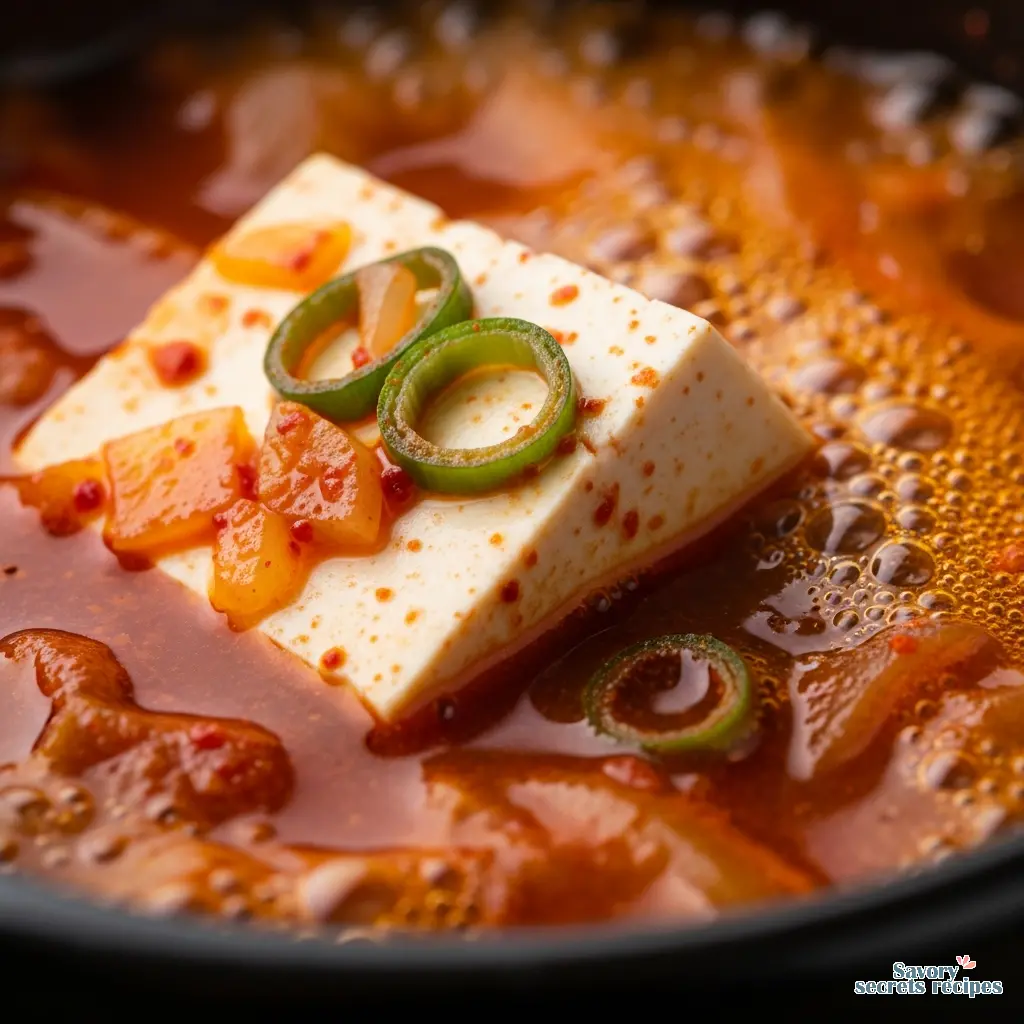
If you have a jar of kimchi in the back of your fridge that is getting a little too sour to eat raw, do not throw it away. That is actually gold for this soup. Aged, sour kimchi has higher lactic acid content, which cuts through the richness of the tofu and sesame oil.
I always start by frying the kimchi in a little oil before adding the broth. This is a technique I learned that changes everything. Frying caramelizes the sugars in the cabbage and mellows out the sharp acidity. It creates a base layer of flavor that boiling alone just cannot achieve. You will know it is ready when the kimchi turns a slightly translucent, deeper orange color.
Tofu Handling Guide: No More Mush
The most heartbreaking moment in making gochujang tofu soup is when you stir it and the beautiful chunks of tofu disintegrate into a grainy mess. Soft tofu is delicate. It requires a gentle hand.
Here is my method for keeping it intact:
First, do not stir the soup vigorously once the tofu is in. Use a spoon to gently ladle hot broth over the tofu chunks instead of mixing them in. Second, add the tofu towards the end of cooking. It only needs about 3 to 4 minutes to heat through. If you boil it for twenty minutes, it will break down. I like to slice the tube into thick rounds and slide them in, or just scoop large spoonfuls directly from the package into the pot.
Serving & The Stone Pot (Ttukbaegi)
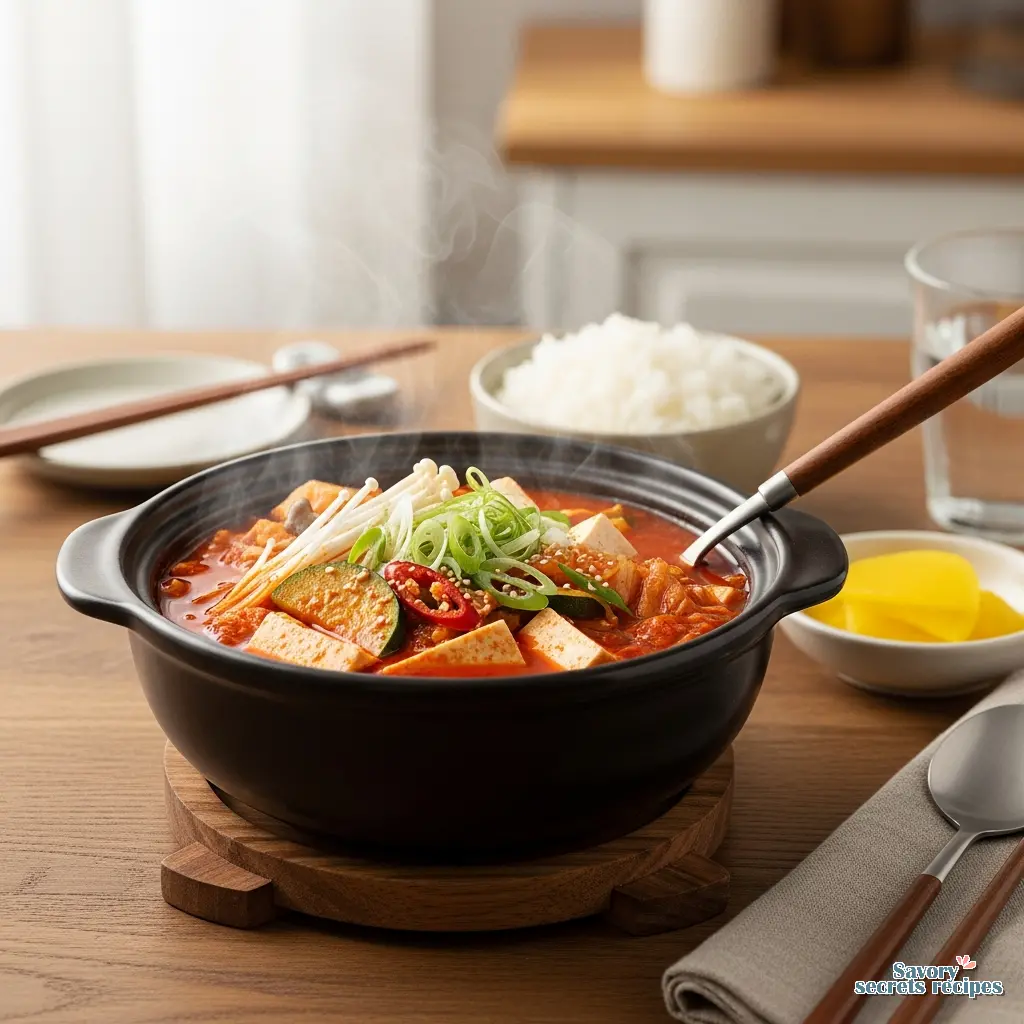
Traditionally, this soup is served in a ttukbaegi, a Korean earthenware pot. The beauty of the stone pot is heat retention. It keeps the soup bubbling hot while you eat it, which is incredibly satisfying on a cold day. If you have one, use it! Just remember to heat it gradually so it doesn’t crack.
But let’s be realistic I don’t always pull out the special cookware on a Tuesday night. You can absolutely make this in a regular small Dutch oven or saucepan. The flavor will be exactly the same. Just serve it immediately. I like to ladle it over a bowl of steamed short-grain rice so the rice soaks up that spicy, savory broth.
Storage & Reheating: The Next Day Strategy
This is something most recipes skip, but as a mom who lives on leftovers, I need to tell you: you can store this, but the texture changes. The tofu will release more water as it sits, which can dilute the broth slightly.
If I am meal prepping, I make the broth base (kimchi, onions, mushrooms, spices) in a big batch and store it separately. Then, when I want lunch, I heat up a portion of the base and add fresh tofu right then. It takes five minutes and tastes fresh.
If you have already mixed it all together, store it in an airtight container for up to 2 days. When reheating, do it gently on the stove. Do not boil it aggressively or the tofu will break apart completely. It might look a little separated at first just give it a very gentle stir.
Frequently Asked Questions
Ready to Cook?
When you make this gochujang tofu soup, you will love how warming and satisfying it feels. It is one of those recipes that proves you do not need meat to have a hearty meal. The combination of spicy broth and silky tofu is just unbeatable on a cold night.
For more inspiration and visual guides, check out my Pinterest boards where I save all my favorite comfort food ideas. I would love to hear how your soup turned out did you add extra veggies? Let me know in the comments!
Reference: Original Source
Can I use gochujang for tofu soup if I don’t have gochugaru?
Yes, you can, but it changes the balance. Gochujang is saltier and sweeter than the flakes. If you swap it in, reduce the soy sauce and salt in the recipe to avoid a sodium overload. Your soup will be thicker and slightly less spicy, but still delicious.
Is Korean soft tofu soup healthy?
Absolutely. It is packed with plant-based protein from the tofu and gut-friendly probiotics from the kimchi. The broth is light but hydrating. Just keep an eye on the sodium levels from the pastes and sauces if that is a concern for you.
What is the difference between jjigae and soondubu?
Think of “jjigae” as the broad category for Korean stews. “Soondubu” (or sundubu) refers specifically to the unpressed, extra-soft tofu used in this dish. So, soondubu jjigae is literally soft tofu stew. Other jjigaes might use firm tofu or different main ingredients.
Can I freeze gochujang tofu soup?
I do not recommend freezing the finished soup. The soft tofu changes texture and becomes spongy and watery when thawed. However, you can freeze the seasoned broth base (without the tofu) for up to a month. Just add fresh tofu when you reheat it.
Is this recipe authentically vegan?
Traditional recipes often use anchovy broth or fish sauce. My version uses a kombu and shiitake mushroom broth and soy sauce to replicate that deep savory flavor without any animal products. It hits all the same flavor notes while keeping it plant-based.