Ingredients
Method
- Prepare the broth by cutting five 1-inch (2.5 cm) slits on each side of the kombu with scissors. Do not wash the kombu, as the white powdery layer provides essential umami. Soak the mushrooms and kombu in room temperature water in the refrigerator overnight for the best flavor.
- Alternatively, boil the mushrooms and kombu in water for 10 to 15 minutes, let them steep for another 10 to 15 minutes, and then remove them from the broth.
- Reserve the kombu and mushrooms; slice the rehydrated mushrooms to include in the jjigae and save the leftover kombu for making Kombu Tsukudani or other simmered dishes.
- Slice the vegetables and any additional mushrooms being used.
- Prepare the soft tofu by slicing the tube or block into pieces, or simply break it into smaller chunks when adding it to the stew later.
- Heat a medium-sized pot or a Korean ttukbaegi over medium heat.
- Add the oil once the pot is hot.
- Sauté the onion and scallions for 2 to 3 minutes until translucent. Stir in the gochugaru and cook for 1 to 2 minutes to develop the chili oil.
- Add the kimchi and sauté for 2 to 3 minutes. Pour in the soy sauce and rice wine over high heat, cooking until the liquid slightly evaporates.
- Add the king oyster or shiitake mushrooms along with some of the enoki mushrooms, and sauté for approximately 3 minutes until lightly cooked.
- Stir in the zucchini and cook for 2 to 3 minutes.
- Pour in the prepared vegetable broth or water.
- Cover the pot and bring to a boil over medium-high heat for about 7 minutes.
- Once the vegetables are tender, taste the soup and season with salt and a pinch of sugar as needed.
- Stir in the minced garlic.
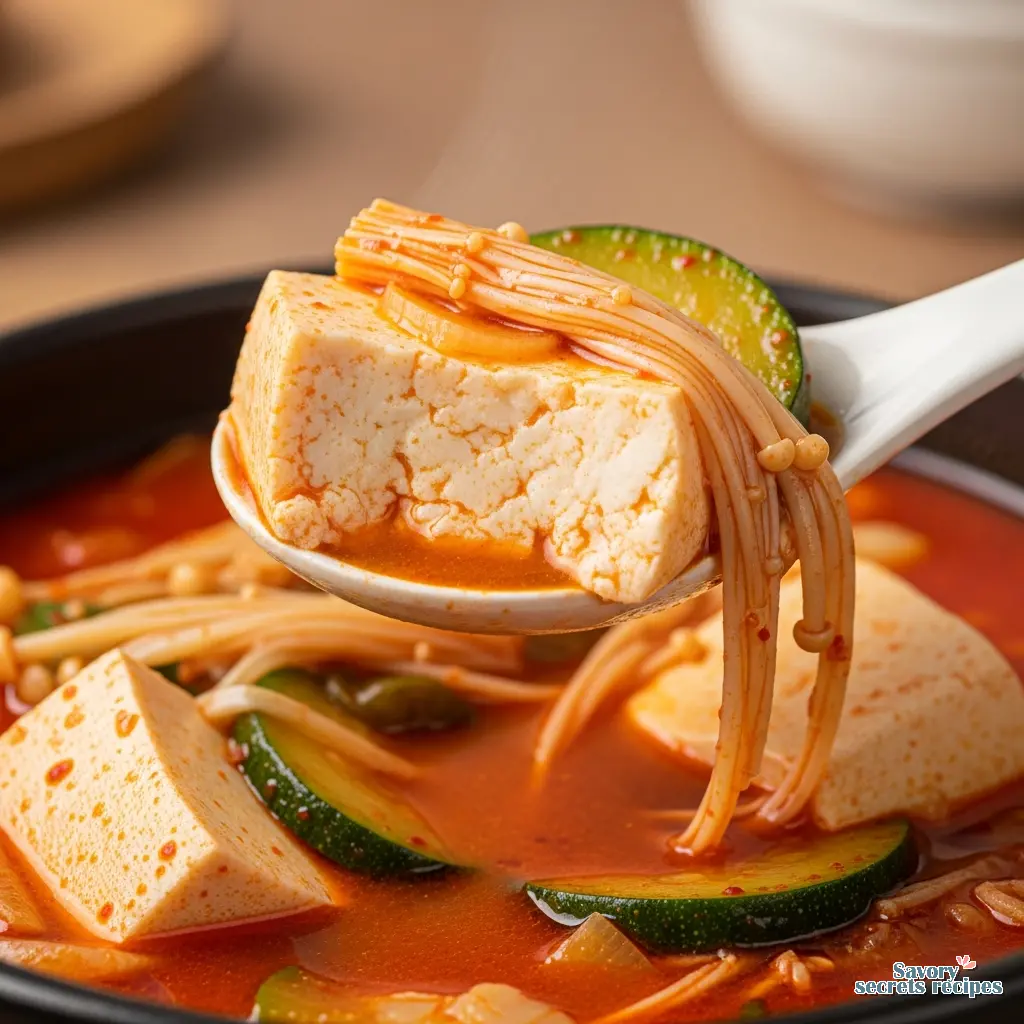
- Add the soft tofu and the remaining enoki mushrooms on top, then boil for an additional 2 to 3 minutes.
- Garnish the dish with the reserved green parts of the scallions.
- Serve hot with steamed rice, kimchi pancakes, and various Korean side dishes.
Nutrition
Notes
Kimchi:
- you can add some kimchi to this stew to make a sundubu kimchi jjigae! The kimchi adds a nice layer of flavour and extra texture. Fermented kimchi really works best for the best flavour. I have a vegan kimchi recipe here.
- If using only dried shiitake mushrooms, rehydrate additional pieces to add to your jjigae. Remember not to discard the water since you can add this to the soup base/broth!
- If you don’t have gochugaru, feel free to use gochujang, which is the fermented chili paste. You may just have to adjust the soy sauce and lessen it a little since some gochujang brands are heavily salted.
- If you don’t have kombu, you can use just dried mushrooms. You can also just use vegetable broth or use water and add a vegetable cube or bouillon and dissolve it in the soup base.
- Feel free to season with more salt or soy sauce, to taste if needed.