



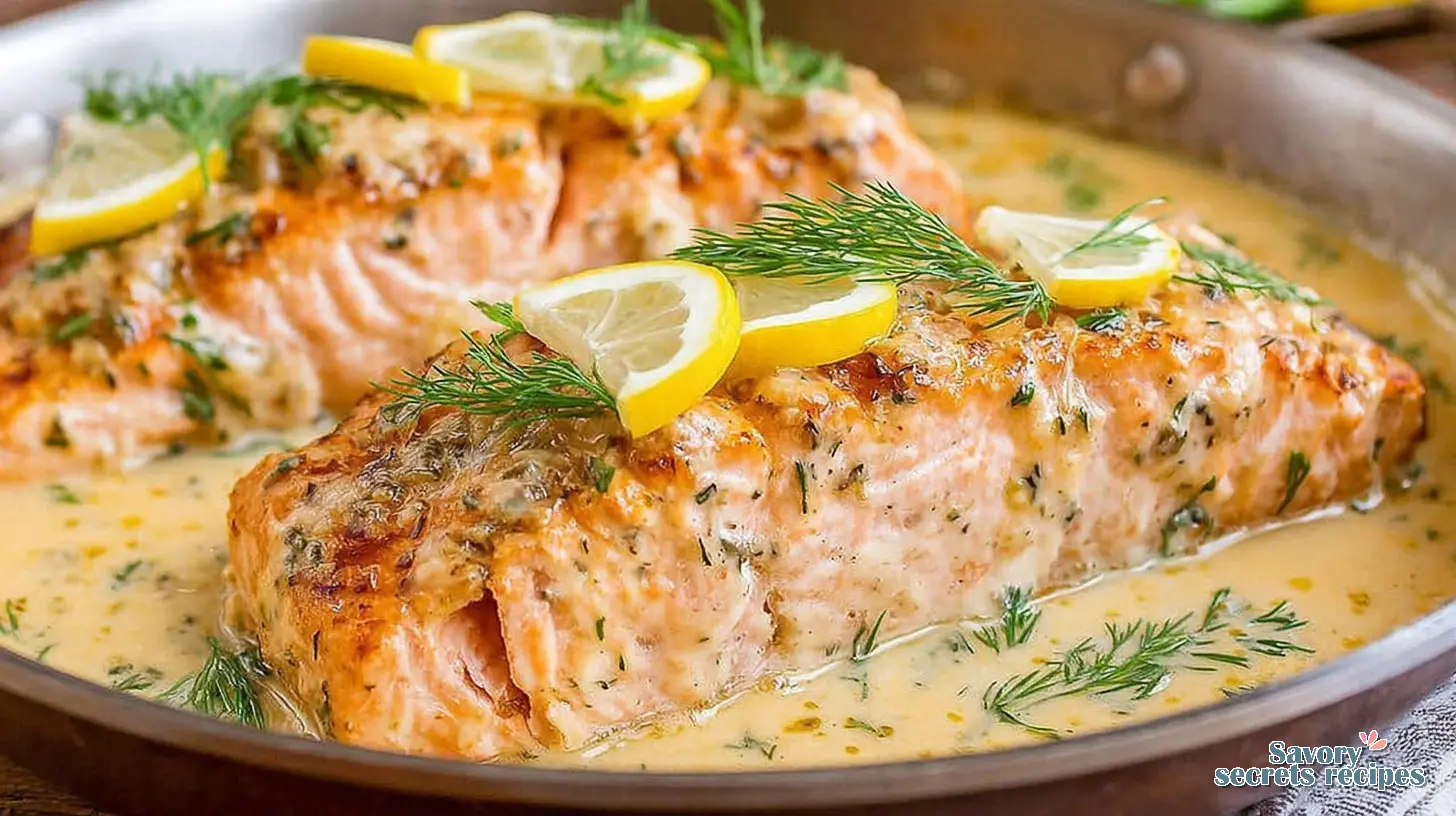
Quick Lemon Dill Salmon Skillet
Ingredients
Method
- Let the salmon sit out for 10 minutes to reach room temperature. Pat dry with a paper towel. Season evenly with sea salt, pepper, and garlic powder.
- Heat a large (12-inch) skillet to medium-high heat. Add olive oil and allow it to heat. Add 2 tablespoons of butter; melt and heat until it bubbles.
- Once the butter is hot, add the salmon fillets, skin side up. Cook uninterrupted for 4-5 minutes until they easily pull away from the pan.
- When the salmon fillets are golden brown and crispy, flip them. Reduce heat to medium and cook for another 4-6 minutes, or until opaque and easily flaked. Ensure the internal temperature reaches 145°F.
- In the last few minutes of cooking, add the remaining 3 tablespoons of butter, chopped dill, and garlic cloves. Melt the butter completely, swirl it around, and spoon it over the salmon. Once the salmon is fully cooked, remove it from the heat and stir in the lemon juice and zest.
- Remove the salmon from the pan. Let it rest for 5 minutes before serving. Pour the lemon dill butter sauce over top and garnish with extra lemon zest and freshly chopped parsley. Store any leftovers in an airtight container for 3-4 days.
Nutrition
Notes
- Select salmon filets of similar size and thickness. Choosing salmon fillets that are fairly even in size will allow cook time to be uniform and you won’t have a lot of juggling fish that is overcooked or undercooked around.
- Allow salmon to come to room temperature for even cooking. This also will help the cook time to be more consistent and even which will make this easy salmon dinner all the better!
- Make sure the pan is HOT before adding your salmon. For that nice golden brown and crispy topped salmon, you want to make sure the pan is very hot before adding it. Give the pan plenty of time to heat up.
- Cook the salmon completely uninterrupted initially for the perfect golden brown crispy top. Another tip when making pan seared salmon is to NOT TOUCH IT. After placing your salmon in your pan, do not touch it for at least 4 or 5 minutes!
That Weeknight Rescue: Why This Lemon Dill Salmon Skillet Changes Everything
It’s almost six o’clock on a Tuesday, or maybe it’s a Wednesday, and you’re standing in front of the refrigerator. Sound familiar? You’ve got that beautiful salmon fillet thawed, maybe some fresh dill that’s *just* clinging to life in the crisper drawer, and a growing sense of panic about what’s for dinner. You want something delicious, something that feels a little special, but honestly, you’re not in the mood for a production. This is where the Lemon Dill Salmon Skillet swoops in, I promise you. Let me think on that for a second. Salmon has this reputation, doesn’t it? Fussy, delicate, easy to mess up. It’s not. It’s just misunderstood, truly. And this particular lemon dill salmon skillet recipe? It’s the antidote to all that weeknight dread. You’re looking at dinner on the table in under 30 minutes, all in one pan, with zero stress, but with a flavor that tastes like you spent an hour on it. That tracks, right? Especially now, with spring in full swing here in Los Angeles, those farmers’ markets are just overflowing with fresh dill and bright Meyer lemons. It’s the perfect time to pivot from heavier winter meals to something lighter, brighter, and utterly satisfying. This light salmon skillet meal is practically designed for these mild April evenings.Gathering Our Essentials: What You’ll Need
You know, the beauty of a truly great recipe often lies in its simplicity. For this lemon dill salmon skillet, we’re not talking about a dozen obscure ingredients. We’re talking about a handful of things that, when treated right, sing together beautifully. Think of it as a culinary conversation. You’ll need some good salmon fillets, of course. I tend to think wild-caught salmon skillet meals have an incredible flavor depth, but honestly, whatever you have on hand from Ralphs or Trader Joe’s will work just fine. Then we’ve got garlic powder, a bit of sea salt and cracked pepper for seasoning. Olive oil and unsalted butter form the foundation for our fresh dill herb butter sauce, which is, I’ll be honest, the star of the show. Fresh garlic cloves, lemon juice, and lemon zest bring that essential brightness. And, of course, that fresh chopped dill. Worth noting, if you don’t have fresh dill, you can certainly use dried, but we’ll talk about that difference in a moment. A few lemon slices for serving, and you’re all set. See? Nothing too complicated here.Mastering the Skillet: Your Guide to Perfect Lemon Dill Salmon
Alright, let’s get into the actual cooking. This is the good part, where everything comes together. The key checkpoint here is preparation. First things first, you’ll want to take your salmon fillets out of the fridge about 10 to 15 minutes before you plan to cook them. Bringing the salmon to room temperature before cooking helps ensure it cooks evenly. This isn’t being fussy, it’s the difference between perfectly flaky salmon and salmon that’s overcooked on the outside and still a bit chilly inside. Next, and this is crucial for that golden crust we’re aiming for, pat your salmon fillets down with paper towels until they’re really, truly dry. Moisture is the enemy of a good sear, you know? Then season them generously with garlic powder, sea salt, and cracked pepper. Now, for the pan. I prefer making pan sauces in stainless steel over nonstick, even though it means more cleanup. You need that fond, those browned bits stuck to the pan. That’s where the flavor lives. Nonstick is convenient, but convenience isn’t always the point. That said, a good cast iron salmon sear works beautifully too. Heat your olive oil in your skillet over medium-high heat until it’s shimmering. This is where most people rush it, but trust the process on this one. You want that pan really hot before the fish goes in. Carefully lay your salmon fillets, skin-side down if they have skin, into the hot pan. Make sure there’s extra virgin olive oil in the spot where you lay the fish to create sear and prevent sticking. And here’s the real secret for a crispy skin: don’t touch them for at least 4 or 5 minutes. Seriously, resist the urge. You’ll know it’s ready when the salmon releases naturally from the pan without sticking. That golden crust will be forming, transforming the color of the fish from translucent to a pale pink creeping up the sides. Flip the salmon and cook for another 3 to 5 minutes, depending on the thickness of your fillets. This is where I tend to think about my grandmother. I remember standing on a step stool next to her stove when I was maybe seven, watching her make a pan sauce from the chicken drippings. She had me smell the shallots at every stage raw, sweating, just beginning to color and made me describe what I was smelling. I got impatient and said they all smelled the same. She made me start over. I can still smell the difference now without thinking about it. That same attention to detail applies here. You’re watching for the salmon internal temperature 125F, or just poke it gently; if it flakes easily with a fork, it’s done.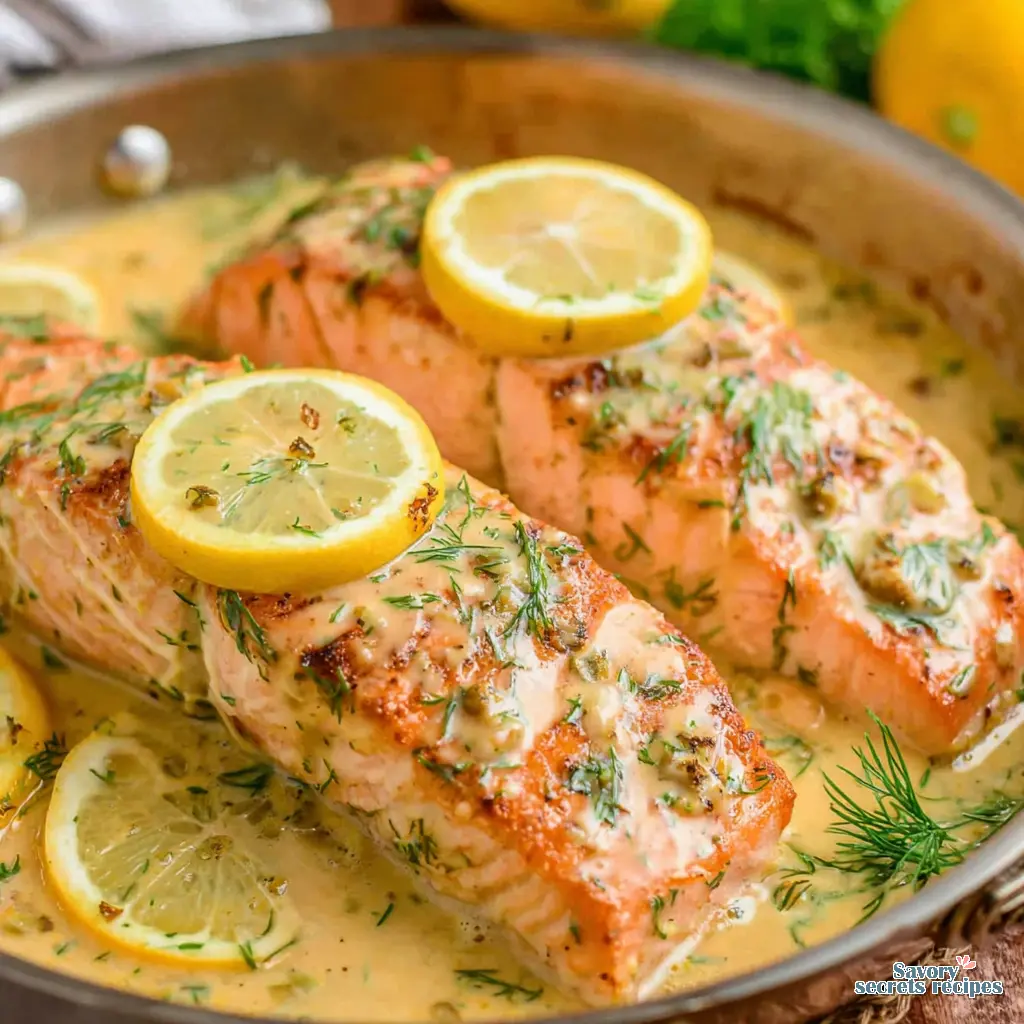 Once the salmon is cooked through, remove it from the pan and set it aside. Now for the citrus herb sauce for fish. Lower the heat to medium, add the unsalted butter and minced garlic cloves to the pan. Let the garlic get fragrant, about 30 seconds. Then, crucially, stir in the fresh lemon juice and lemon zest. Adding the lemon juice at the end, not the beginning, is what makes the citrus pop instead of disappearing. Finally, fold in that chopped fresh dill. Give it a good stir, let it warm through for just a moment, and then spoon that beautiful savory dill salmon cook sauce over your fillets. It’s truly a thing of beauty, this lemon butter pan sauce.
Common Hurdles & How to Clear Them: Troubleshooting Your Lemon Dill Salmon Skillet
Look, I’ll be honest, I’ve absolutely overcooked salmon before. And you know what? It was still pretty good, just not *perfect*. That’s why I’m a stickler for precision, even if Marc says I make a simple pan sauce sound like engineering sometimes. But understanding common issues means you’ll nail this lemon dill salmon skillet every single time.Common Mistakes & Fixes
Mistake: Salmon sticks to the pan.
Solution: The pan wasn’t hot enough, or the fish wasn’t dry enough. Pat it down thoroughly and ensure your skillet is shimmering hot before adding the salmon. Trust the process here; don’t try to force a flip if it’s sticking; it will release naturally when cooked.
Mistake: Salmon is dry and chalky.
Solution: You’ve overcooked it. Salmon cooks quickly! Watch for salmon doneness visual cues, like the color changing from dark pink to opaque, creeping up the sides. Pull it off the heat when it’s still slightly translucent in the very center; residual heat will finish it.
Mistake: The lemon flavor is weak.
Solution: You probably added the lemon juice too early. For maximum brightness, add the lemon juice and zest right at the end, after the salmon is cooked and you’re making the pan sauce.
Mistake: Unevenly cooked fillets.
Solution: Ensure your salmon fillets are roughly the same size and thickness. Also, bring them to room temperature for 10-15 minutes before cooking. Cold fish hitting a hot pan can cause seizing and uneven cooking, which isn’t what we want.
Making it Yours: Variations & Smart Substitutions
One of the things I love about this easy healthy salmon recipe is how adaptable it is. In my experience, once you’ve got the core technique down, you can play around with it. If you don’t have fresh dill for your fresh dill salmon pan, fair enough. You can use dried dill, but remember the potency difference. As a general rule, one tablespoon of fresh dill equals one teaspoon of dried herbs. So, if the recipe calls for two tablespoons of fresh, you’d use two teaspoons of dried. Add dried dill a bit earlier to the sauce to let its flavor bloom. For dietary adaptations, if you’re avoiding dairy, you can substitute the unsalted butter with a plant-based butter alternative or simply use more olive oil in your lemon butter pan sauce. It won’t have quite the same richness, but it’ll still be delicious. If you’re looking for a low-carb option, this dish is already fantastic on its own, but you could add some blanched green beans or roasted broccoli right to the skillet after the salmon comes out, letting them soak up that incredible citrus herb sauce.Serving Up Success: Pairings for Your Light Salmon Skillet Meal
This is where it gets interesting, because you’ve just made something that looks truly impressive. The golden crust, the herb-flecked butter pooling in the pan, that bright lemon zest against the pink fish. You can already smell it, can’t you? When you plate this, that fillet will slide off your spatula perfectly, and that pan sauce will follow it, glistening.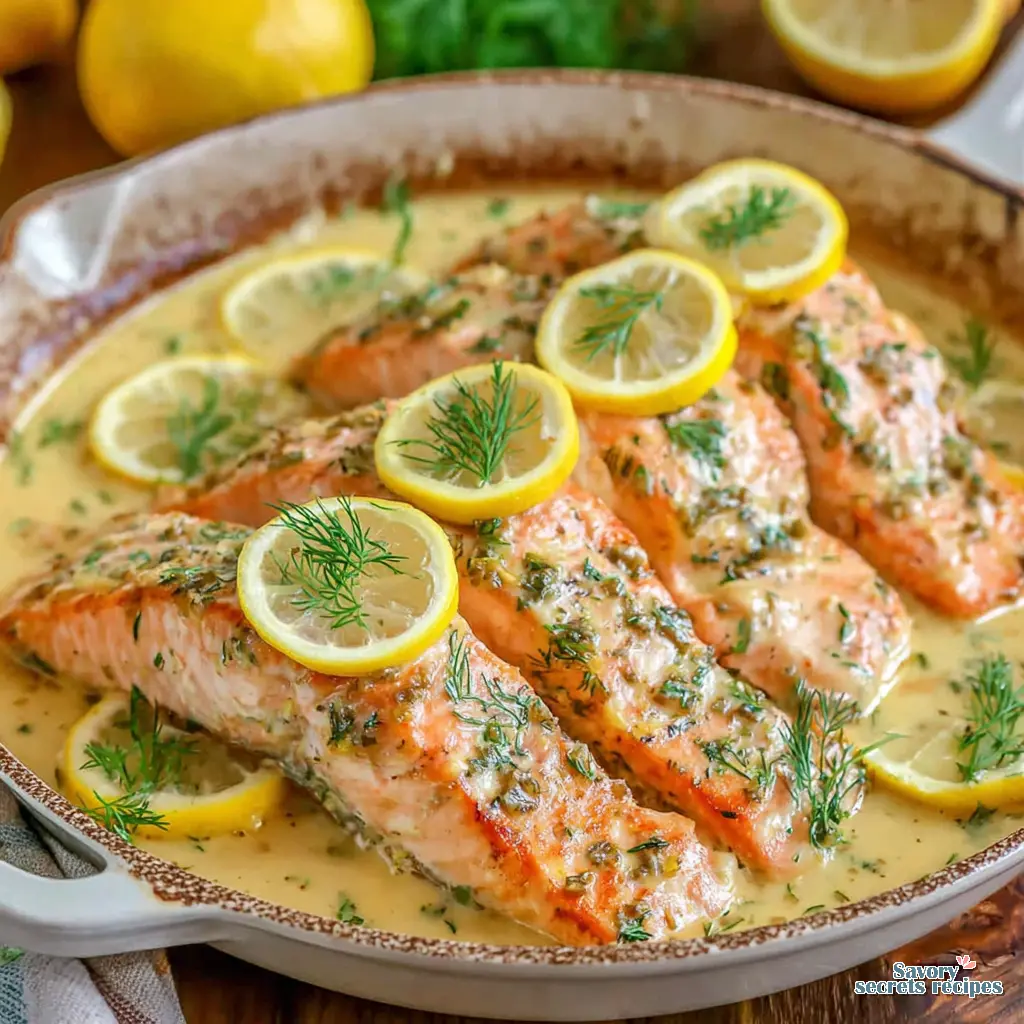
Keeping It Fresh: Storage, Freezing, & Reheating Your Lemon Dill Salmon
Sometimes you’ll have leftovers, and that’s perfectly fine. A well-prepared lemon dill salmon skillet is still great the next day, though I tend to think it’s best enjoyed fresh. If you’re saving leftovers, a crucial tip from what I’ve observed is to keep the salmon and the dill sauce separate if you can. If they’re combined, eat them within 24 hours. If stored separately in individual airtight containers in the refrigerator, the salmon will keep for up to 48 hours. For best results, I wouldn’t save salmon longer than that. When you’re ready to reheat, you’ve got a few options. The oven is generally speaking your best bet for maintaining texture. Pop it into a preheated oven at 350°F for about 3 to 5 minutes, just until it’s warmed through. You can also reheat it gently in the microwave in 30-second increments, but be careful not to overcook it, or it’ll turn dry. You want to avoid that.Frequently Asked Questions About Lemon Dill Salmon Skillet
My Final Thoughts on This Lemon Dill Salmon Skillet
When you pull this lemon dill salmon skillet off the heat, when you see that golden crust and smell the garlic and dill blooming in the pan, you’ll know you’ve done something truly wonderful. When you take that first bite, that flaky salmon with its bright, herbaceous sauce, you’ll realize weeknight cooking doesn’t have to be hard or boring. This changes things, doesn’t it? It’s a testament to simple ingredients and a little bit of technique. Honestly, this might become the thing you make every single week. Don’t say I didn’t warn you. Tell me how it goes, I want to hear what sides you paired it with! For more inspiration, check out my Pinterest boards.Source: Health & Nutrition Research
Can I use salmon with the skin on for this Lemon Dill Salmon Skillet?
Absolutely! I actually prefer skin-on salmon. You’ll want to place the fillet skin-side down first in the hot skillet. This helps render the fat and gives you that wonderfully crispy skin, which is a fantastic textural contrast to the flaky fish.
How do I know when my salmon is done cooking?
You’ll know it’s ready when the salmon turns from a dark, translucent pink to a pale, opaque pink, creeping up the sides. You can also gently poke it with a fork; if it flakes easily, it’s done. I tend to think 125°F internal temperature is perfect.
Can I use dried dill if I don’t have fresh dill for this fresh dill salmon pan?
Yes, you can! Fresh is always my preference for that vibrant flavor, but dried dill works. As a general rule, use one teaspoon of dried dill for every tablespoon of fresh dill called for in the recipe. Add it to the sauce a little earlier to let its flavor bloom.
Do you put dill on salmon before cooking?
In this lemon dill salmon skillet recipe, we actually add the fresh dill at the very end, as part of the lemon butter pan sauce. This preserves its bright, herbaceous flavor and vibrant green color, preventing it from burning or losing its potency during the sear.
What flavors go best with salmon?
Salmon pairs beautifully with bright, fresh flavors. Citrus, especially lemon, is a classic for a reason. Herbs like dill, parsley, and tarragon are fantastic. Garlic, butter, and a touch of savory seasoning really make the fish shine without overpowering its delicate taste. That tracks, doesn’t it?
What seasoning should I put on salmon for a savory dill salmon cook?
For this recipe, we keep it simple but effective: sea salt, cracked pepper, and garlic powder. These create a lovely savory base that perfectly complements the fresh lemon and dill. You don’t need much more when you’re making such a flavorful sauce.