



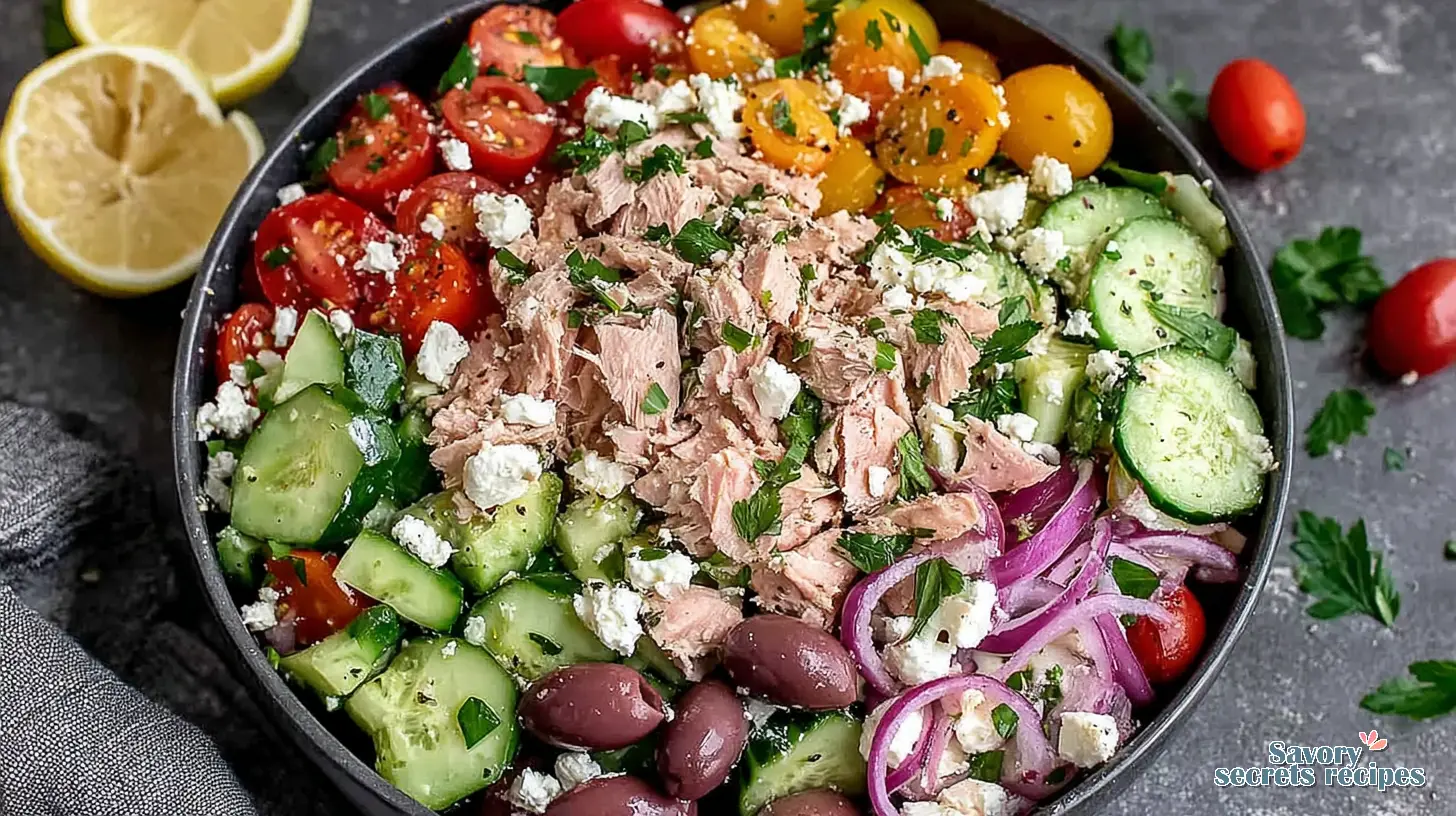
Easy Mediterranean Tuna Salad Bowl
Ingredients
Method
- Drain the can of tuna in olive oil and set aside.
- Halve the cherry tomatoes and place them in a medium mixing bowl.
- Dice the cucumber into small pieces and add to the mixing bowl with the tomatoes.
- Thinly slice the red onion and add to the bowl.
- Pit and slice the Kalamata olives, then add them to the bowl with the other ingredients.
- Crumble the feta cheese and add to the bowl.
- Add the drained tuna on top of the other ingredients in the bowl.
- In a small bowl, whisk together the olive oil, red wine vinegar, dried oregano, garlic powder, black pepper, and sea salt.
- Pour the dressing over the ingredients in the large mixing bowl.
- Gently toss the salad with a spoon to mix all ingredients and coat them in the dressing.
- Sprinkle the chopped fresh parsley over the salad.
- Serve immediately, or chill the salad in the refrigerator for 30 minutes before serving.
Nutrition
Notes
Why You’ll Love This Mediterranean Tuna Salad Bowl
Let me walk you through this. You know that moment, right? It’s a Wednesday, you’re staring into the fridge, and you need something that feels like a real meal but won’t take an hour to put together. You want to feel good after eating it, not just full. I’ve been there more times than I can count, especially after a long day of patient consults.
This Mediterranean Tuna Salad Bowl solved that exact problem for me. It’s the kind of lunch I can throw together in the ten minutes I have between calls, and it actually leaves me energized. I was happy with how this turned out because it doesn’t taste like “healthy food” in that boring, cardboard way. It’s bright, it’s savory, and it feels like a treat. The textures are everything, too. You get the creamy feta, the little briny pops from the olives, and the satisfying chunk of the tuna all in one bite.
To be safe, I tested this a few different ways, playing with the tuna and the dressing ratios. Here is what I have found works best for a bowl that’s light but still filling, perfect for a spring day when you want something fresh. This one really works.
Ingredients for Your Mediterranean Tuna Salad Bowl
One thing I love about this recipe is how forgiving it is. You probably have most of this stuff already. The goal is to build layers of fresh, Mediterranean flavor without a complicated shopping list.
We’re talking canned tuna, cherry tomatoes, cucumber, red onion, and those salty Kalamata olives. Then for creaminess and tang, we’ve got feta cheese and a simple dressing made with good olive oil, red wine vinegar, and dried oregano. Fresh parsley on top is non-negotiable for me. It just makes it taste alive.
Choosing the Best Tuna for Your Bowl
This is the part that matters. In my testing, I’ve tried all the options. You’ve got a couple of good paths here.
For the best flavor and texture, I suggest chunk light tuna packed in olive oil. It’s that happy medium. The olive oil it’s packed in adds richness, so you might need a tiny bit less dressing oil. The chunks stay nice and distinct, not mushy. If you’re using tuna in water, that’s totally fine, but you’ll want to be a bit more generous with the olive oil in your dressing to compensate. Otherwise, it can taste a little chalky. Worth noting: look for a brand with an MSC certification if you can. It’s a small choice that makes a difference.
Fresh Veggies & Mediterranean Staples
For the vegetables, think crisp and colorful. I use an English cucumber because the skin is thinner and there are fewer seeds. If you’re using a regular cucumber from the supermarket, just give it a quick peel and scoop out the watery seeds with a spoon. Trust me on this, it prevents a soggy bowl later.
Slice those cherry tomatoes in half. Let their juices mingle. Dice the red onion finely. If the raw onion flavor is too strong for you, a quick five-minute soak in ice water tames it right down. And for the olives, buy them whole and give them a rough chop. Those little juicy, briny bits are so much better than the pre-sliced kind.
Making the Zesty Dressing
The dressing is simple but powerful. We’re using Napa Valley olive oil, red wine vinegar, dried oregano, garlic powder, sea salt, and black pepper. The goal is a thick, drizzle-able consistency. You don’t want it too watery because the juices from the tomatoes and cucumber will naturally thin it out a bit once everything’s tossed.
One thing to watch for: whisk it really well. You want the oregano and garlic powder to fully dissolve and blend into the oil. If it looks too thin at this stage, that’s normal, just keep whisking. The texture you’re looking for will coat the back of a spoon.
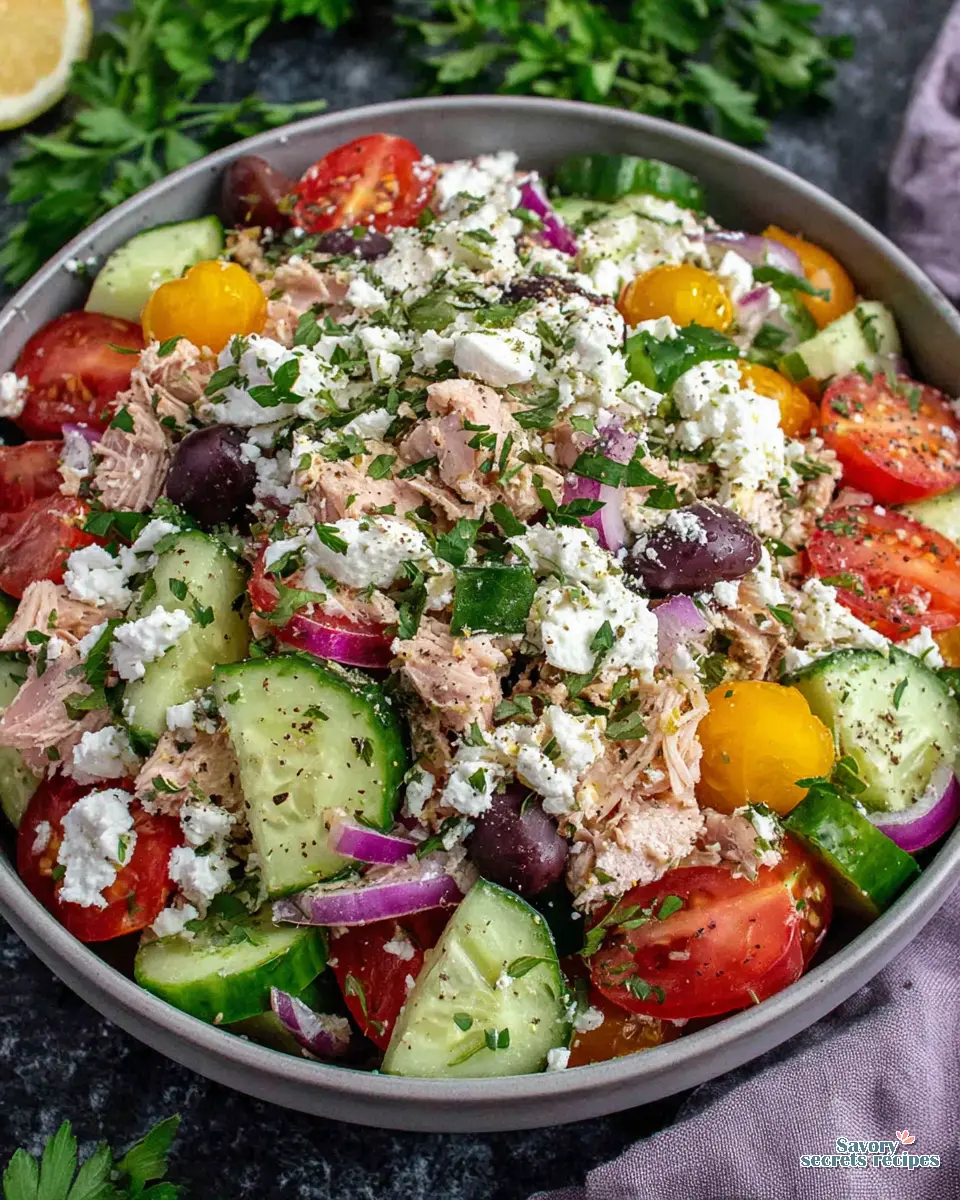
How to Make Mediterranean Tuna Salad
The method here is all about preserving textures. You want to keep those beautiful tuna chunks and crisp veggies, not turn it into a homogenous mush.
Step 1: Prep Your Ingredients
Get everything chopped and ready to go. Dice the cucumber and red onion, halve the tomatoes, chop the olives and parsley, and crumble the feta. Having it all prepped makes the assembly feel effortless, like you’re just tossing things together. Which, I mean, you are. But it feels more intentional this way.
Step 2: Mix Tuna & Dressing
Drain your tuna well. If it’s packed in oil, you can let a little of that flavorful oil stay. In a big bowl, gently flake the tuna with a fork. Then, pour about three-quarters of your dressing over it. Fold it together gently. You’re just coating it, not mashing it. This is your checkpoint. Taste it. Does it need more salt? A pinch more oregano? Now’s the time to adjust.
Step 3: Assemble Your Salad Bowl
Now for the fun part. Add all your chopped veggies, the olives, and most of the feta and parsley to the bowl with the dressed tuna. Here’s the trick: fold everything together with a light hand. Just a few turns until it’s combined. Then, drizzle the remaining dressing over the top and finish with the last bits of feta and parsley. It should look abundant and colorful, like a little edible mosaic.
Expert Tips for Your Tuna Salad Bowl
I’ve made this Mediterranean Tuna Salad Bowl more times than I can remember, and these little notes make all the difference between good and great.
First, drain your tuna well, but don’t press all the life out of it. A little residual moisture is fine, especially if it’s oil. For the vegetables, chop them to a small, spoon-able size. You want a bit of everything in each bite. I add the tuna last when I’m mixing to help the chunks stay distinct.
If you’re a garlic lover like I am, you might be tempted to add fresh minced garlic to the dressing. You can, but start with half a clove. The powder distributes more evenly and mellows, while fresh garlic can be a bit sharp and overpowering in a raw salad. This should work, but check your specific brand of garlic powder for potency.
And about that feta. If you’re using a drier, crumbly Greek feta, it might not blend into the dressing as smoothly if you were making a creamy version. For this recipe, we’re just crumbling it in, so any style works. The briny saltiness is what we’re after.
Common Mistakes & Fixes
Mistake: The salad gets watery and soggy after sitting.
Solution: This usually happens if you don’t drain the tuna well or if you use a regular cucumber without seeding it. English cucumbers are less watery, or just scoop those seeds out.
Mistake: The flavors taste bland.
Solution: You likely underseasoned. The dressing needs enough salt and acid to stand up to the tuna and feta. Taste and adjust before adding the veggies. A little more vinegar can brighten it right up.
Mistake: The tuna turns into tiny, crumbly bits.
Solution: You over-mixed it. Fold gently! And use chunk light tuna instead of flaked. It holds its shape much better.
Delicious Mediterranean Tuna Salad Variations
The beauty of this bowl is its flexibility. Think of the base recipe as your template, and then you can play. Here is what I have found works for different tastes and needs.
Make it a Meal: Bowl Ideas
To make this a more substantial meal, serve it over a base. A handful of fresh baby spinach or arugula wilts perfectly under the warm-ish salad. For a heartier option, a scoop of cooked quinoa or farro underneath is fantastic. It soaks up the dressing and makes it super filling. You could even stuff it into a whole-wheat pita for a truly portable lunch.
Protein & Veggie Swaps
Not a tuna fan? A can of rinsed chickpeas or cannellini beans works beautifully for a plant-based version. Just mash them slightly so they soak up the dressing. For veggies, try adding some diced yellow bell pepper for color and sweetness, or throw in a handful of sun-dried tomatoes for a deeper, concentrated flavor. If you don’t have capers (they’re not in our base recipe, but people ask), chopped green olives are a great substitute for that briny kick.
Serving Suggestions & Pairings
This Mediterranean Tuna Salad Bowl is a complete meal on its own, honestly. But if you’re serving it for a light dinner or to guests, I love pairing it with something simple and crisp on the side.
Some warmed whole-grain pita bread or a few seeded crackers are perfect for scooping. A simple side of sliced avocado with a squeeze of lemon adds healthy fats and makes it even more satisfying. If I’m bringing this to a potluck, I’ll sometimes serve it in a hollowed-out whole-wheat bread bowl. It looks impressive and there’s no extra dish to wash.
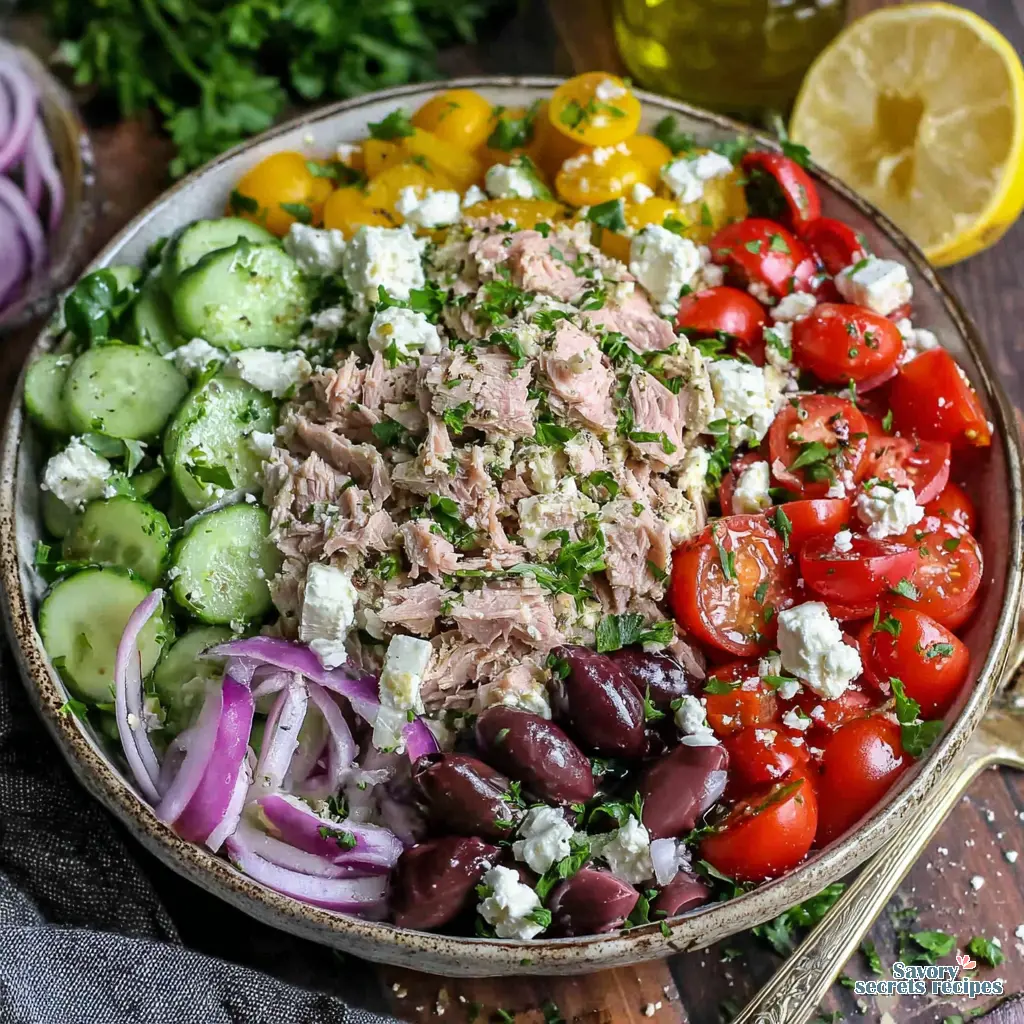
Storage & Meal Prep Tips
This is a fantastic make-ahead lunch. In my experience, though yours may differ, it holds up well for about 2 days in the fridge. Store it in an airtight container.
One thing to watch for: it might get a little watery from the vegetable juices after a day. That’s normal. Just give it a good stir before you eat it, or drain off any excess liquid at the bottom of the container. If you’re meal prepping for the whole week, consider keeping the dressing separate and tossing it each morning. Or, make the dressing a bit thicker to begin with, knowing the veggie juices will thin it out later.
I don’t recommend freezing this Mediterranean Tuna Salad Bowl. The cucumbers and tomatoes lose all their lovely texture when thawed. It’s best enjoyed fresh or within a couple of days.
Common Questions About Tuna Salad Bowls (FAQ)
Health Benefits of Mediterranean Tuna Salad
As a dietitian, this is the part I genuinely love. This bowl isn’t just tasty, it’s nourishing in a real way. It’s packed with lean protein from the tuna, which helps with muscle repair and keeps you satisfied. The olive oil and olives provide heart-healthy monounsaturated fats.
All those fresh vegetables deliver fiber, vitamins, and antioxidants. It’s naturally gluten-free and can easily be made dairy-free by skipping the feta. The balance of protein, healthy fats, and complex carbs from the veggies makes it a great option for blood sugar management, too. It’s a light Mediterranean tuna meal that truly supports how you want to feel.
When you enjoy this Mediterranean Tuna Salad Bowl, you’re giving yourself a meal that’s as good for your body as it is for your taste buds. It’s that simple, satisfying solution for when you need something real, fast. I hope it becomes a regular in your rotation like it is in mine.
For more inspiration on simple, healthy meals, check out my Pinterest boards where I share tons of easy variations.
Source: Nutritional Information
Can I use fresh tuna instead of canned?
Absolutely. Cook a fresh tuna steak to your liking (I prefer medium-rare), let it cool completely, then flake it. The flavor is incredible. Just note that fresh tuna is leaner, so your dressing might need a tiny bit more olive oil to compensate.
Is this Mediterranean Tuna Salad Bowl good for meal prep?
Yes, it’s perfect for it. I make a big batch on Sunday for easy lunches. The flavors actually meld and get better overnight. Just store it in a sealed container and expect a little liquid to release, which you can stir back in or drain.
What can I use if I don’t have Kalamata olives?
Any briny olive will work in a pinch. Green olives or even a tablespoon of capers (drained well!) can give you that salty, savory punch. The flavor profile will shift slightly, but it’ll still be delicious.
How can I make this recipe more filling?
Easy. Serve it over a bed of greens like spinach or kale, or add a half-cup of cooked quinoa or chickpeas right into the mix. The extra fiber and protein will keep you full for hours.