




Hearty Old-Fashioned Vegetable Soup Without Tomatoes
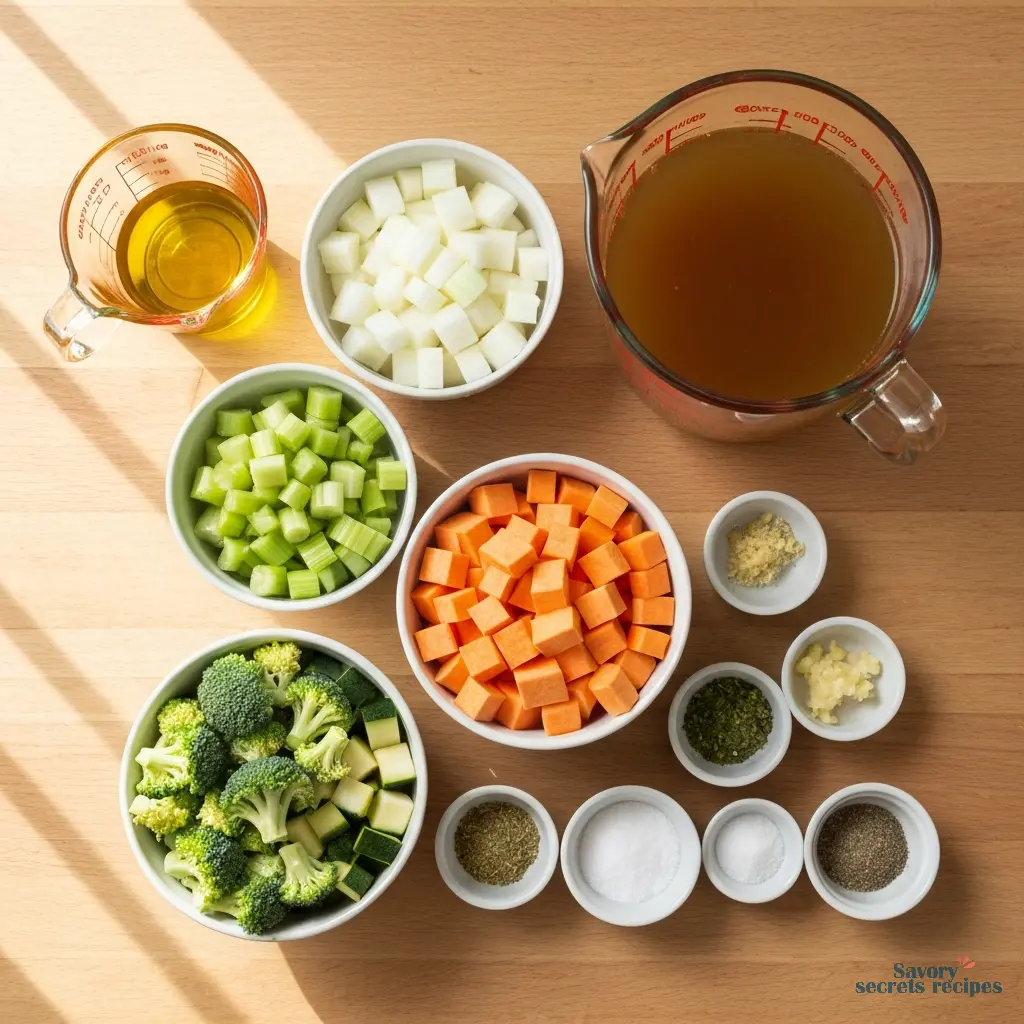
Ingredients
Method
- Heat olive oil in a large soup pot over low heat. Add diced onion, celery, and carrots, and sauté for 4 to 5 minutes.
- Add garlic, dried thyme, dried parsley, diced sweet potatoes, broccoli, zucchini, and corn. Stir well and cook for 4 to 5 minutes.
- Add the vegetable broth and bring to a boil. Reduce the heat and stir in the coconut milk. Simmer for 18-20 minutes, or until the vegetables and sweet potatoes are tender.
- Ladle one-third of the soup into a blender. Blend until smooth, then return it to the pot and stir thoroughly. Serve in bowls, garnish with fresh parsley, and enjoy.
Nutrition
Notes
- Dice the vegetables into small pieces, of roughly the same size, for an even cook time.
- Make sure to peel the sweet potatoes!
- Check the sweet potatoes are fork tender before blending some of the soup.
- Nutritional information is auto-generated and should be understood to be an estimate.
- garlic, which scores 1.
- vegetable broth will depend upon ingredients used.
- black pepper, which scores 2.
- plant milk has various scores.
When the Wind Whips Off Lake Michigan
You know the feeling. It’s January in Milwaukee, and that wind coming off the lake has a bite that goes right through your coat. Honestly, by the time I get home from the store, all I want is something that warms you from the inside out. Something that doesn’t take a ton of fuss. For years, that meant tomato soup for me. But then my daughter developed a sensitivity to nightshades, and let me tell you, finding a good recipe for old fashioned vegetable soup without tomatoes became a mission. I tried a few that were just… sad. Watery broths with floating, bland veggies. Not exactly the hearty hug you’re looking for.
This version is different. It’s the one I kept tweaking until it passed the ultimate test: my Opa Klaus’s nod of approval. He’s the one who taught me that good, old fashioned cooking isn’t about complexity. It’s about letting simple ingredients do their work. This old fashioned vegetable soup without tomatoes is exactly that. It’s a pot of pure, uncomplicated comfort that comes together with what you probably already have. And I promise, you won’t miss the tomatoes one bit.
Why This Old Fashioned Vegetable Soup Without Tomatoes Works
In my testing, most recipes for soup without tomatoes fall into one of two traps. They’re either too thin, tasting like seasoned water, or they rely on a heavy cream base that overpowers the vegetables. This one finds the middle ground. The trick is building layers of flavor right from the start, and using the vegetables themselves to create body. The sweet potatoes break down a bit as they simmer, thickening the broth naturally into something hearty and substantial. It’s not a trick, really. It’s just old fashioned vegetable soup wisdom. The kind my Opa would approve of because it makes sense. It uses the ingredients to their full potential without any fuss.
For the busy parent, which I am, this recipe is a lifeline. It addresses that real pain point of wanting something nutritious that everyone will actually eat. The flavor is deep and comforting, not reliant on any one ingredient. And because it’s a chunky vegetable soup, it feels like a complete meal in a bowl. All things considered, it’s a solid performer across the board.
The Foundation: Building Flavor Without Tomatoes
When you take tomatoes out of the equation, you’ve got to get a little strategic. That’s where your aromatics come in. Onion, celery, carrot—that’s your holy trinity, your mirepoix. Don’t rush this part. I see people crank the heat to get it done faster, but that’s a mistake. You want to sweat them, not sear them. Medium heat, a little patience. Let them soften and sweeten for a good eight to ten minutes. That sweetness becomes the backbone of your old fashioned vegetable soup without tomatoes.
Then there’s the garlic and herbs. Add them just for the last minute. You’re not looking to brown the garlic, just wake it up. That quick toast in the oil unlocks its flavor without any bitterness. The dried thyme and parsley might seem simple, but they’re classic for a reason. They add that earthy, garden-fresh note that makes the soup taste, well, old fashioned. Good browning takes patience, but this step is about gentle heat and time. Let it do its work.
Vegetable Prep: Your Most Important Tool
I need to be clear about something. How you cut your vegetables matters more than you might think for this old fashioned vegetable soup without tomatoes. It’s not about making perfect cubes for a magazine. It’s about even cooking. If you dice your carrots into big chunks and your zucchini small, one will be mush and the other will be crunchy. Not ideal.
Case in point: aim for a rough ½-inch dice on most things. For the carrots and celery that go in early, you can go a bit smaller. They’re part of the flavor base. For the sweet potatoes and zucchini that go in later, keep them uniform. This might be personal preference, but I don’t peel my potatoes for soup. The skins add a subtle richness and extra nutrients. Just give them a good scrub. For the broccoli, just cut the florets into bite-sized pieces. The stems are great too—just peel the tough outer layer and dice them up. No waste. For more vegetable-focused soup ideas, explore our collection of high fiber vegetarian soup recipes.
My Opa’s Knife Lesson
I remember standing in his kitchen in Whitefish Bay, watching him prep vegetables for soup. His knife moved with a rhythm on the cutting board, like a heartbeat. He wasn’t fast in a flashy way. He was consistent. Every piece of carrot was roughly the same size. “The soup cooks evenly this way,” he’d say. “The tool should disappear in your hand.” He was talking about his Wüsthof chef’s knife, of course. But the principle applies even if you’re using a basic kitchen knife. Focus on consistency, not speed. Your soup will thank you.
Simmering: Where the Magic Happens
Once you’ve added your broth and the heartier veggies like the sweet potatoes, you bring it to a boil and then immediately drop it to the gentlest simmer you can manage. This is non-negotiable. A rolling boil will break the more delicate vegetables apart and make the broth cloudy. A simmer lets everything cook through gently, exchanging flavors. The sweet potatoes will start to release some of their starch, which naturally thickens the broth into something lush and satisfying.
After about 15 minutes, you add the quicker-cooking veggies—the broccoli, corn, and zucchini. They just need enough time to become tender but still retain a bit of texture and their bright color. This is when your kitchen starts to smell amazing. That wholesome, savory aroma is exactly what you want. Five to seven more minutes is usually perfect. You’ll know the soup is done when the sweet potatoes are fork-tender but not falling apart completely.
Tips for Perfect Old Fashioned Vegetable Soup Without Tomatoes
Preparation Tips
Clean as you go or regret it later. Seriously. Dice all your vegetables before you even turn on the stove. It makes the process feel seamless. Use seasonal veggies from the farmers market if you can—they have the best flavor. If you’re short on time, frozen corn and pre-cut broccoli florets from the store are absolutely fine. I use them all the time. For the onions, a sharp knife is key. Cut off the root end, halve it pole to pole, peel, and make horizontal cuts before dicing. Keep your fingertips curled back. Safety first.
Cooking Tips
Add a little salt during each major step. Season your sweating mirepoix lightly. Season the broth when you add it. This builds flavor in layers instead of trying to fix it all at the end. If your soup seems too thin after simmering, you can mash a few pieces of sweet potato against the side of the pot with a fork and stir them in. It thickens it right up. If it’s too thick, just add a splash more broth or water. Taste always at the end. Does it need a pinch more salt? A crack of pepper? A tiny splash of apple cider vinegar can add a bright note if it tastes flat.
Storage & Make-Ahead Strategy
This soup is arguably better the next day. The flavors really settle in. Let it cool completely before storing. I transfer it to a few airtight containers—some for the fridge, some for the freezer. It makes weekday lunches a breeze. Worth noting: because there’s no dairy, it freezes beautifully for up to 3 months. Just thaw overnight in the fridge.
Variations & Substitutions
Dietary Adaptations
The recipe as written is vegan and gluten-free. That tracks with how my Opa often cooked—simple, plant-forward meals. For a creamier version, you could stir in a quarter cup of room-temperature sour cream or plain yogurt at the very end, off the heat. If you’re avoiding nightshades completely, you’re already set—no tomatoes, peppers, or regular potatoes here.
Ingredient Substitutions
This is the ultimate “clean out the fridge” soup. Swap sweet potatoes for Yukon Gold or russet potatoes. Use green beans instead of broccoli. Leeks are a fantastic addition in place of some onion. Got some spinach or kale? Stir in a few handfuls right at the end until wilted. If you want it heartier, add a can of drained white beans or some cooked barley when you add the broccoli. The world is your garden, as they say.
Flavor Variations
For a different herb profile, try a bay leaf or two while it simmers (remove before serving). A pinch of smoked paprika adds a warm, subtle depth. My husband loves his bowl topped with a little grated Parmesan, which adds a salty, umami kick. Meatlovers could add some shredded rotisserie chicken at the end just to warm through. It’s a flexible template.
Common Mistakes to Avoid
❌ Mistake: Dicing vegetables way too large, especially carrots. They take forever to cook and don’t flavor the broth as well.
✅ Solution: Aim for a consistent ½-inch dice. Smaller for the carrots and celery that form your base.
❌ Mistake: Sautéing the onion, celery, and carrot on high heat. This browns them quickly but doesn’t develop their sweetness.
✅ Solution: Medium heat, and give it time. Sweat them until they’re soft and fragrant, about 10 minutes.
❌ Mistake: Adding all the salt at the end. The soup tastes seasoned on the surface but flat underneath.
✅ Solution: Season in stages. A little when sweating veggies, a little with the broth. Taste and adjust at the finish.
❌ Mistake: Boiling the soup vigorously after adding the broth. This breaks down vegetables unevenly.
✅ Solution: A gentle simmer is your friend. It coaxes out flavors and cooks everything evenly.
❌ Mistake: Not adjusting the broth level. The recipe makes a brothy soup. If you prefer it thicker, start with 5 cups instead of 6.
✅ Solution: Know your preference. You can always add more liquid, but you can’t take it out.
Frequently Asked Questions
How to Store and Serve Your Soup
Let the soup cool to room temperature before storing—I just leave the pot on the stove with the lid off for an hour. Then, ladle it into airtight containers. In the fridge, it’s good for 4-5 days. For the freezer, use containers meant for freezing and leave some headspace. It’ll be your best friend on a future busy night. To reheat, I prefer the stovetop over medium-low, stirring occasionally. The microwave works fine for single servings; just stir every minute.
Serving is the easy part. Ladle it into deep bowls. A sprinkle of fresh parsley or chives on top makes it look special. A side of crusty bread from the bakery or some simple crackers is all you need. It’s a complete, comforting meal that does exactly what it promises.
A Pot of Patience and Warmth
When you make this old fashioned vegetable soup without tomatoes, your kitchen will fill with the kind of smell that makes everyone wander in asking, “Is it ready yet?” It’s the smell of patience, of simple ingredients transforming into something greater. It reminds me of those Sunday afternoons at my Opa’s, a specific feeling of warmth and anticipation. This soup is that feeling in a bowl.
I hope it becomes a reliable staple in your home, too. Give it a try this week. And if you put your own spin on it—maybe with different herbs or your favorite seasonal veg—I’d love to hear about it. Tag me or leave a comment. Stay warm and nourished out there.
What’s the best way to get a flavorful old fashioned vegetable soup without tomatoes?
Don’t skip sweating your mirepoix (onion, celery, carrot) low and slow. That’s your flavor foundation. Using a good quality broth is key, too. And season in layers—a little salt at each stage, not all at the end. That makes a huge difference.
Can I make this vegetable soup without tomatoes in a slow cooker?
Absolutely. Sauté the onion, celery, carrot, and garlic first for best flavor, then add everything except the broccoli, corn, and zucchini to the slow cooker. Cook on low for 6-7 hours. Add the remaining veggies in the last 30 minutes.
What can I add to make this soup heartier?
For extra protein, stir in a can of drained white beans or some cooked lentils. For grains, add a cup of cooked barley, wild rice, or small pasta like ditalini when you add the broccoli. Just note that pasta will soak up broth over time.
My soup turned out bland. How can I fix it?
First, make sure you salted enough. Add salt in small increments, tasting as you go. A splash of apple cider vinegar or lemon juice can brighten it. A dash of umami, like a little soy sauce or nutritional yeast, can add depth without tomatoes.
Can I freeze this old fashioned vegetable soup without tomatoes?
Yes, it freezes very well. Cool it completely, then transfer to freezer-safe containers, leaving an inch of space for expansion. It’ll keep for 2-3 months. Thaw in the fridge overnight before reheating.
How long will the soup last in the refrigerator?
Stored in an airtight container, your homemade vegetable soup will keep for 4 to 5 days in the fridge. The flavors often improve after a day. Just give it a good stir when you reheat it.
What if my soup is too thick or too thin?
Too thick? Stir in a little extra broth or water until it’s your preferred consistency. Too thin? Let it simmer uncovered for a bit longer to reduce, or mash a few potato pieces against the pot to thicken it naturally.
What are the best vegetables for an old fashioned vegetable soup without tomatoes?
Root vegetables and hearty greens are perfect. Think carrots, celery, potatoes, sweet potatoes, parsnips, turnips, green beans, peas, corn, and kale. They hold up well to simmering and build a rich, sweet broth base.