Ingredients
Method
- Select the corned beef brisket.
- Shop several days in advance to secure the best selection before it's gone.
- Avoid freezing.
- Select a thick slab and inspect the sides to avoid excessive gristle.
- Check the meat by feeling for gristle, as some butchers may fold it over to conceal excess.
- Remove the central gristle that runs the length of the slab.
- Choose the thickest slab available. Look for chunk-style cuts, which may be priced higher per pound.
- If no spice bag is present, add whole white and black peppercorns and bay leaves to the brisket.
- Select the cabbage.
- Choose a heavier, more solid piece for best results.
- Check the aroma to ensure it is not overly bitter.
- Check multiple stores to find a batch without a strong bitter smell.
- Discard the outer leaves, even if the store has already removed some to improve appearance.
- Select the potatoes.
- Avoid the red-dyed ones.
- Select a bag of medium to small sized ones.
- Use the smallest possible pieces.
- For the best results, use cherry tomatoes or other small, salad-sized varieties.
- Select the carrots.
- Purchase the smallest bag of carrots available, unless you prefer them, as you will only need one carrot per pot of cabbage to remove any bitterness.
- Do not serve a bowl of carrots on Saint Patrick's Day.
- Prepare and cook the meal.
- Allow three hours for this step.
- Select a large Dutch oven or stock pot large enough to hold all ingredients at once.
- Place the brisket in the bottom of the pot with the best side facing up.
- Do not rinse it. The next steps will eliminate any harmful elements and remove the outer marinade.
- Add the spice packet, or use one teaspoon of peppercorns and two bay leaves.
- Generously cover the brisket with water and a bottle of beer for added flavor and tenderness.
- Bring the mixture to a boil.
- Reduce the heat, cover the pot, and simmer for two hours.
- Let the mixture rest for two hours.
- Scrub and rinse the new red potatoes thoroughly.
- Cut out any eyes and blemishes.
- Retain as much of the peel as possible.
- Quarter the potatoes. Halve or leave whole if they are very small.
- Cover the items with water until you are ready to use them.
- Peel away the dark outer cabbage leaves until only light green leaves remain. Rinse the cabbage, then quarter it through the core to keep the pieces intact. Set aside.
- Peel and quarter one carrot, then set it aside.
- Peel and quarter the onion, then set it aside.
- Rinse the fresh parsley and finely chop the leafy tops.
- Use kitchen scissors.
- After two hours, proceed.
- Place the potatoes over the brisket.
- Pour in enough water to cover all ingredients.
- Bring the mixture to a boil.
- Reduce the heat, cover the pot, and simmer for ten minutes.
- Layer the cabbage over the potatoes, then top with the onion and carrot.
- Pour in enough water to cover all ingredients.
- Bring the mixture to a boil.
- Lower the heat, cover the pot, and simmer for 20 minutes.
- Check the cabbage for tenderness.
- Otherwise, simmer for an additional five minutes. Do not undercook it, as it is difficult to overcook.
- Remove from heat when finished.
- Crush a garlic clove and rub it inside a large serving bowl.
- Transfer the piping hot potatoes to a bowl. Add at least a quarter pound of butter and a generous handful of chopped fresh parsley.
- Stir gently until the butter melts, coats all the potato pieces, and the parsley is evenly distributed.
- Place the remaining parsley in a small serving bowl for those who wish to add extra to their potatoes.
- Add more for best results.
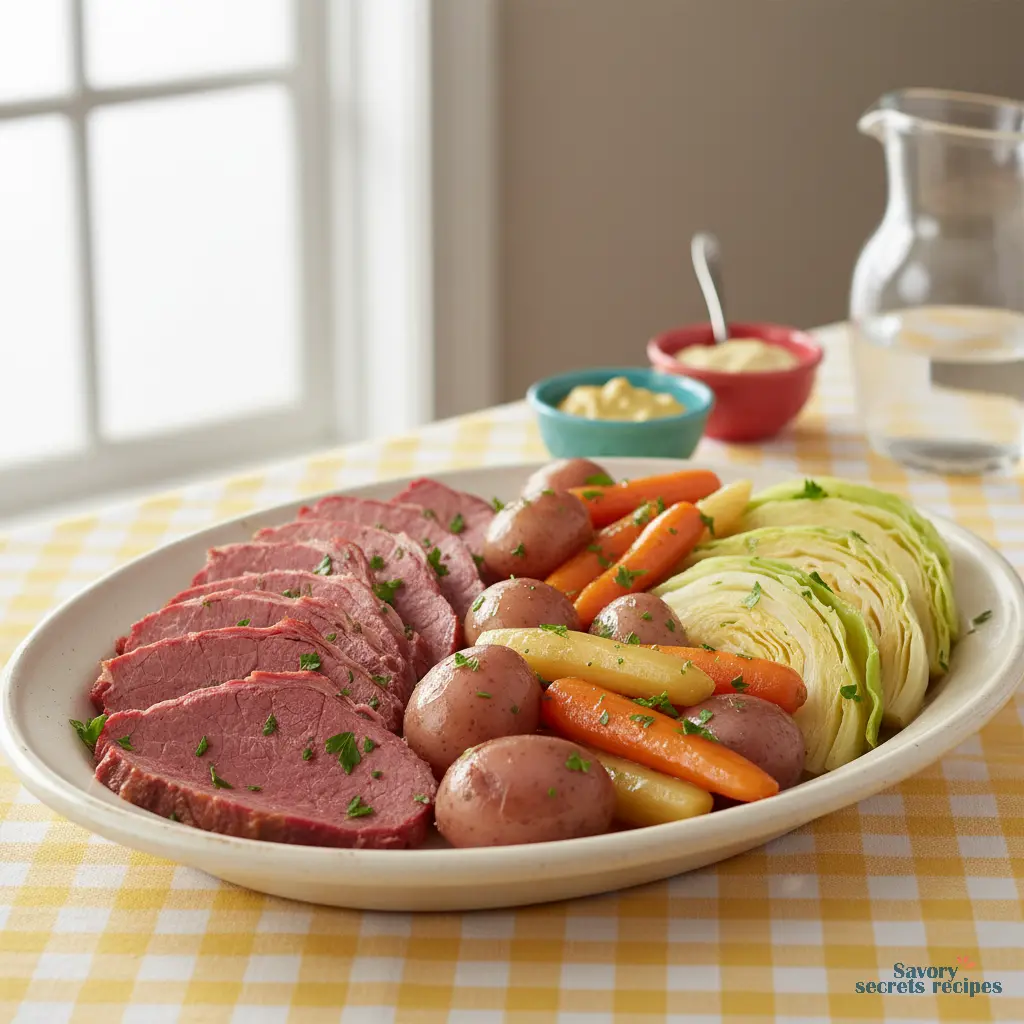
- Slice the brisket against the grain.
- Save some for breakfast.
- Finely chop and fry the corned beef and cabbage. Add any leftover parsley. Serve with coffee. Prepare enough to have leftovers for the next morning's breakfast.
Nutrition
Notes
Ingredient Swap: I always use a bottle of Harp lager for the braising liquid, but a good beef broth works perfectly if you don't have beer on hand.
Storage Tip: This meal keeps beautifully.
I store the sliced brisket, vegetables, and broth separately in airtight containers in the fridge for up to four days.
Make-
Ahead Secret: You can simmer the corned beef a day in advance.
Just let it cool in its broth overnight, then gently reheat it and add the vegetables fresh the next day for the best texture.
Common Mistake: The biggest error is slicing the brisket with the grain, which makes it tough.
I always look for the lines of muscle and slice cleanly across them for tender pieces.
Serving Suggestion: Don't skip the garlic-rubbed bowl for the potatoes.
That one crushed clove makes a world of difference, infusing them with a subtle, aromatic flavor.
Equipment Note: A large Dutch oven is my go-to, but any heavy stock pot with a tight-fitting lid will work.
The key is having enough room to layer everything without crowding.