Ingredients
Method
- Squeeze the juice from 115 grams of kimchi into a liquid measuring cup before measuring the solids.
- Whisk together 1/4 cup kimchi juice, 2 teaspoons gochujang, and 1 teaspoon soy sauce until the gochujang is completely dissolved.
- Drizzle 2 teaspoons toasted sesame oil over 370 grams cooked short-grain rice and mix by hand to coat each grain and remove clumps.
- Heat 1 tablespoon vegetable oil in a frying pan over medium-high heat, then stir-fry the chopped kimchi until browned and fragrant.
- Add the rice and 1 scallion, then stir-fry while pressing down on clumps until the rice is uniform in color.
- Pour the kimchi juice mixture over the rice, increase heat to high, and stir-fry until the rice browns and the grains separate.
- Taste the kimchi bokkeumbap and season with additional soy sauce or salt if necessary.
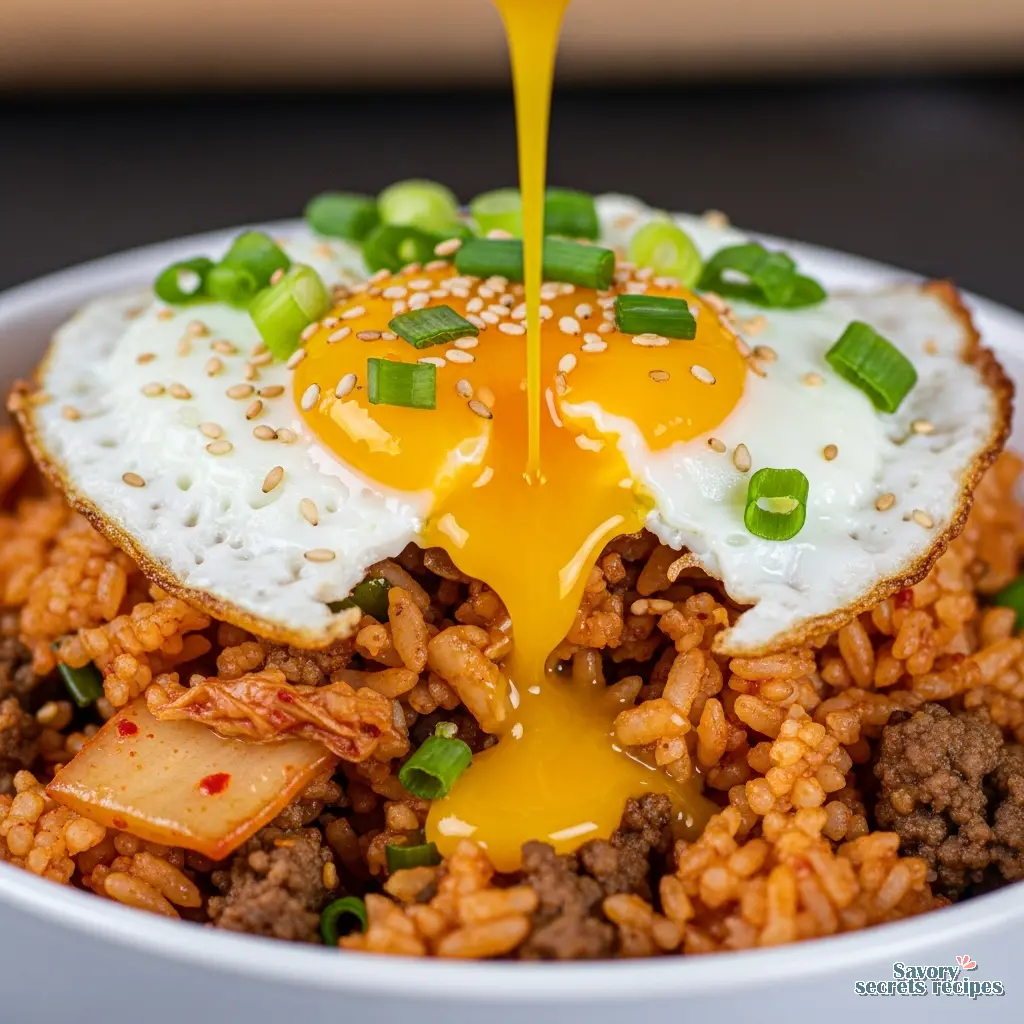
- Add the scallions, plate the fried rice, and top with two sunny-side-up eggs.
Nutrition
Notes
Rice Selection: I have found that using day-old, cold rice is the secret to success because it allows the grains to stay separate and firm rather than turning into a mushy mess.
Kimchi Quality: I always reach for my most fermented, sour jar of kimchi for this dish because the intense acidity mellows out perfectly when it is caramelized in the pan.
Flavor Balance: If your kimchi is exceptionally sour, I recommend adding a tiny pinch of sugar to the sauce mixture to help round out the heat and the tang.
The Perfect Crust: I like to let the rice sit undisturbed over high heat for about a minute at the very end to develop a golden, crunchy layer on the bottom of the pan.
Serving Tip: I find that a generous sprinkle of toasted sesame seeds and some crushed seaweed snacks add a wonderful texture that makes every bite more interesting.
Storage Advice: You can easily store any leftovers in the refrigerator for a few days, and I think it actually tastes even better the next morning when reheated for a quick breakfast.