Ingredients
Method
- Maintain clean surfaces and utensils and wash hands frequently throughout the process to prevent bacterial contamination and ensure proper fermentation. Refer to the provided photos for visual guidance.
- Quarter the rinsed and dried cabbage, then use a sharp knife to remove and discard the hard white bottom core.
- Place the cabbage in a large mixing bowl. Lift each leaf and sprinkle a generous amount of sea salt between them until all leaves are salted. Press down on the cabbage and let it rest for 30 minutes to soften and draw out moisture.
- Whisk all vegan fish sauce ingredients in a small mixing bowl while the cabbage rests, then set aside.
- Combine fresh ginger, garlic, onion, and red chili flakes in a food processor or blender. Start with 3-4 tablespoons of chili flakes for mild heat or 1/2 cup for a spicier version, then taste and adjust the flavor as needed.
- Add the vegan fish sauce to the chili mixture and pulse to combine, then set aside.
- Flip each cabbage section over and pack down firmly to compress. Repeat this process three more times for a total of four flips, waiting 30 minutes between each and washing hands before touching the cabbage.
- Stir the sauce together with chopped carrots and optional green onions in a medium mixing bowl, then cover and set aside.
- Sterilize storage containers by pouring boiling water over them in a clean sink. Allow them to cool slightly, then dry with a clean towel and set aside.
- Rinse each cabbage section in very cold water to remove excess salt after the final flip. Pat dry with clean towels and separate the leaves for easier handling.
- Clean and dry the large mixing bowl, return the cabbage to it, and coat each leaf thoroughly with the sauce mixture. Use gloves if necessary to avoid skin irritation.
- Apply the sauce generously while ensuring enough remains to coat all the cabbage. Wash hands and prepare the sterilized containers once finished.
- Pack the coated leaves into the sterilized containers with clean hands, pressing down firmly to eliminate air pockets. Seal with a sterilized lid and store in a cool, dark place to ferment.
- Ferment the kimchi at room temperature for 36 to 48 hours, then transfer it to the refrigerator for one week to develop a softer texture and deeper flavor.
- Continue fermentation for up to 21 days for a tangier, more intense flavor and more tender cabbage.
- Open the container daily and press the kimchi down with a clean utensil to release air bubbles and keep the cabbage submerged in liquid.
- Monitor the scent of the kimchi; once it smells pleasant and tangy, transfer it to the refrigerator.
- Store the kimchi in the refrigerator for 3-4 weeks or up to several months. Discard if mold forms or if the smell becomes unpleasant.
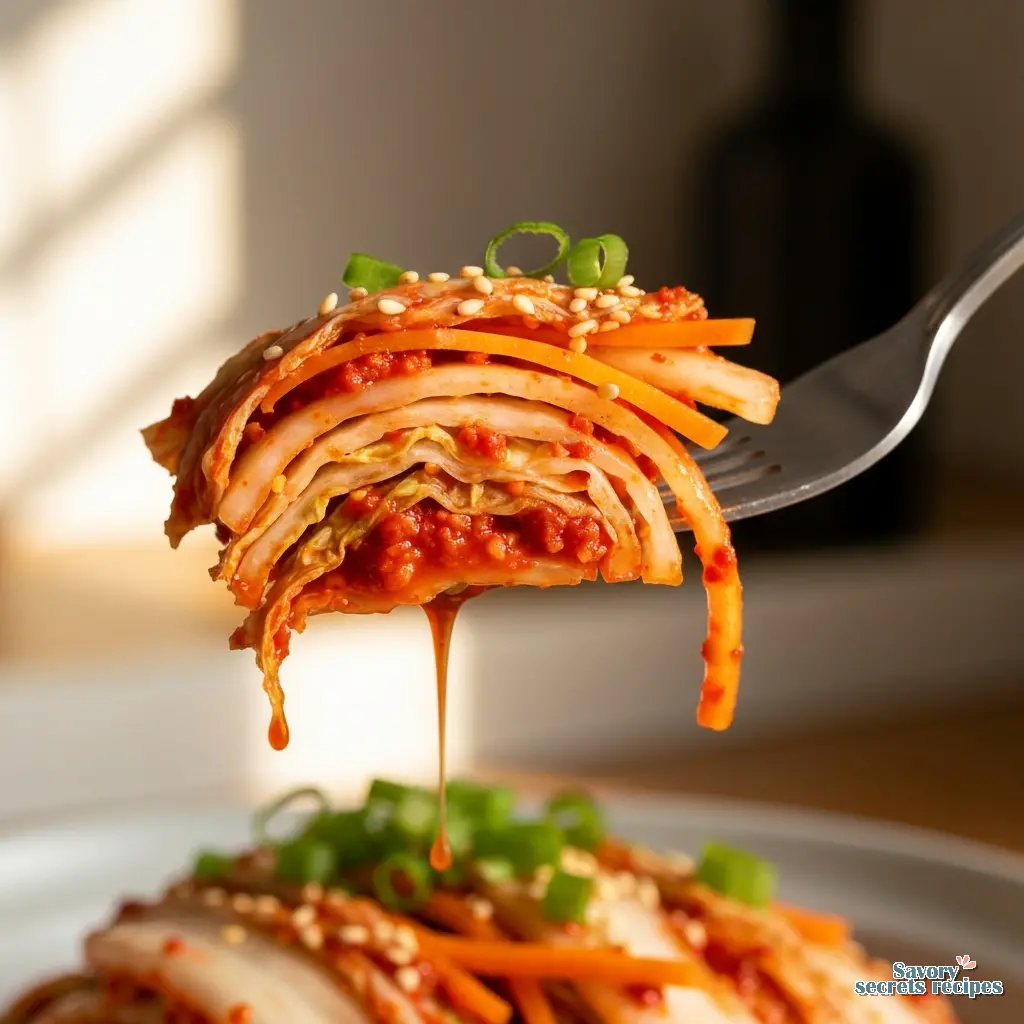
- Serve the kimchi as a side dish or addition to Asian-inspired meals like fried rice, spring rolls, or tofu stir-fry.
Nutrition
Notes
*Prep time does not include fermenting for longer than 36 hours.
*If you can’t find Korean chili flakes you can use red pepper flakes.
*Nutrition information is a rough estimate calculated with 1 tsp sea salt (since some gets washed off) and without optional ingredients.
*I learned everything I know about kimchi from eating copious amounts of kimchi in Korea, and studying this helpful resource from Maangchi – an oasis for Korean cooking.