Ingredients
Method
- Wash the cutting board, knife, several large bowls, and some glass jars with soapy water. Rinse them thoroughly, then give them a final rinse with boiling water.
- Place the bowl and jars in a 180°F oven for 20 minutes to dry them completely. For the cutting board, knife, and plastic jar lids, allow them to air dry on the countertop.
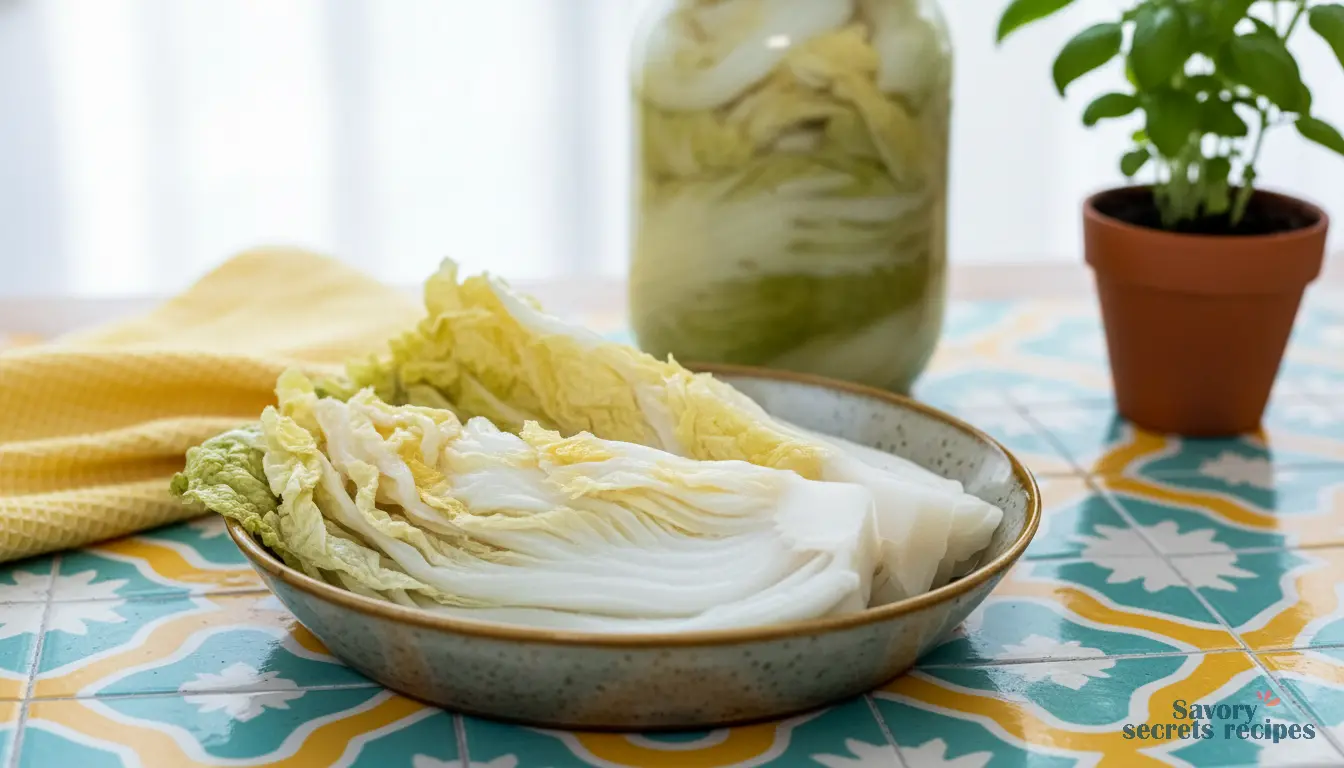
- Peel away the cabbage's outer layers. Slice the cabbage into four or eight even wedges, based on your jar's size.
- Do not wash the cabbage. Simply remove the outer layers, as the interior is clean. If you prefer, you may wash it and let it air dry completely before proceeding.
- Weigh the cabbage. Then weigh the salt, using 2-3% of the cabbage's total weight according to your taste preference. Use iodine-free salt to prevent the pickles from darkening.
- Thoroughly rub salt onto every leaf of the cabbage, which will take approximately 20 minutes. After applying all the salt, place the cabbage into a jar. If the jar opening is too small for the cabbage, cover the cabbage with plastic wrap and let it rest at room temperature overnight.
- Transfer the cabbage and its released liquid into the jar the following day, once the salt has drawn out ample moisture and softened the stem.
- Ensure the cabbage is fully submerged in liquid. If needed, add a 2-3% salt solution to cover it completely and seal the jar. Fermentation will take approximately 3-4 weeks.
Notes
Ingredient Variation: I sometimes add a few whole peppercorns or a small dried chili to the jar for a subtle, aromatic kick, but keep it minimal to let the cabbage shine.
Storage Secret: Once fermented, I always store my jars in the refrigerator, which slows the process and keeps the sour flavor right where I want it for months.
Make-
Ahead Tip: The initial salting and overnight rest is a perfect stopping point if my schedule gets busy, letting me jar the softened cabbage the next day without any rush.
Common Mistake: The biggest lesson I learned was not packing the jar too tightly.
The cabbage needs a little room to breathe and expand as it ferments.
Serving Suggestion: My favorite way to enjoy this is finely chopped in a simple stir-fry with pork and glass noodles, where its bright acidity cuts through the richness perfectly.
Equipment Note: If you don't have a scale for the salt, I've successfully used about 1 1/2 teaspoons of kosher salt per pound of cabbage as a good rule of thumb.