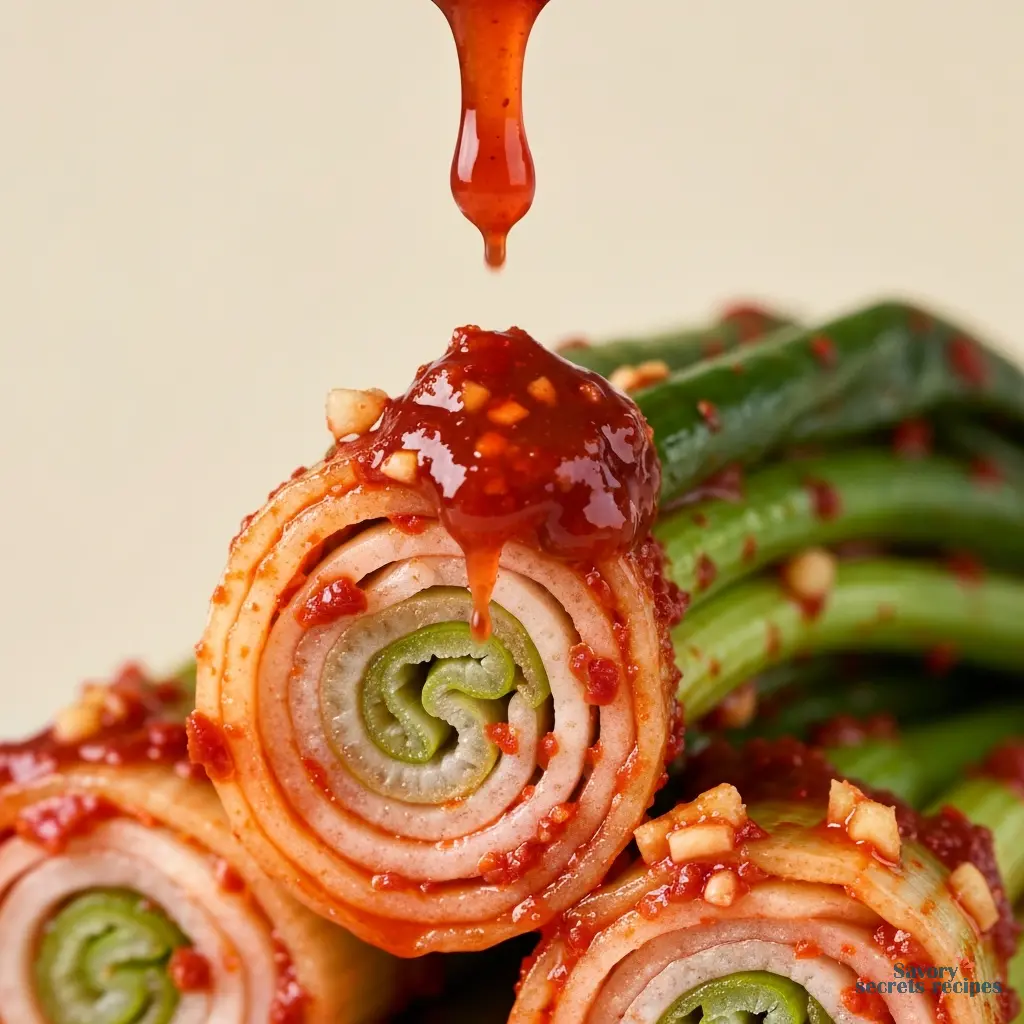
Ingredients
Method
- Trim the root ends from the green onions and peel away any tough or discolored outer layers. Rinse them thoroughly several times. Shake off the extra water and allow them to drain completely.
- Combine all seasoning ingredients in a bowl.
- Cut the dried squid into thin strips approximately two inches long. If the squid is very dry and hard, soak it in water until slightly softened, though this step is usually unnecessary.
- In a large bowl, gently rub the seasoning mixture over the green onions and optional squid to coat them evenly.
- Bundle several green onions together and fold them before placing in an airtight container for storage. Alternatively, tie them by wrapping the green end around the white base to form a loop, then threading the leafy tops through the loop.
- Let the mixture rest at room temperature for one day before transferring it to the refrigerator. While the pa kimchi is ready to eat immediately, its flavor will improve with fermentation over two to three weeks in the fridge. To serve, make several cuts through the folded or tied green onions using a knife or kitchen scissors.
Notes
Ingredient Flexibility: I love adding that dried squid for a deep, savory note, but if you don't have it, a tablespoon of finely chopped salted shrimp or just a bit more fish sauce works wonderfully for that umami kick.
Storage Secret: This kimchi is a slow bloomer.
I always let it sit out for that full day to get fermentation started, then it lives in the fridge.
The flavor truly deepens and mellows beautifully after about two weeks, so patience is rewarded.
Make-
Ahead Magic: The seasoning paste itself can be mixed a day in advance and kept in the fridge.
I find this actually helps the garlic and ginger flavors meld, making the final coating process quicker and more flavorful.
Common Mistake: The most important step is letting those scallions drain completely after washing.
Any extra water clinging to them will dilute your seasoning paste and make the final kimchi too watery.
I pat them gently with a clean kitchen towel to be sure.
Serving Suggestion: My favorite way to eat this is straight from the jar as a banchan, but I also love chopping it up and tossing it into a bowl of hot rice with a fried egg on top for a simple, incredible meal.
Equipment Note: You really don't need a special kimchi container.
I make this in a large glass bowl for mixing, then pack it tightly into any clean, airtight glass jar or food-safe plastic container I have on hand.
Just leave a little space at the top.