Ingredients
Method
- Boil a pot of water. Add rice cakes and cook for 2 minutes or until soft. Strain and transfer to a large mixing bowl. Drizzle with half the oil and mix well to coat evenly.
- Add onion, gochugaru, soy sauce, and sugar to the rice cakes. Toss thoroughly to season evenly.
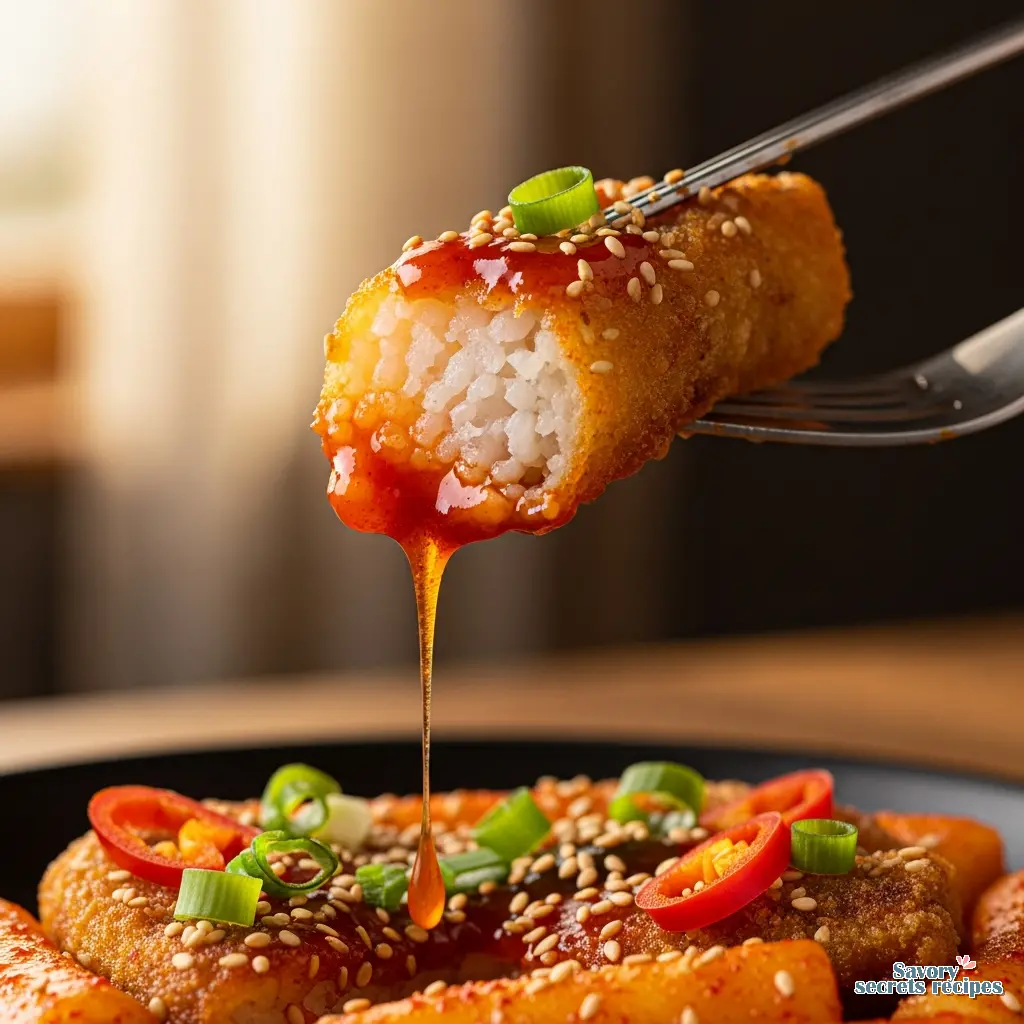
- Heat remaining oil in a non-stick skillet over medium-low heat. Add rice cakes and cook slowly for 3 minutes, turning regularly to prevent sticking or burning. Reduce heat to low if needed. Avoid high heat and stir frequently to coat the rice cakes without burning the sauce.
- Drizzle with sesame oil and sprinkle with toasted sesame seeds. Serve hot.
Nutrition
Notes
Preparation: If your rice cakes are frozen, I recommend soaking them in cold water for about twenty minutes before boiling to ensure they cook through evenly and stay chewy.
Heat Management:
I cannot stress enough how quickly chili flakes can burn: keep your skillet on medium-low and keep those rice cakes moving to get a beautiful toasted flavor instead of a bitter one.
Texture Secret:
My biggest discovery was tossing the boiled rice cakes in oil before adding the spices: it creates a barrier that helps each piece get that signature crispy exterior without sticking to its neighbor.
Ingredient Swap: I sometimes use honey or maple syrup instead of brown sugar when I want a slightly different depth of sweetness that clings perfectly to the rice cakes.
Storage and Reheating:
These are best eaten fresh because rice cakes naturally harden as they cool: if you do have leftovers, I suggest reheating them in a pan with a tiny splash of water and a lid to steam them back to life.
Serving Ideas: I love topping my bowl with a handful of thinly sliced scallions or a soft-boiled egg to balance out the heat and add a fresh, crunchier texture to the dish.
Equipment Tip: While a non-stick skillet is my favorite for this, I have also used a well-seasoned cast iron pan which gives the rice cakes an even more incredible, rustic char.