Ingredients
Method
- Cut the cabbage lengthwise through the stem into quarters. Remove the cores from each piece and cut the quarters crosswise into 2-inch-wide strips.
- Place the cabbage in a large bowl and sprinkle with salt. Massage the salt into the cabbage by hand until it softens slightly. Cover with water, weigh down with a plate and a heavy object, and let stand for 1 to 2 hours.
- Rinse the cabbage three times under cold water. Let it drain in a colander for 15 to 20 minutes while you prepare the spice paste.
- Clean and dry the mixing bowl. Combine the garlic, ginger, sugar, and your choice of fish sauce, shrimp paste, or water into a smooth paste. Stir in 1 to 5 tablespoons of gochugaru and set aside.
- Squeeze any excess water from the cabbage and add it to the spice paste along with the radish and scallions.
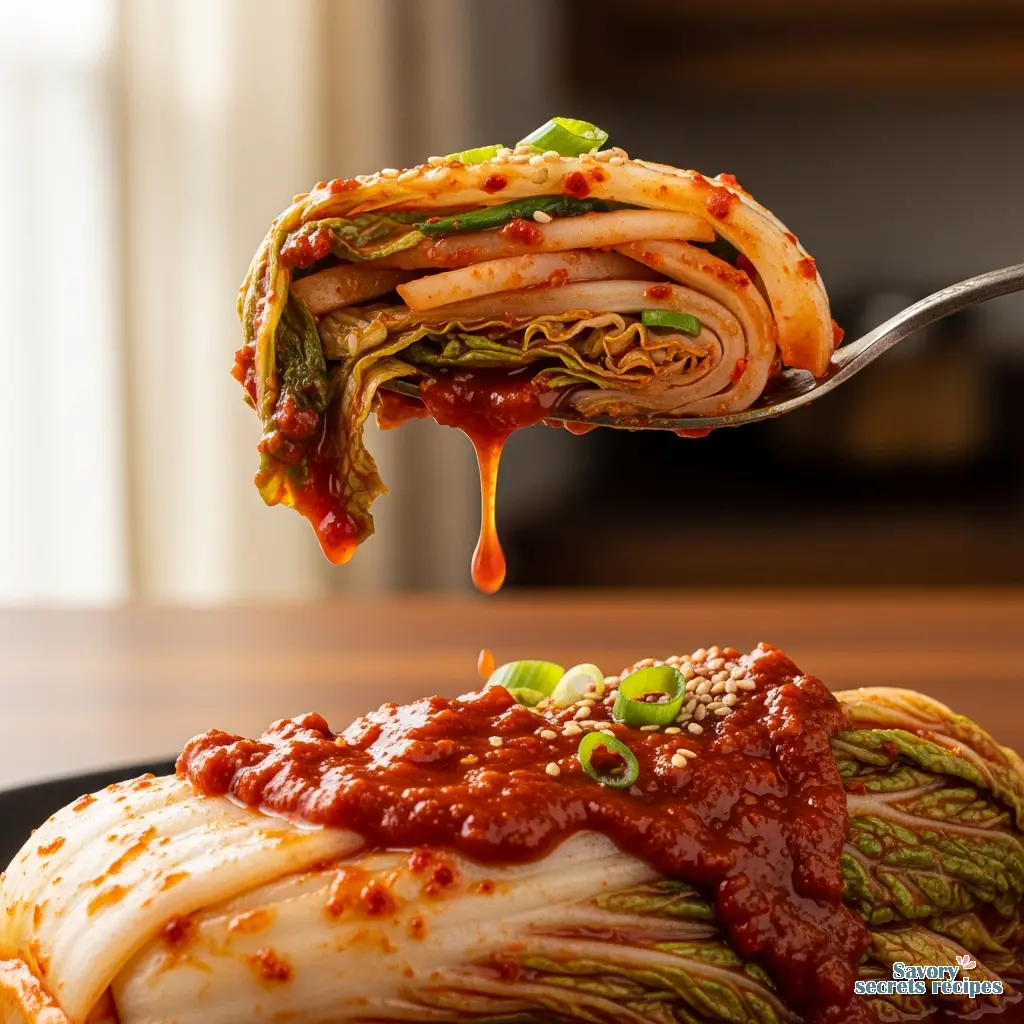
- Gently work the paste into the vegetables by hand until they are thoroughly coated. Use gloves to protect your hands from irritation and staining.
- Pack the kimchi into a 1-quart jar. Press down firmly until the brine rises to cover the vegetables, leaving at least 1 inch of headspace at the top, then seal the jar.
- Place the jar on a plate to catch overflow and let it ferment at cool room temperature, away from direct sunlight, for 1 to 5 days.
- Check the kimchi daily by pressing the vegetables down with a clean utensil to keep them submerged and release gases. Taste the kimchi regularly and transfer the jar to the refrigerator once it reaches your preferred level of ripeness.
Recipe Notes
- Use iodine-free salt and filtered or spring water to ensure proper fermentation. Select seafood or vegetarian alternatives for umami flavor. Store the kimchi in the refrigerator for several months and always use clean utensils for serving.
Nutrition
Notes
Salt Choice: I always use iodine-free sea salt because I discovered that iodine can actually inhibit the fermentation process and leave you with a soft, mushy cabbage.
Spice Control: I recommend starting with two tablespoons of the red pepper flakes if you are sensitive to heat, as you can always add more next time but you can never take that fire back once it is in there.
Skin Protection: I cannot stress enough how important it is to wear gloves while massaging the paste into the cabbage, because those chili flakes can cause a lingering burn on your skin that you will regret for hours.
Jar Headspace: I make sure to leave at least an inch of space at the top of my jar because the kimchi will bubble and expand as it ferments, and I have learned the hard way that a jar can overflow if it is packed too high.
Fermentation Check: I have noticed that my kimchi ferments much faster in the summer heat, so I start tasting it after just one day to make sure it reaches that perfect tang without getting too sour.
Serving Tip: I always use a clean spoon or pair of chopsticks when taking kimchi out of the jar to keep the brine clear and prevent any unwanted bacteria from spoiling the batch.