



Healthy Greek Chickpea Feta Bowl
Ingredients
Method
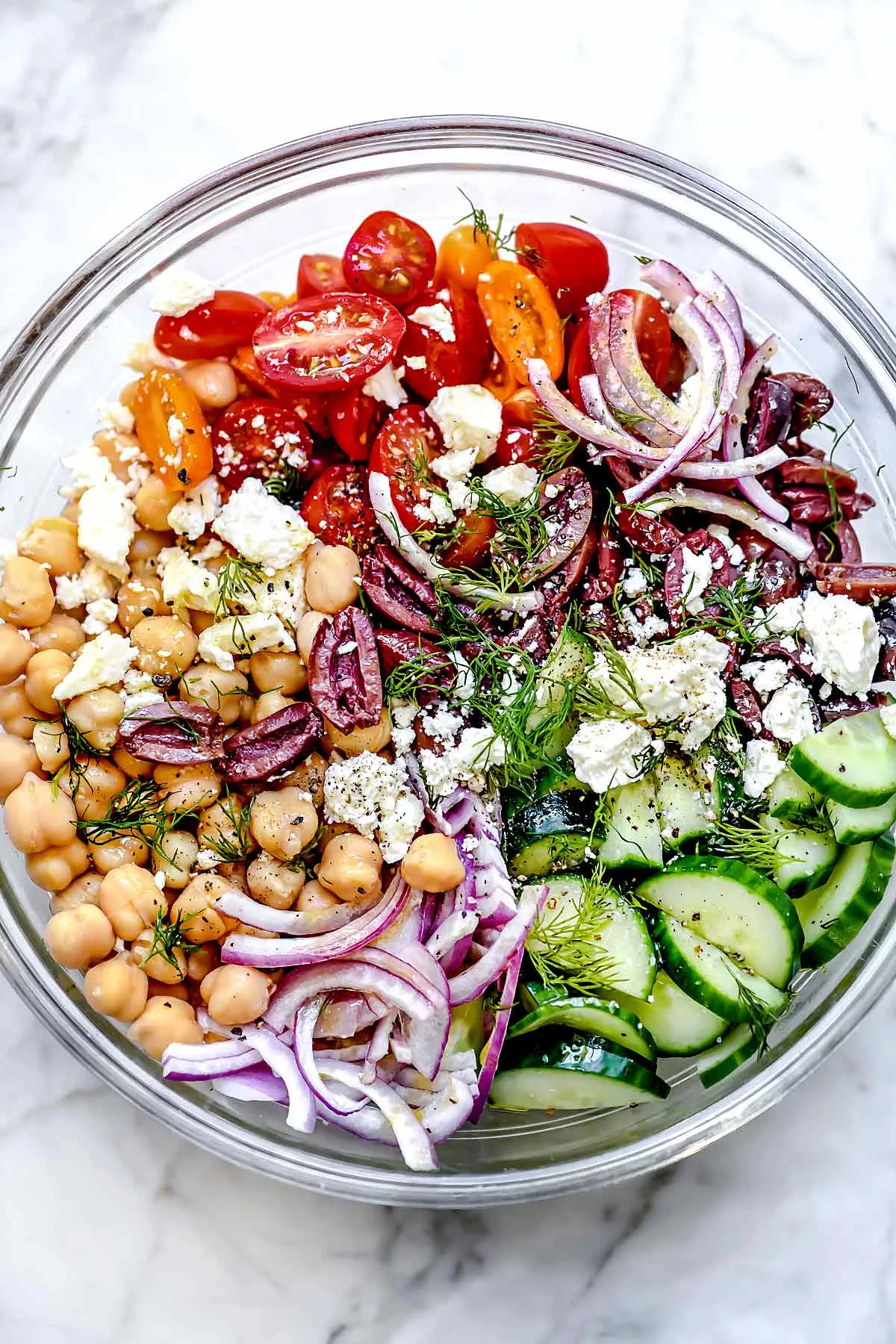
- In a large bowl, add the drained chickpeas, cucumber, tomatoes, kalamata olives, red onion, half of the feta cheese and the dill.
- Drizzle with the olive oil and vinegar then season with the kosher salt, freshly ground black pepper and sugar.
- Toss gently and add the rest of the feta cheese. Adjust seasoning and serve or refrigerate overnight.
Nutrition
Notes
Why This Greek Chickpea Feta Bowl Is Exactly What You Need
Ever stare into the fridge after a long day, wanting something that feels good but doesn’t feel like work? I’ve been there. Honestly, we all have. That’s the exact moment this Greek Chickpea Feta Bowl was born for. It’s not a recipe you plan for days. It’s the one you throw together when you’re tired, maybe a little hangry, and you just need dinner to happen. Now.
Here’s what I’m seeing. You want fresh, bright flavors. You want something that feels indulgent but is actually packed with good stuff. And you definitely don’t want to dirty every pan in the kitchen. That tracks perfectly with this bowl. It’s assembly, not cooking. It’s about letting a few really good ingredients do the heavy lifting. When you get that first bite, the creamy feta against the hearty chickpeas and the pop of those cherry tomatoes… that’s what I’m talking about. It’s a Mediterranean chickpea plate that solves the busy life dilemma in about fifteen minutes flat.
Your Ingredient Strategy: Building the Foundation
Let’s talk about what goes into this fresh chickpea feta dish. I’m a stickler for ingredients because they’re the whole point. You start with a can of chickpeas. Don’t overthink it. I grab the no-salt-added kind from Trader Joe’s or the organic ones at Ralphs. Rinse them well. That starchy liquid in the can? We don’t need it here. It’ll just make everything else taste muddy.
Then, the vegetables. An English cucumber is my non-negotiable. That tender skin, the fewer seeds… it just works better in salads like this. You don’t have to peel it. Just slice it. Cherry tomatoes, halved. They’re sweeter, especially this time of year. A slivered red onion for bite. And kalamata olives. The briny, salty punch they give is irreplaceable. If you only have black olives, fair enough, but the flavor profile shifts. It’ll still be good, just different.
Now, the feta. This is important. Get a block of feta in brine. The pre-crumbled stuff in a bag is coated to prevent clumping, and that coating dulls the flavor. You want that tangy, creamy crumble that comes from breaking a cold block with your fingers. Pop it in the freezer for five minutes before you start. It crumbles so much cleaner. Season as you go, not at the end. That’s the rule.
The Dressing Decision: Simple vs. Emulsified
This is where my comparison-led method comes in. You’ve got two clear paths for your healthy chickpea bowl meal dressing, and the tradeoff is real.
Option one, which is in the recipe card, is the ultra-clean approach. You drizzle extra virgin olive oil and red wine vinegar right over the assembled bowl. You sprinkle a tiny bit of sugar to round out the vinegar’s sharpness, then hit it with dried oregano, salt, and pepper. Toss. That’s it. The flavors stay distinct and bright. It’s fast, and it lets each ingredient sing.
Option two is to make a proper vinaigrette in a small jar first. Same ingredients, but you shake them together violently to create a temporary emulsion. This coats everything more evenly from the first bite. It feels a bit more finished, a bit more like a composed salad. It adds maybe ninety seconds to your process.
Which should you choose? If you’re eating it immediately, I love the clean, direct approach. If you’re meal prepping or want every bite perfectly dressed, take the extra minute to shake up a vinaigrette. Both are exactly right, just for different moments. My sense is that most weeknights, I’m going with option one.
Assembly Flow: How to Build Your Savory Feta Chickpea Mix
Okay, so you’ve got your components prepped. Here’s the sequence that works. It seems trivial, but order matters for texture.
Start with the chickpeas in your biggest bowl. Give them a drizzle of oil first and toss them around. They’re the heart of this protein bowl, so you want them lightly coated. Then, add your cucumber, tomatoes, onion, and olives. Now, your herbs that fresh dill. Toss it all gently with your hands. I know, I know. But you get a better, more even mix. Your hands forget, so you have to remind them.
Now, dress it. Whether you’re drizzling or pouring from your jar, do it now. Toss again. Finally, crumble that cold feta over the top and give it one last, very gentle fold. You want pockets of feta, not a homogenous pink mess. The feta will start to soften and meld into the dressing as it sits, which is exactly what you want. That’s the process doing the work.
Your pan’s not hot enough yet? Just kidding. There’s no pan. See? That’s what I’m talking about. You’re done.
Crispy Chickpea Science: A Worthwhile Detour
The recipe card gives you the classic, no-cook method. But I’d need to test this further before saying definitively… actually, I have tested it. If you have an extra seven minutes and want a next-level texture, crisp those chickpeas.
Drain, rinse, and pat them very dry with a paper towel. In a non-stick skillet over medium heat, cook them for 7 to 8 minutes. Stir them frequently. You’re listening for a faint popping sound and watching for a light golden brown color. They’ll get a little crispy exterior while staying creamy inside. It adds a whole new dimension to your Greek Chickpea Feta Bowl.
Why do this? It intensifies the chickpea flavor, gives a nutty aroma, and provides a textural contrast that’s just fantastic. Is it mandatory? No. Is it a game-changer? I’m still working through this, but… yes. It kind of is. For a quick dinner, skipping it is totally fair. For a weekend lunch where you want to feel proud of your effort, give it a go.
Common Mistakes & Fixes
Getting Your Greek Chickpea Feta Bowl Just Right
Mistake: A bland, watery bowl.
Solution: You didn’t season the vegetables directly or you used watery tomatoes. Salt your cucumber and tomatoes lightly in a separate bowl, let them sit for 5 minutes, then drain any liquid before adding. And taste as you go!
Mistake: Soggy leftovers after one day.
Solution: You stored it all mixed together. For meal prep, store the dressed chickpea and veggie mix separately from the feta. Keep the feta in its own container and add it fresh when you’re ready to eat.
Mistake: The feta disappears into a pink slurry.
Solution: You crumbled it too finely or tossed it too aggressively. Use bigger, cold crumbles and fold them in at the very end. Let the process do the work.
Making It Yours: Variations & Substitutions
This is a template, not a commandment. The beauty of a light veggie bowl recipe is its flexibility. No fresh dill? Use a tablespoon of chopped fresh parsley or even a teaspoon of dried oregano. It’ll be different, but it’ll be good.
Want to make it vegan? This is an easy one. Skip the feta. For that creamy, tangy element, whisk together two tablespoons of tahini with a tablespoon of lemon juice and a pinch of salt. Drizzle that over instead. You lose the saltiness, so you might need to adjust with a few extra olives or a pinch more salt.
If you don’t have red wine vinegar, don’t worry. Lemon juice is the obvious and perfect substitute. White balsamic or champagne vinegar also work beautifully. Each one changes the character slightly lemon is brighter, white balsamic is sweeter. It’s all about your own taste.
Feel like adding more? Half an avocado, sliced, is incredible here. Some chopped bell peppers for extra crunch. A handful of baby spinach wilts nicely with the warmth of the chickpeas if you go the crispy route. It’s your healthy bowl meal. Build it how you like it.
Meal Prep & Storage: Your Future Self Will Thank You
Can you prepare this healthy chickpea bowl meal ahead of time? Absolutely. It’s one of the best meal prep recipes I know. The ingredients will keep for 4 to 5 days in the fridge. Here’s the critical tip: store elements separately.
Keep the dressed chickpea and vegetable mix in one container. Keep the crumbled feta in another small container. This prevents the veggies from getting soggy and the feta from dissolving. When you’re ready to eat, combine them.
If you made crispy chickpeas and they’ve softened, you can re-crisp them in a 425°F oven for a few minutes or in an air fryer for just a minute or two. They come right back to life. Honestly, this is easier than you think and makes weekday lunches feel like a treat.
Frequently Asked Questions
Go Ahead, Build Your Bowl
So there you have it. A Greek Chickpea Feta Bowl that’s less about following rules and more about understanding a method. It’s the kind of recipe that gets into your regular rotation because it’s reliable, fast, and makes you feel good. When you savor this bowl, you’ll pat yourself on the back for choosing something real over takeout.
I genuinely love the puzzle of making eating well this straightforward. Give it a try tonight. And if you do, I’d love to see it. For more inspiration on simple, ingredient-driven meals, check out my Pinterest boards. They’re full of ideas just like this one.
Here’s to easy, healthy eating that actually tastes amazing. Now we’re getting somewhere.
Source: Health & Nutrition Research
How do you make a healthy Greek Chickpea Feta Bowl?
Focus on whole ingredients: canned chickpeas for protein and fiber, lots of fresh vegetables, a good olive oil, and a moderate amount of flavorful feta. The health comes from the balance it’s a nutrient-dense, vegetarian recipe that’s naturally satisfying without being heavy.
What are the main ingredients in a fresh chickpea feta dish?
The core is chickpeas, block feta cheese, cucumber, tomato, red onion, and kalamata olives. The dressing is just extra virgin olive oil, red wine vinegar, dried oregano, salt, and pepper. Fresh dill is the herbal finish that makes it sing.
How long does a Greek Chickpea Feta Bowl last in the refrigerator?
If stored properly with the feta separate, the main mix lasts 4 to 5 days. The vegetables will soften a bit after day two, but the flavors will actually deepen and meld, which can be really delicious in its own way.
Can you prepare this healthy chickpea bowl meal ahead of time?
Yes, it’s a perfect make-ahead lunch. Prep and dress the chickpea and vegetable mix, store it in a sealed container, and keep the feta crumbles in a separate small container. Combine them when you’re ready to eat for the best texture.
What vegetables are best to include in a Mediterranean chickpea plate?
Stick with crunchy, fresh vegetables that won’t wilt immediately. English cucumber, cherry tomatoes, and slivered red onion are the classic trio. Bell peppers, radishes, or steamed-then-cooled asparagus are also fantastic additions when you want to mix it up.