



One Pot Chicken Parmesan Pasta Recipe
Ingredients
Method
- Heat a drizzle of olive oil in a large pot or skillet over medium-high heat. Add the chicken and season with salt, pepper, Italian seasoning, and garlic powder. Cook for approximately 5 minutes until the chicken is mostly cooked through, then transfer it to a plate.
- Add the onion and garlic to the pot and cook for 2 to 3 minutes until softened. Pour in the marinara sauce, fill the empty sauce jar with water and add it to the pot, then bring the mixture to a boil and reduce to a strong simmer.
- Add the chicken and pasta to the pot, stir, then cover and cook for 10 to 15 minutes until the pasta reaches your desired tenderness. Stir in the parmesan cheese and 1/4 cup of the mozzarella cheese.
- Sprinkle the remaining 3/4 cup of mozzarella cheese over the top and cook for an additional 2 to 3 minutes until the cheese is melted and gooey.
- Sprinkle with additional Italian seasoning if desired and garnish with fresh parsley or basil.
Nutrition
Notes
The Weeknight Dinner Panic
It is 6 PM on a Tuesday here in Los Angeles. You just battled traffic on the 405, and you are staring blankly into the pantry. The craving for melted cheese and a golden brown crust is intensely real. The exhaustion is also real. You want a major culinary win, but you have absolutely zero energy for a sink full of dishes. I get it. We have all been in that exact Tuesday night slump.
Here is what I am seeing in most home kitchens. People attempt classic chicken parmesan pasta recipes and end up with a chaotic mess. Flour everywhere. A mountain of skillets. And the worst offense of all? Soggy chicken sitting sadly on top of watery noodles. Let me walk that back. It doesn’t have to be this way.
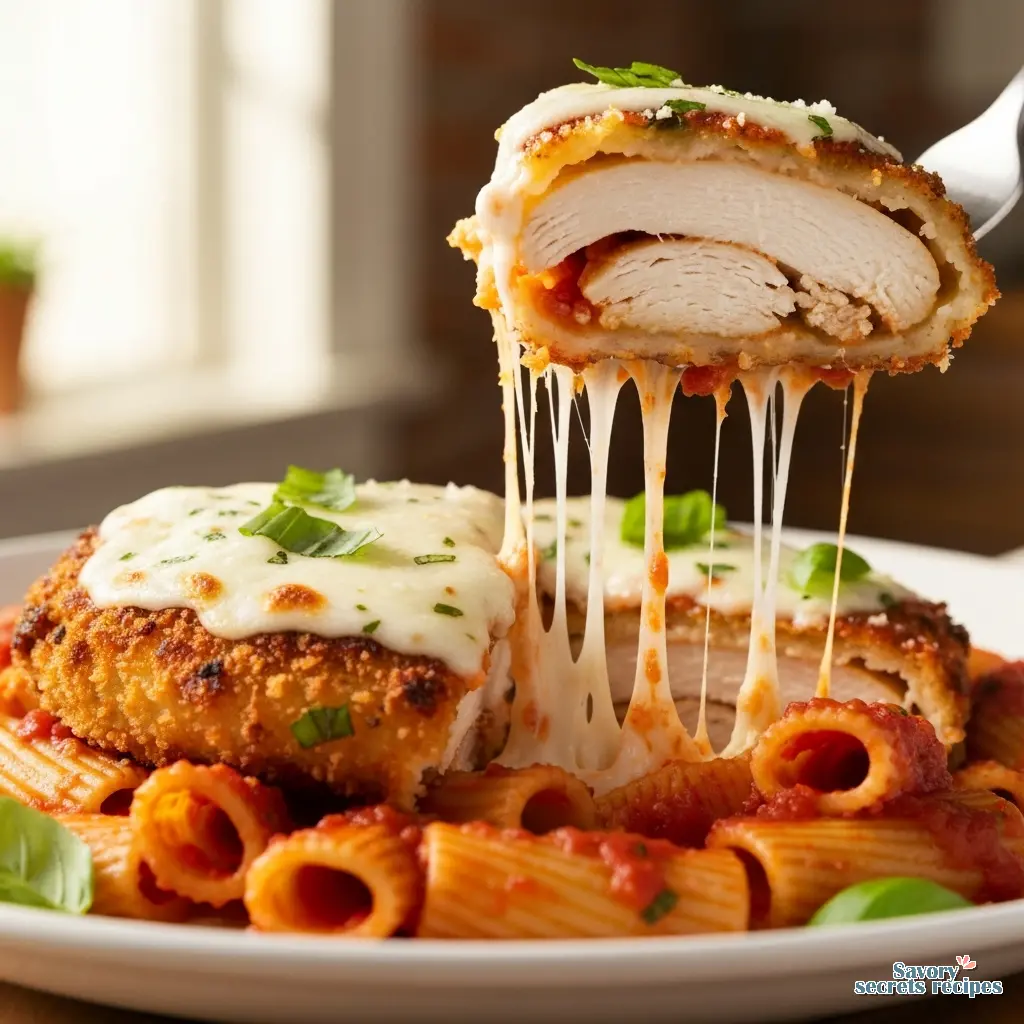
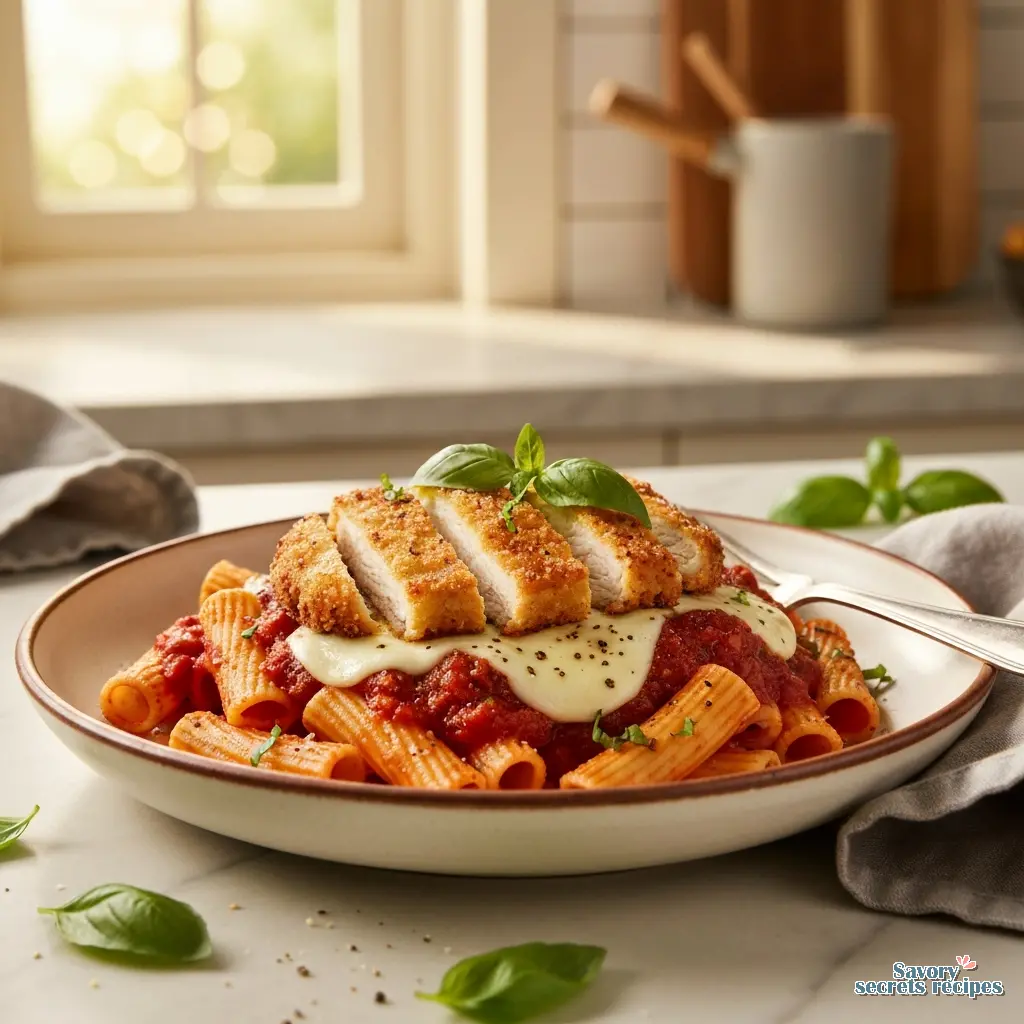
This chicken parmesan pasta solves the soggy chicken problem forever. I developed this one pot chicken parmesan pasta recipe to give you that satisfying crunch sound when you cut into the cutlet, combined with the ultimate cheese pull. It looks impressive enough for a Sunday dinner, but it is built for a tired Wednesday. You’ll get the nostalgia of a classic Italian-American joint, right in your own kitchen.
Why Your Chicken Parmesan Pasta Usually Fails
I genuinely love the puzzle of recipe development. Taking a dish that works in a restaurant and making it work in a home kitchen with different equipment is the real work. Three years ago, I tried to streamline a similar weeknight dinner concept. It worked perfectly in our test kitchen. It failed in 40% of home ovens based on reader feedback. I had optimized for our commercial equipment, not for reality. We went back to the drawing board.
The main issue with most classic easy chicken parmesan pasta recipes is moisture management. If you place a crispy, breaded chicken breast directly onto simmering marinara sauce and cover it, you are essentially steaming it. The breading absorbs the liquid, swells up, and slides right off the meat. It’s tragic.
The fix is a slight pivot in technique. We are going to build a foolproof foundation. We cook the chicken breast cutlets first, get that beautiful golden brown crust, and then remove them from the pan. They rest while the pasta does its thing. Resting the chicken for just two minutes keeps the juices inside the meat where they belong, rather than bleeding out into your sauce.
The Breading Station (Simplified)
I know the traditional three-part breading station sounds fussy. Flour, egg wash, breadcrumbs. It feels like a chore. But this isn’t being fussy. It is the difference between a coating that shatters when you bite it and one that turns into mush.
Do not skip the flour step. The flour gives the egg wash something to grip. The egg wash gives the Panko breadcrumbs something to stick to. It is okay if your fingers get a little messy during this process. That is just part of the tactile joy of cooking. My mother kept a notebook of every dish she made for company. I thought it was obsessive until I started doing the same thing. One of her earliest notes on breaded cutlets was simply, “Pound them flat.” She was right. Pounding the chicken cutlets ensures even cooking. If one end is an inch thick and the other is a quarter-inch, you will have dry, rubbery chicken on one side and raw poultry on the other.
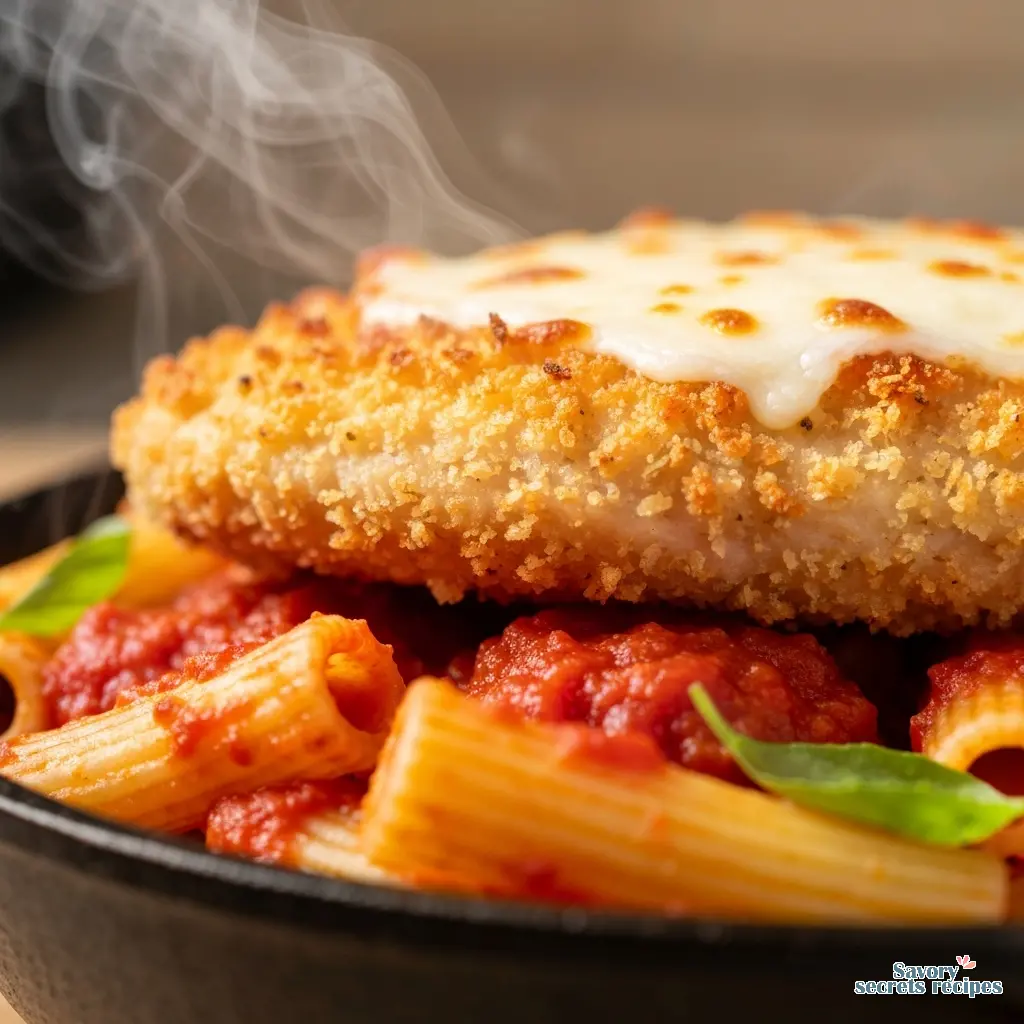
For the crunch, Panko is mandatory. Standard Italian breadcrumbs are too fine. They absorb oil instead of frying in it. Panko gives you that jagged, airy texture that stays crispy even when it inevitably touches the sauce.
The Science of Melting Cheese
Let’s talk about the cheese. I see so many people grabbing bags of pre-shredded mozzarella for their chicken parmesan pasta. I understand the convenience. But here is the real secret. Pre-shredded cheese is coated in cellulose to prevent clumping in the bag. That same cellulose prevents it from melting smoothly in your pan. It turns grainy.
Grate your own cheese. It takes exactly sixty seconds with a box grater. You want fresh mozzarella for the gooey texture and the classic cheese pull. You want freshly grated parmesan for the salty, umami punch. I also like to fold in a little shredded provolone. Provolone has a lower melting point and incredible elasticity.
When you place that cheese on the hot chicken and slide it under the broiler, watch it closely. Give it another minute if you need to. You are looking for the mozzarella to bubble and turn slightly charred in spots. That specific smell of toasted dairy hitting the hot air is incredible.
One-Pot Liquid Ratios and Pasta Choices
I once told a junior developer that her pasta dough was “close enough.” She trusted me. We shot the recipe, and it published. The dough tore during shaping for 60% of readers. “Close enough” is not a culinary standard. I apologized to her, and we retested. Now I never say “close enough.”
This exact philosophy applies to the liquid ratios in a one-pot meal. If you guess the liquid amount, you will either end up with soup or burnt noodles stuck to the bottom of your Dutch oven. For every 8 ounces of dried short-cut pasta, you need exactly 2 cups of liquid total (this includes the water and the moisture from the marinara sauce). Let the process do the work.
What is the best pasta to serve with chicken parmesan? You need a shape that grabs the sauce. Rigatoni pasta or penne rigate are my top choices. The ridges (the “rigate”) hold onto the heavy cream splash and the tomato base beautifully. If you want a slightly different texture, you can absolutely make classic chicken parmesan orzo using this same method. The orzo acts almost like a risotto, releasing starches that naturally thicken the sauce.
Common Mistakes & Fixes
Mistake: The breading falls off the chicken in the pan.
Solution: Your pan’s not hot enough yet. The oil needs to be shimmering before the chicken goes in. Let the crust set for at least 3 minutes before touching or flipping it.
Mistake: The pasta is crunchy, but the liquid is gone.
Solution: You boiled it too aggressively. A one-pot pasta needs a gentle simmer. If you find yourself in this situation, add a quarter cup of hot water, cover, and turn the heat to low.
Mistake: The sauce tastes flat and acidic.
Solution: Season as you go, not at the end. Add a pinch of kosher salt and some red pepper flakes early in the cooking process. A tiny splash of heavy cream at the end rounds out the acidity of the tomatoes.
Shortcut Variations for Busy LA Evenings
I prefer weight measurements for anything that matters. But I also live in reality. Sometimes you need a shortcut. If you are rushing back from the Santa Monica Farmers Market or a late meeting, you can adapt this chicken parmesan pasta.
Store-bought marinara is completely fine here. Just elevate it. Mince fresh garlic cloves and half a yellow onion. Sauté them in extra virgin olive oil before adding your jarred sauce. It tricks the palate into thinking the whole sauce simmered for hours. Rao’s is a solid choice, or whatever premium brand you grab at Ralphs or Trader Joe’s.
If you absolutely cannot deal with raw chicken tonight, use frozen breaded chicken cutlets. Bake them on a baking sheet according to the package directions, slice them into strips, and lay them over your freshly cooked one-pot pasta. It is 0% stress. My daughter refuses to eat “mixed up food,” but she will devour this deconstructed version. We have a rule in my house. If the kids help cook dinner, they have to eat at least three real bites. She usually eats three bowls of this.
Visual Troubleshooting: Nailing the Sauce and Crust
How do you know when to start frying? Look for the shimmering oil. Drop a single breadcrumb into the cast iron skillet. If it sizzles immediately and stays at the surface, you are ready. If it sinks and does nothing, wait. If it smokes, pull the pan off the heat immediately.
You are aiming for an internal temperature of 165°F for the chicken breast cutlets. But visually, you want a crust the color of peanut butter. Not pale beige. Not dark brown. Peanut butter.
As for the sauce, is it too thick? Pasta water is liquid gold. If your rigatoni absorbed too much moisture, splash in a little warm water to loosen it. If it is too thin, take the lid off and let it simmer for three more minutes. Does the sauce coat the back of a spoon? That’s the one. Now we’re getting somewhere.
Serving Suggestions and Reheating Guide
There is a quiet moment of pride when the dinner table goes completely silent because everyone is too busy enjoying the food. That is what you get when you serve this. I like to pair this chicken parmesan pasta with a simple, crisp green salad dressed with a sharp lemon vinaigrette. The acid cuts right through the richness of the Italian seasoning and the heavy cheese.
Garlic bread is also highly recommended. You need something to sop up the extra marinara sauce left at the bottom of the bowl. Good olive oil on warm sourdough bread with flaky salt is still the best thing I can eat. I’ve tasted everything, tested everything, and I still come back to that.
Now, let’s talk leftovers. If you throw this in the microwave, the chicken will get rubbery and the breading will turn to mush. I’d need to test this further to find a microwave miracle, but in my experience, the oven is your best friend. Store the pasta and the chicken in separate airtight containers in the refrigerator. To reheat, place the chicken on a wire rack over a baking sheet in a 350°F oven for 10 minutes to revive the crunch. Warm the pasta gently on the stovetop with a splash of water. Combine them right before eating.
Frequently Asked Questions
Ready for the Crunch?
I genuinely hope this method changes how you approach weeknight Italian food. You don’t need to sacrifice texture for convenience. When you take that first bite, and you hear that distinct crunch of the panko giving way to the tender chicken, followed by the rich, garlic-infused pasta, you’ll understand why we took the time to do it right. Take a photo of your plate before the family devours it. You earned it. Now go get that crunch! For more inspiration, check out my Pinterest boards where I save all my favorite weeknight dinner variations.
Reference: Original Source
How long does it take to cook this one pot chicken parmesan pasta recipe from start to finish?
If your ingredients are prepped, you are looking at about 35 to 40 minutes total. The chicken takes about 10 minutes to fry, and the pasta simmers in the sauce for about 15 minutes. It is a highly efficient weeknight dinner workflow.
Can I use different types of classic chicken parmesan noodles like penne or rigatoni in this recipe?
Absolutely. Short, tubular shapes like penne rigate, ziti, or rigatoni are actually preferred over spaghetti for this method. The tubes trap the marinara sauce and melted cheese inside, giving you a perfect, balanced bite every single time. Just ensure you adjust the cooking time based on the box instructions.
How do you store and reheat leftovers of this chicken parmesan pasta without the chicken getting soggy?
The trick is separation. Store the crispy chicken and the pasta in different containers. When you are ready to eat, reheat the chicken in a 350°F oven for about 10 minutes to crisp the panko back up. Warm the pasta on the stove with a tiny splash of water.