




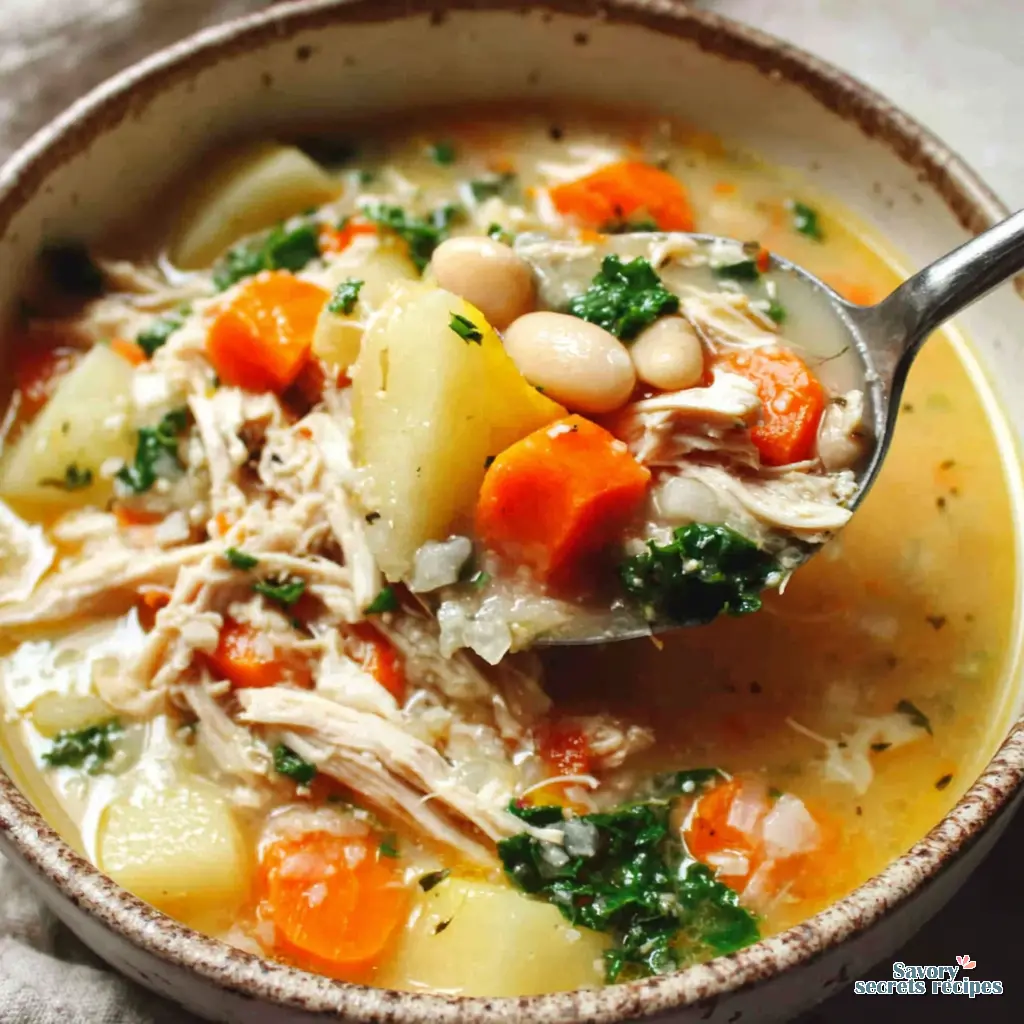
Hearty Chicken Soup with Potatoes and Kale
Ingredients
Method
- In a large pot, heat olive oil over medium heat until shimmering.
- Add chopped onions, carrots, and celery, sautéing until soft, about 5-7 minutes.
- Add the chicken breasts and cook until golden brown and no longer pink in the center, about 7-10 minutes.
- Pour in the chicken broth, bringing the mixture to a gentle simmer.
- Stir in the rice, cooking according to package directions until tender, about 15-20 minutes.
- Once the rice is cooked, swirl in the cream, seasoning with salt and pepper to taste.
- Serve hot in warm bowls and enjoy!
Nutrition
The Secret to a Truly Hearty Chicken Soup
Here’s the thing. Most people think soup is just a starter. A little liquid appetizer you eat before the actual dinner shows up. Real talk, if I am spending 45 minutes cooking on a Tuesday night, that pot better contain the entire meal. I grew up eating Grandma Jean’s pot roast every Sunday after church, and she taught me early on that comfort food needs to stick to your ribs. You need that heavy heft of the spoon as you lift it from the bowl. That is exactly what this hearty chicken soup delivers. While this recipe is designed to be a full meal, sometimes you just want a light and traditional classic chicken noodle soup.
I know the weather here in LA can be unpredictable in the spring. One day it is 75 degrees, and the next evening the marine layer rolls in, the temperature drops to 55, and you are shivering in your kitchen. That is the exact moment you need a warm winter soup that transitions perfectly into spring. The steam fogging up the windows on a chilly evening is basically free therapy.
Feeding a hungry family on a budget right now is incredibly stressful. Grocery prices are ridiculous. But honestly, though, you can stretch a buck so far with this recipe. We are talking about maximum warmth and satiety. You will not hear anyone asking for a snack an hour after eating this.
Why This Hearty Chicken Soup Works
I’m not gonna lie, I used to make watery, sad soups. I would throw some chicken breasts in a pot with water and hope for the best. The result was always disappointing. Good enough is good enough for some things, but not for soup. You want a stew-like, thick broth. You want layers of flavor.
To make a thick chicken vegetable soup recipe no cream required, you need to rely on your starches and your cooking method. We are adding cannellini beans and Yukon Gold potatoes. The starch from the potatoes naturally thickens the broth as it simmers. Choose Yukon Gold potatoes for creaminess. If you prefer your potatoes to hold their shape completely, use red potatoes instead. Avoid Russet potatoes because they will disintegrate into mush. I learned that the hard way. This method creates a much thicker base than you would find in a typical homemade chicken soup.
This is a hearty chicken soup with potatoes and kale, which means we are building bulk. Kale adds incredible volume and a beautiful vibrant green color. Plus, using chicken thighs instead of breasts gives you way more flavor and a much better texture for a long simmer. Thighs do not dry out like breasts do. Trust me on this.
The Science of Broth: Why Bone-In Matters
Let’s talk about the foundation of any good soup. The broth. If it works, it works, but using bone-in chicken is a massive upgrade. The bones release collagen as they simmer, which gives the broth that rich, slightly viscous texture. It is the difference between soup that feels like water and soup that feels like a meal.
I usually buy bone-in, skinless chicken thighs. I drop them right into the pot. Once they are cooked through, you just pull them out, remove the meat from the bones, and shred it. Here is a trick I use all the time. Use a stand mixer with the paddle attachment to shred cooked chicken quickly. It takes ten seconds and saves your wrists. Honestly brilliant.
If you are really in a rush, you can absolutely use a rotisserie chicken. But here is the catch. Wait to add rotisserie chicken until the very end just to heat it through. If you boil pre-cooked chicken for thirty minutes, it turns into rubber. You lose a little depth of flavor by not simmering raw chicken, but on a busy weeknight, nobody’s grading this. If you are short on time, an easy chicken noodle soup is a great alternative that still hits the spot.

Starch Management: The Rice and Pasta Rule
We need to talk about soup bloat. You know exactly what I mean. You make a beautiful pot of soup, add a cup of dry pasta or rice, and put the leftovers in the fridge. The next day, you open the container and find a solid block of mush. The starch absorbed every single drop of your precious broth.
I think this works, but in my experience, anyway, cooking rice or pasta directly in the broth is a massive mistake if you want leftovers. Always cook your starches separately. Cook rice or pasta in a different pot, put a scoop into individual serving bowls, and ladle the hot hearty chicken soup over the top. This keeps your broth intact for days. I always recommend this same step when making a homemade chicken soup to prevent the noodles from getting mushy.
If you are doing low-carb meal prep, just skip the grains entirely and swap in extra parsnips or turnips. Or if you need dinner on the table in literally ten minutes, grab some pre-cooked pouch rice from Ralphs or Trader Joe’s. Use what you’ve got.
Visual Doneness Guide for Vegetables
The way you cut your vegetables matters. We want a rustic cut for this hearty chicken soup. Big, chunky pieces of celery root, parsnips, and carrots. You want to see a rainbow of vegetables in the pot. But you have to stage them right.
Start by sautéing your onions, carrots, and celery first. This builds a massive flavor base. Add your garlic at the specific step listed in the instructions, usually after the onions are soft. If you add garlic too early, it burns and turns bitter. Nobody wants bitter soup.
Delicate greens need special treatment. Add kale or spinach at the very end to wilt without overcooking. You just want the residual heat of the broth to soften them. If you boil kale for twenty minutes, it turns into sad, stringy mush.
Anti-Inflammatory Ingredient Deep Dive
When my kids get the sniffles, this is my go-to recipe. We load it up with anti-inflammatory ingredients like fresh ginger and turmeric. The color becomes this incredible, vibrant golden hue. It smells like comfort.
A quick warning about turmeric. Use gloves when handling fresh turmeric to avoid staining your hands bright yellow for three days. I looked like I had a terrible fake tan accident on my fingers last winter. If you are using dried herbs instead of fresh, remember the golden rule. Use half the amount of dried herbs compared to fresh. Fresh herbs like rosemary, thyme, and sage offer superior flavor, but dried herbs work fine in a pinch.
If you want to make a creamy variation, you can absolutely add dairy. Use heavy cream instead of half-and-half for extra indulgence. Half-and-half has a tendency to curdle if the soup is too acidic or too hot. Heavy cream is much more stable.
Common Mistakes & Fixes
Mistake: The potatoes completely dissolved into the broth.
Solution: You likely used Russet potatoes which break down easily. Switch to Yukon Gold or Red potatoes, and cut them into larger, rustic chunks.
Mistake: The leftover soup has no liquid left.
Solution: You cooked the rice or pasta directly in the pot. Always cook starches separately and add them to individual bowls before ladling the soup.
Mistake: The chicken is tough and rubbery.
Solution: If using pre-cooked rotisserie chicken, you added it too soon. Only add cooked chicken in the last 5 minutes just to heat it through.
Instant Pot & Slow Cooker Instructions
I am a firm believer that cooking methods that do not require me to stand at the stove are lifesavers. If you want to use your Instant Pot, use the sauté function for the veggies first. Then add your chicken, broth, and potatoes. Seal it and cook on high pressure for 12 minutes. Quick release, pull the chicken to shred it, and stir in your beans and kale at the end.
For the slow cooker, toss everything except the kale and beans into the pot. Cook on low for 6-8 hours or high for 3-4 hours. Shred the chicken right in the pot, then stir in the greens and beans during the last thirty minutes. Cleanup counts as part of the recipe, and one-pot meals are my favorite kind of math.

Storage & Freezing Guide
I prefer recipes that create leftovers on purpose. Batch cooking is how we survive the workweek. Allow your hearty chicken soup to reach room temperature before sealing it. If you put a hot container in the fridge, it creates condensation that waters down your beautiful broth.
Store it in an airtight container in the refrigerator for 3 to 5 days. For freezing, this soup is a champion. Freeze it in individual portions for up to 3 months. When you are ready to eat, you can microwave individual portions for 2-3 minutes. If you made a creamy version with heavy cream, I highly recommend stovetop reheating over low heat to maintain the texture and prevent the dairy from separating.
Frequently Asked Questions

Serving Up Comfort
At the end of the day, a big pot of this hearty chicken soup simmering on the stove makes any kitchen feel like home. Garnish your bowls with fresh herbs, maybe a squeeze of Meyer lemon if you have one, and absolutely serve it with a thick slice of crusty sourdough bread for dipping. You can even toss some croutons on top for extra texture.
I genuinely love the moment when I open the fridge on a Thursday night and realize we actually have these leftovers ready to go. It is the best feeling. Try this out, make it your own, and enjoy the comfort.
I share tons of variations and family-friendly meal ideas over on my Pinterest boards, so come hang out with me there if you need more weeknight inspiration!
Reference: Original Source
Does chicken soup actually help when you have a cold?
Yes, it really does. The warm liquid helps clear congestion, while the protein from the chicken and nutrients from the vegetables support your immune system. Plus, adding anti-inflammatory ingredients like ginger and turmeric to your hearty chicken soup gives it an extra healing boost.
Can I use dried herbs instead of fresh herbs?
Absolutely. If you don’t have fresh rosemary or thyme, use dried. The general rule is to use half the amount of dried herbs since their flavor is more concentrated. Add them earlier in the cooking process so they have time to rehydrate and release their oils.
What else can I add to this hearty chicken soup?
You can clear out your produce drawer with this one. Zucchini, bell peppers, or sweet potatoes work beautifully. If you want to make how to make chicken soup more filling a reality, try adding tortellini, quinoa, or chickpeas. Just remember to cook any pasta separately!
Can I use cooked chicken instead of raw?
You can, and it’s a great time-saver. If you are using leftover chicken or a store-bought rotisserie bird, shred it and add it to the pot during the last 5 minutes of cooking. You just want to warm it through so it doesn’t become tough and rubbery.
Can I use uncooked rice?
I strongly advise against cooking raw rice directly in the soup pot. The rice will absorb a massive amount of your broth, leaving you with a thick, mushy casserole instead of soup. Cook your rice in a separate saucepan and add it to individual bowls when serving.
How much uncooked rice equals 2 cups of cooked rice?
You will need about 2/3 cup of uncooked white rice to yield 2 cups of cooked rice. Rice typically triples in volume when cooked. Boil it separately in about 1 and 1/3 cups of water, fluff it with a fork, and ladle your hot soup right over it.